





Irish Regency Side Tables
Irish regency side tables bring architectural poise and figured timbers into a room, offering functional elegance through console, serving, and work forms.
Irish Regency Side Tables
When you search for irish regency side tables, you encounter formal console and serving pieces alongside versatile sewing, work, and occasional tables spanning the nineteenth century, Georgian, and Regency eras. These forms reflect the distinct cabinet-making traditions of Ireland during the Regency period, often displaying heavier carving or more dramatic timber selection than their English counterparts.
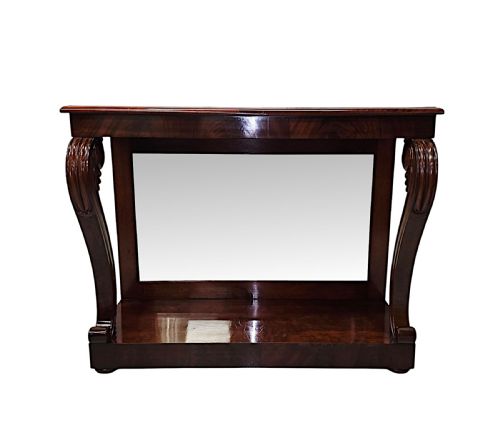
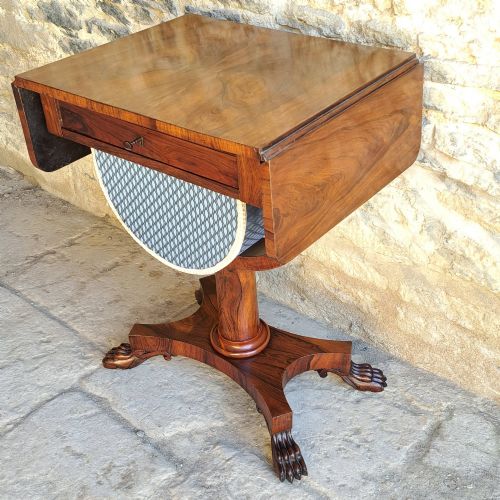
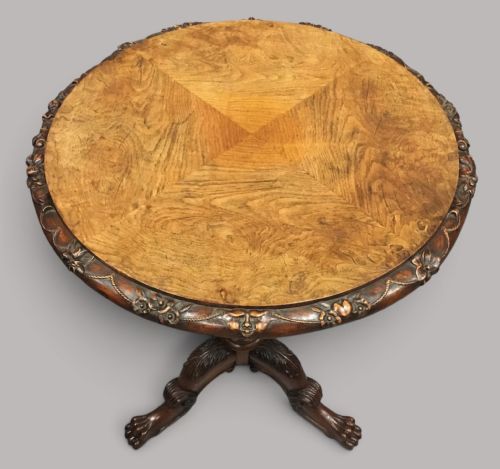
The pieces listed on this page range from grand console tables and serving tables down to drop-leaf work tables, bedside tables, and tripod occasional tables. Mahogany is the most frequent timber, though rosewood, burr yew, and pollard oak appear in specific examples alongside inlaid folding tea tables and dumbwaiters.
Makers such as Gillingtons of Dublin and Robert Strahan & Co are represented in the titles, anchoring the regional attribution through stamps or scholarly association. Buyers encounter both console tables meant for wall placement and centre or side tables designed to be viewed from multiple angles.
Materials and construction methods
Cabinet-makers relied heavily on solid and veneered mahogany, alongside exotic and native timbers including rosewood, burr yew, and pollard oak to create striking grain patterns on table tops and friezes. Secondary woods such as oak appear in internal framing and drawer construction.
Carving was executed by hand directly into the dense timber, particularly evident on console and serving table bases where dimensional mounts, brass details, and fabric elements occasionally supplement the woodwork. Drop-leaf and foldover mechanisms utilise traditional hinge and pivot joinery appropriate to work and tea tables.
Irish Regency Side Tables Retail Price Guide 2026
Typical asking prices for irish regency side tables among the pieces listed under this phrase on Sellingantiques today, from the lower quarter to the upper quarter. They describe what is for sale here now, not the wider market.
The listings combine nineteenth-century, Georgian, and Regency periods utilising mahogany, rosewood, burr yew, and pollard oak across console, sewing, and serving forms.
Distinguishing quality in the selection
Quality rests in the choice of timber figurations, such as highly figured burr yew or pollard oak, and the crispness of the hand-carved elements on the frieze and legs. Maker attribution, whether through a stamped signature like Gillingtons or firm attribution to Robert Strahan & Co, elevates the standing of a piece.
The integrity of the structural joinery, the matching of timber veneers across table tops, and the survival of original brass fittings and secondary woods separate standard production from the finest workshop output.
Gillingtons of Dublin·Robert Strahan & Co
The Irish Regency Side Tables Glossary
- Console table
- A table designed to stand against a wall, frequently supported by front legs or brackets while relying on the wall for balance. They often feature elaborate carving on the apron.
- Work table
- A small portable table equipped with a bag or drawers for sewing and needlework materials, popular during the Regency period. They often feature drop leaves.
- Pollard oak
- Oak timber taken from pollarded trees, yielding a dense, knotty grain highly prized for decorative veneer work. It produces a mottled pattern across table tops.
- Serving table
- A large dining room table used for holding dishes and silverware during meals, sharing architectural details with console tables. They belong to the broader category of side tables.
- Dumbwaiter
- A tiered revolving or stationary piece of furniture used for holding food and tableware beside a dining table. Irish examples from the nineteenth century utilise mahogany construction.
Irish Regency Side Tables: Frequently Asked Questions
What is an Irish regency side table?
An Irish regency side table is a piece of nineteenth-century or Georgian furniture designed for wall placement or general serving use, originating from Irish workshops. These include console tables, serving tables, and work tables.
They display regional stylistic preferences such as bold carving and dense mahogany, rosewood, or burr yew timbers.
How were these tables used originally?
These tables served various domestic functions depending on their specific form, from displaying decorative objects in a hallway to holding dishes in a dining room. Sewing and work tables provided functional storage for needlework in private chambers.
Foldover tea tables and occasional tables adapted to social gatherings and tea service in formal drawing rooms.
How do I identify a Gillingtons piece?
Pieces associated with Gillingtons of Dublin are typically identified by physical stamps on the woodwork or through scholarly attribution based on distinct construction traits and carving styles. Their work appears on large console and sofa tables from the period.
Such attribution relies on documented workshop signatures and characteristic Irish cabinet-making methods.
What woods were commonly used?
Mahogany is the primary timber seen across the selection, complemented by rosewood, burr yew, and pollard oak for decorative veneer surfaces. Oak is also utilised for internal framing and secondary components.
Inlaid details and brass mounts frequently accent these primary woods.
How do I care for antique timber?
Antique timber tables require stable environmental conditions away from direct heat sources and strong sunlight to prevent veneer cracking and timber shrinkage. Regular dusting with a soft, dry cloth maintains the polish without chemical buildup.
Wax polishing can be applied sparingly to nourish dry wood surfaces according to the specific needs of the timber.