


Georgian Stool Frame
A georgian stool frame forms the robust internal skeleton of a period seat, offering buyers a sturdy timber structure ready for custom upholstery.
Georgian Stool Frame
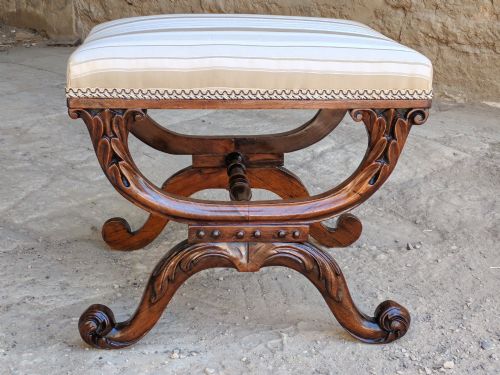
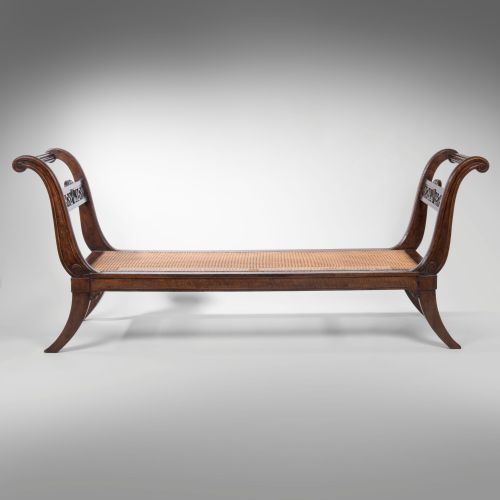
A georgian stool frame encompasses a variety of timber structures including footstools, window seats, and benches originating from or styled after the Georgian and Regency periods. Buyers searching this phrase encounter both authentic 18th-century pieces and later revival interpretations spanning the nineteenth and early twentieth centuries.
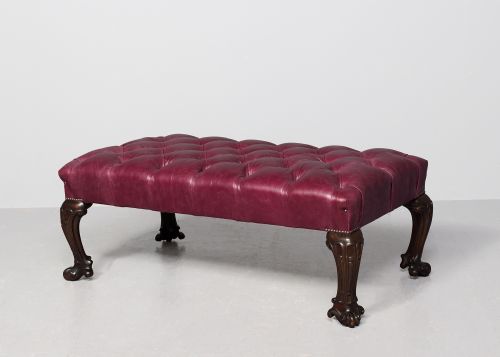
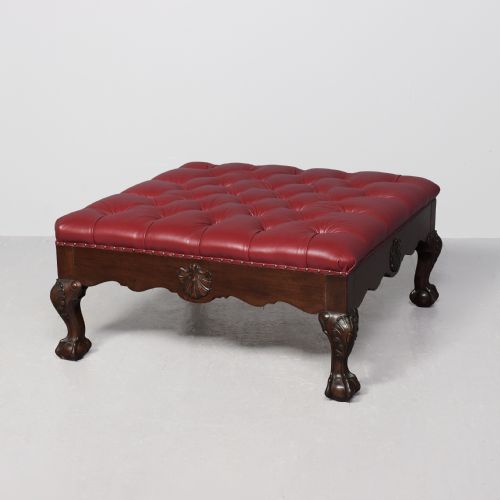
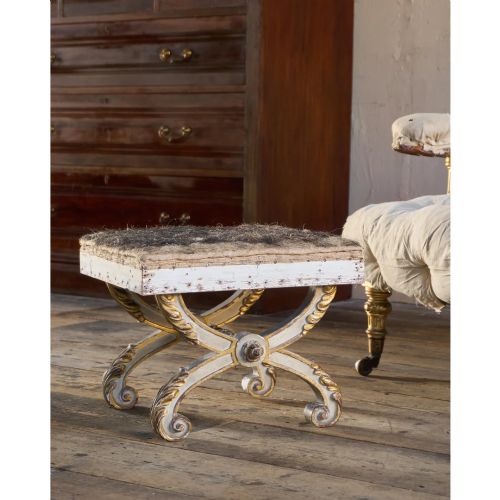
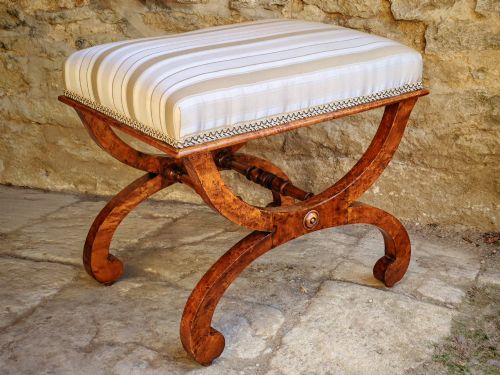
The forms range from simple low footstools to grand X-frame curule designs and long dressing stools. Mahogany remains the dominant timber, frequently accompanied by rosewood, burr maple, and general wood constructions.
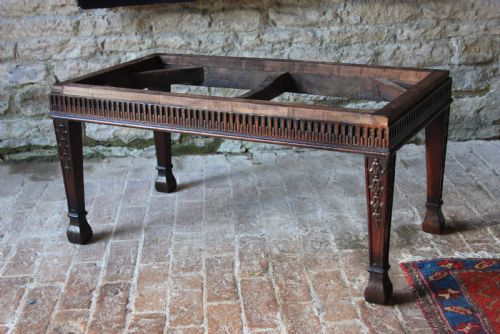
Many examples arrive stripped to the wooden skeleton, whilst others retain fragments of historical coverings or later hide and kilim upholstery. The selection bridges formal window seats and modest footstools intended for domestic comfort.
How They Were Made
Cabinetmakers utilised dense hardwoods such as mahogany and rosewood to construct the primary load-bearing structures, ensuring stability across long spans and complex curves. Timber selection dictated the potential for fine carving, particularly in styles referencing Chippendale and Queen Anne aesthetics.
Joinery techniques involved precise mortise and tenon connections, which allowed frames to withstand the downward pressure of daily use. Secondary applications of brass detailing and gilt work enhanced the visual hierarchy of formal Regency and Grand Regency pieces.
Listings feature mahogany as the primary timber, alongside rosewood and burr maple across various nineteenth-century styles.
What Varies in Quality
The refinement of carved ornament separates standard production from superior examples, as seen in the depth and sharpness of execution on mahogany frames. Crisp joinery and the selection of richly figured timbers like burr maple further distinguish the finer pieces.
Structural integrity depends on the original precision of assembly and the survival of the timber grain without excessive compromise from past alterations. Pieces exhibiting complex geometric forms, such as curule X-frames, demonstrate higher ambition in the original workshop.
Miles & Edwards
The Georgian Stool Frame Glossary
- X-frame
- A structural form utilising intersecting diagonal supports to form the legs and base of a stool or window seat. This ancient design gained particular favour during the Regency period.
- Curule
- A classical seat design featuring crossed concave legs derived from Roman administrative furniture. It often appears in high-status nineteenth-century seating.
- Kilim
- A flat-woven textile frequently utilised as a traditional upholstery covering for period footstools. It introduces geometric pattern and wool texture to the wooden frame.
- Hide
- Heavy animal leather used historically for durable upholstery on seating. Burgundy and red hide variants appear frequently on nineteenth-century mahogany frames.
Georgian Stool Frame: Frequently Asked Questions
What is a georgian stool frame?
A georgian stool frame is the underlying wooden structure of a period seat, built from timbers such as mahogany or rosewood.
These pieces range from simple footstools to elaborate X-frame window seats designed for formal rooms.
How were these frames used historically?
These frames served domestic functions as footstools, dressing stools, and window seats in period interiors.
Their sturdy timber construction supported heavy upholstery suited to daily sitting or resting feet.
How do I identify a period frame?
Identification relies on examining the timber species, joinery methods, and stylistic cues such as Chippendale carving or Regency X-frames.
Many listings also indicate specific production eras through construction characteristics and historical revival styles.
Can I reupholster an antique frame?
Upholstery can be adapted to suit modern interiors while respecting the structural integrity of the antique timber.
Many frames are acquired as bare wood skeletons specifically to allow custom fabric or hide selection.