




Mahogany Footstool Frame
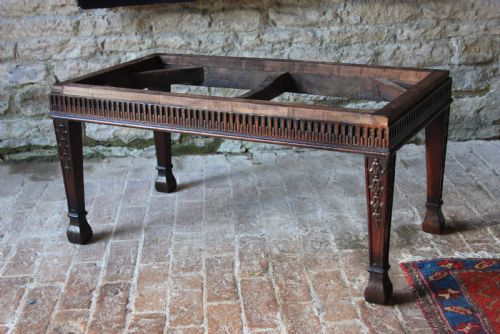
A mahogany footstool frame offers sturdy timber and honest joinery, providing a solid structural core ready for reupholstery or display.
Mahogany Footstool Frame
A mahogany footstool frame represents the structural skeleton of a traditional low seat, stripped to its timber or preserved with period upholstery. These pieces emerge in styles ranging from early nineteenth-century Regency and William IV designs to later Victorian, Edwardian, and revival interpretations.
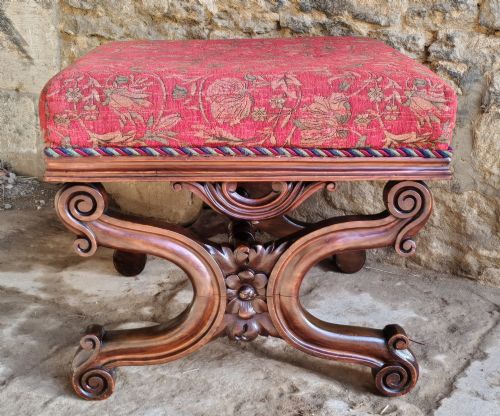
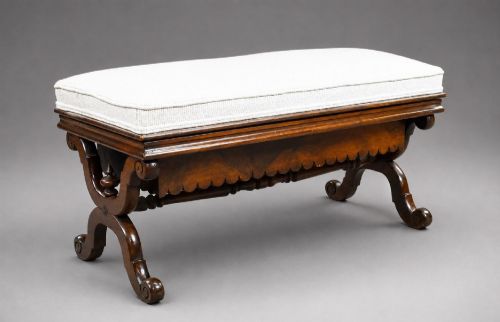
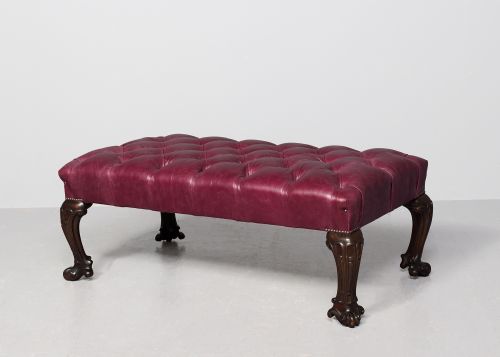
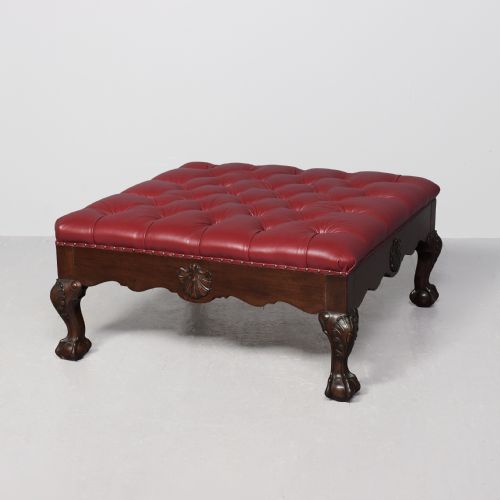
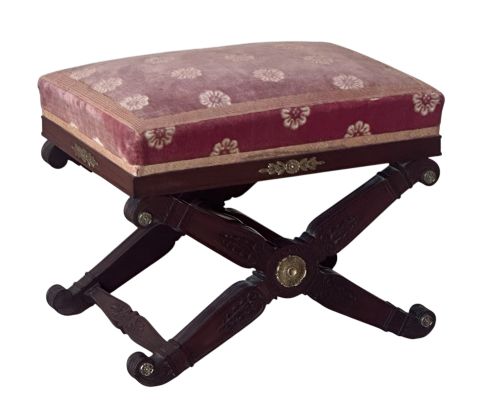
Buyers will encounter various forms across this selection, including compact dressing stools, long ottomans, and distinctive x-frame supports. The primary timber is solid mahogany, often shaped into cabriole legs or intersecting cross-braces that reflect the aesthetic tastes of their respective decades.
Materials and construction
Cabinetmakers constructed these supports primarily from dense mahogany, occasionally pairing the timber with brass mounts or gilt bronze details. Frames frequently incorporate carved wooden ornament along the rails, edges, and legs.
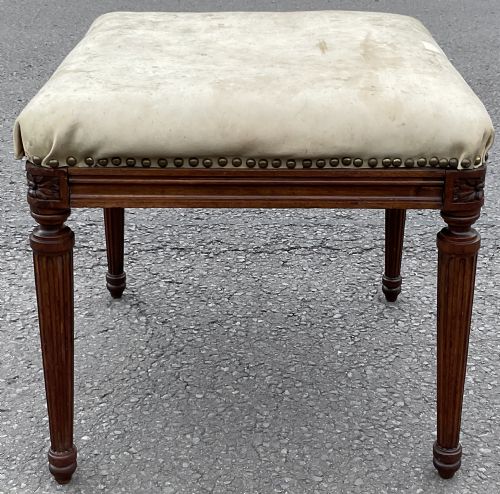
Many examples survive stripped of their original textiles, exposing webbing and stuffing remnants, while others retain historic leather, wool, kilim, or gros-point needlework tops secured with traditional tacks.
Some nineteenth-century footstools managed to outlast three generations of parlour sofas while retaining their original needlework.
Judging the standard of a frame
Quality rests in the crispness of the timber carving and the rigidity of the joints, particularly at the stress points of x-frame and cabriole legs. Superior examples display thoughtful proportions and dense, well-figured mahogany grain.
The integrity of the structural frame dictates the piece's merit, distinguishing simple utilitarian carpentry from the refined execution found in revival and Regency workshops.
The Mahogany Footstool Frame Glossary
- X-frame
- A structural design featuring intersecting diagonal legs forming an X shape when viewed from the side. This ancient form provides robust lateral support.
- Cabriole leg
- A furniture leg that curves outward and then tapers inward, mimicking an animal's leg. It often terminates in a pad or carved foot.
- Gros-point
- A heavy, counted-thread needlework technique used for durable upholstery. It creates a firm, textured surface ideal for heavy-use footstools.
- William IV
- A British design period spanning the 1830s characterised by heavy, robust proportions and classical revival motifs. Furniture from this era uses dense timbers.
- Hide
- Animal skin prepared for upholstery, providing a durable and smooth surface. Red and burgundy hide variations appear frequently on nineteenth-century seating.
Mahogany Footstool Frame: Frequently Asked Questions
What periods do these frames represent?
The selection spans from Georgian and Regency eras through the Victorian period and into early twentieth-century revival pieces.
Maker styles include Queen Anne and Chippendale revivals alongside French Empire influences.
How were these stools used originally?
They served primarily as footrests before armchairs and sofas, or as low dressing stools in private chambers.
Larger versions functioned as ottomans for reclining in formal reception rooms.
Can I reupholster a bare frame?
Most bare frames readily accept modern or traditional upholstery methods depending on the webbing and rail depth.
Original textiles can sometimes be preserved, but webbed frames invite new fabric choices.
How do I identify an x-frame stool?
An x-frame relies on two crossing diagonal timbers on each side rather than four vertical legs.
This geometry creates a distinct curule shape associated with Regency and nineteenth-century seating.