
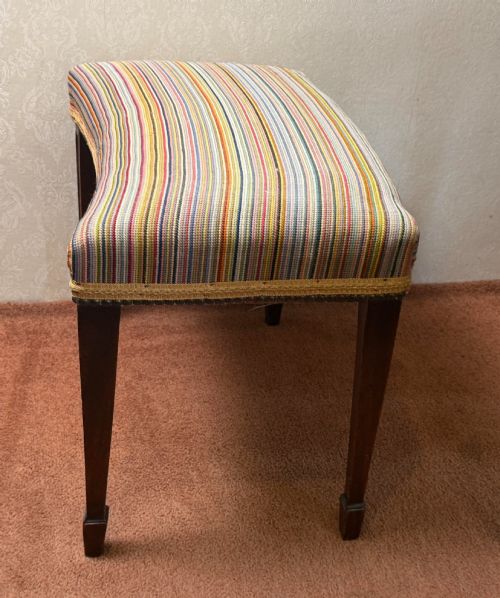
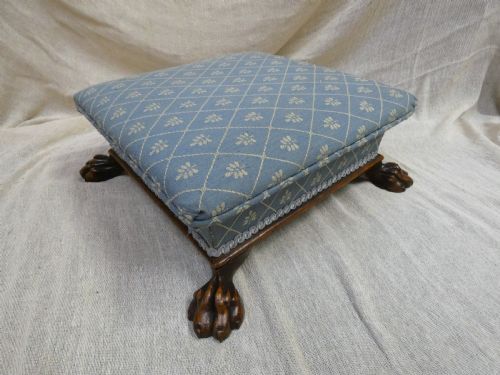

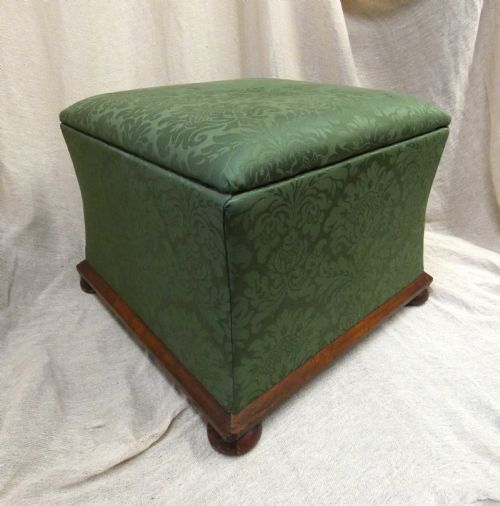


Square Mahogany Footstool
A square mahogany footstool offers classic timber framing and upholstered comfort, bringing understated British craft into any sitting room.
Square Mahogany Footstool
A square mahogany footstool is a compact domestic seating piece designed for resting feet or serving as a low seat, found across the 18th century, 19th century, and Victorian periods.
Buyers encountering this search phrase will most frequently meet Victorian and Georgian examples, often built with straightforward timber frames and various textile coverings.
Makers shaped these items into footstools, ottomans, and occasional low tables, sometimes utilising turned legs or square tapering supports depending on the prevailing style.
Materials and construction methods
Workshops built the primary framework using solid mahogany timber, shaping the wood into straight, turned, or tapering legs that supported the upholstered upper sections.
Craftspeople upholstered the top surfaces using fabric, wool, and tapestry textiles, occasionally incorporating brass details or caned inserts to finish the piece.
Current listings demonstrate timber frames paired with wool, brass, and tapestry fabric across 18th and 19th century periods.
Assessing quality in construction and finish
The standard of a square mahogany footstool depends upon the crispness of the timber turnings and the structural integrity of the joints uniting the legs to the frame.
Superior examples display careful timber selection with rich grain patterns in the mahogany, alongside traditional upholstery methods that maintain firm support across the textile top.
Howard & Sons
The Square Mahogany Footstool Glossary
- Mahogany
- A durable tropical hardwood valued for its deep reddish-brown colour and stable grain. Furniture makers utilised this material extensively throughout Georgian and Victorian periods.
- Tapering legs
- Support posts that gradually narrow toward the floor. This design appears frequently on 18th century and Regency furniture forms.
- Ottoman
- A low upholstered seat or footstool without a back or arms. These pieces often feature sprung tops and textile coverings.
- Caning
- Woven plant material used to create resilient open panels in furniture seats. This technique provides a lighter alternative to solid wood or heavy upholstery.
Square Mahogany Footstool: Frequently Asked Questions
How do I date a square mahogany footstool?
Examine the leg style and timber finish to determine the period of manufacture. Georgian pieces often feature tapering supports, whilst Victorian examples display heavier turned forms.
Compare the construction methods used on the underside of the frame with known period pieces. Subtle shifts in joinery help narrow down the decade of creation.
Where were square mahogany footstools placed?
These items stood beside armchairs and sofas in principal reception rooms to provide comfort during long evenings. Their compact proportions allowed them to move easily about the floor.
Some versions served secondary duties as low seating near fireplaces or as occasional supports for books and trays.
Can I use a footstool as a coffee table?
Certain sturdy variants with flat wooden or caned tops function well as low tables for serving tea or displaying small objects. Firmly upholstered versions accommodate trays when paired with a stable base.
Protecting the textile surface with a suitable tray ensures the fabric underneath remains clean and undamaged during daily use.
How do I clean mahogany wood frames?
Wipe the wooden surfaces gently with a dry, soft cloth to remove dust without disturbing the polish. Avoid harsh chemical sprays that might dull the natural sheen of the timber.
Apply a traditional beeswax polish sparingly when the wood appears dry, buffing the surface gently to restore the natural lustre of the mahogany.