


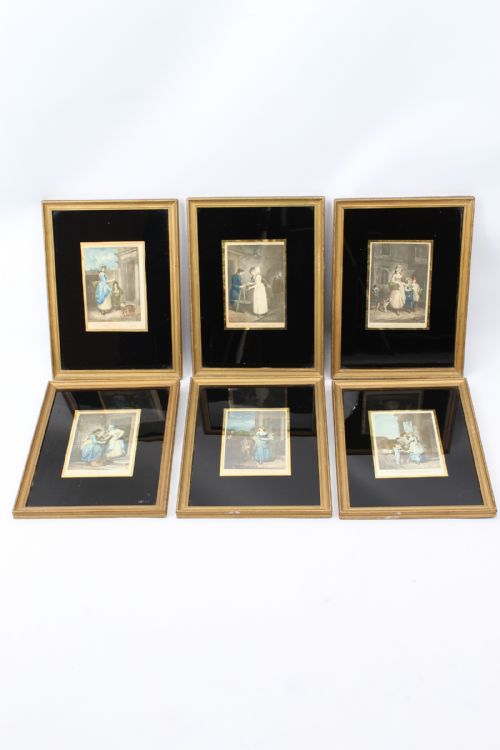


Georgian Stipple Print
A georgian stipple print offers the delicate tonal nuance of 18th-century printmaking, captured through tiny dots of ink on paper or silk.
Georgian Stipple Print
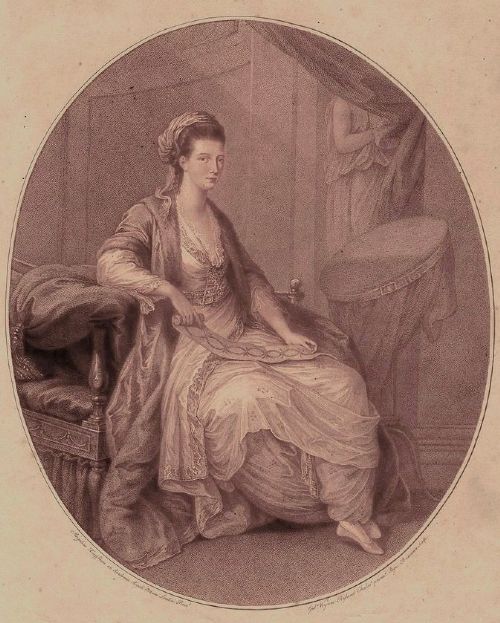
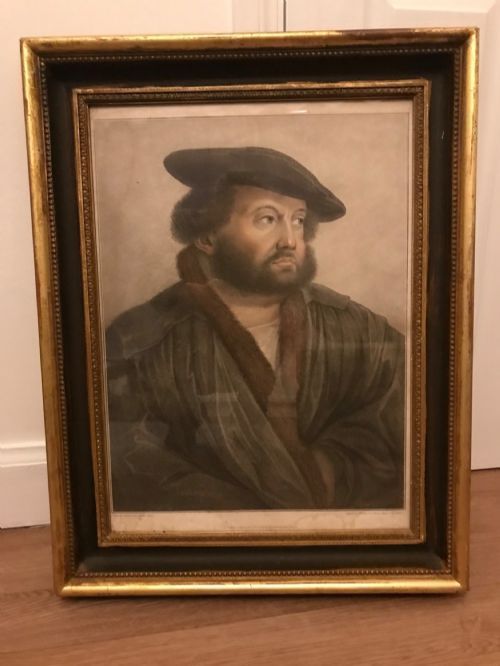
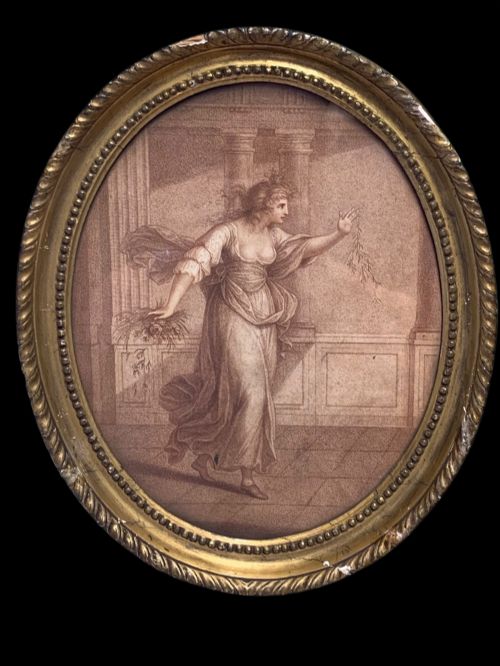
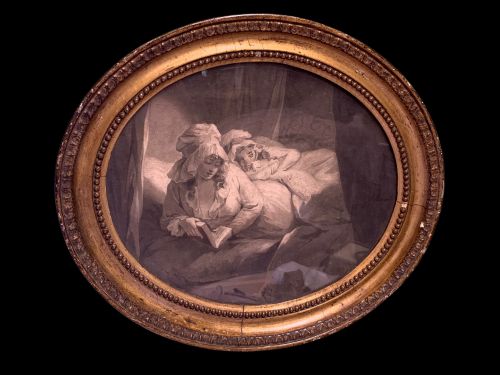
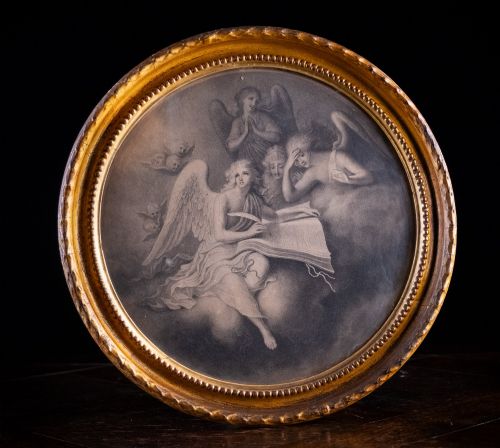
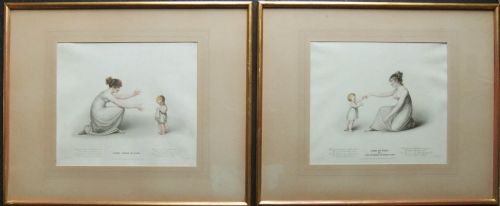
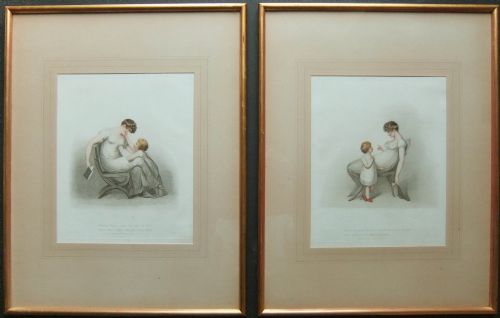
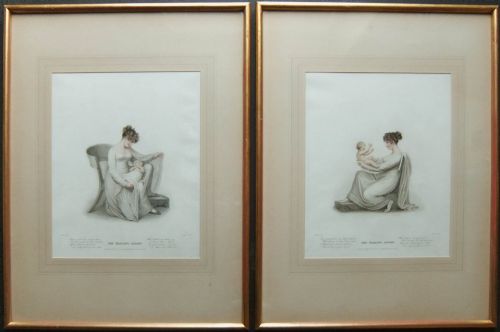
A georgian stipple print presents portraits, domestic scenes, and classical subjects executed with fine stippling technique rather than continuous lines. These works emerge predominantly from the 18th century and the Regency period, framed in period materials such as giltwood and wood.
Buyers encounter single portraits of historical figures like Hans Holbein alongside pairs of sentimental domestic subjects after artists such as Adam Buck and Francis Wheatley. Many examples retain their original Hogarth frames or period glass, preserving the integrity of the piece.
Materials and technique
Makers built these images using ink applied to paper or silk, sometimes enhanced with hand-colouring over the printed stipple ground. Copper plates were punctured with dots using a stippling wheel or needle to create subtle gradations of shadow and light.
Finished plates were housed behind glass within timber frames, frequently decorated with gold leaf or gilt finishes to complement the refined tone of the engraving.
Eros and Aphrodite occasionally share gallery space with naval officers and crying infants, proving Georgian walls enjoyed quite eclectic company.
Quality and execution
The survival of original framing components, such as period giltwood moulding and old glass, adds considerable context and visual harmony to the work.
Francesco Bartolozzi·Adam Buck·George Romney·Henry William Banbury·Hans Holbein
The Georgian Stipple Print Glossary
- Stipple engraving
- A printmaking technique where tonal gradations are created by building up patterns of tiny dots rather than solid lines. This method allowed printmakers to achieve painterly effects resembling chalk drawings.
- Hogarth frame
- A narrow, stepped wooden frame profile popular during the 18th and Regency periods. These frames typically feature a dark moulded edge with inner gilt slips.
- Hand-coloured
- A print finished with watercolour applied by hand after the printing process. This technique adds colour highlights to otherwise monochrome engravings.
- Neoclassical
- An artistic style drawing inspiration from the classical art and culture of ancient Greece and Rome. This aesthetic influenced many portrait and allegorical subjects of the period.
Georgian Stipple Print: Frequently Asked Questions
How do I hang a georgian stipple print?
Keep these prints away from direct sunlight to protect the ink and paper from fading over time. Stable indoor humidity levels prevent warping in the wood and giltwood frames.
Use sturdy picture hooks suited to the weight of the old glass and timber frame. Grouping pairs or sets together, such as series by Adam Buck, maintains historical balance on the wall.
What frames are period correct?
Hogarth frames with their distinct dark stepped mouldings and inner gilt slips appear frequently on Regency and 18th-century examples. Simple giltwood and plain wood frames are also typical of the era.
Original glass often displays bubbles, waviness, and slight thickness variations indicative of historic manufacture. Retaining this glass preserves the authentic appearance of the piece.
How do I identify the date?
Examine the paper quality, ink density, and any printed publication text along the lower margin of the sheet. Dates inscribed directly onto the print often record the original year of publication.
Stylistic cues such as neoclassical drapery or Regency attire help narrow the production window. Framing construction methods provide further physical evidence for dating the assembly.