

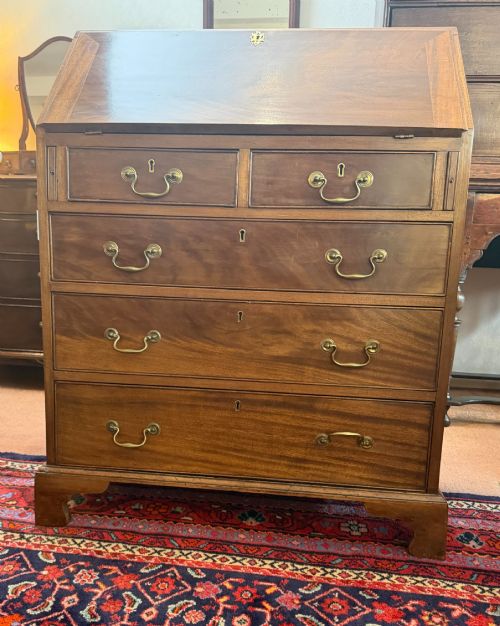
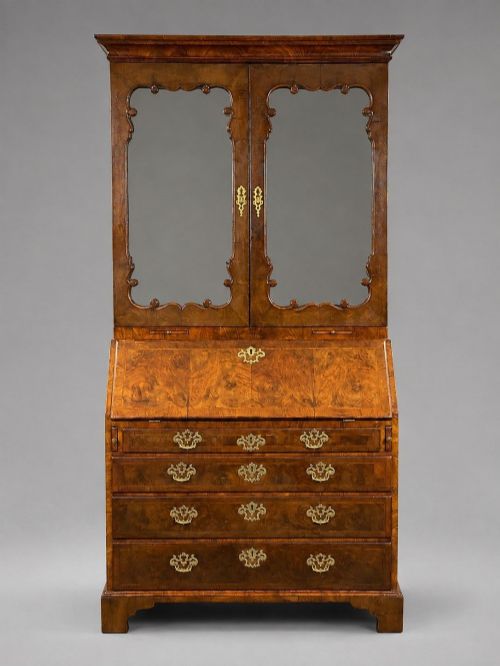
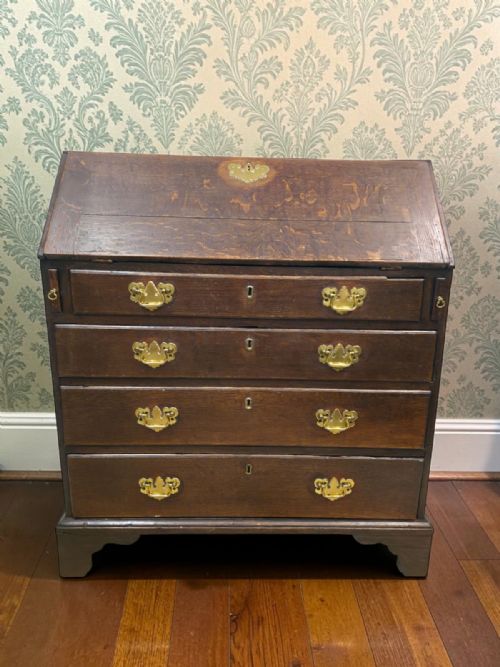
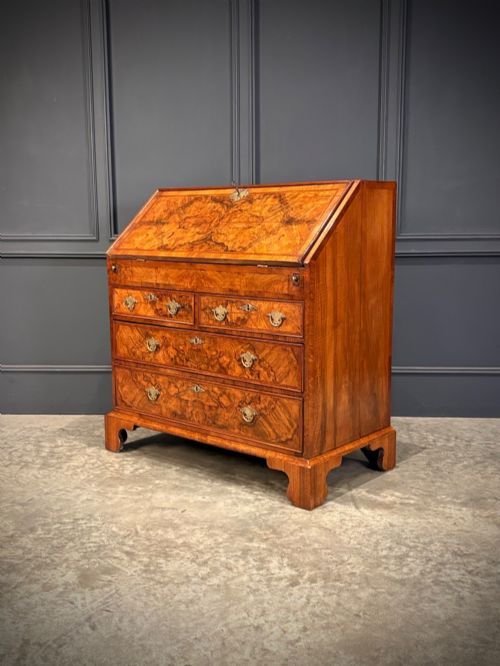



Georgian Slope Front Cabinet
A georgian slope front cabinet or bureau brings working space and hidden drawers together in timber.
Georgian Slope Front Cabinet
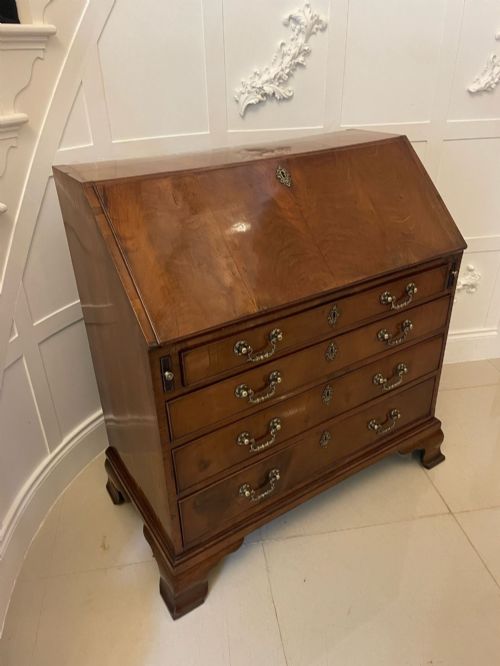
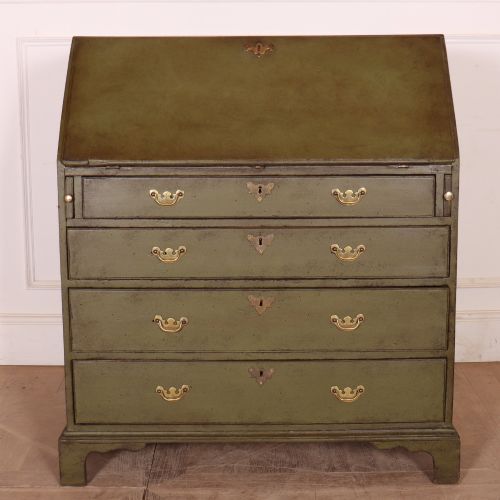
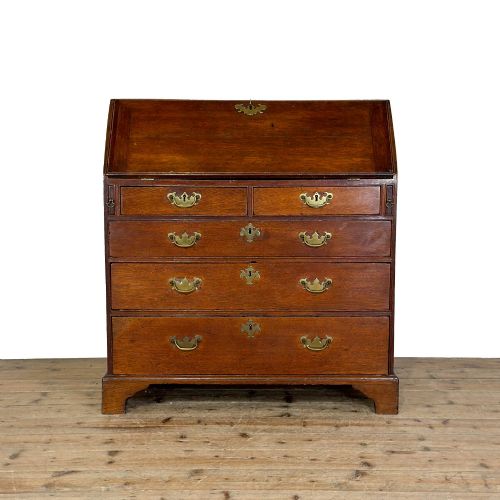
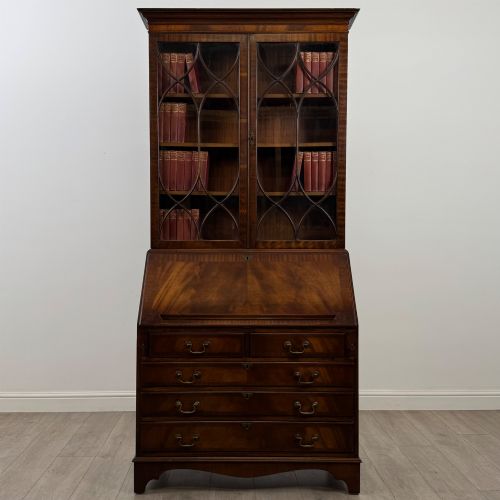
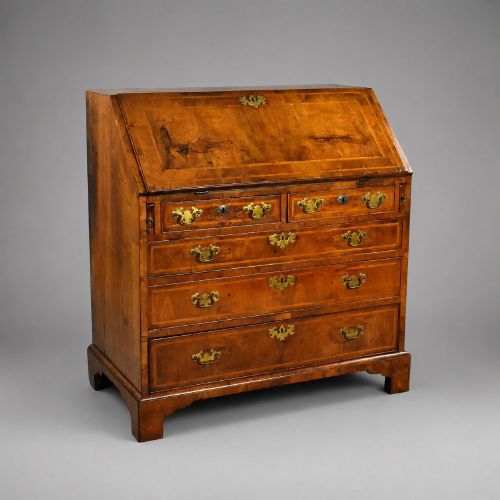
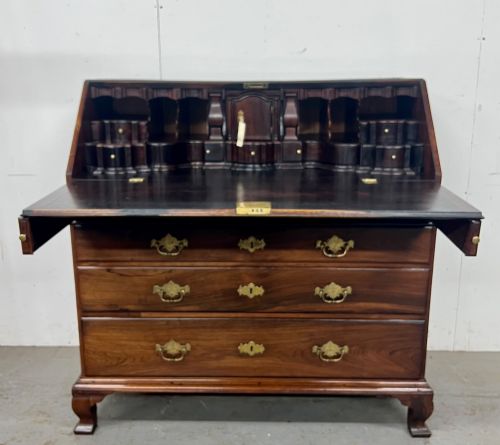
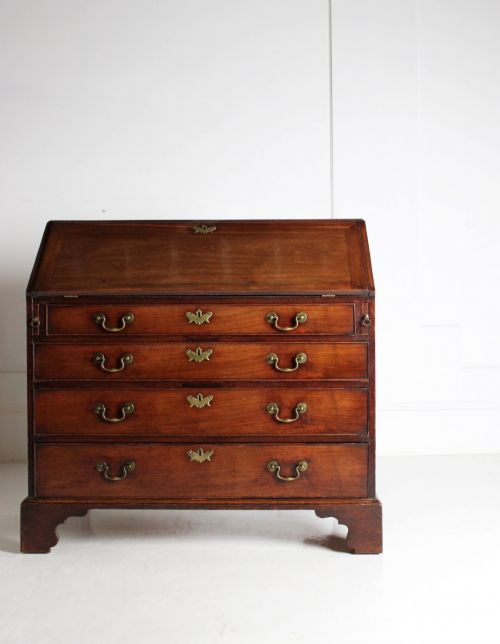
When searching for a georgian slope front cabinet, buyers encounter desks, bureaux, and bureau bookcases designed for sorting papers and storing valuables behind a hinged writing flap. The examples on this page span the seventeenth, eighteenth, and nineteenth centuries, alongside Edwardian and Georgian Revival reinterpretations.
Mahogany, oak, and walnut dominate the selection, appearing in both solid construction and figured veneers. Pieces range from modest table top models and small country versions to large bureau bookcases with glazed upper sections.
Materials and construction
Cabinetmakers built these pieces using native and imported timbers, selecting oak for early vernacular frames and mahogany or walnut for refined urban examples. Burr walnut, burr elm, and satinwood veneers added decorative movement to the writing flaps and drawer fronts.
Joinery relied on dovetails for drawer construction and pegged mortise and tenon joints for structural frames. Brass hardware, including escutcheons and drop handles, completed the construction alongside hand-cut feather banding and inlay.
Listings span periods from the 17th century through the Edwardian era, utilising oak, mahogany, walnut, and rosewood.
Distinctions in quality
Quality rests upon the selection of timber veneers, where highly figured walnut or book-matched mahogany elevates a piece above plain boarded construction. The interior fitments, including secret compartments, carved valances, and well-proportioned pigeonholes, separate standard writing boxes from finer cabinetwork.
Proportion and untouched surface patination dictate the standing of a piece within its period. Crispness in the execution of feather banding, stringing, and brass hardware placement marks the work of skilled workshops.
The Georgian Slope Front Cabinet Glossary
- Bureau
- A desk featuring a sloping writing flap that drops down to reveal small drawers and pigeonholes. This term frequently overlaps with slope front cabinet and escritoire in older records.
- Fall front
- The hinged writing flap of a desk that opens forward to provide a flat surface for correspondence. It conceals the interior compartments when closed.
- Bureau bookcase
- A tall cabinet combining a sloping desk lower section with glazed or panelled shelving above for books. These pieces often feature adjustable interior shelves.
- Feather banding
- A decorative border formed by veneer strips cut diagonally and laid in a herringbone pattern around drawer edges. It requires precise woodworking skill.
- Escutcheon
- A protective brass plate surrounding a keyhole to prevent timber wear. Elaborate pierced brass designs often indicate finer period pieces.
Georgian Slope Front Cabinet: Frequently Asked Questions
What is a georgian slope front cabinet?
A georgian slope front cabinet is a writing desk with a hinged slanted lid that opens for paperwork. It typically includes internal drawers and sits atop larger drawers for storage.
These pieces served as domestic workspaces for organising correspondence and financial records in eighteenth-century homes.
What woods were used for these desks?
Cabinetmakers utilised mahogany, walnut, and oak as the primary woods for construction. Burr walnut, elm, and satinwood appeared frequently as decorative veneers on drawer fronts and writing flaps.
Rosewood and painted finishes also appear in specific regional or later examples.
How do I use one in a modern home?
These cabinets function effectively as compact writing desks or laptop stations in living rooms and studies. The closed slope front hides working materials while maintaining a tidy interior appearance.
Internal pigeonholes and small drawers provide practical storage for stationery and modern correspondence.
How do I distinguish walnut from mahogany pieces?
Walnut furniture generally dates from the late seventeenth and early eighteenth centuries, displaying rich brown tones with swirling grain patterns or burr figures. Mahogany became dominant later in the eighteenth century, showing a straighter, redder grain.
Mahogany pieces often feature crisper carved details due to the density and strength of the timber.