



Mahogany Desk Stationery Slope
A mahogany desk stationery slope brings order to correspondence, combining portable writing surfaces and compartments from Georgian and Victorian eras.
Mahogany Desk Stationery Slope
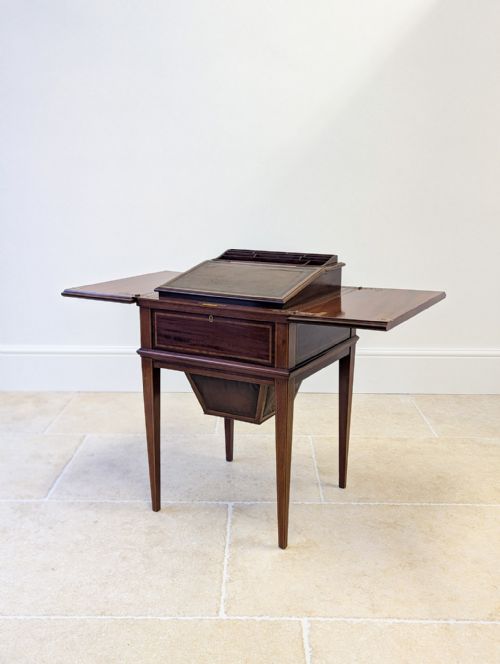
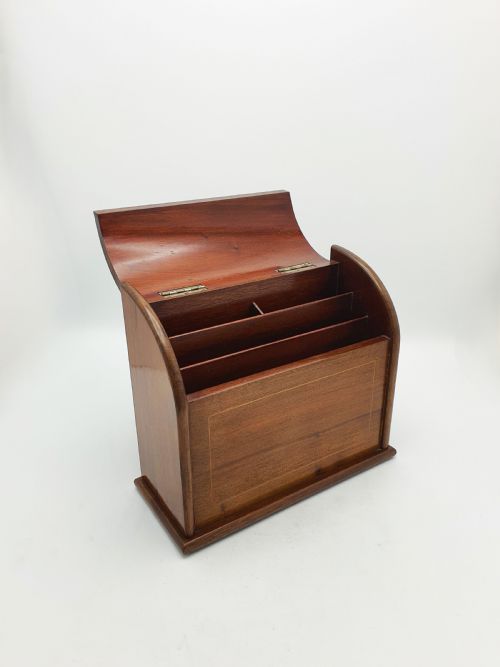
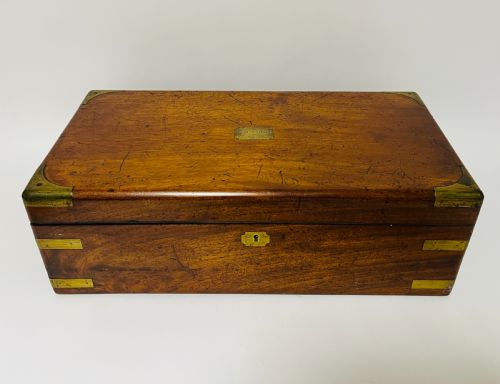
When you examine a mahogany desk stationery slope, you look at items designed for organising letters, papers, and writing implements across the eighteenth and nineteenth centuries. These pieces range from portable campaign boxes bound in brass to fitted stationery cabinets and Davenport desks.
The versions you meet most frequently on this page date from the Victorian and Georgian periods, constructed in solid mahogany or flame mahogany veneers. They include hinged-lid boxes, letter holders, and larger writing tables equipped with internal compartments.
Materials and construction methods
Cabinetmakers built these pieces primarily using mahogany, often selecting figured timber or flame mahogany for exterior surfaces. Secondary woods and internal partitions frequently incorporate satinwood, boxwood, and rosewood for contrast.
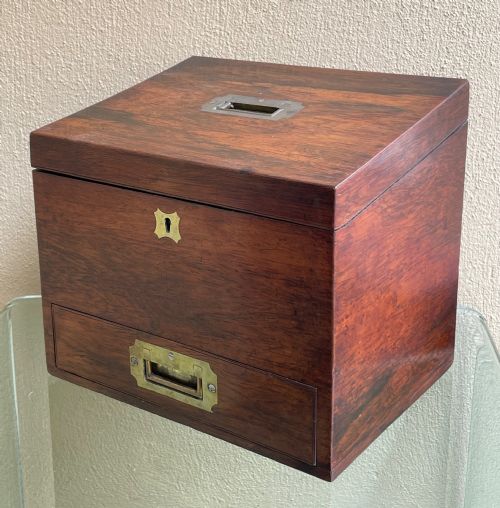
Metal fittings played a crucial role in construction, particularly brass corners, straps, and flush handles seen on campaign pieces designed for travel. Inlaid details utilising boxwood and other contrasting timbers appeared on Edwardian and Georgian examples.
Listings feature mahogany, rosewood, and teak items spanning the Georgian, Victorian, and Edwardian periods.
Distinctions in quality and execution
The standard of a piece rests upon the selection of timber and the precision of its joinery. Superior examples display carefully matched grain patterns across visible surfaces and tight, durable joints that withstand daily use.
Hardware and internal fittings further distinguish the range. Finely cast brass mounts, well-fitted secret drawers, and intact leather writing surfaces indicate high-grade workshop production rather than standard commercial output.
Mappin and Webb·Fisher
The Mahogany Desk Stationery Slope Glossary
- Campaign slope
- A portable writing box fitted with brass corners and recessed handles designed for military travel. These pieces prioritized robust construction and secure locking mechanisms.
- Davenport desk
- A compact pedestal desk featuring a sloping top and side drawers. The form gained popularity during the Georgian and Victorian periods for domestic correspondence.
- Stationery cabinet
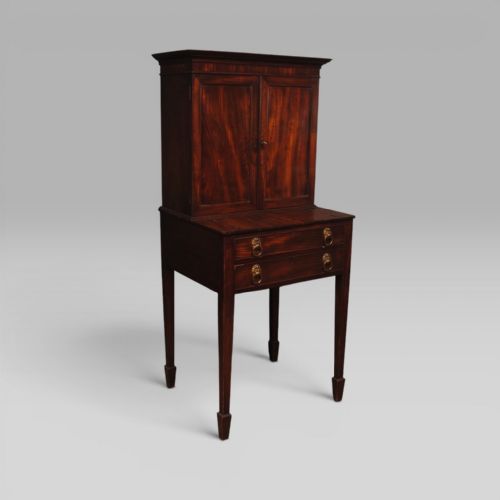
- An upright desktop cabinet with doors or a falling front designed to hold paper and envelopes. Interiors typically contain tiered letter slots and small compartments.
- Flame mahogany
- Timber cut to reveal a distinctive, flamelike grain pattern. Cabinetmakers used these veneers on primary display surfaces to create visual depth.
Mahogany Desk Stationery Slope: Frequently Asked Questions
What is a campaign writing slope?
A campaign writing slope is a portable box built for travel, featuring protective brass corners and flush handles. These sturdy items allowed officers and travellers to write letters away from home.
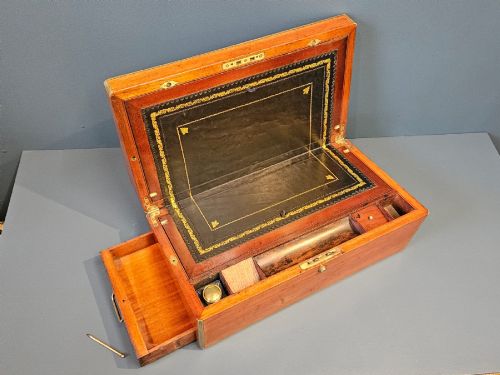
They open to reveal an angled writing surface and fitted compartments for inkwells and pens.
How do I date a mahogany slope?
Dating relies on observing construction methods, brass hardware styles, and secondary timbers used inside. Georgian pieces often display simpler internal layouts, while Victorian versions feature elaborate brass binding and fitted stationery racks.
Cabinetry details and lock types also provide clues to the decade of manufacture.
What is a Davenport desk?
A Davenport desk is a small desk with a sloping writing lid placed over a pedestal of drawers. It offers a compact footprint suitable for writing letters in smaller rooms.
Many Victorian examples incorporate side drawers and internal compartments for organised storage.
Were these boxes used for travel?
Portable writing boxes were essential for correspondence during journeys, particularly military campaigns or naval voyages. Their robust construction protected writing materials from the elements.
Fitted interiors ensured ink and paper remained secure while on the move.