


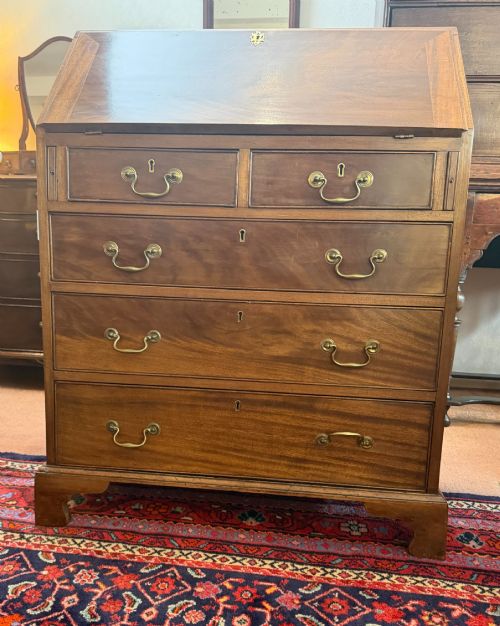
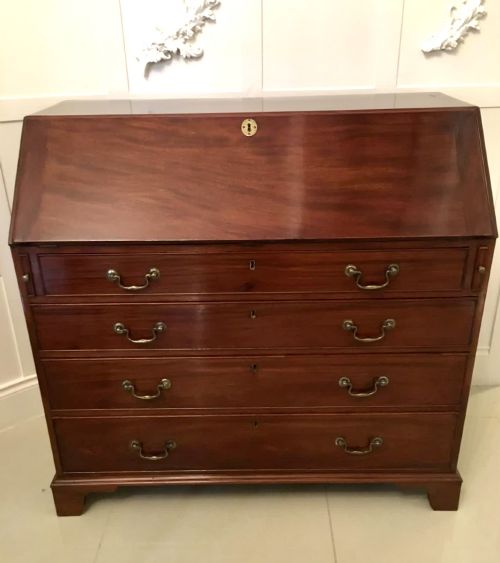
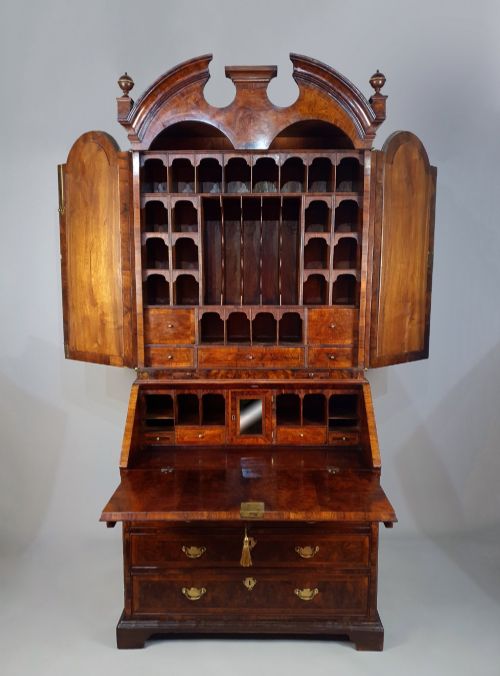
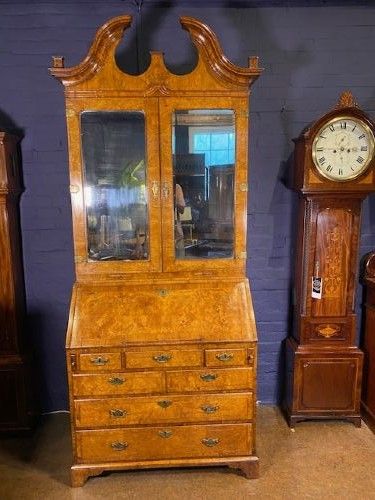
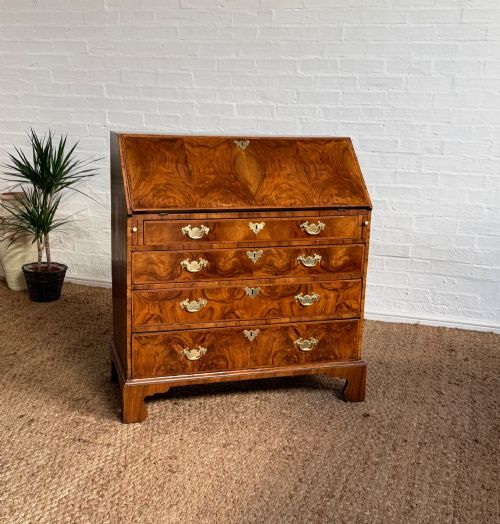
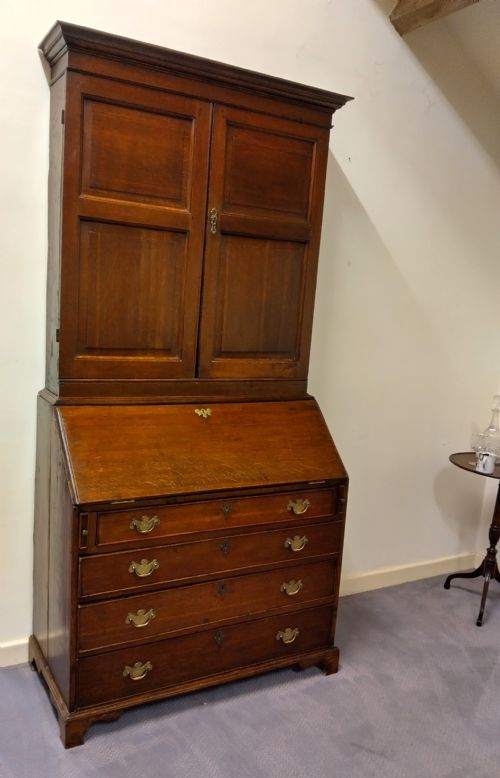
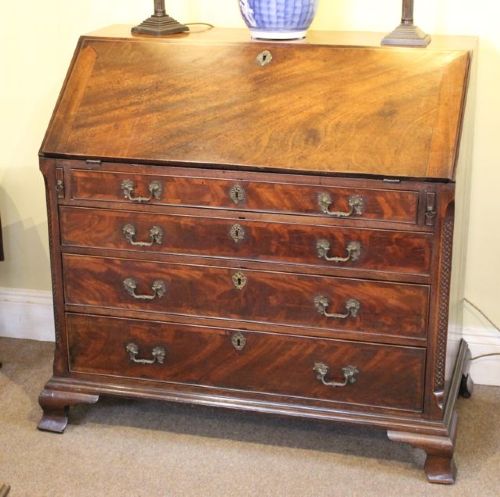
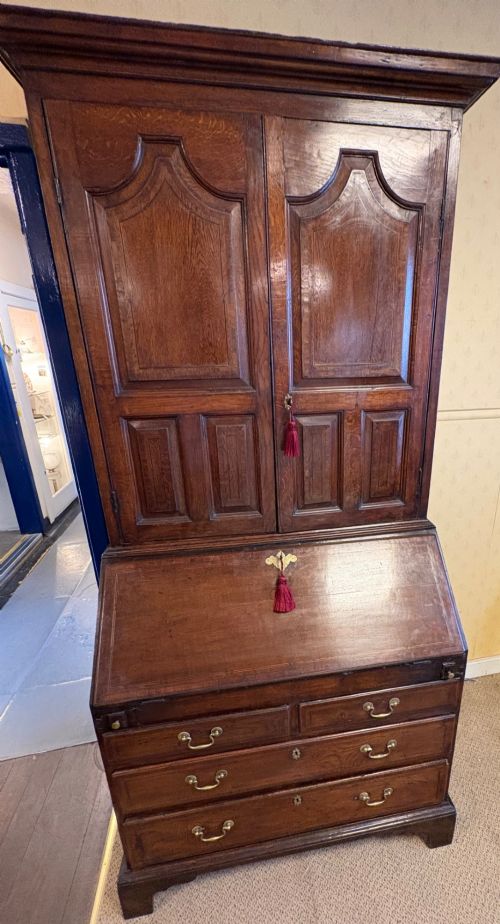
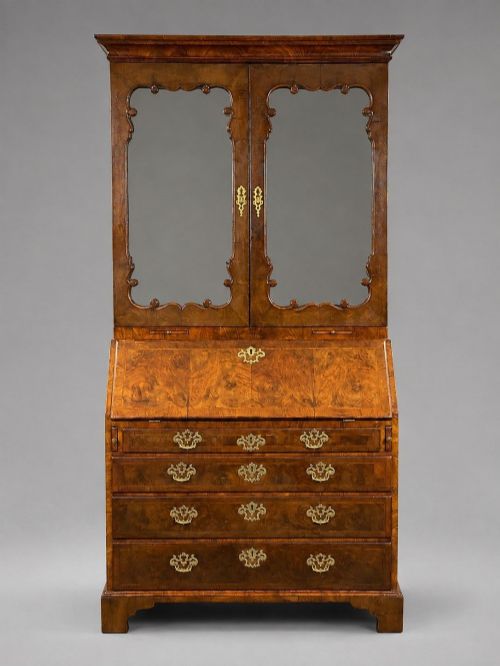
Georgian Slant Front Secretary
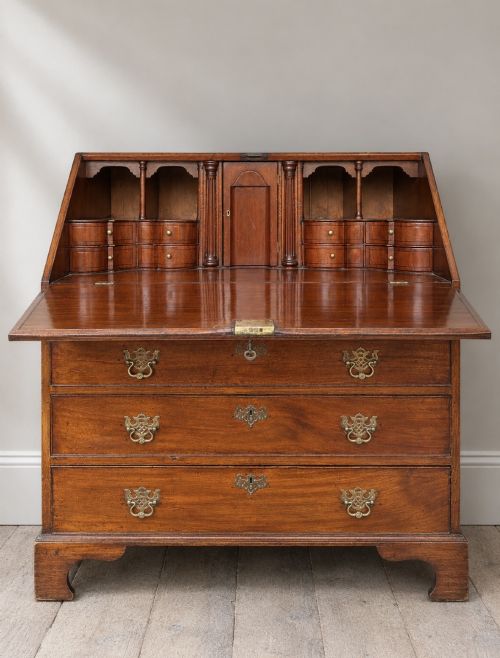
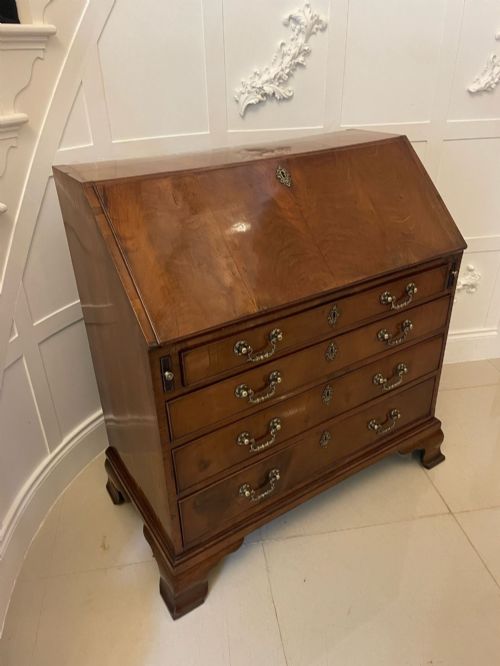
A georgian slant front secretary is a dedicated writing cabinet with a sloping fall front, built to keep correspondence and ledgers private.
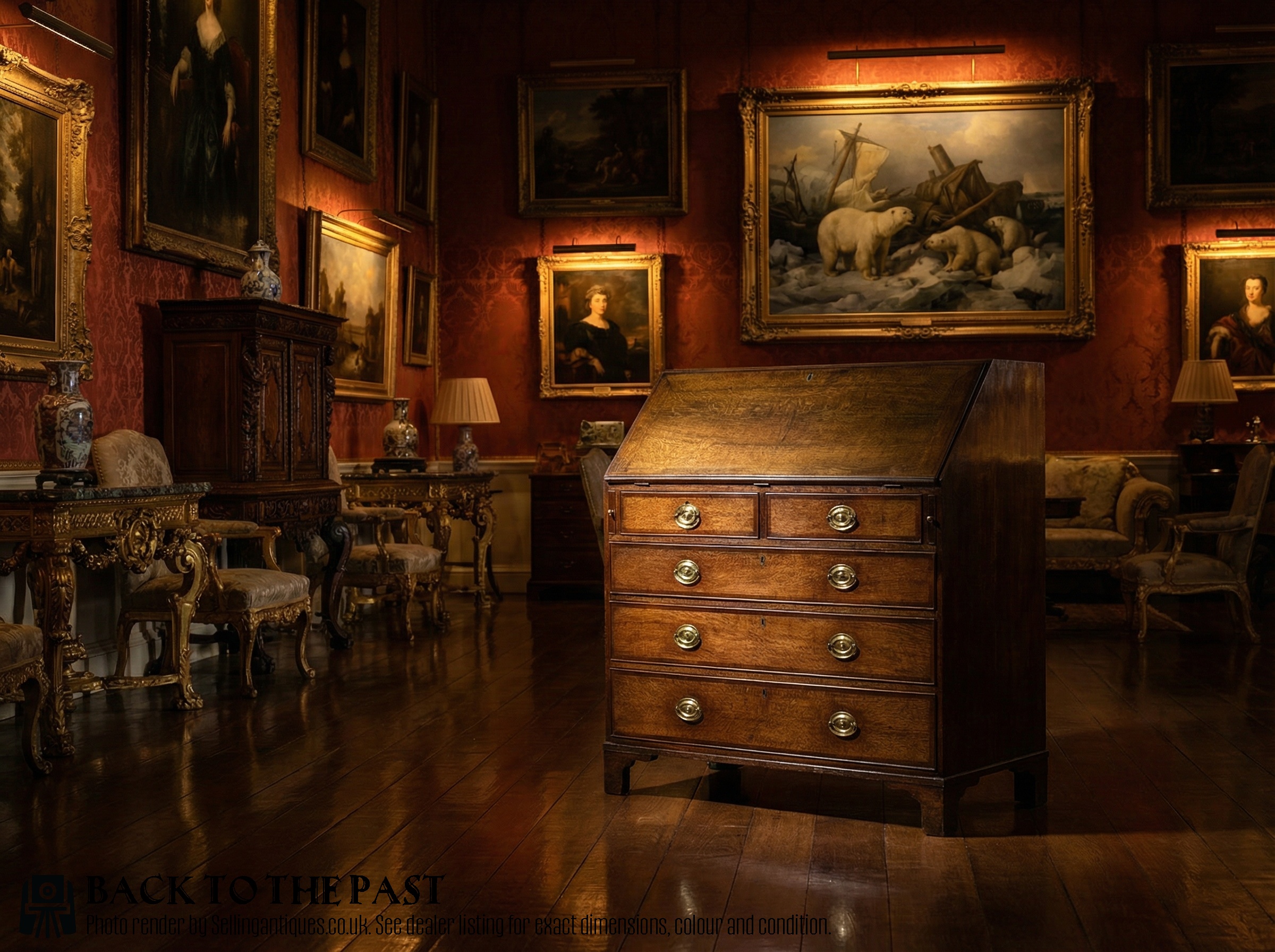
Georgian Slant Front Secretary
When you search for a georgian slant front secretary, you encounter fitted writing furniture spanning the eighteenth and nineteenth centuries, alongside later revivals.
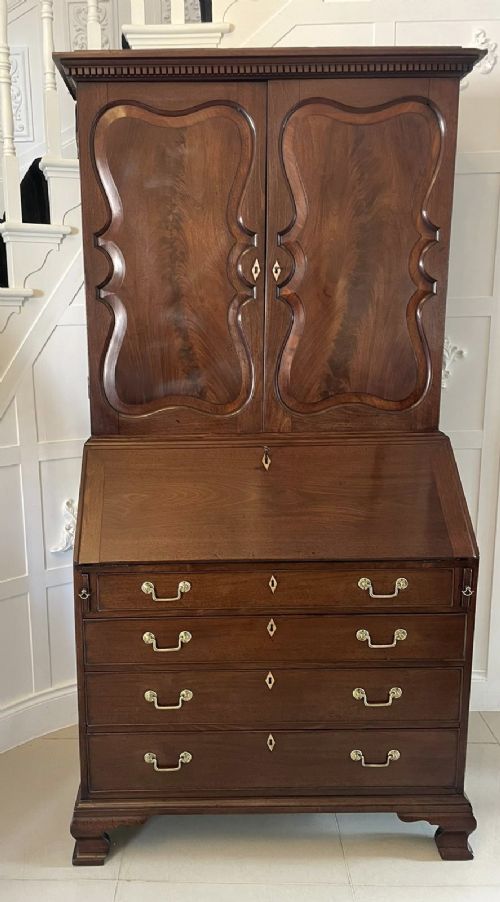
The most common examples on this page are mahogany or walnut bureaux, often constructed as standalone items or paired with upper bookcase sections.
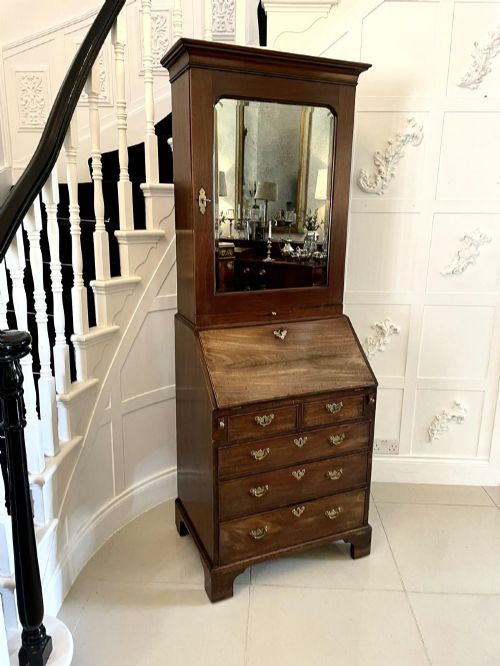
Pieces range from compact oak and fruitwood writing desks to tall bureau bookcases featuring glazed upper doors and internal pigeonholes.
Materials and Construction
Cabinetmakers utilised dense timbers such as mahogany, oak, walnut and burr walnut, frequently applying figured veneers to the exterior surfaces.
Some early bureau bookcases include sliding candle slides positioned just beneath the upper doors to illuminate the writing surface.
Quality and Execution
Superior examples display careful timber selection, particularly in the matching of burr walnut or figured mahogany veneers across the fall front.
Refinement shows in the complexity of the stepped or fitted interior, the thickness of the drawer linings and the subtlety of the brass hardware.
Chippendale
The Georgian Slant Front Secretary Glossary
- Fall front
- The hinged sloping panel that drops down to form the writing surface of the bureau.
- Bureau bookcase
- A dual-purpose piece combining a lower slant front desk with an upper shelving or display cabinet.
- Stepped interior
- An arrangement of internal drawers and pigeonholes rising in tiered levels beneath the fall front.
- Bracket foot
- A simple corner foot shape commonly found supporting eighteenth-century case furniture.
- Escutcheon
- A protective brass plate fitted around a keyhole.
Georgian Slant Front Secretary: Frequently Asked Questions
How do I use a slant front desk?
The sloping lid lowers to create a flat writing ledge while concealing the internal compartments.
Documents and writing implements remain stored inside when the front is closed and locked.
How do I date a walnut bureau?
Early pieces from the early eighteenth century often display rich burr walnut veneers and candle slides.
Later nineteenth-century and Edwardian examples reproduce these earlier styles with distinct construction methods.
Where should I place a bureau in a room?
These compact writing cabinets suit studies, living spaces or bedrooms where floor space is limited.
Ensure adequate clearance in front of the piece for the fall front to open fully.