



Late 18th Century Bureau
A late 18th century bureau is a serious writing cabinet designed for correspondence and ledger work, combining deep drawers with a fitted internal desk space.
Late 18th Century Bureau
A late 18th century bureau is the form to seek when a buyer needs a working writing desk paired with substantial storage for papers and household accounts. These pieces emerge primarily from the Georgian period, often reflecting George III designs alongside continental Dutch Rococo examples.
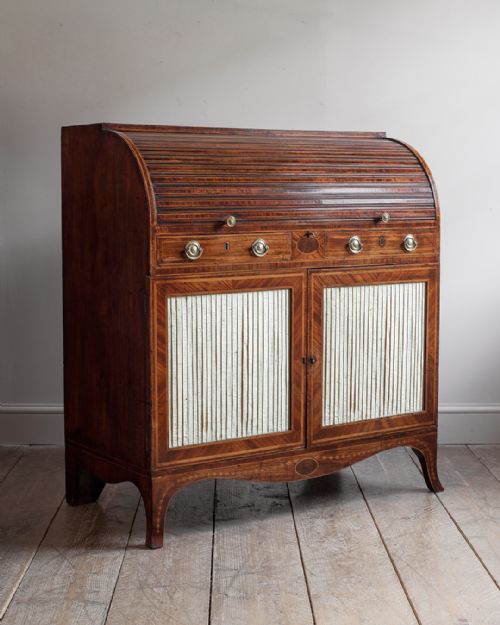
The layout typically centres on a fall-front flap that opens to reveal pigeonholes and small drawers, positioned above graduating exterior drawers. Variations on this page include cylinder tambour bureaux, bureau bookcases with upper shelving, and secretaire chests designed for writing standing or seated.
How they were made
Cabinetmakers constructed these writing pieces predominantly in solid and veneered mahogany, alongside walnut, elm, and structural pine for secondary carcases. Timber selection prioritised well-figured grain to present a smooth, patterned surface across the fall-fronts and drawer faces.
Surface decoration incorporated inlaid satinwood and elaborate floral marquetry, particularly on Dutch examples. Brass hardware such as drop handles and escutcheons secured the drawers, while internal writing surfaces were frequently lined with leather or textile.
Late 18th Century Bureau Retail Price Guide 2026
Typical asking prices for late 18th century bureau among the pieces listed under this phrase on Sellingantiques today, from the lower quarter to the upper quarter. They describe what is for sale here now, not the wider market.
The furniture forms recorded here include standard chests of drawers, cylinder tambour bureaux, kneehole desks, secretaire chest on chest designs, and bureau bookcases.
What varies in quality
The calibre of a late 18th century bureau rests on the selection of the timber figure and the precision of the cabinetwork. Pieces featuring highly figured mahogany or intricate marquetry inlay reflect greater workshop skill than plain carcases.
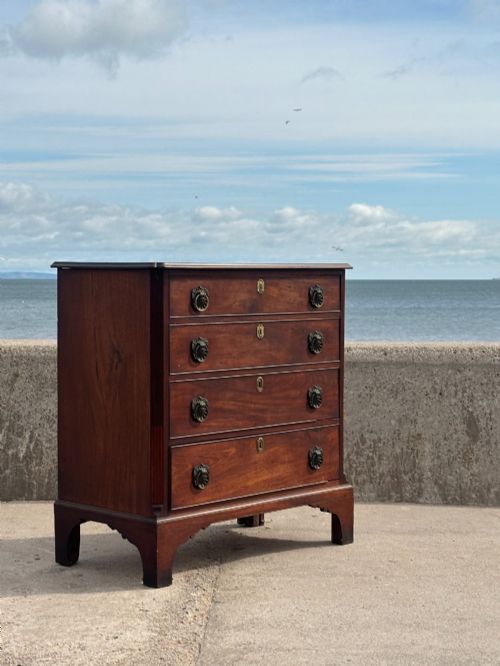
Internal arrangement also dictates distinction, where fitted compartments with secret drawers and well-executed pigeonholes demonstrate superior construction. The integrity of the bracket feet and the smooth action of the fall-front mechanism further separate standard examples from finer works.
The Late 18th Century Bureau Glossary
- Bureau
- A writing cabinet featuring a sloping fall-front that drops to form a desk surface over multiple drawers. This form provides both private storage and a practical writing station.
- Fall-front
- The hinged sloping lid of a bureau that lowers to reveal the internal compartments and acts as the writing surface. It locks shut to secure the correspondence within.
- Tambour
- A flexible shutter made of narrow vertical strips of wood glued to a canvas backing, allowing it to slide round a curve. It encloses the upper desk section on cylinder bureaux.
- Marquetry
- Decorative veneer work formed by fitting together thin pieces of wood, shell, or bone to create pictorial or floral patterns. This technique appears prominently on Dutch walnut examples.
- Bracket feet
- Small supporting feet shaped like architectural brackets that elevate the base of the chest or bureau off the floor. They provide a stable foundation for heavy carcases.
Late 18th Century Bureau: Frequently Asked Questions
How do I use a bureau for writing?
Drop the hinged fall-front forward until it rests horizontally to create a firm writing surface supported by wooden lopers pulled from the carcase. This exposes the internal pigeonholes and small drawers for stationery.
After writing, lift the flap back into position and engage the lock to secure your papers and keep the room tidy.
What is the difference between a bureau and a bureau bookcase?
A standard bureau consists of the writing desk base with drawers beneath a sloping fall-front. It stands alone as a compact chest with a writing slope.
A bureau bookcase adds an upper glazed or panelled cabinet for storing and displaying books above the desk section, creating a taller piece of furniture.
How do I tell a Georgian bureau from a later copy?
Examine the secondary woods inside the drawers, such as pine or oak, and check the dovetails for hand-cut irregularity rather than machine uniformity. Georgian pieces utilise period brass fittings and hand-planed timbers.
Look closely at the construction methods of the backboards and drawer linings to confirm eighteenth-century workshop practices.
Where should I place a bureau in my home?
Position a bureau against a sturdy wall in a study, library, or living room where natural light from a side window falls across the open writing flap. Ensure there is adequate clearance to pull out the supporting lopers and sit comfortably.
Keep the piece away from direct heat sources and strong sunlight to protect the fragile mahogany or walnut veneers from drying out.