

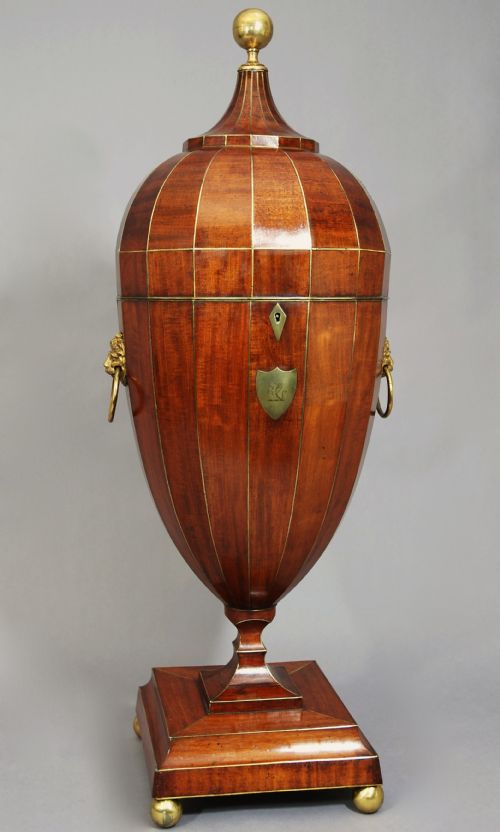
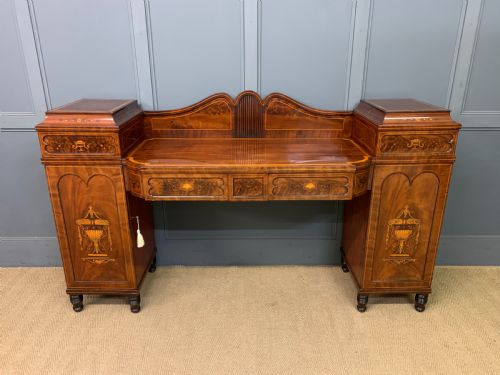


Georgian Sideboard Urn
These georgian sideboard urn pieces are classic dining room furnishings designed to hold cutlery or water, prized for their striking neoclassical forms.
Georgian Sideboard Urn
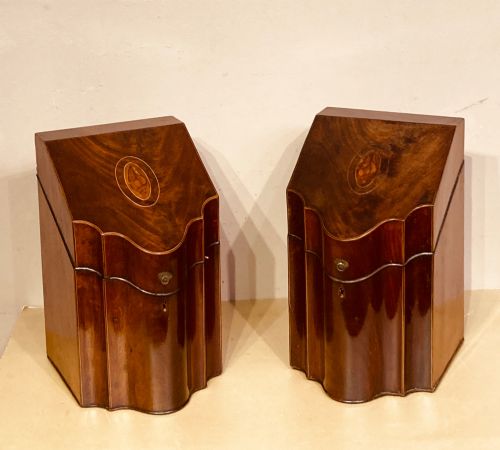
The version you are most likely to meet on this page is a mahogany knife box or lidded cutlery urn reflecting Georgian and Sheraton styles. Pieces range from matched pairs of eighteenth-century knife boxes to later Victorian and Edwardian revivals featuring marquetry inlay.
How They Were Made
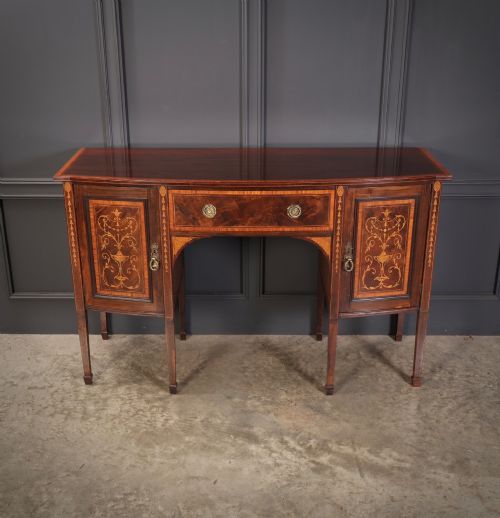
Cabinetmakers constructed these pieces primarily from solid and veneered mahogany, often embellished with satinwood, boxwood, and rosewood marquetry. Metal components such as brass taps, handles, and solid silver mounts provided functional and decorative accents.
Joinery techniques produced geometric and serpentine silhouettes, including bow-front and demi-lune shapes. Inlays and stringing created intricate surface patterns characteristic of neoclassical design.
Georgian Sideboard Urn Retail Price Guide 2026
Typical asking prices for georgian sideboard urn among the pieces listed under this phrase on Sellingantiques today, from the lower quarter to the upper quarter. They describe what is for sale here now, not the wider market.
Some knife boxes are so narrow they seem designed exclusively for exceptionally thin cutlery.
What Varies in Quality
The standard of timber selection and inlay precision distinguishes finer examples from simpler workshops. Richness of patina and the crispness of carved or inlaid details elevate an individual piece.
Proportions and the survival of original mounts, such as brass feet or silver hardware, influence the overall integrity of the item.
The Georgian Sideboard Urn Glossary
- Urn
- A vase-shaped vessel, often lidded, used on dining furniture for serving water or storing cutlery. They are classically inspired and heavily associated with neoclassical dining rooms.
- Knife Box
- A sloping wooden container designed to hold flatware upright on a sideboard. Eighteenth-century versions often feature serpentine or bow-front profiles.
- Marquetry
- Decorative veneer work forming pictorial or geometric patterns using various coloured woods. Boxwood and satinwood are frequently utilised against mahogany backgrounds.
- Pedestal Sideboard
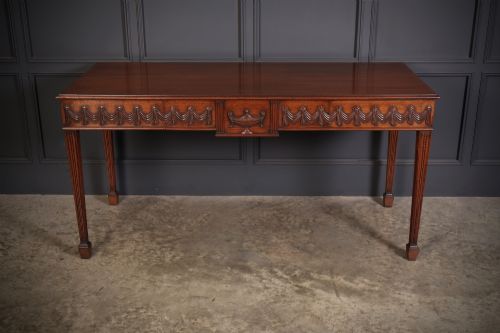
- A dining room furnishing comprising central tables flanked by pedestals, which frequently support cutlery urns. This arrangement defines formal Georgian dining architecture.
Georgian Sideboard Urn: Frequently Asked Questions
What is a georgian sideboard urn?
A georgian sideboard urn is a decorative vessel used during formal dining to house cutlery or hold water. These pieces sit atop pedestals or sideboards in dining rooms.
They reflect classical architectural forms popular in the eighteenth century and later revival periods.
How were cutlery urns used?
Cutlery urns stored table knives and forks when not in use on the dining table. Servants accessed the interior compartments to retrieve utensils during formal meals.
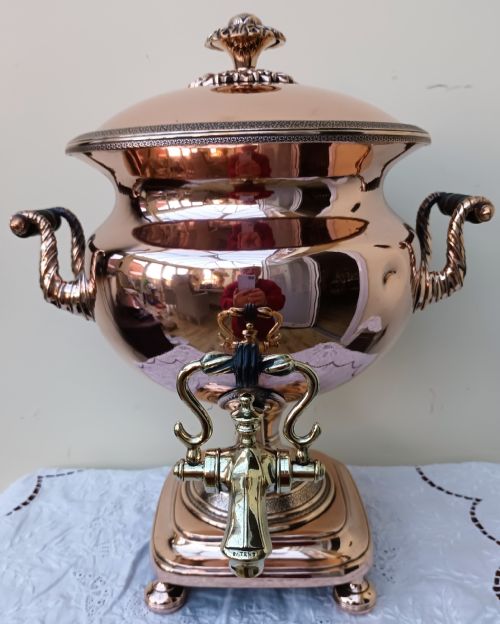
Some variants functioned as heated water urns or samovars for tea and washing.
How do I date a mahogany urn?
Dating relies on examining timber species, construction methods, and hardware styles. Eighteenth-century pieces display different internal fittings and joinery compared to later revivals.
Matching the stylistic markers to Georgian or Sheraton design periods helps establish the age.
Are these pieces always found in pairs?
Many cutlery urns and knife boxes survive as pairs to balance the symmetry of a sideboard arrangement. Single items also occur frequently in historical dining room layouts.
Revival pieces from the Victorian and Edwardian eras often replicate this balanced aesthetic.