
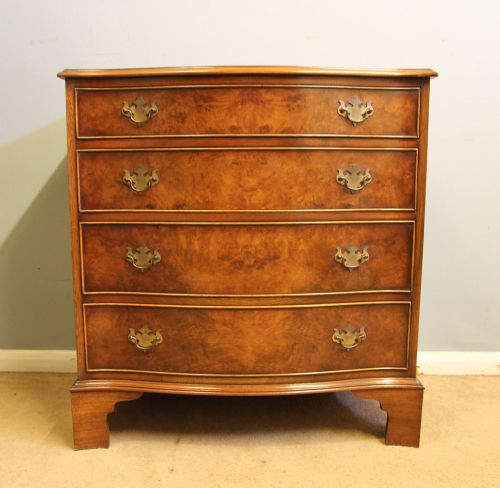
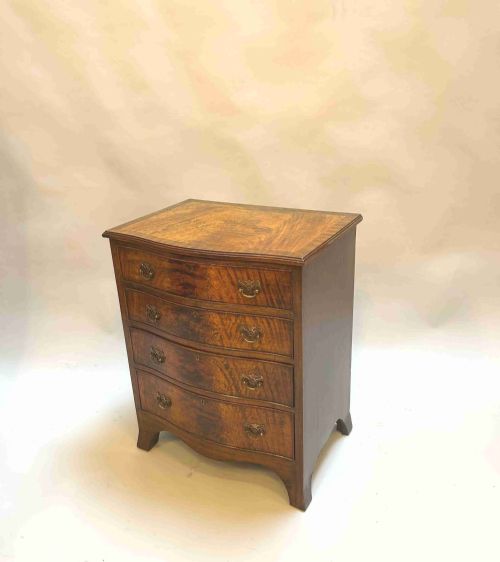
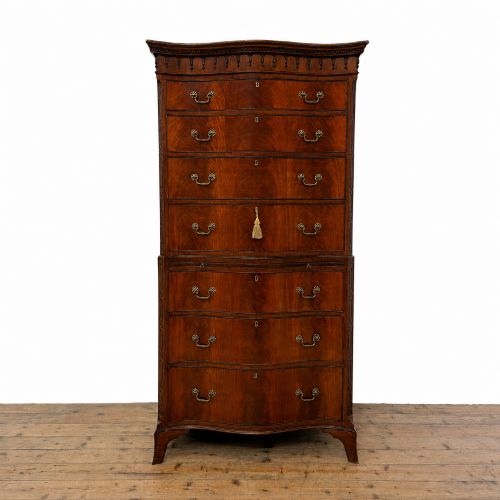
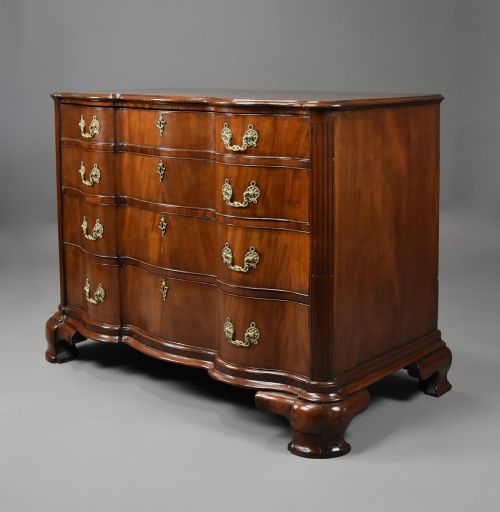
Georgian Serpentine Drawers
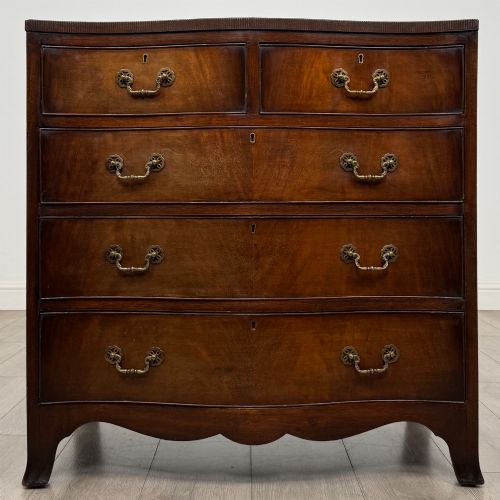
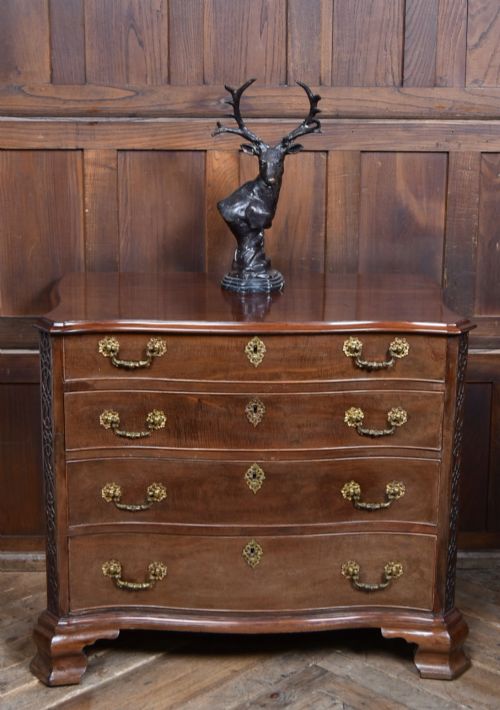
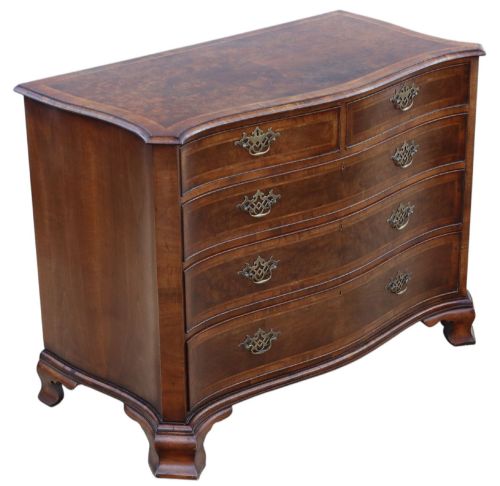
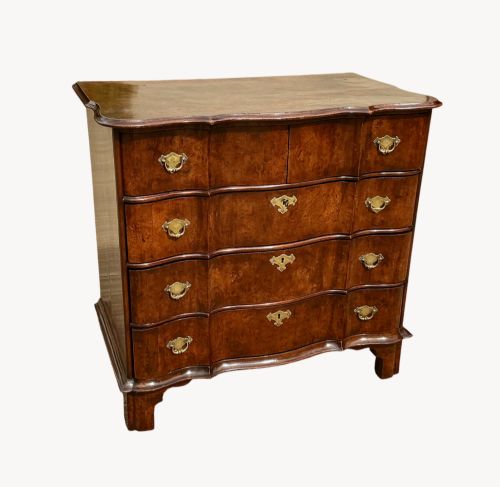
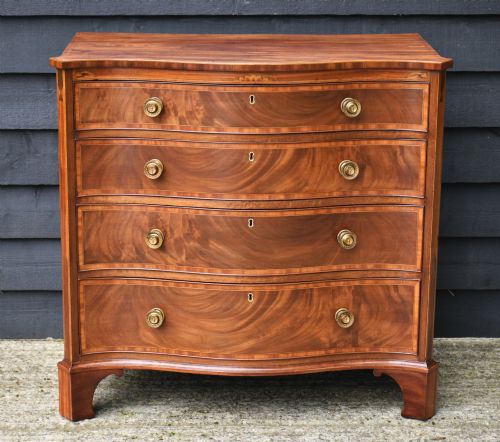
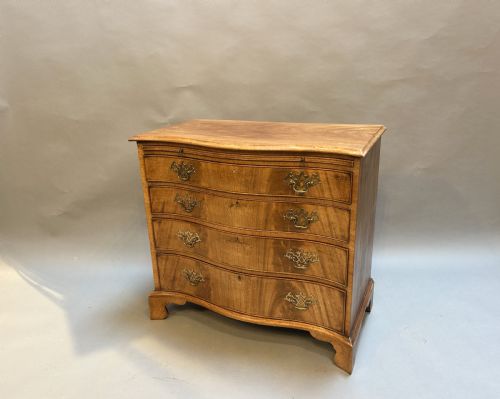
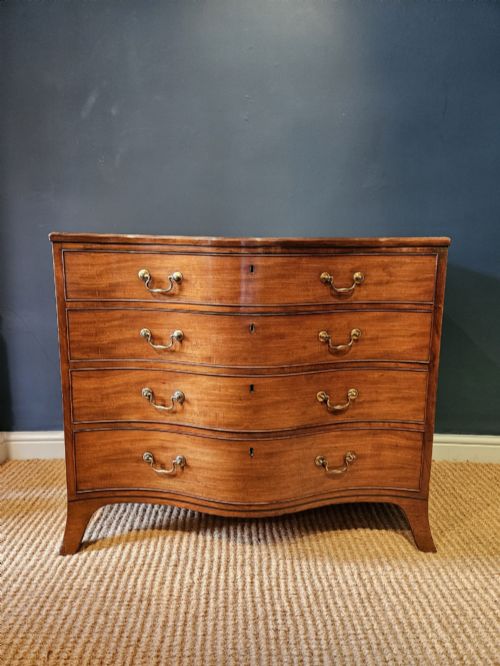
Georgian serpentine drawers combine the sculptural sweep of an undulating front with the rich figuring of 18th-century timber.
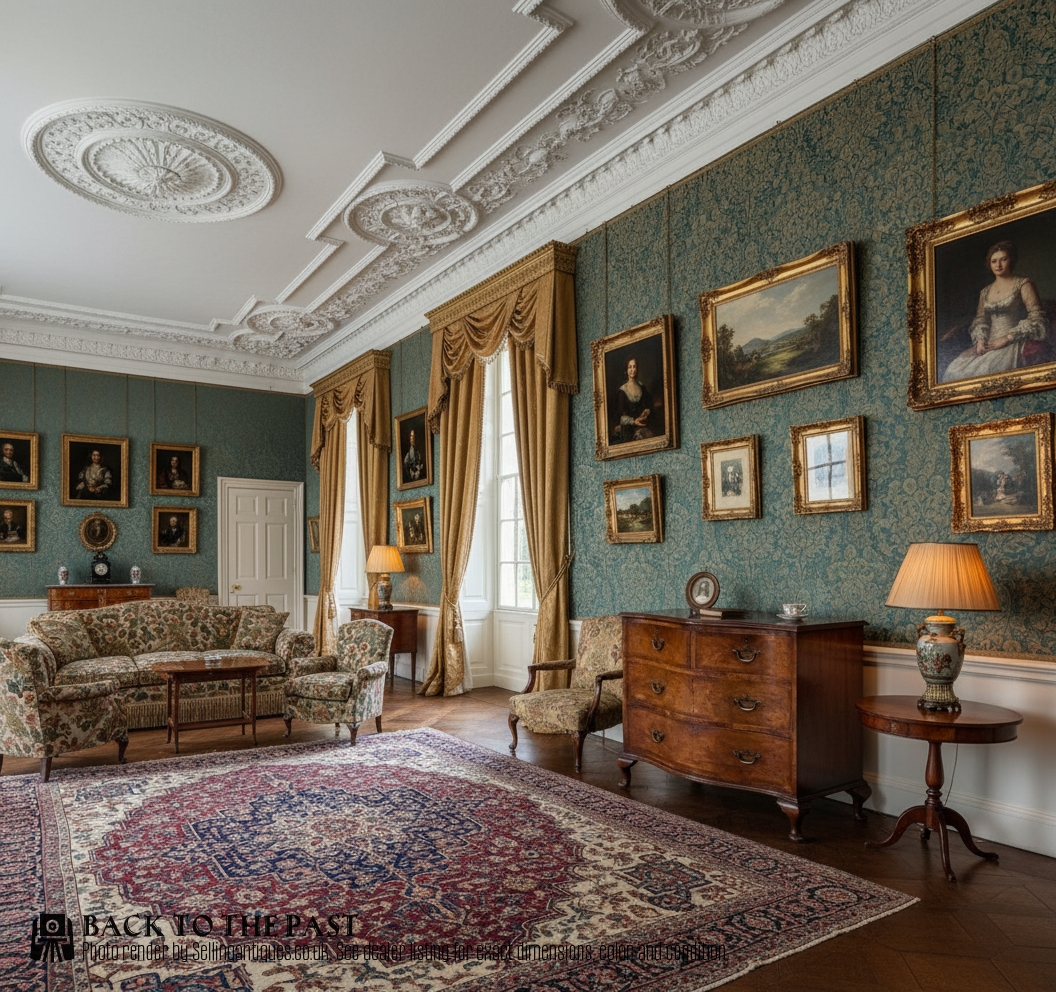
Georgian Serpentine Drawers
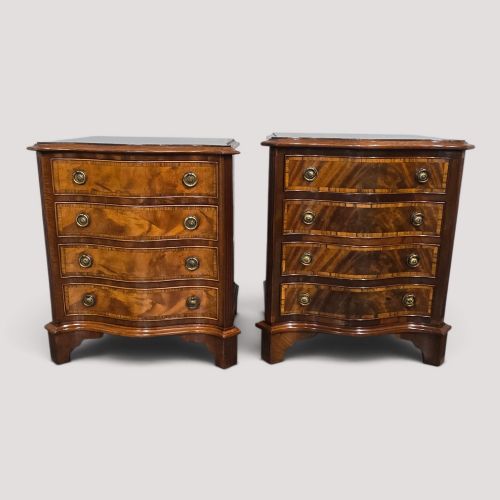
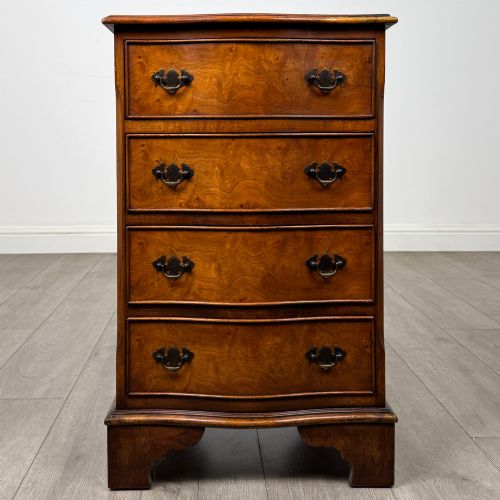
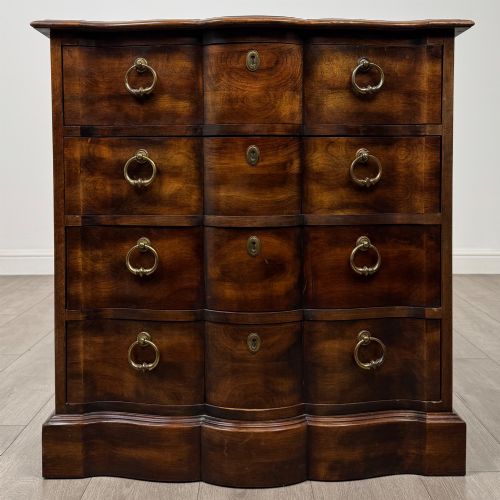
When searching for georgian serpentine drawers, buyers encounter case furniture defined by a convex centre flanked by concave sides, or vice versa, creating a distinctive wave-like profile. These pieces appear primarily as chests of drawers, commodes, and tallboys originating from the 18th century, alongside later revival interpretations from the Edwardian period and the early 20th century.
The form demands exceptional cabinetmaking skill because every drawer front and framing member must follow the complex curved contour without warping or binding. While authentic 18th-century examples command serious attention, the later revival pieces offer the same aesthetic silhouette built with comparable attention to timber selection.
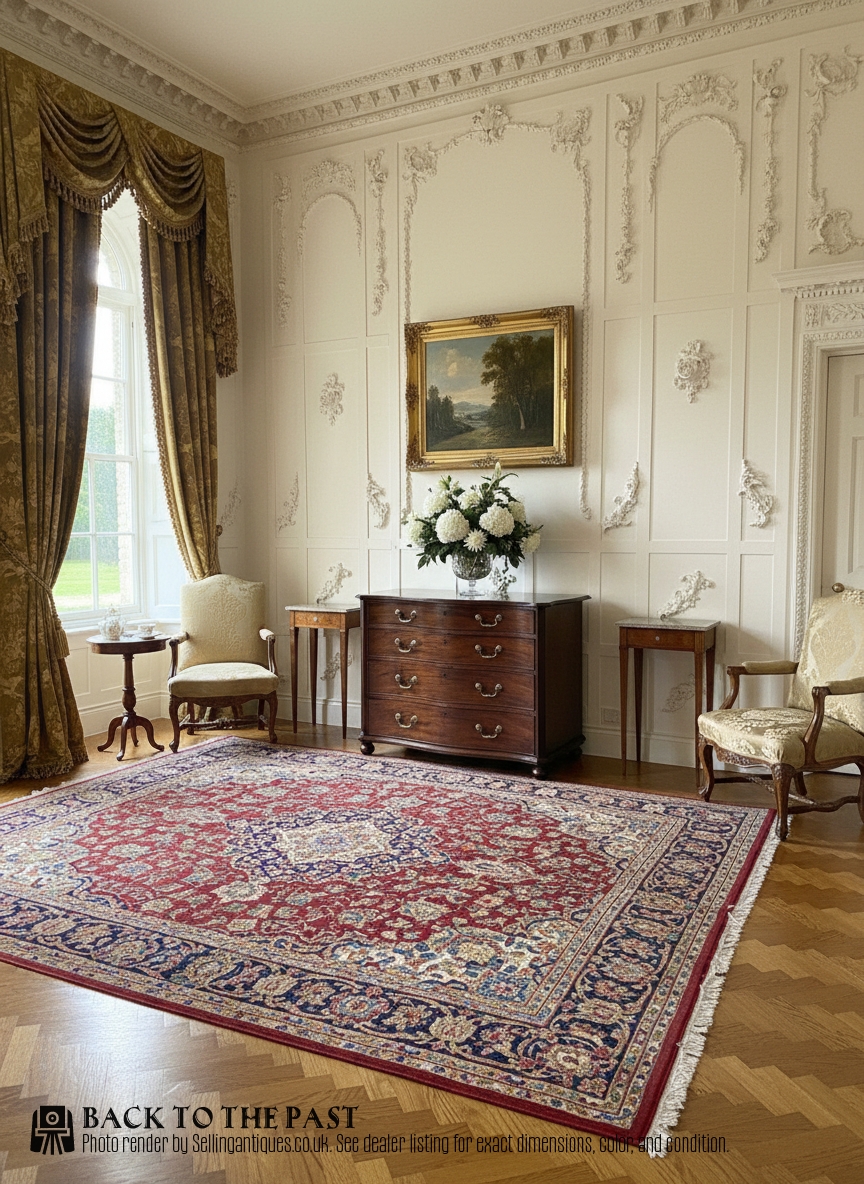
How They Were Made
Cabinetmakers constructed these pieces using solid and veneered timbers, predominantly relying on dense mahogany and highly figured burr walnut over sturdy oak or deal carcasses. Craftsmen applied decorative details such as boxwood inlay, crossbanding, and brass hardware to accentuate the sweeping lines of the drawer fronts.
The undulating curves of the serpentine shape required timber to be painstakingly carved from solid stock or carefully bent and laminated to hold the tension of the profile over decades of use.
Georgian Serpentine Drawers Retail Price Guide 2026
Typical asking prices for georgian serpentine drawers among the pieces listed under this phrase on Sellingantiques today, from the lower quarter to the upper quarter. They describe what is for sale here now, not the wider market.
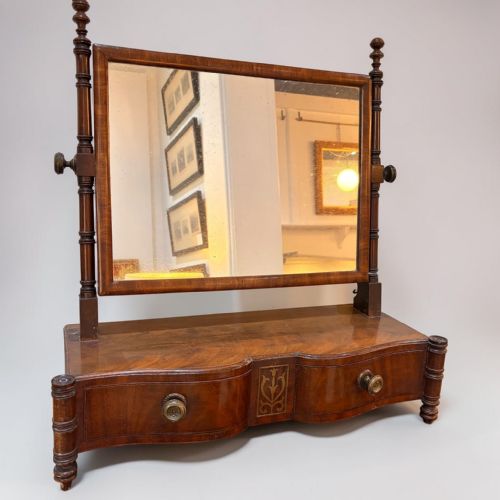
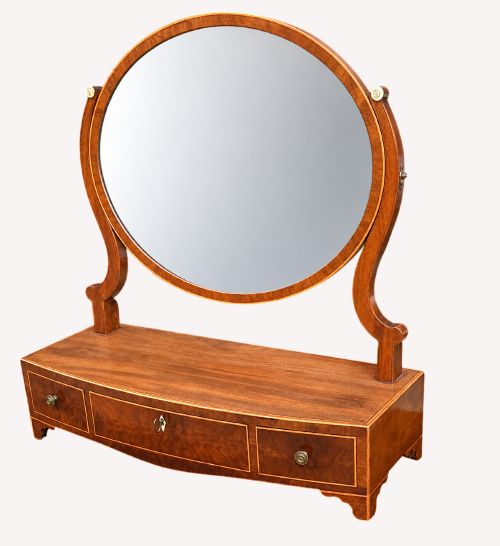
The inventory combines standard chests of drawers with dressing table mirrors, bedside lamp chests, and tallboys.
What Varies in Quality
The primary distinction rests in the harmony of the timber grain across the undulating drawer fronts and the precision with which the curves meet the flanking stiles. Master craftsmen selected symmetrical flame mahogany or matching burr walnut veneers that flowed seamlessly across the serpentine sweep rather than appearing balkanised.
Secondary elements such as original gilt brass handles, well-fitted brushing slides, and cleanly dovetailed drawer linings elevate a piece from standard domestic utility to high cabinetmaking art.
The Georgian Serpentine Drawers Glossary
- Serpentine
- A front contour characterised by a convex curve in the centre flanked by two concave curves. This undulating shape requires immense skill from the cabinetmaker to execute successfully.
- Brushing slide
- A pull-out shelf located above the top drawers used historically for writing or brushing clothes. It sits flush within the cabinet frame when closed.
- Crossbanding
- A narrow strip of veneer applied perpendicularly to the grain of the primary surface to form a decorative border. It frames the drawer fronts and highlights the curved outline.
- Flame mahogany
- Timber cut from the fork of the mahogany tree where the branch meets the trunk, producing a fiery, feather-like grain pattern. Cabinetmakers reserved this prized material for prominent drawer fronts.
Georgian Serpentine Drawers: Frequently Asked Questions
How do I spot a reproduction?
Examinations of internal timbers, drawer linings, and secondary woods like oak or deal help distinguish 18th-century originals from 20th-century revivals. Machine-cut dovetails and modern adhesives point clearly to later manufacturing dates.
Original pieces show hand-cut joinery, timber shrinkage appropriate to age, and wear patterns consistent with centuries of domestic use.
What was the brushing slide used for?
The pull-out shelf, often termed a brushing slide, served as a convenient surface for writing letters or brushing down garments. It provided a temporary workspace without requiring a dedicated desk.
These slides sit discreetly just beneath the top moulding and pull out smoothly on runners integrated into the internal framing.
How do I care for burr walnut veneer?
Burr walnut veneer requires stable room temperatures and protection from direct sunlight to prevent the delicate grain patterns from drying out or splitting. Gentle dusting with a dry, soft cloth maintains the polished surface.
Occasional applications of appropriate furniture wax nourish the timber without building up heavy chemical residues that dull the natural figure.