

Bracket Feet Drawers
Bracket feet drawers unite utility and restrained architectural form, offering sturdy chests and bedside pieces raised on shaped corner supports.
Bracket Feet Drawers
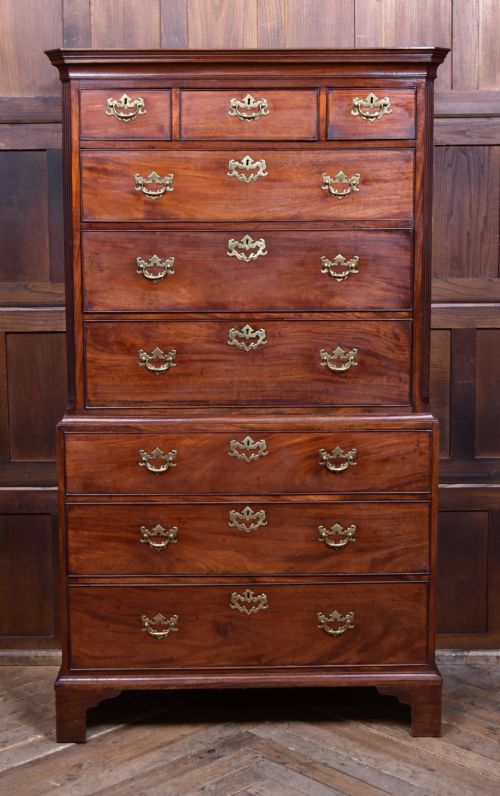
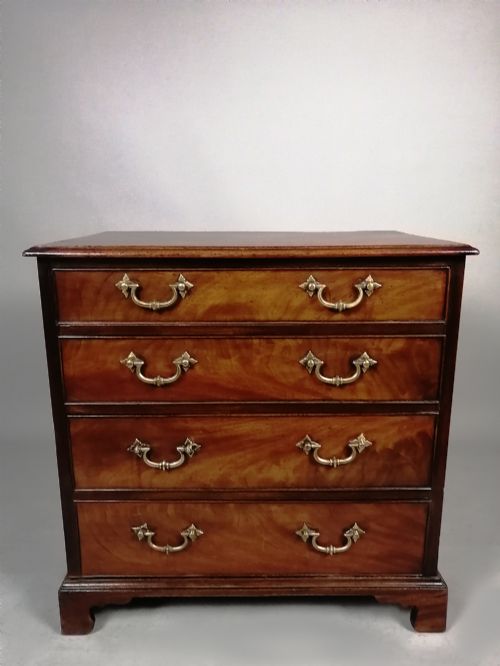
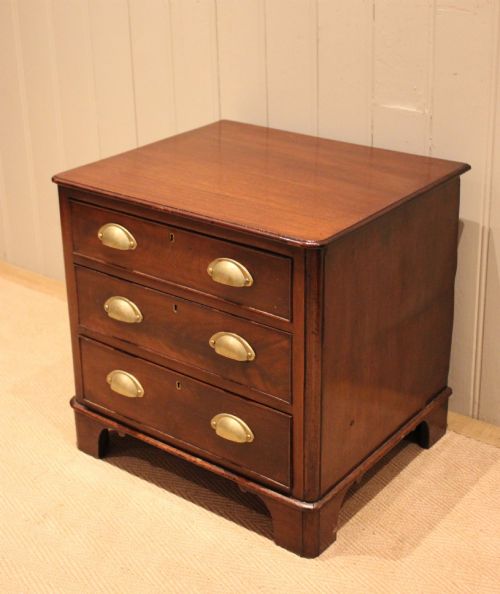
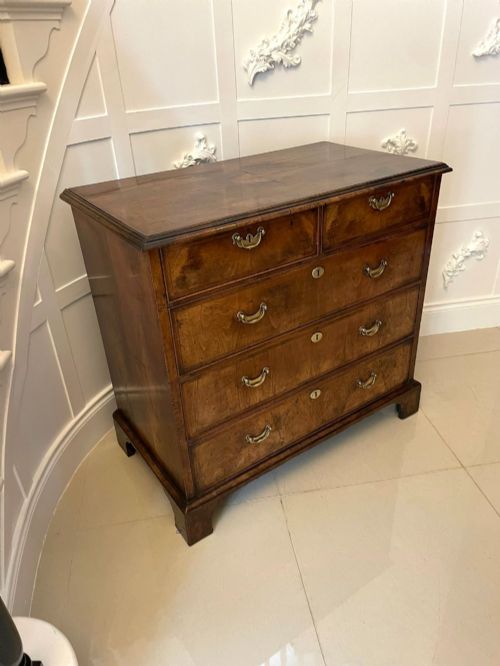
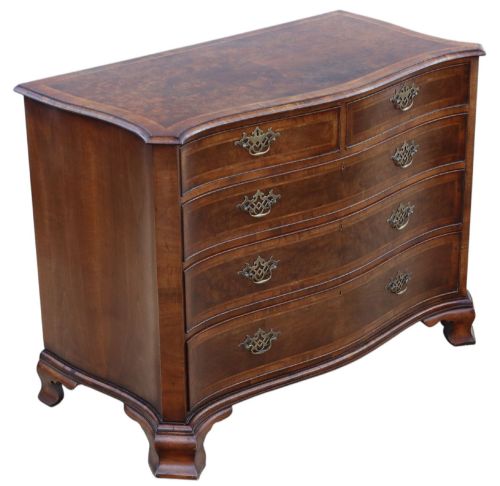
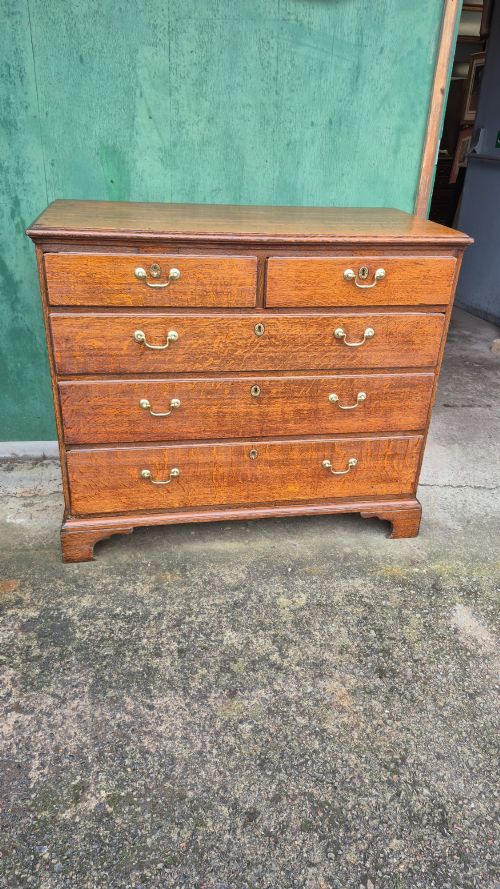
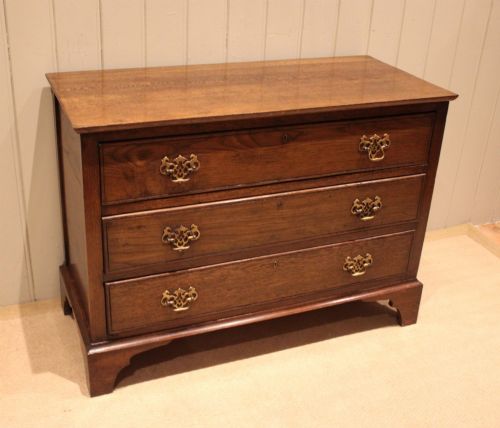
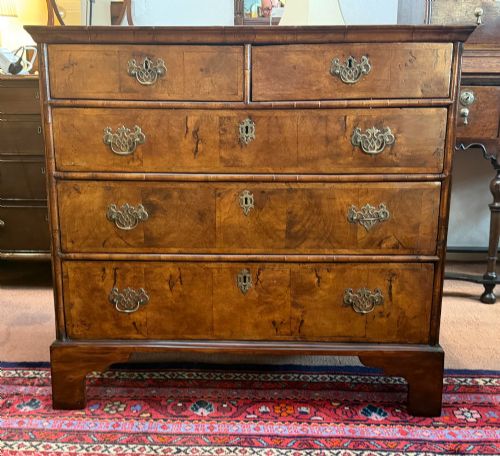
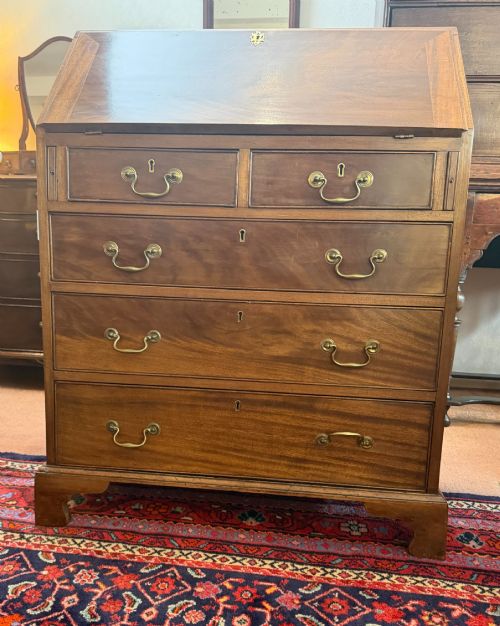
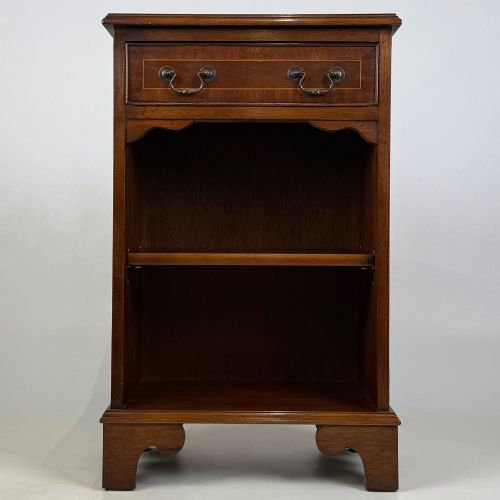
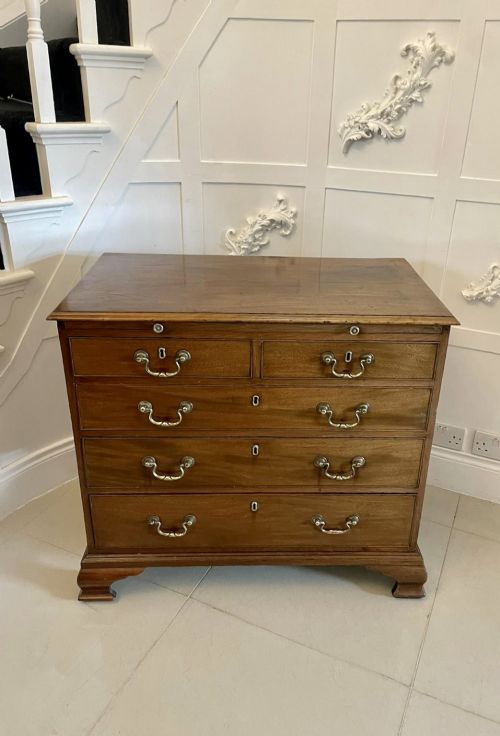
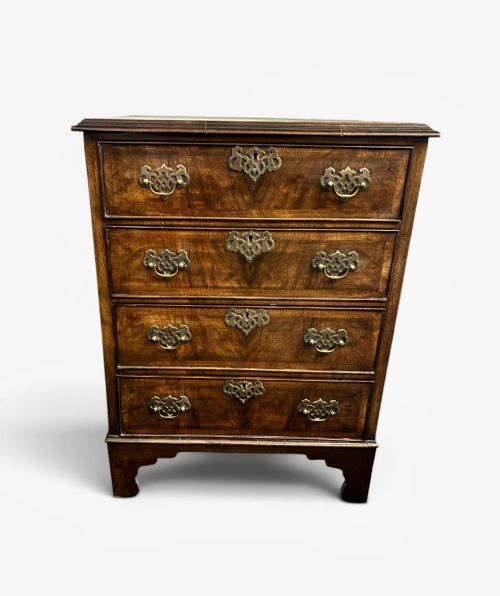
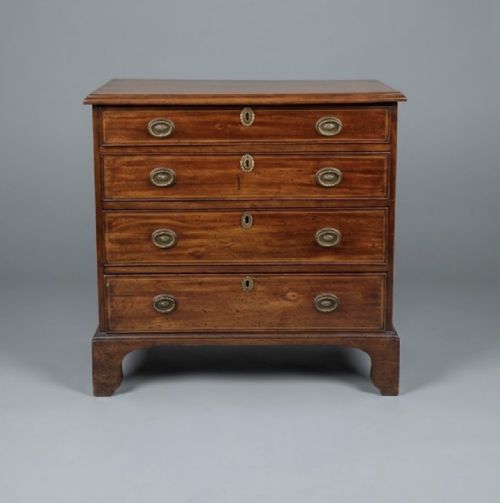
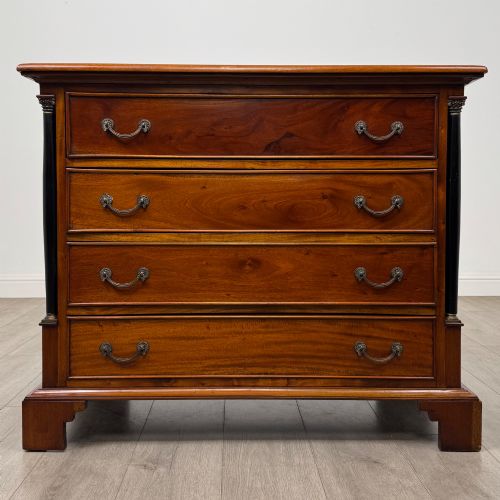
When searching for bracket feet drawers, a buyer explores case furniture elevated on distinct wooden corner brackets rather than a continuous plinth or turned legs. Chests of drawers dominate this selection, alongside smaller bedside tables, bureaux, and tall chests on chests.
The pieces appearing most frequently originate in the eighteenth and nineteenth centuries, spanning Georgian, Regency, and Victorian periods, with occasional twentieth-century revivals. Oak and mahogany serve as the primary timbers, frequently supplemented by walnut, burr walnut, and pine.
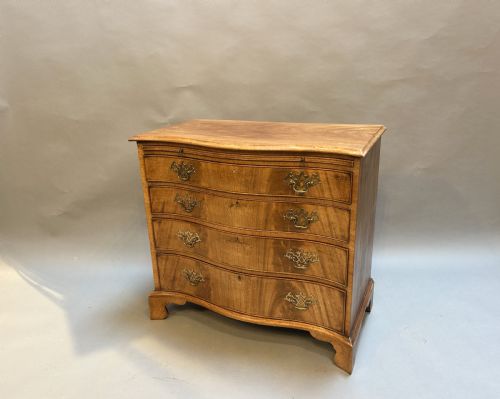
These items were traditionally constructed for domestic storage, ranging from compact proportions suited for bedrooms to large serpentine commodes. The presence of bracket feet provides stability while lifting the primary body of the cabinet gracefully off the floor.
Materials and Construction
Cabinetmakers utilised solid timbers such as mahogany, oak, and walnut for the primary structure, often applying figured veneers or crossbanding to drawer fronts for visual depth. Drawer linings typically consist of secondary woods like pine or oak, joined with hand-cut dovetails that indicate period craftsmanship.
The signature bracket feet are usually mitred at the corners and reinforced internally with triangular corner blocks to ensure structural integrity under heavy loads. Brass hardware, including bail handles, drop handles, and escutcheons, is fixed through pre-drilled holes, often accompanied by original locks.
Listings feature mahogany, oak, and walnut timbers, with period examples spanning the eighteenth to the twentieth centuries.
Indicators of Quality
Quality in these pieces is dictated by the crispness of the timber selection and the integrity of the structural joinery, particularly where the bracket feet meet the base moulding. Finer examples display carefully matched wood grain across the drawer fronts and minimal restoration to the original wooden feet.
The sophistication of the secondary details, such as precise dovetailing, intact brass hardware, and secondary wood choices, separates superior cabinet work from standard utility pieces. Proportion also plays a vital role, with smaller proportions and serpentine or bow-front outlines commanding greater attention.
J Moorcroft
The Bracket Feet Drawers Glossary
- Bracket foot
- A corner foot shaped like a bracket, supporting the base of a case piece such as a chest of drawers. It typically forms a simple mitered corner or an ogee profile.
- Serpentine
- A furniture front or top shaped with a curving contour that is convex in the centre and concave at the ends. This sweeping line requires advanced woodworking skill.
- Brushing slide
- A pull-out shelf integrated above the top drawers of a chest, historically used for folding clothes or writing. It slides flush into the cabinet frame when not in use.
- Crossbanding
- A narrow strip of veneer laid around the border of a drawer front or tabletop so that the grain runs perpendicular to the main panel. This technique creates a neat framing effect.
- Dovetail
- A joint formed by interlocking wedge-shaped fingers, securing drawer corners together with high tensile strength. Hand-cut variations help date antique case furniture.
Bracket Feet Drawers: Frequently Asked Questions
What are bracket feet drawers?
These pieces are storage cabinets, primarily chests of drawers, elevated on shaped wooden feet at each corner. They provide a sturdy base while giving the heavy case a lighter appearance.
Originating largely in the Georgian and Victorian eras, they combine practical storage with traditional cabinetmaking techniques using oak and mahogany.
How do I identify a Georgian chest?
Georgian pieces typically feature solid mahogany or oak construction, hand-cut dovetails on the drawer interiors, and period brass hardware like swan-neck handles. The proportions tend to be robust yet elegant.
Look for pegged joints in earlier examples and subtle details such as ogee bracket feet or decorative crossbanding around the drawer edges.
Were bracket feet original to the furniture?
Feet frequently suffer damage over centuries due to damp floors and movement, leading to careful repairs or total replacement. Examining the interior corner blocks and timber ageing helps confirm originality.
Matching the wood species and wear patterns of the feet to the rest of the carcase indicates whether the base remains untouched.
How do I care for antique wood furniture?
Maintain stable indoor humidity and keep wooden items away from direct heat sources and strong sunlight to prevent the timber from splitting or warping. Dust regularly with a soft, dry cloth.
Applying occasional appropriate wax preserves the finish and nourishes older timbers like walnut and mahogany without building up heavy residue.