
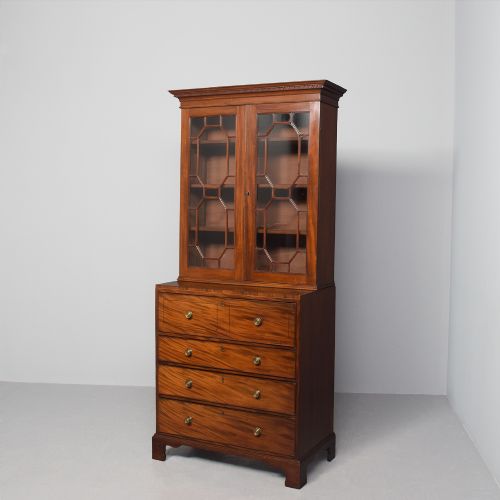
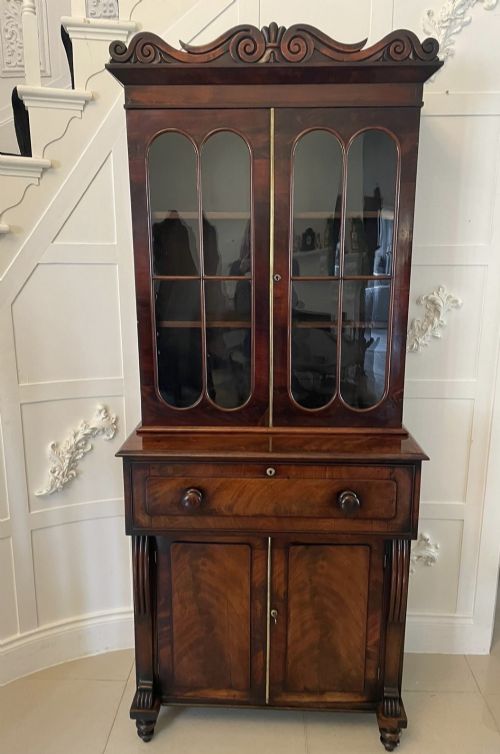
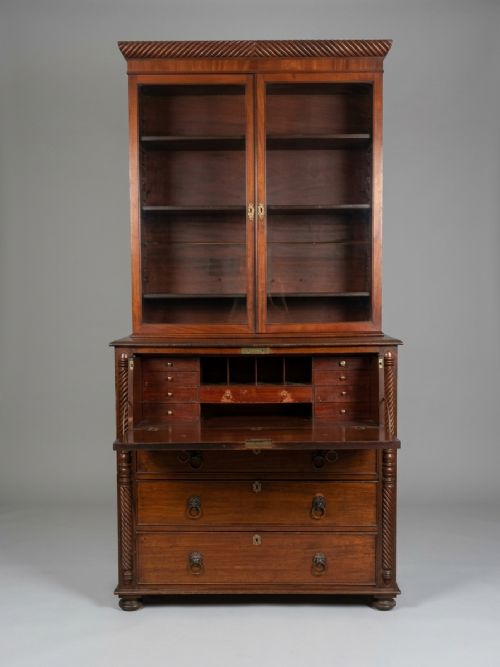
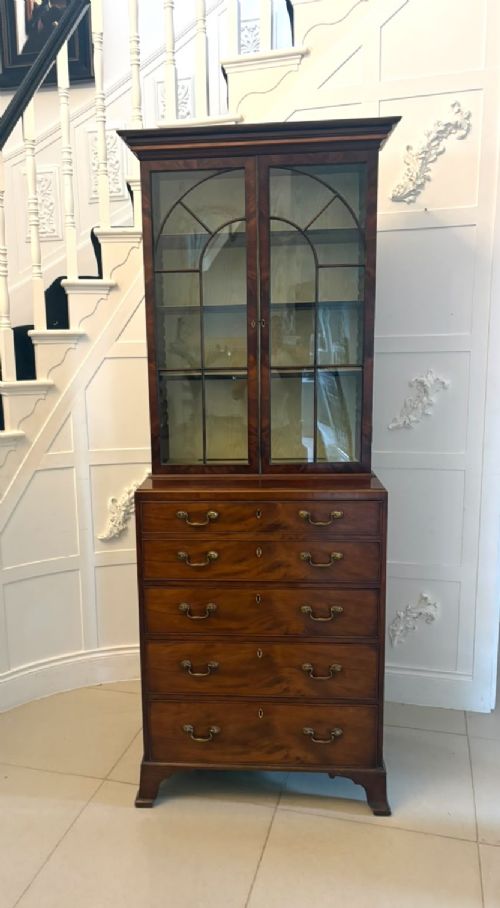


Georgian Secretary Desk Cabinet
A georgian secretary desk cabinet offers dual-purpose writing space and concealed storage, bringing period elegance and practical organisation to any room.
Georgian Secretary Desk Cabinet
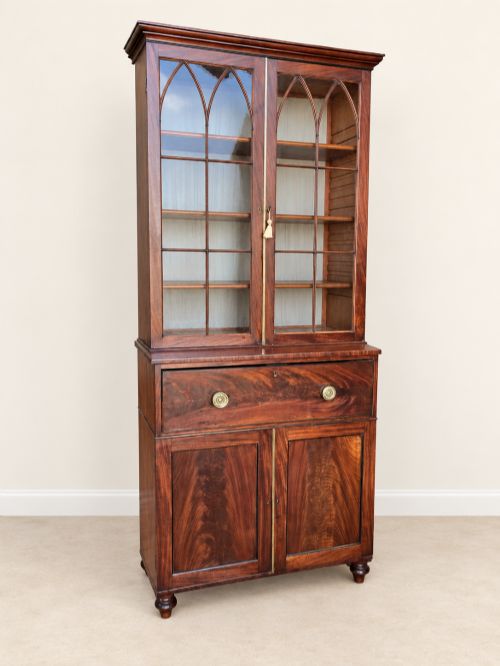
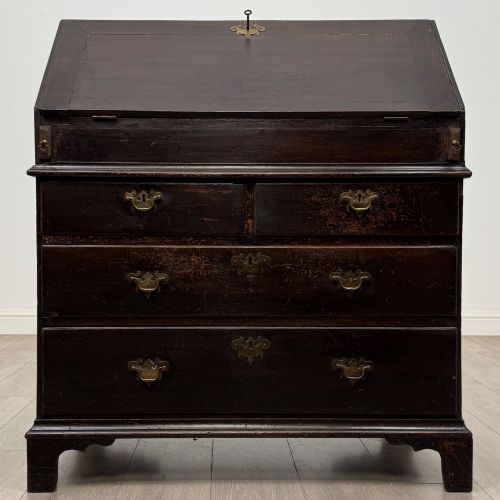
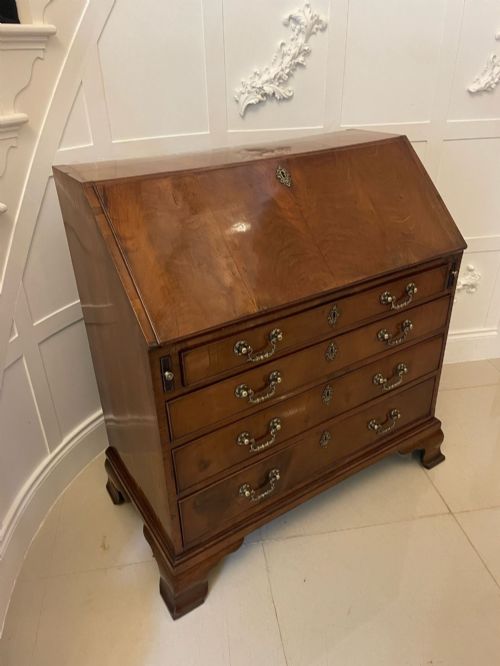
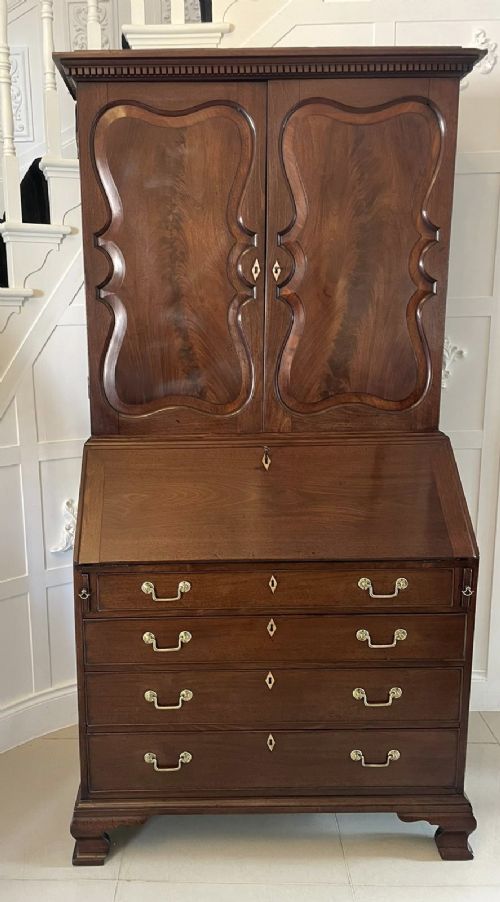
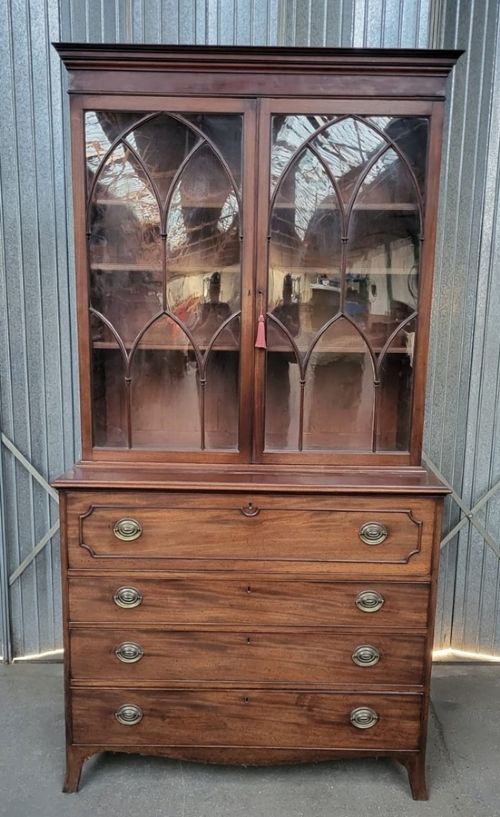
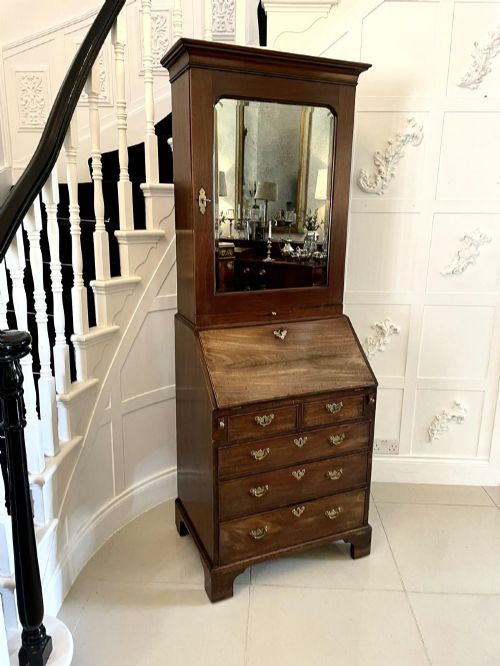
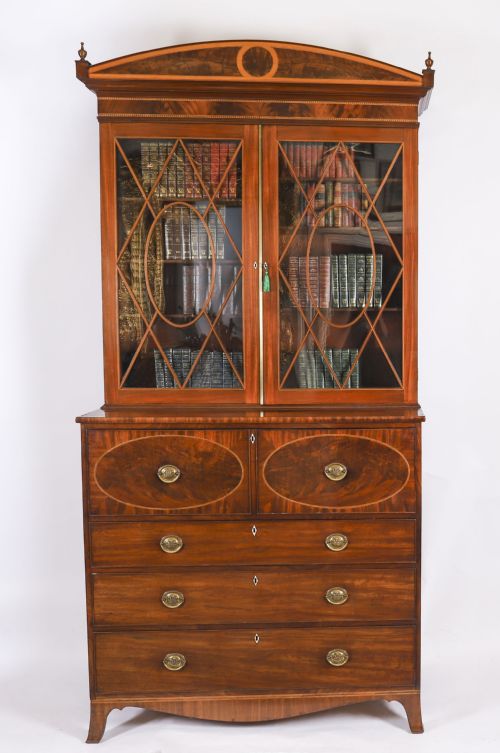
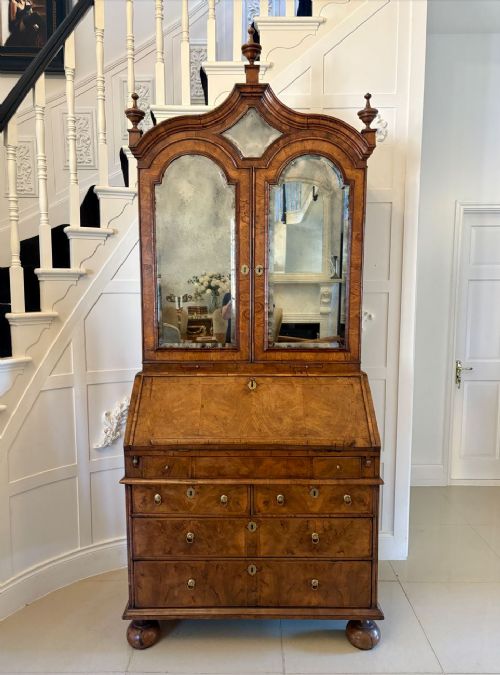
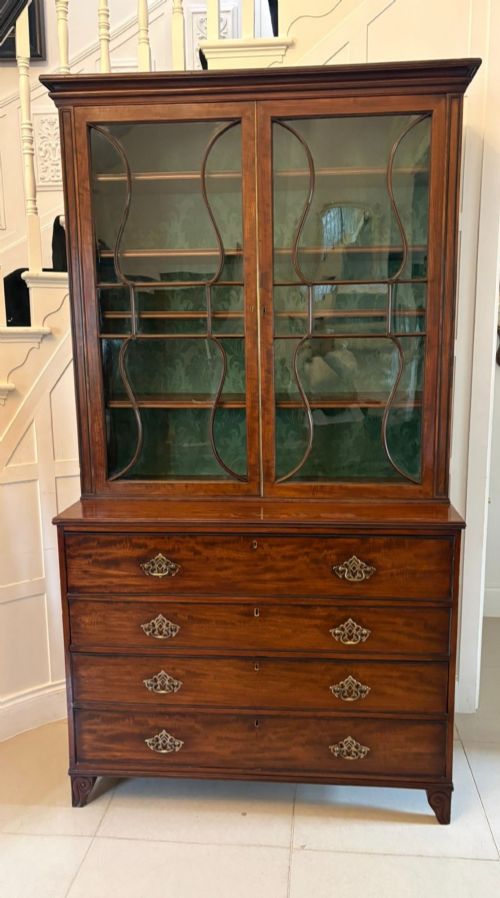
A georgian secretary desk cabinet combines a writing bureau with an upper bookcase or a tall writing cabinet, serving multiple functions in domestic interiors. Buyers meeting these pieces on this page encounter bureau bookcases, secretaire bookcases, and escritoires spanning periods from the late seventeenth century through the georgian and regency eras into Edwardian revivals.
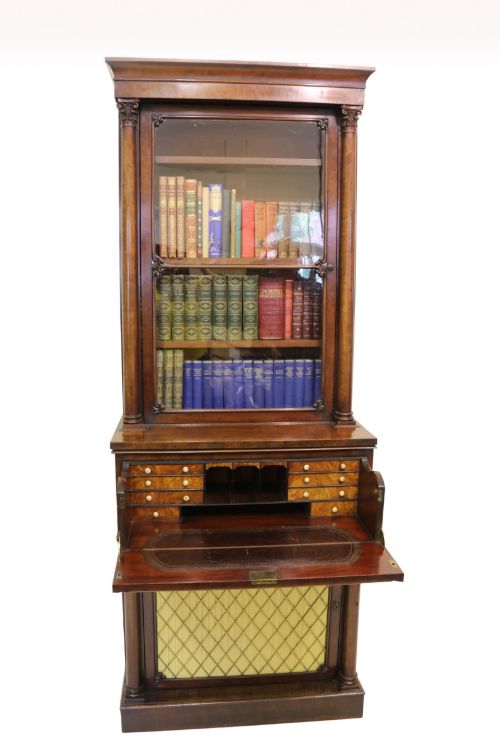
Forms range from fall-front writing bureaux to tall three-section bureau bookcases with glazed upper doors and fitted interiors. Oak, walnut, and mahogany predominate across the selections, often enhanced by glazed doors, candle slides, and stepped interior compartments designed for correspondence and ledgers.
Materials and construction
Cabinet makers utilised dense hardwoods including mahogany, oak, and walnut, frequently selecting figured veneers, flame mahogany, burr walnut, and featherbanding to ornament the exterior surfaces. Glass panels were fitted into upper bookcase doors to display books and collections, whilst brass hardware supplied structural hinges, escutcheons, and drop handles.
Internal construction involved secondary timbers and specialised joinery to create stepped compartments, pigeon holes, and concealed drawers within the writing section. Writing surfaces frequently incorporated fitted leather inserts or polished wood panels hinged to drop forward smoothly on supportive brackets.
An early oak bureau bookcase on this page carries evidence of a modern conversion, having been thoughtfully adapted to house a television.
Assessing craftsmanship
Quality separates through the selection of timber veneers, the precision of inlay work, and the sophistication of the internal fittings. Superior examples display carefully matched burr walnut or flame mahogany grain patterns across the fall-front and drawer facades, alongside intricate stepped interior pigeon holes.
Structural integrity and original proportion govern value, distinguishing pieces retaining their original glazed doors and brass hardware from later adaptations or heavy restorations.
The Georgian Secretary Desk Cabinet Glossary
- Bureau bookcase
- A combination furniture piece featuring a sloping writing flap above drawers, surmounted by a glazed or panelled bookcase cabinet. It provides both workspace and storage in a single tall unit.
- Secretaire
- A desk or cabinet containing a pull-out or drop-front drawer fitted with small drawers and pigeon holes for writing materials. The term often describes pieces where the upper drawer conceals a fitted writing compartment.
- Escritoire
- A writing cabinet or desk used for correspondence, popular during the seventeenth and eighteenth centuries. These tall pieces often feature a fall-front writing surface enclosing numerous internal drawers.
- Flame mahogany
- Mahogany timber cut at an angle to the branch junction to produce a distinctive flickering, flame-like grain pattern. Cabinet makers utilised this veneer on prominent exterior surfaces for visual impact.
- Burr walnut
- Wood taken from a walnut tree growth or burl, yielding a swirling, highly figured grain pattern prized for luxury furniture. It appeared frequently on elite pieces from the Queen Anne and George periods.
- Featherbanding
- Delicate inlay work utilising small strips of veneer laid diagonally to form a herringbone pattern around panel borders. This decorative technique frames drawer fronts and cabinet doors.
Georgian Secretary Desk Cabinet: Frequently Asked Questions
What is a georgian secretary desk cabinet?
A georgian secretary desk cabinet is a combined writing desk and storage unit, typically featuring a sloping fall-front or pull-out writing drawer beneath an upper bookcase section.
These pieces emerged to provide functional workspace and enclosed book storage within period homes.
How do I identify a bureau bookcase?
A bureau bookcase combines a lower writing desk section with an upper cabinet enclosed by wooden or glazed doors.
Opening the fall-front or secretaire drawer reveals small compartments and pigeon holes intended for stationery.
What woods were used for these desks?
Cabinet makers constructed these pieces primarily in mahogany, walnut, and oak, often applying burr walnut or flame mahogany veneers.
Secondary woods supported internal partitions, while brass provided structural hardware and hinges.
How do I style a secretary cabinet at home?
Secretary cabinets function effectively in studies, living rooms, or hallways, offering concealed workspace when closed and display space on upper shelves.
The drop-front surface provides a functional writing station while keeping correspondence out of sight.