
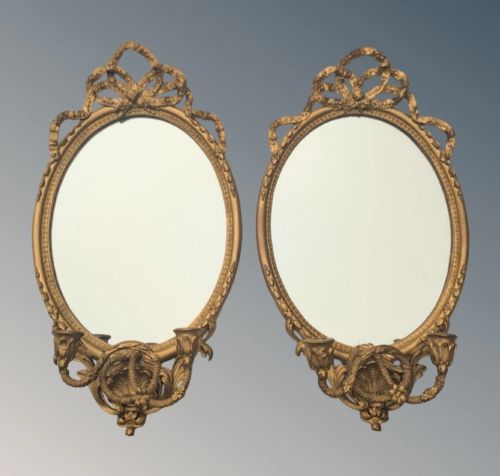
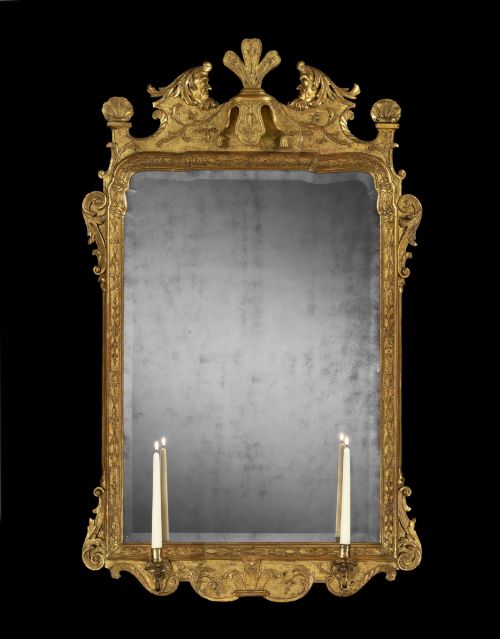
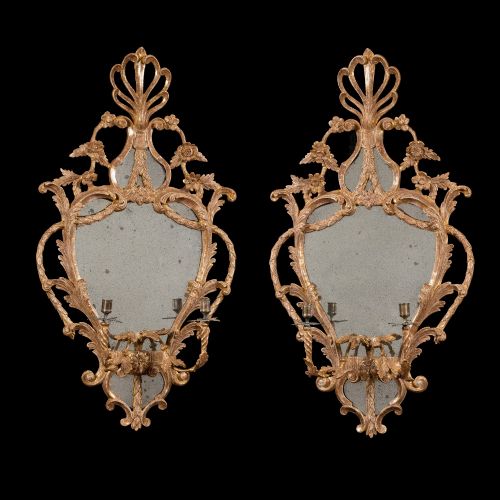
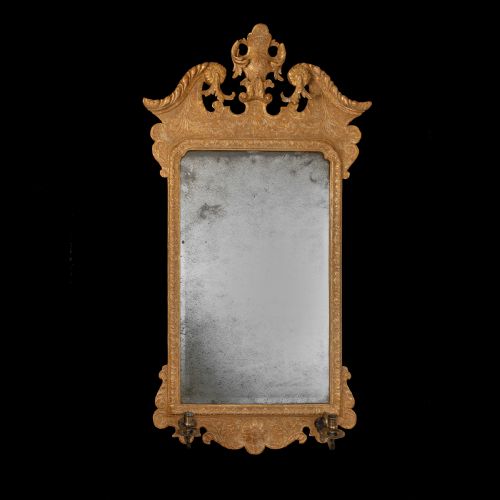
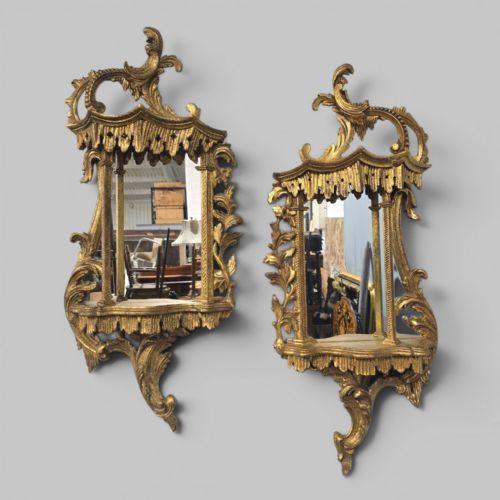

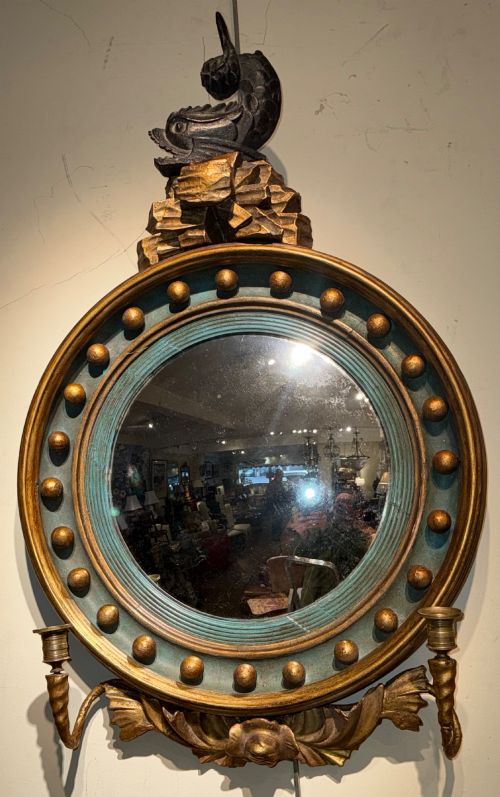


Georgian Sconce Wall Mirror
These georgian sconce wall mirror pieces catch the light and expand a room, bringing eighteenth-century elegance and brilliant gilded surfaces straight to your wall.
Georgian Sconce Wall Mirror
A georgian sconce wall mirror combines reflective glass with integrated candle arms or sconces, creating functional lighting alongside decorative presence. You will encounter these pieces primarily in eighteenth-century origins, alongside Regency interpretations and later revival pieces.
The forms span ornate girandoles with candle branches, architectural George I and George II gilt gesso designs, and sweeping convex plates. Chinese Chippendale and Neoclassical styles appear frequently across the selection, showing carved wooden frames finished in gold leaf or giltwood.
How they were made
Carvers shaped solid timber frames from wood before applying layers of gesso to build up intricate relief decoration. Artisans then gilded these prepared surfaces with gold leaf, achieving the luminous metallic sheen characteristic of the period.
Makers integrated brass candle arms or sconces directly into the frame structure of girandole examples to hold candles safely. Silvered or mercury glass plates were set within the rebates, occasionally taking a convex curve to reflect a wide angle of the interior.
Listings feature periods spanning from George I and George II through the Regency era and into later revival work from eighteen-eighty and nineteen-twenty.
What separates the fine from the ordinary
The depth and crispness of the hand-carved relief work dictate the artistic ambition of the piece, separating brisk commercial production from masterful sculpture. Original gilding surfaces show subtle variations in tone and wear that machine-applied modern finishes cannot replicate.
The integrity of the structural joinery and the survival of the original mirror plate provide tangible evidence of careful historic stewardship. Integration of the candle arms and the harmony of proportion across the frame define the success of the design.
Benjamin Goodison
The Georgian Sconce Wall Mirror Glossary
- Girandole
- A wall mirror featuring attached candle branches or sconces designed to reflect and multiply candlelight. These fixtures were placed between windows or above mantelpieces to illuminate darker rooms.
- Gesso
- A plaster-like mixture applied to wooden frames as a smooth base for subsequent gilding. Artisans carved intricate decorative motifs directly into this dried composition.
- Convex mirror
- A circular mirror with a bulging, rounded glass plate that captures a panoramic reflection of the interior. They often feature ebonised slip rings and crests topped by carved eagles.
- Giltwood
- Timber that has been coated with thin sheets of gold leaf over a prepared ground. It provides a durable, brilliant metallic finish that catches ambient room light.
- Chippendale Revival
- A later nineteenth-century and early twentieth-century stylistic movement reproducing the elaborate carved mahogany and gilt designs of Thomas Chippendale. These pieces demonstrate high standards of period-revival craftsmanship.
Georgian Sconce Wall Mirror: Frequently Asked Questions
What is a girandole mirror?
A girandole mirror is a wall-hanging looking glass equipped with one or more projecting candle sconces attached to the frame. The polished glass surface and metallic gilding were intended to reflect and amplify candlelight throughout evening rooms.
These pieces served both a practical illumination purpose and a decorative function in eighteenth-century interiors. They were frequently positioned between windows to maximise natural and artificial light.
Where should I hang a convex mirror?
Convex mirrors work effectively in reception rooms, halls, and dining spaces where their wide-angle reflection can capture the entire breadth of the interior. Placing them opposite a window draws external light deep into the space.
Because of their optical distortion, they are best hung at eye level to allow viewers to appreciate the miniature panorama they project. Ensure the wall fixing is secure, as these giltwood and gesso frames carry substantial weight.
How do I distinguish George I from Regency styles?
George I and George II mirrors typically feature architectural symmetry, rich gesso decoration, and heavy carved wooden frames with neoclassical or Palladian motifs. The surfaces are frequently gilded directly onto gesso grounds over pine or oak.
Regency mirrors, dating from the early nineteenth century, often lean towards circular convex formats with ebonised sight edges, ball-bearing friezes, and crests featuring eagles or marine animals. The giltwood treatment in Regency pieces tends to display bolder, cleaner classical lines.
Are these mirrors suitable for daily use?
These mirrors function reliably as wall decor and reflective elements in modern homes, though original antique glass plates may show age-related foxing and minor distortion. The candle sconces are generally kept unlit today to preserve historic fabric and avoid smoke damage.
Cleaning requires gentle dusting with a soft dry cloth, avoiding liquid polishes or abrasive cleaners that could damage the historic gold leaf and gesso surfaces.