
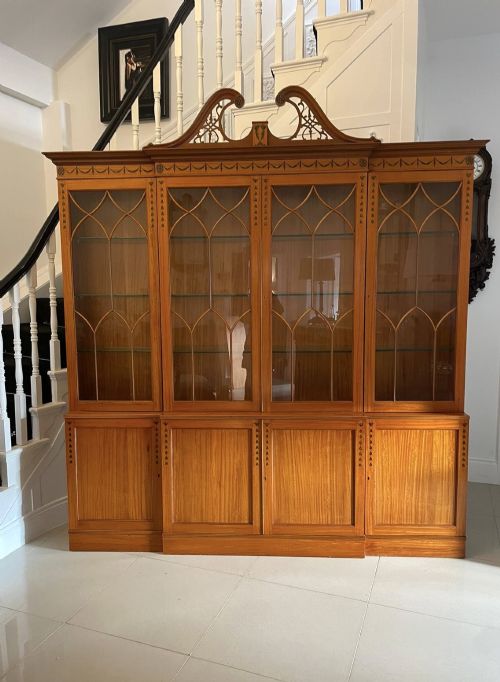
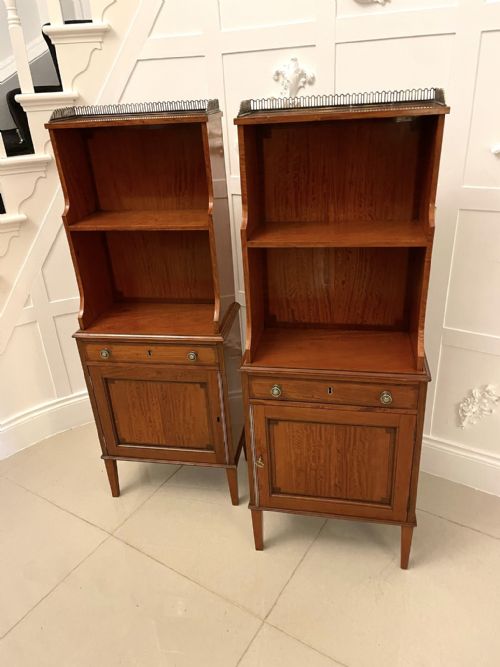
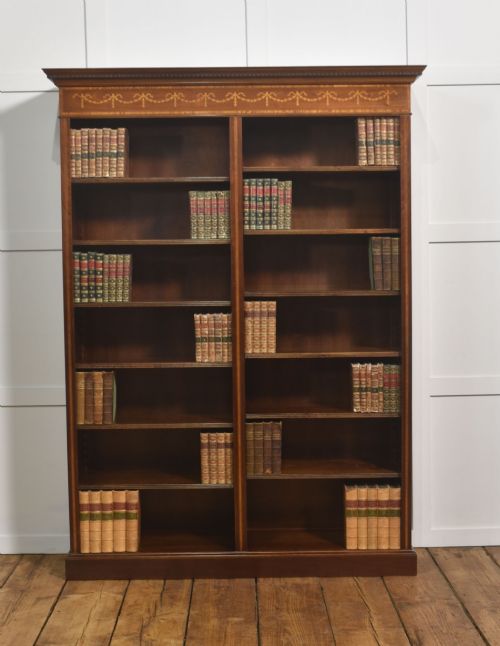
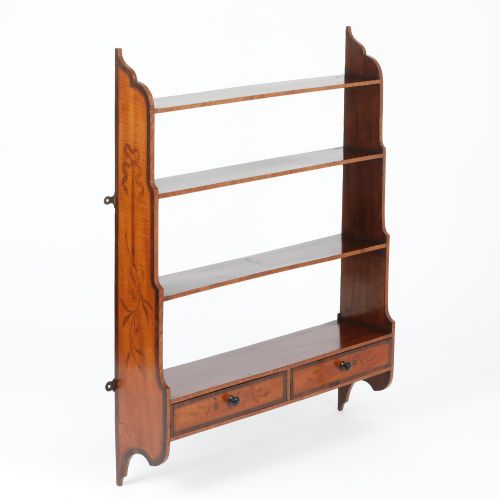


Georgian Satinwood Bookcase
A georgian satinwood bookcase brings pale exotic timber and refined neoclassical proportions into a room, offering both display and storage.
Georgian Satinwood Bookcase
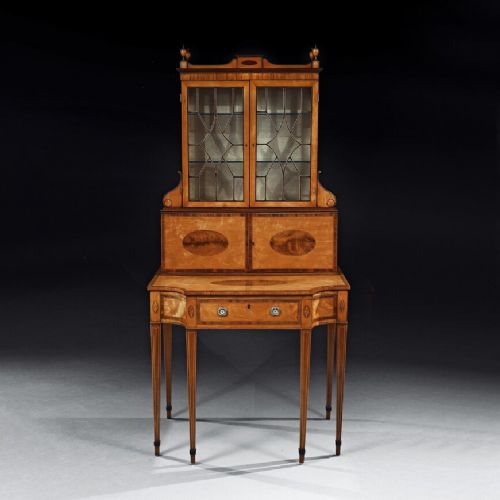
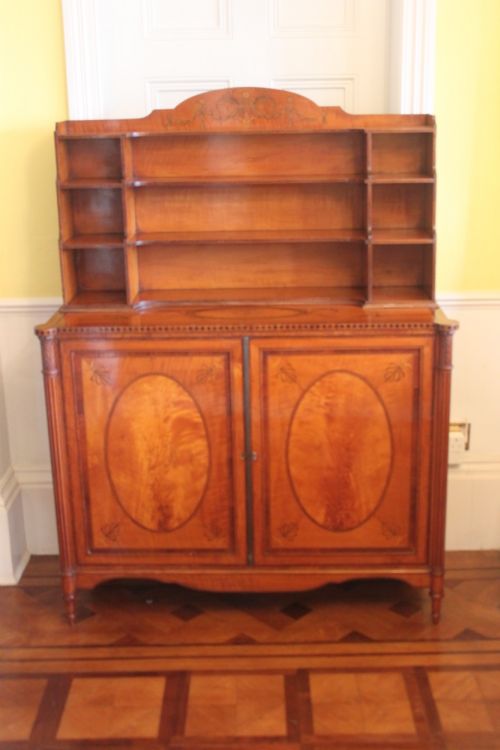
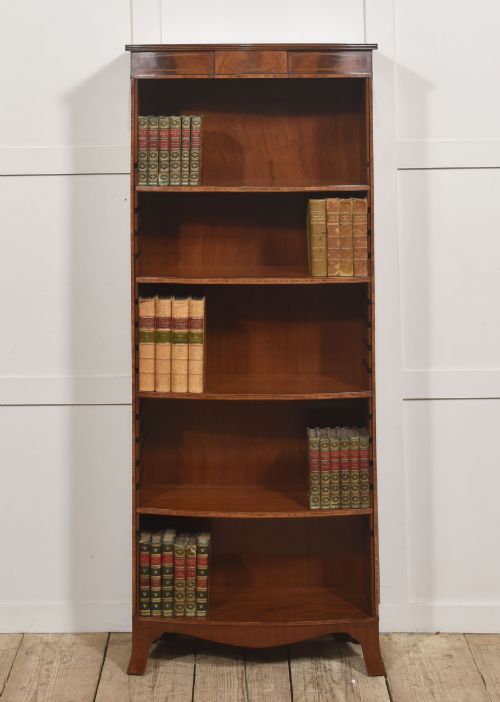
A georgian satinwood bookcase combines timber framing with glazed doors or open shelves, taking forms such as breakfront cabinets, secretaires, and bureau bookcases. These pieces originate primarily from the eighteenth and nineteenth centuries, with later revivals continuing the aesthetic.
The most typical examples employ satinwood veneers alongside contrasting woods like mahogany, boxwood, and harewood. Makers applied these timbers to create fitted writing compartments, cylinder fronts, and glazed upper sections designed to house libraries.
How they were made
Cabinet makers built these pieces using solid timbers like mahogany and sabicu for structural integrity, applying fine sheets of satinwood as veneer across the exterior surfaces. Boxwood and darker woods were cut into thin strips for stringing and intricate timber inlay.
Glazing bars divided the glass doors into geometric patterns such as astragal designs, while specialised hardware utilised brass fittings for drop fronts and cabinet doors. Painted decoration and marquetry panels frequently embellished the central friezes and lower cupboards.
Some secretaire cabinets conceal hidden spring-loaded compartments behind miniature pigeonholes for storing secret correspondence.
What varies in quality
The standard of a georgian satinwood bookcase rests upon the selection and matching of the timber grain, particularly where figured veneers meet across drawer fronts and cabinet doors. Superior examples display precise symmetry in their timber inlay and marquetry work.
Construction methods also dictate worth, distinguishing workshop-produced furniture with original painted decoration and integrated writing drawers from simpler later reproductions. The finesse of the glazing bars and the crispness of the carved mouldings further separate workshop tiers.
Gillows·Waring and Gillow·Edwards and Roberts
The Georgian Satinwood Bookcase Glossary
- Astragal glazed
- Glass doors divided into panes by narrow wooden mouldings. These bars form intersecting geometric patterns across the bookcase front.
- Secretaire
- A cabinet incorporating a pull-down writing drawer with internal pigeonholes and small drawers. This writing surface hides behind a dummy drawer front.
- Marquetry
- Decorative patterns formed by fitting contrasting veneer pieces into a background surface. Craftsmen utilise various dyed and natural woods to create floral or architectural motifs.
- Breakfront
- A piece of furniture where the central section projects forward from the side wings. This architectural arrangement adds depth and visual weight to large cabinets.
- Cheveret
- A small movable writing table or cabinet featuring a small bookshelf or tier on top. These compact pieces rest on slender legs.
Georgian Satinwood Bookcase: Frequently Asked Questions
How do I care for satinwood?
Satinwood furniture requires placement away from direct sunlight and heat sources to prevent the timber veneer from fading or drying out. Gentle dusting with a dry cloth preserves the polished surface.
Avoid using silicone polishes or excess moisture on antique veneered surfaces.
What is astragal glazing?
Astragal glazing refers to the wooden framework that holds individual panes of glass within cabinet doors. These thin strips create repeating geometric patterns across the front of the bookcase.
Original glass panes often display minor ripples and bubbles visible under raking light.
How do I distinguish revival periods?
Revival pieces from the late nineteenth and early twentieth centuries often employ machine-cut veneers and standardised hardware. Earlier eighteenth-century examples display hand-cut dovetails and distinct timber patination.
Stylistic markers such as Edwardian Sheraton Revival details help date pieces produced a century after the original georgian era.