





Georgian Round Wall Mirror
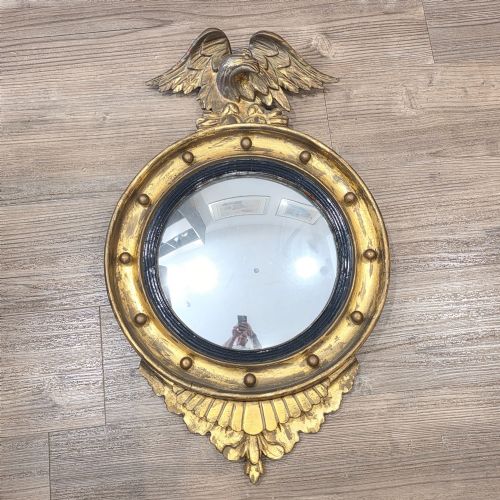
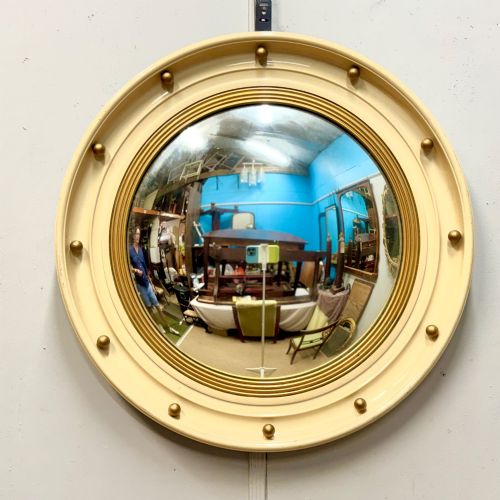
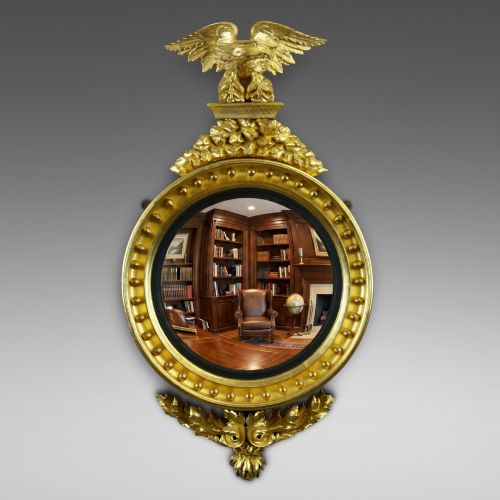
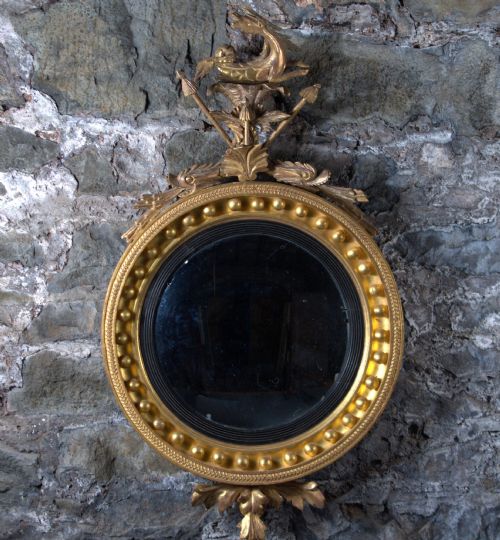
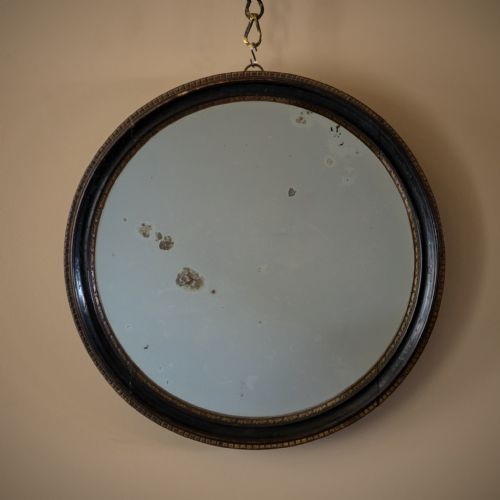
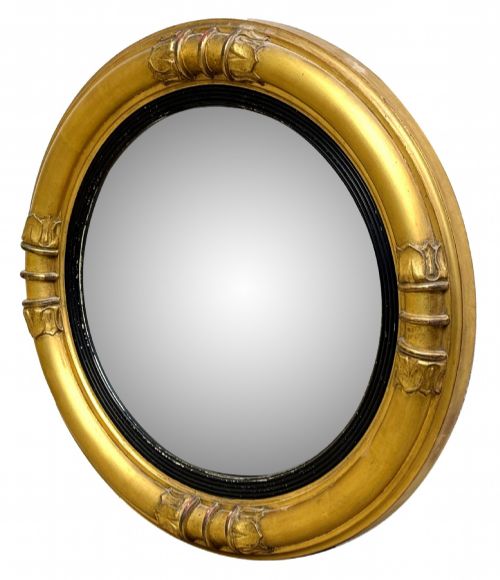
A georgian round wall mirror brings deep perspective and intense reflective light into a room, dominated by convex plates from the Regency period.
Georgian Round Wall Mirror
When you search for a georgian round wall mirror, you encounter circular looking glasses designed to hang in halls, drawing rooms and parlours. These pieces offer a sweeping, curved view of an entire interior space through their distinctive convex glass plates.
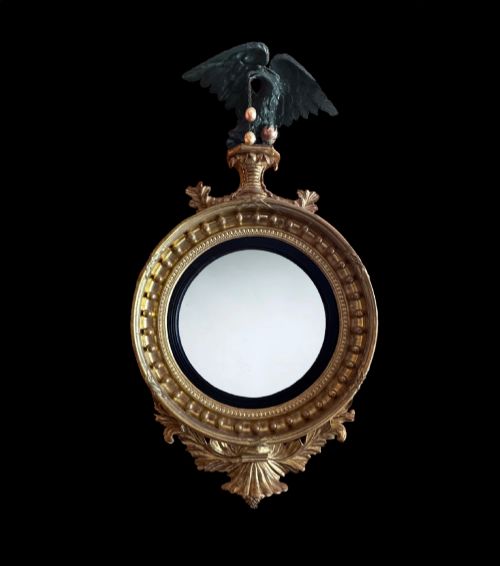
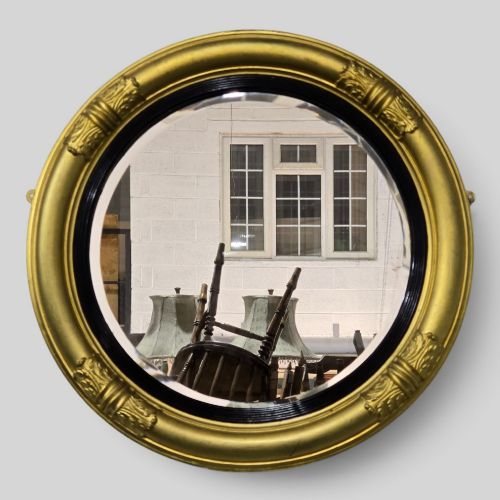
The versions you meet most often on this page belong to the Regency period and the wider nineteenth century, alongside later revivals. They appear most frequently as giltwood and gesso frames, often incorporating circular convex glass.
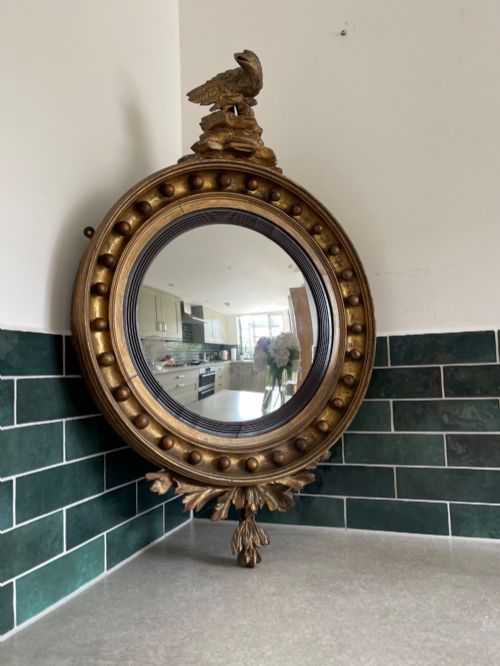
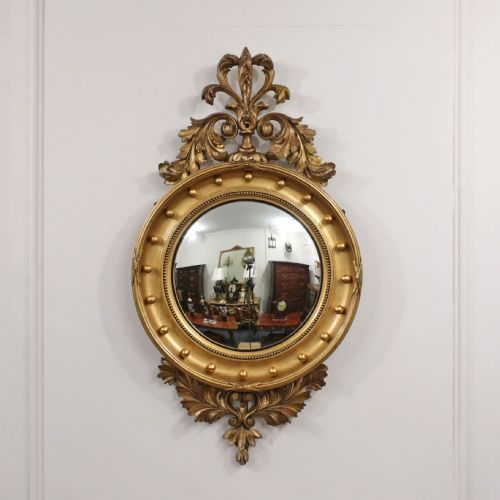
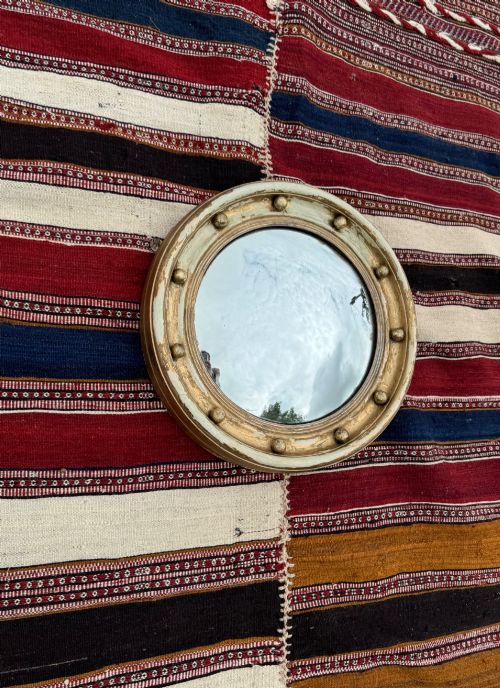
Many examples take the form of butler's mirrors or hall mirrors, while others feature elaborate crests such as spread eagles, dragons or carved woodland motifs. The physical form ranges from small circular wall hung pieces to grand scale convex mirrors spanning several feet in diameter.
Materials and construction
Makers shaped these frames primarily from wood, applying layers of gesso to build up decorative details, surface relief and carved ornamentation before finishing the exterior with gold leaf or paint.
The glass itself is curved to create the convex form, sometimes paired with an ebonised wood slip directly surrounding the reflective plate to create visual depth within the gilt frame.
Carpenters and carvers constructed the structural wooden carcasses to support heavy curved glass, applying specialist joinery and hanging mounts capable of sustaining the significant weight of large circular frames.
Watch out for fierce wooden eagles perched atop frames, keeping a sharp watch over the room.
Separating the fine from the ordinary
Quality rests significantly in the depth and sharpness of the carved wood and gesso ornamentation, where crisp detailing on eagles, dragons and foliate scrolls marks out superior craftsmanship.
The handling of the gilt finish dictates the visual presence of the piece, distinguishing finely burnished gold leaf surfaces from flat or heavily modernised paint applications.
The integrity of the convex glass plate and the condition of the original ebonised slip influence the overall harmony and historical authenticity of the mirror.
The Georgian Round Wall Mirror Glossary
- Convex mirror
- A circular looking glass with an outward-curving surface that reflects a wide, fish-eye perspective of the surrounding room. This form was especially popular during the Regency era.
- Giltwood
- Timber that has been coated with a thin layer of gold leaf over a prepared gesso ground. It provides a warm, reflective metallic surface.
- Gesso
- A plaster-like mixture applied to wood frames and carved to create raised decorative mouldings. It accepts gilding and paint effectively.
- Ebonised slip
- A dark, black-painted inner moulding or ring set between the glass plate and the outer gilt frame. This element creates a contrasting visual border.
- Butler's mirror
- A convex wall mirror traditionally used in domestic service areas to monitor activity across a room. They often feature simple circular frames.
Georgian Round Wall Mirror: Frequently Asked Questions
What is a convex mirror?
A convex mirror is a circular looking glass with an outward-curving surface that bends light to show a wide-angle view of an interior space. These pieces were designed to pull light into darker hallways and rooms.
The curved glass creates a miniature panoramic perspective of the entire surrounding environment. This optical effect made them both decorative and functional additions to period homes.
How do I hang a heavy round mirror?
Hanging a heavy round mirror requires secure fixing directly into wall studs or using heavy-duty masonry anchors. The substantial weight of the timber carcass and curved glass demands robust hardware.
Professional mirror hangers often utilise strong wire paired with multiple wall brackets to distribute the load evenly. Ensuring the fixing matches your wall type protects both the frame and the plaster.
How can I tell a Regency mirror from a Victorian one?
Regency mirrors frequently exhibit crisp, neoclassical carving styles, often featuring spread eagles, sphere-adorned frames and detailed gesso work. They date from the early nineteenth century.
Victorian and later revival pieces often show softer carving details, different framing proportions, or machine-prepared timber substrates. Examining the construction of the backboards and the composition of the gesso helps clarify the period.
Where should I place a convex wall mirror?
Convex mirrors work best opposite a window or light source to bounce illumination across the space. Their wide-angle reflection animates dark corners and narrow hallways.
Placing the mirror at eye level ensures the curved reflection captures the best parts of the room. They serve as strong focal points above mantelpieces, sideboards and console tables.