




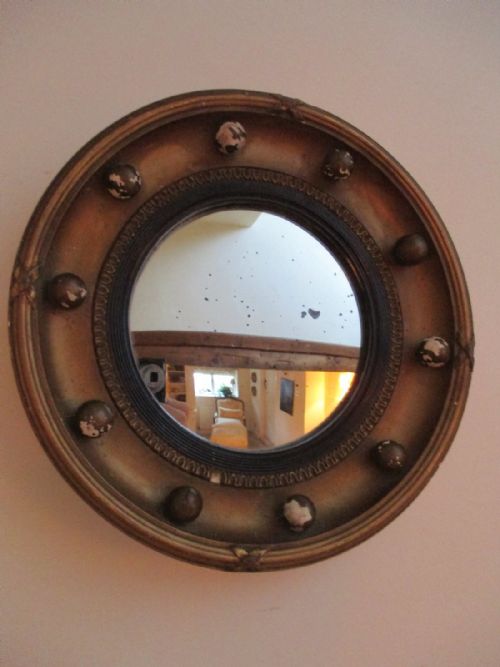
Small Round Wall Mirror
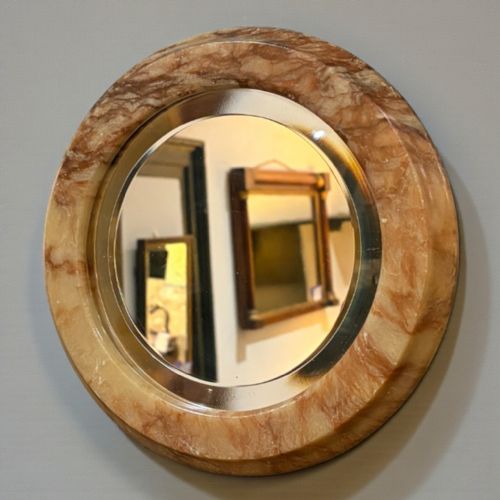
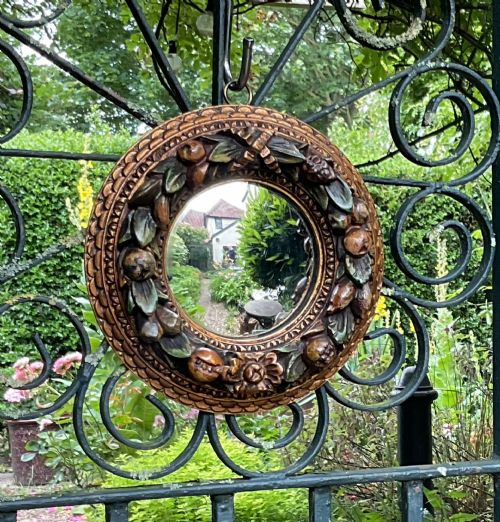
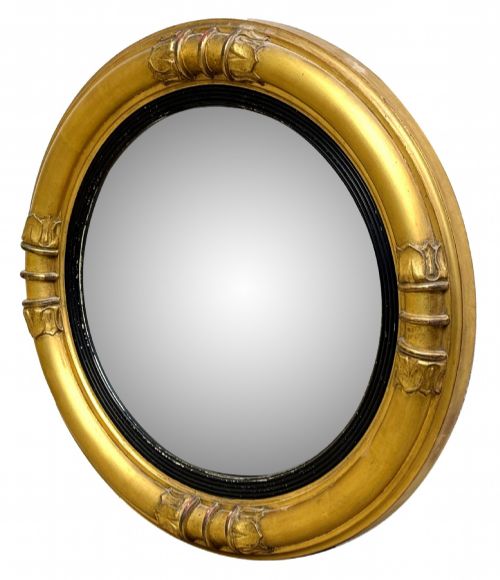
These small round wall mirrors bring deep convex plates and gilded circular frames into compact spaces.
Small Round Wall Mirror
A small round wall mirror offers a compact reflection through a circular frame, often formed as a convex plate that gathers light from across the room. You meet these pieces in nineteenth-century and early twentieth-century formats, drawing on Regency, Victorian, Louis Philippe, and Arts and Crafts design.
The evidence shows forms ranging from plain mahogany and ebonised timber borders to deeply carved giltwood frames. Many surviving examples employ convex or bulls-eye glass, though flat plates also appear within decorative wooden surrounds.
Originating from British and French workshops, these smaller mirrors suit narrow hallways and intimate rooms where a standard rectangular glass would overwhelm the wall space.
Materials and Construction
Makers shaped these frames from carved wood, mahogany, and ebonised timber, frequently applying gesso to build up decorative moulding before gilding the surface with gold leaf. Glass plates were cast and silvered, then curved outward in convex examples to create the characteristic fish-eye reflection.
Japanned finishes and contrasting gilt with ebony accents demonstrate specific decorative techniques employed during the nineteenth century to add depth and visual contrast to the small circular surrounds.
The listings span the nineteenth century, Regency era, and the 1920s, utilising materials such as giltwood, mahogany, and ebonised wood.
Judging Quality and Distinction
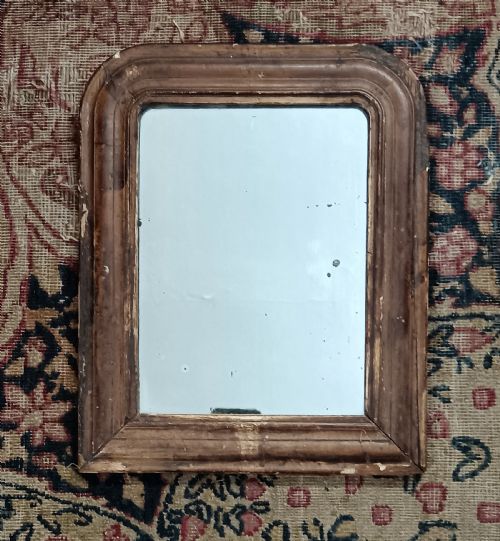
Quality rests in the crispness of the wood carving and the depth of the gilt preparation, where hand-applied gold leaf holds a warmer lustre than modern metallic paints. The integrity of the original glass plate also distinguishes finer examples, especially when age brings authentic foxing to the surface without obscuring the reflection.
Proportion matters greatly in small mirrors, separating pieces with balanced, harmonious frame widths from those with heavy or clumsy borders that crowd the glass.
The Small Round Wall Mirror Glossary
- Convex mirror
- A round mirror with an outward-curving glass plate that captures a wide-angle, distorted view of the interior. This form was popular during the Regency period.
- Giltwood
- Timber covered with a thin layer of gold leaf over a prepared gesso ground. It provides a bright metallic finish that catches interior light.
- Foxing
- Age-related spots and discoloration within the silvering of a mirror plate. Collectors value genuine foxing as a sign of antique authenticity.
- Japanned
- European imitation of East Asian lacquerwork, created using layers of varnish and dark paint. It gives wooden frames a dark, glossy surface.
- Gesso
- A plaster mixture applied to wood frames to create a smooth surface for carving and gilding. It allows for intricate decorative relief.
Small Round Wall Mirror: Frequently Asked Questions
Where should I hang a small round wall mirror?
These mirrors suit narrow spaces like hallways, entryways, or above small pieces of furniture where a compact focal point is needed. Their reflective quality helps bounce light into darker corners of a room.
Because of their modest scale, they also work well grouped within a gallery wall alongside paintings or smaller framed works.
How do I identify a Regency convex mirror?
Regency convex mirrors typically feature circular wooden frames adorned with reeded ebony inner rings, ball-bearing details, or carved crests like eagles. The glass curves outward to capture a panoramic view of the interior.
Frames from this period are usually finished in giltwood and date from the early nineteenth century.
What is foxed glass?
Foxed glass refers to mirror plates that have developed dark spots, mottling, or cloudy patches as the reflective backing degrades over time. This ageing process occurs naturally across decades in antique mirrors.
Many collectors appreciate foxing because it confirms the age of the glass and adds character to the reflection.
Are these mirrors heavy?
Despite their small diameter, convex mirrors can be surprisingly heavy due to the solid timber frames, thick gesso layers, and curved glass plates. Proper wall fixings are essential to support their weight safely.
Checking the backboards and hanging loops helps ensure the structure remains secure before mounting.