


Circular Wood Wall Mirror
A circular wood wall mirror brings depth and light into a room, reflecting centuries of skilled joinery and decorative framing.
Circular Wood Wall Mirror
When you search for a circular wood wall mirror, you encounter pieces that range from modest domestic items to grand reception room furnishings. The selection spans periods from the Georgian and Regency eras through the Victorian age into the twentieth century, alongside revivals that echo earlier tastes.
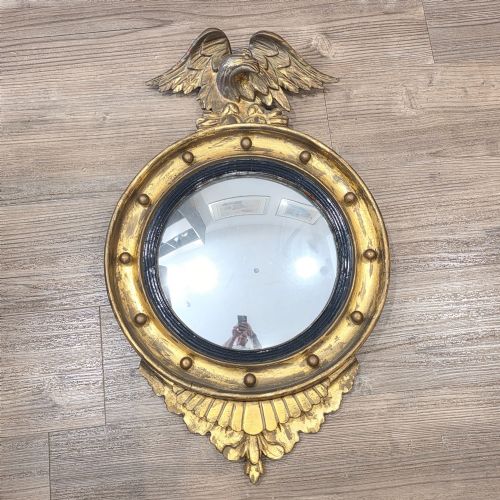
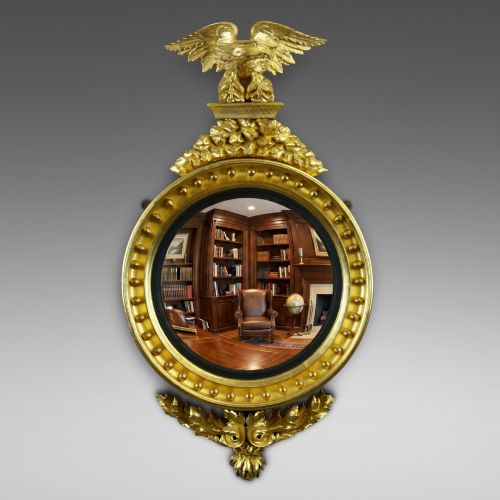
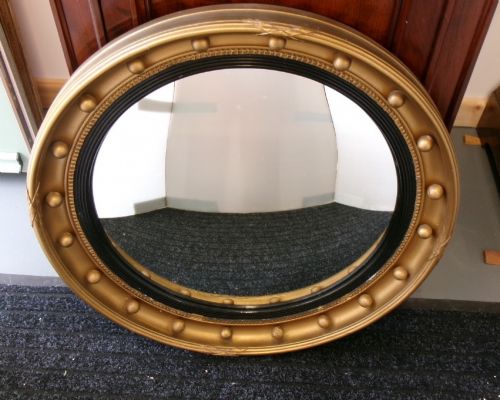
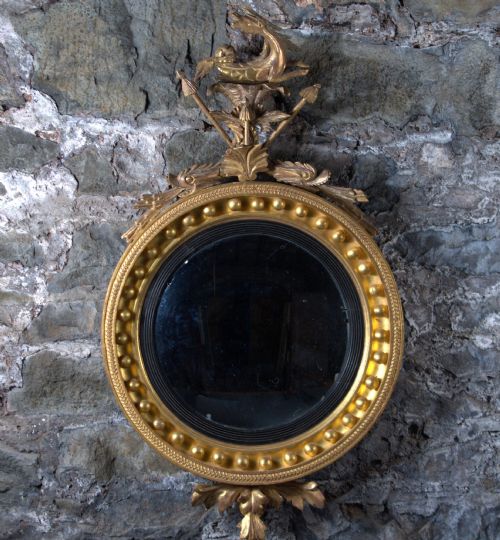
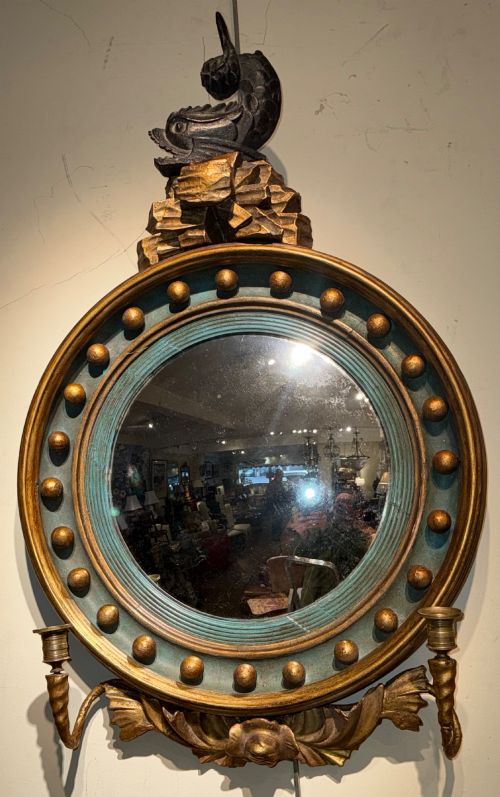
The version you are most likely to meet on this page is the convex wall mirror, often framed in giltwood or carved wood, sometimes taking the form of a porthole, sorcerer's, or witch's glass. These round forms distort perspective delightfully, gathering light from across the interior.
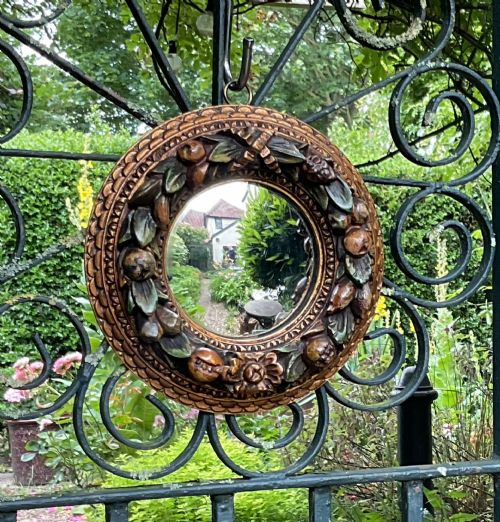
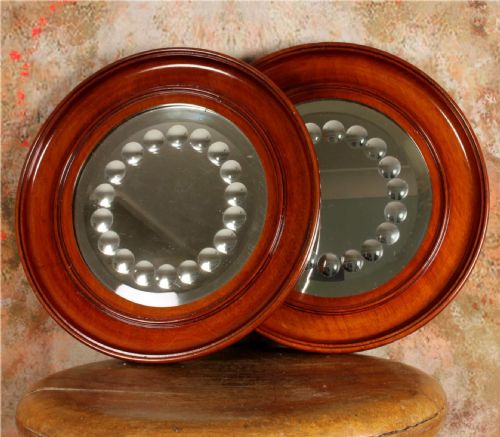
Other variations appear in mahogany and ebonised wood, spanning simpler round frames as well as intricate Florentine rococo carvings and architectural overmantle designs. Styles shift from restrained classical lines to ornate leaf and dragon motifs.
How they were made
Mirror glass and specialist convex plate glass form the optical core of these objects, curved to project panoramic reflections into the room. Brass components sometimes appear in structural brackets or decorative mounts, complementing the timber and gilding.
Some convex mirrors feature a spread eagle perched atop the frame, keeping a sharp, perpetual eye on the room below.
What varies in quality
The distinction between tiers of work lies in the depth and crispness of the wood carving, where hand-tooled ornament outshines moulded composition. Superior examples display refined proportions and harmonious integration between the frame and the curved glass plate.
Age and original material integrity also separate fine items from later reproductions, evident in the natural foxing of the mirror plate and the patina accumulated across the timber and gilt surfaces over generations.
The Circular Wood Wall Mirror Glossary
- Convex mirror
- A round mirror with an outward-curving glass plate that captures a wide-angle, distorted reflection of the entire room. This form gained immense popularity during the Regency and Victorian periods.
- Giltwood
- Timber, often pine or gesso-coated wood, covered with thin gold leaf to create a brilliant metallic surface. It forms the primary framing material for many classical circular mirrors.
- Gesso
- A plaster-like mixture applied to wood frames to provide a smooth base for gilding or intricate low-relief carving. Artisans carved fine details directly into this hardened layer.
- Foxed mirror plate
- Glass showing speckled age spots and dark patches where the silvered backing has oxidised over time. Collectors prize genuine foxing as an indicator of great age.
- Ebonised wood
- Timber treated with a dark stain or finish to imitate expensive ebony. This technique provided a stark, dark contrast to gilded details on nineteenth-century frames.
Circular Wood Wall Mirror: Frequently Asked Questions
Where should I hang a convex mirror?
These mirrors suit principal reception rooms, hallways, or dining spaces where their wide-angle reflection can capture the entire interior.
Position them at eye level opposite a window or light source to maximise the illumination they cast across the space.
What is a sorcerer's mirror?
Also known as a witch's mirror, this is simply a convex wall mirror designed to bend light and provide a panoramic view of the room.
Historical superstition once attributed protective qualities to these curved glasses, believing they warded off negative spirits.
How do I date a wood wall mirror?
Dating relies on examining the joinery, the type of timber used, and the construction methods behind the frame.
Characteristics such as hand-carved gesso work, the composition of the mirror plate, and specific stylistic cues point directly to eras like the Regency or Victorian period.
How do I clean an antique mirror?
Dust the carved wood and gilt surfaces gently with a soft, dry brush to prevent damage to the delicate finish.
Clean the glass sparingly with a soft cloth, taking care to avoid moisture seeping behind the plate where the silvering has aged.