





Georgian Gilt Convex Mirror
A georgian gilt convex mirror catches the light of a room entirely, pulling the whole interior into its curved glass.
Georgian Gilt Convex Mirror
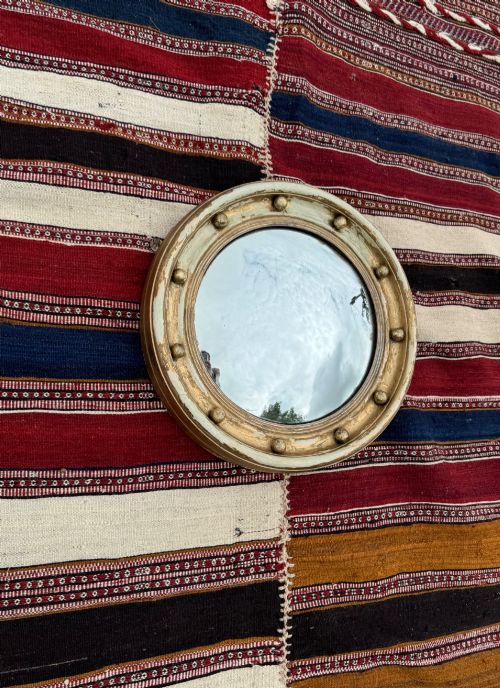
A georgian gilt convex mirror is a circular wall glass designed to reflect a wide view of an entire chamber in miniature form. When searching this phrase, buyers encounter round wall mirrors that span from compact halls pieces to grand saloon proportions.
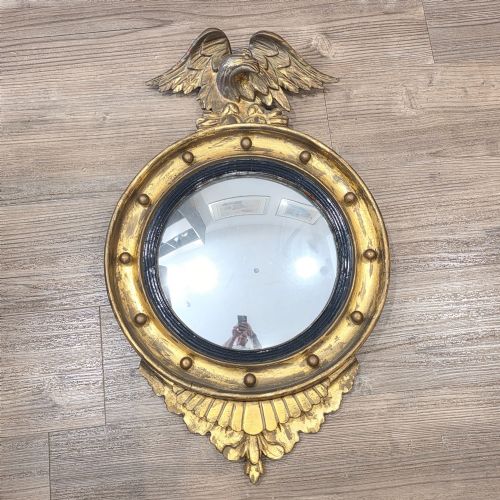
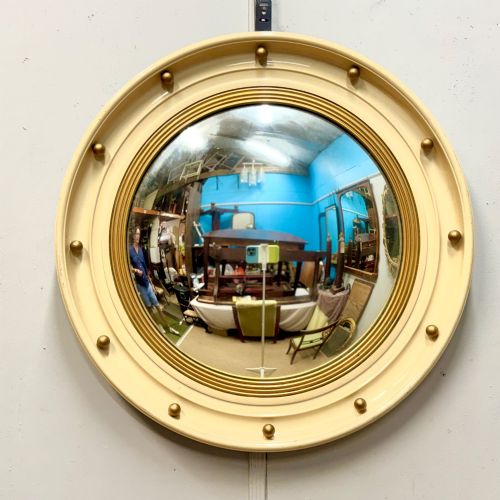
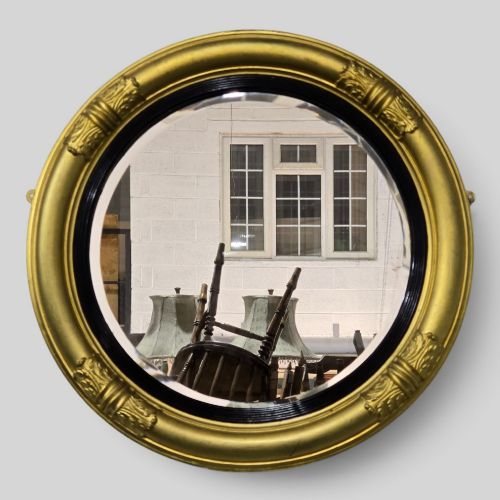
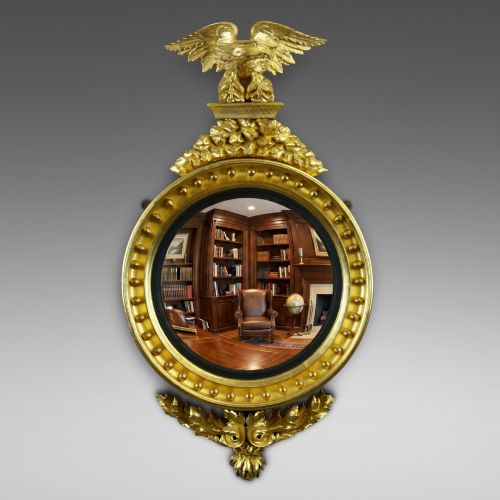
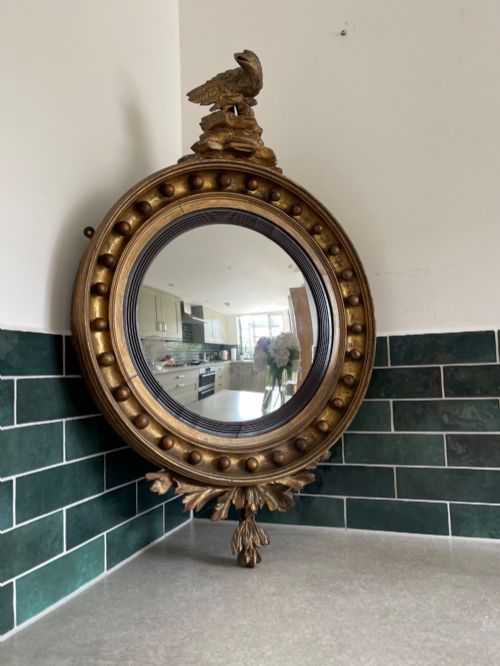
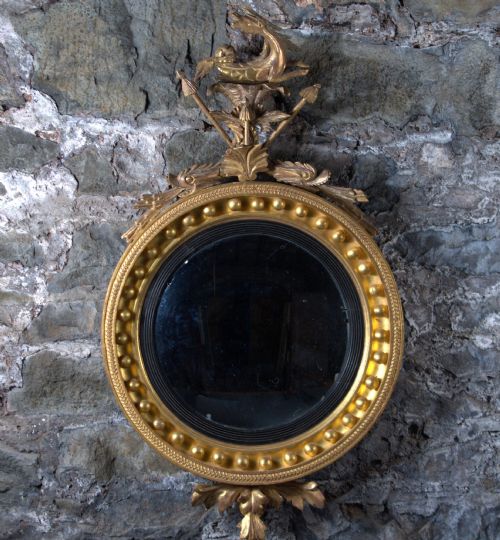
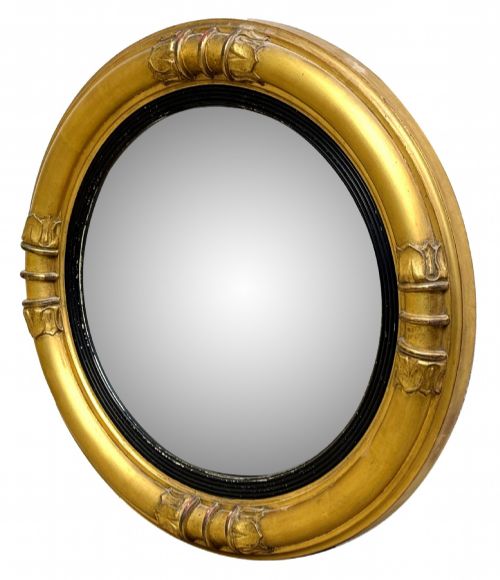
Most examples found here date from the Regency period and the wider nineteenth century, though earlier Georgian roots and later revivals appear. The form often includes a round frame finished in gold, occasionally paired with an ebonised slip near the glass.
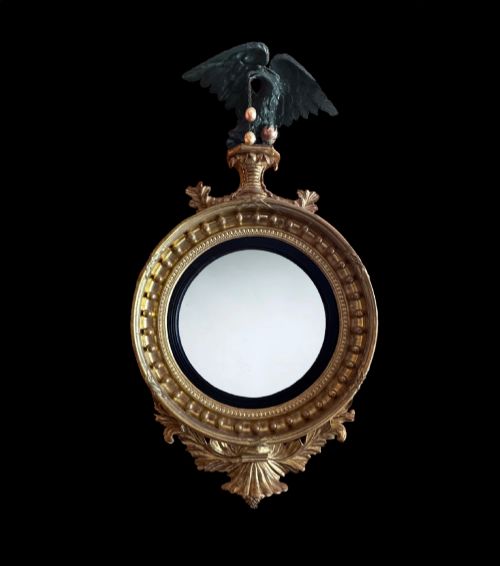
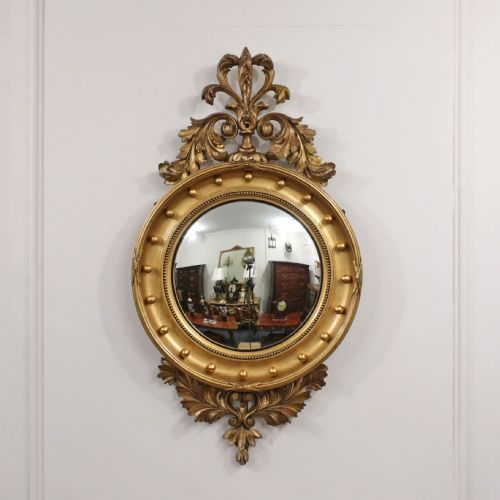
Many of these wall mirrors take simple circular forms, while others carry detailed crests such as spread eagles or dragon mounts. Certain pieces incorporate candle sconces, known as girandoles, which double the flickering light cast into the room.
How they were made
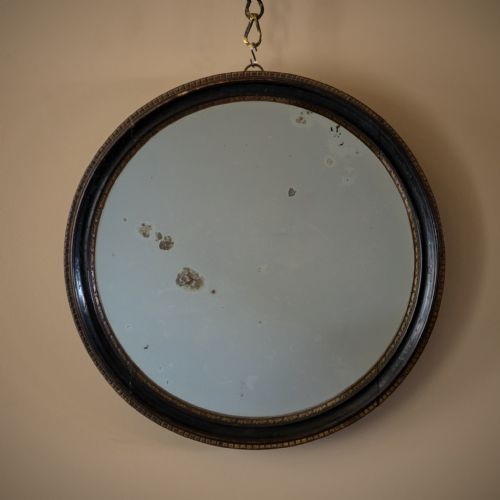
Makers shaped these circular frames from wood and gesso, applying layers of gold leaf or paint to the surface to achieve a bright gilt finish. Ebonised wood slips frequently appear inside the main frame to provide a dark contrast against the reflective glass.
The convex glass itself creates the characteristic fish-eye reflection, curving outward to gather light from every corner of the space. Carved wooden ornaments, including birds and dragons, were attached to the top and base of the circular frames.
Listings for this phrase span the Regency period, Victorian era, and twentieth-century revivals, utilising materials such as giltwood, gesso, ebonised wood, and brass.
What varies in quality
The crispness of the carved detail on the frame and crest separates standard examples from the finest works. Elaborate mounts like eagles and girandole candle arms require careful hand carving that defines the upper tier of these pieces.
The depth of the gilding and the preservation of the original surface condition dictate the visual impact of the mirror. Intact convex glass without excessive clouding maintains the integrity of the optical effect.
The Georgian Gilt Convex Mirror Glossary
- Convex mirror
- A round wall glass with an outward-curving surface that produces a wide-angle reflection of the room.
- Giltwood
- Timber carved and coated with gold leaf or metallic powder to create a bright golden appearance.
- Ebonised slip
- A dark, blackened inner moulding placed directly around the edge of the glass to frame the reflection.
- Girandole
- A wall mirror fitted with attached candle sconces that reflect light forward into the space.
- Gesso
- A plaster-based mixture applied to wood frames to provide a smooth base for carving and gilding.
Georgian Gilt Convex Mirror: Frequently Asked Questions
Where should I hang a convex mirror?
These pieces suit reception rooms and halls where the wide-angle reflection can capture the entire activity of the space. Placing them opposite a window maximises the light they pull into the room.
Because they project visually from the wall, they work well above a mantelpiece or as a single focal point on a plain surface.
How do I know if it is Regency?
Regency examples typically display specific frame proportions, often featuring reeded ebony inner rings and classical ball ornaments around the outer perimeter. The presence of carved eagle crests is also characteristic of this period.
Construction methods on the reverse, including timber ageing and traditional fixings, help confirm the nineteenth-century origins of the piece.
What is a butler's mirror?
The term butler's mirror is often used interchangeably with convex wall mirrors due to their historical placement in service areas. This allowed staff to monitor the room while remaining out of the main line of sight.
Today, the description applies generally to round convex glasses housed in simple or decorative circular frames.
How do I clean the glass?
Careful dusting with a soft cloth preserves both the antique glass and the delicate gilt surface around the edge. Avoid spraying liquids directly onto the frame or the edges of the mirror plate.
Moisture can seep behind the silvering or damage the gesso beneath the gold leaf, so use minimal moisture during cleaning.