




Georgian Revival Server
A georgian revival server brings classical proportion to dining and living spaces through timeless revival craftsmanship.
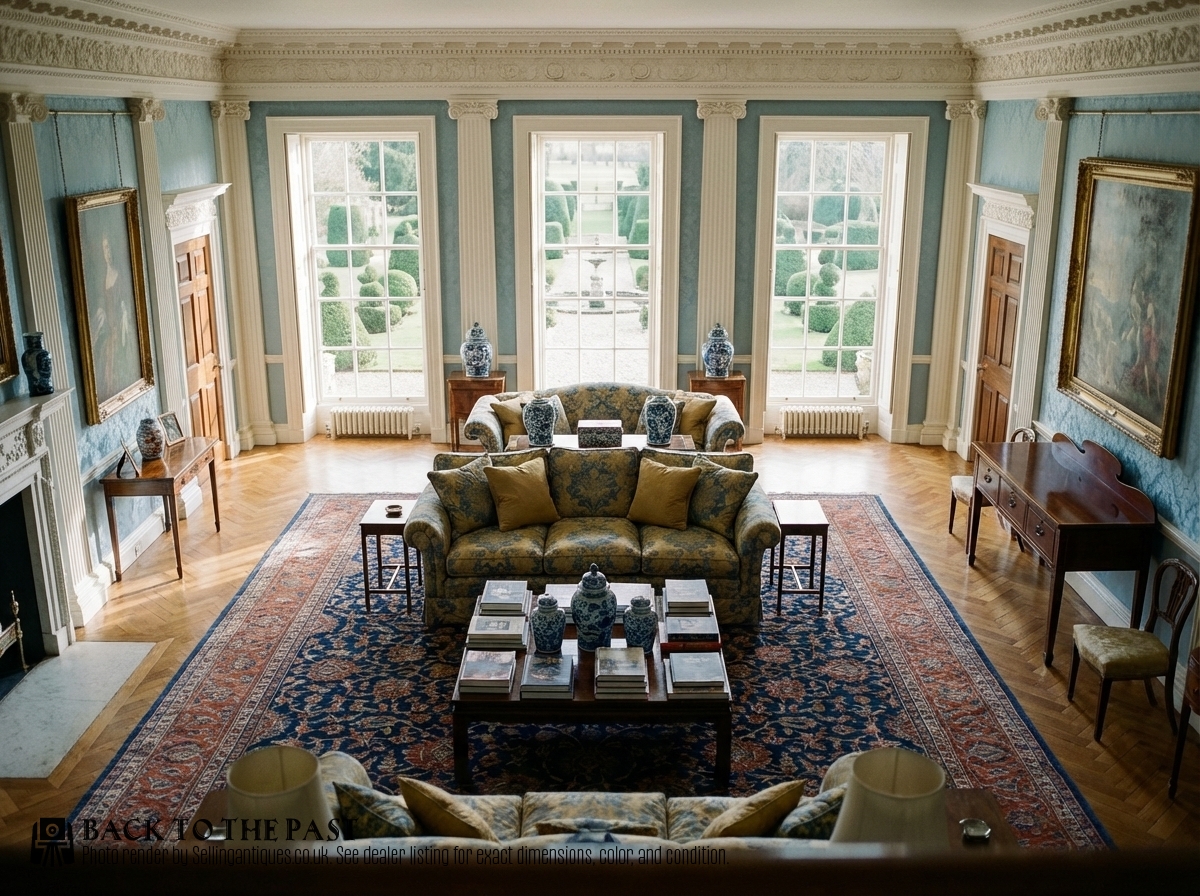
Georgian Revival Server
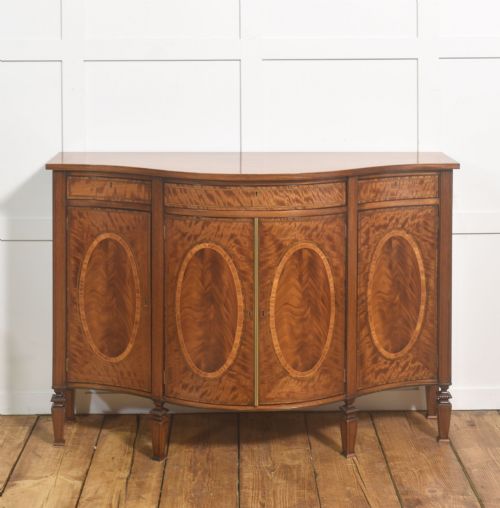
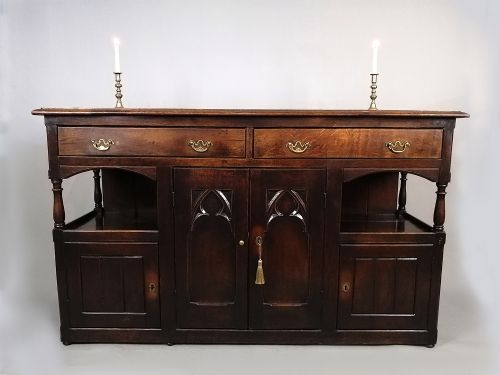
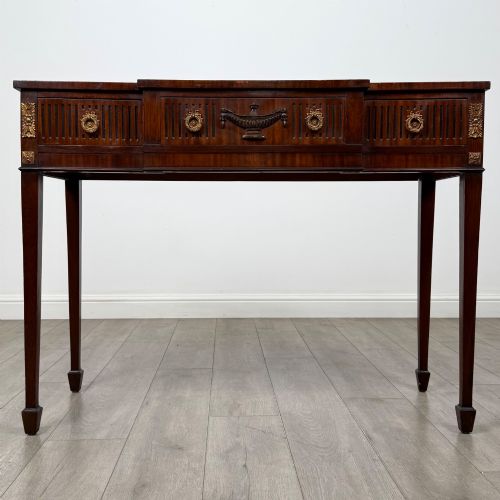
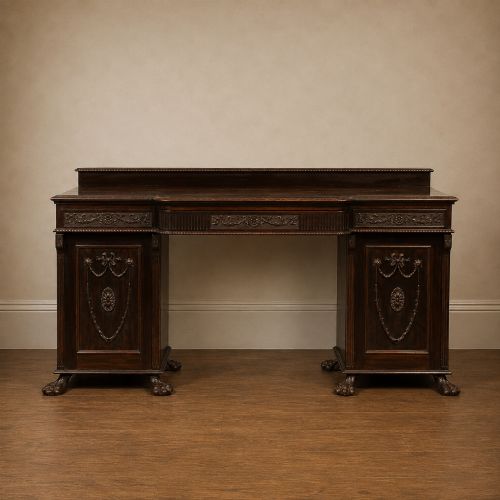
A georgian revival server is a substantial dining or living room piece designed to hold tableware and serving dishes. These pieces draw heavily on earlier eighteenth-century forms such as sideboards, buffets, and console tables.
The versions most common on this page emerge from late-nineteenth and early-twentieth-century workshops. They replicate the grand proportions of earlier eras using Edwardian and Victorian production methods.
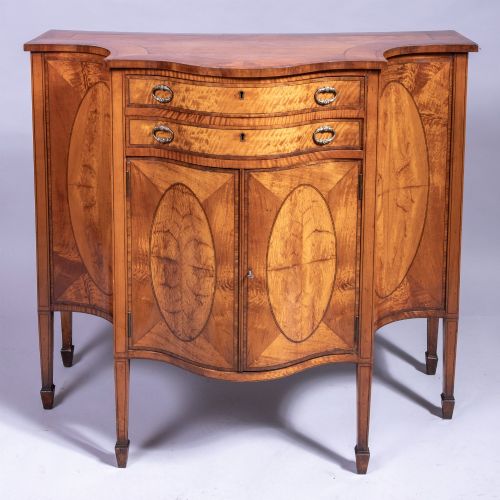
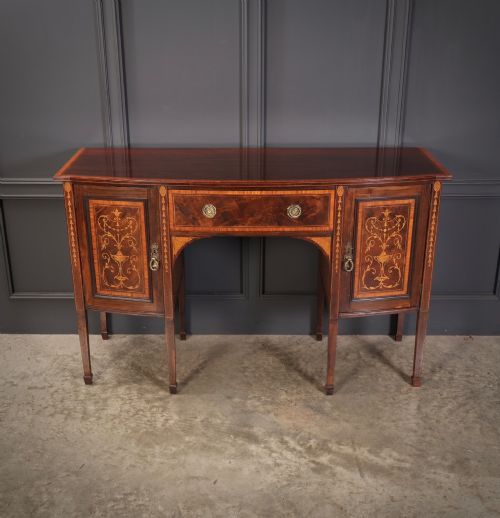
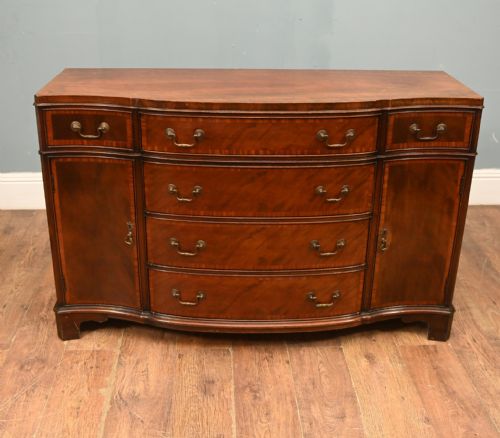
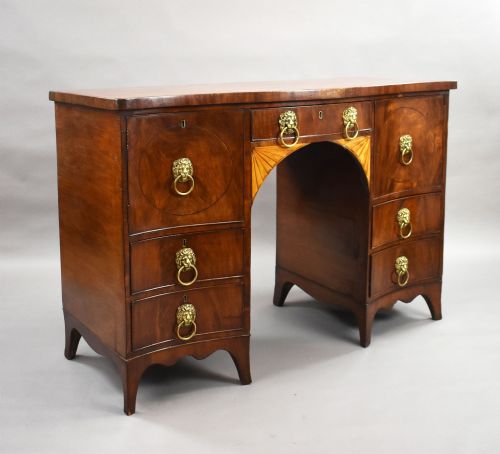
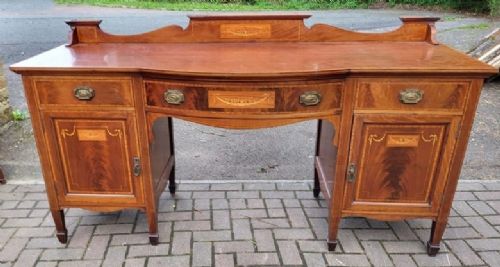
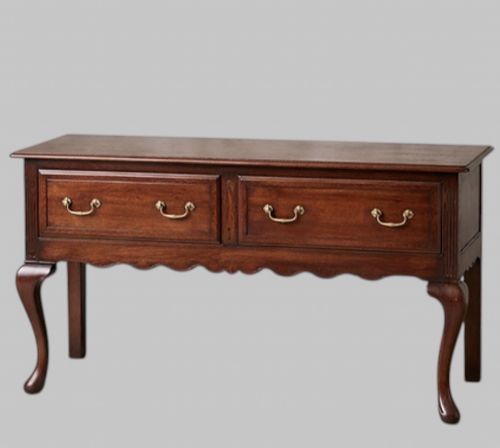
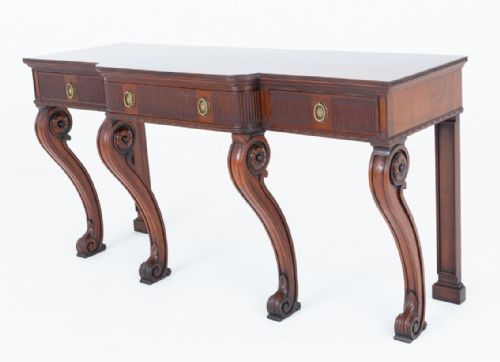
Makers construct these items as sideboards, side tables, and serving tables with bow-front or serpentine shapes. They function as both storage units and display surfaces in traditional dining spaces.
Materials and construction
Cabinet makers rely primarily on solid and veneered mahogany, frequently accented with satinwood inlay, boxwood, and flame mahogany figures. Oak and burr walnut also appear in specific regional or period interpretations.
Surface decoration involves intricate marquetry, cross-banding, and decorative inlay work derived from Sheraton and Adam traditions. Brass hardware and occasional sterling silver elements complete the structural detailing.
One dining server hides its history beneath a marble top influenced by Irish design.
Judging quality in revival pieces
Quality rests upon the selection of timber figures and the precision of the marquetry and inlay work. Superior examples display carefully matched grain patterns across curved bow-front or serpentine doors and drawers.
The crispness of carved details, such as paw feet or classical motifs, distinguishes finer workshops from mass production. Structural integrity depends on heavy framing timbers and tightly fitted joinery within the carcase.
Howard And Sons
The Georgian Revival Server Glossary
- Serpentine
- A front profile curving outward in the centre and inward at the ends. This undulating shape demands high skill from the cabinet maker.
- Bow-front
- A convex, outwardly curved front section typical of late-eighteenth and revival sideboards. It maximises internal storage while softening room angles.
- Marquetry
- Decorative patterns formed by fitting small pieces of veneer into a wood background. It creates pictorial or geometric designs on tabletops and drawer fronts.
- Cross-banding
- A narrow strip of veneer laid around the border of a panel with the grain running at right angles to the centre. This frames the primary timber surface.
- Breakfront
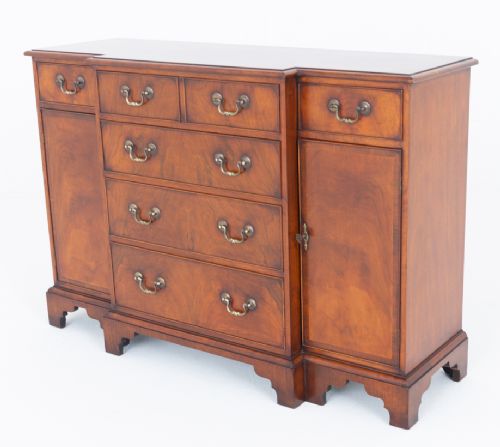
- A piece of furniture where the centre section projects forward from the flanking outer sections. It adds architectural depth to large sideboards and cabinets.
Georgian Revival Server: Frequently Asked Questions
What is a georgian revival server used for?
These pieces serve as practical storage furniture for dining rooms, holding plates, cutlery, and serving dishes within drawers and cupboards. The wide top surface functions as a station for presenting food and drink during meals.
Beyond dining spaces, they act as decorative console tables in hallways or living rooms. Their aesthetic derives from classical eighteenth-century designs suited for formal interiors.
How do I date a georgian revival server?
Dating relies on examining construction techniques, secondary woods inside drawers, and the specific revival style employed. Edwardian and late-nineteenth-century pieces often mix machine-cut elements with hand-finishing.
Stylistic cues such as Sheraton inlay or Adam neoclassical motifs indicate the design source rather than the manufacture date. Most pieces on this page date from the late Victorian and Edwardian eras.
Are these servers solid mahogany?
Many examples utilise solid mahogany for structural posts, frames, and drawer linings. Large flat surfaces like tabletops and door panels typically feature mahogany veneers over secondary timbers.
Inlay work incorporates contrasting woods such as boxwood and satinwood. This combination prevents warping on wide surfaces while maintaining a rich exterior appearance.
How do I style a server in a modern home?
A server anchors a dining room when paired with a large dining table and chairs. Placing matching lamps, trays, or silver items on the top surface completes the traditional look.
In living areas, the piece functions as a side table or console beneath artwork or mirrors. Its rich timber tones contrast effectively against neutral walls.