

Mahogany Server with Drawers
A mahogany server with drawers offers a practical surface and discreet storage, combining rich timber grains with timeless period craftsmanship for daily use.
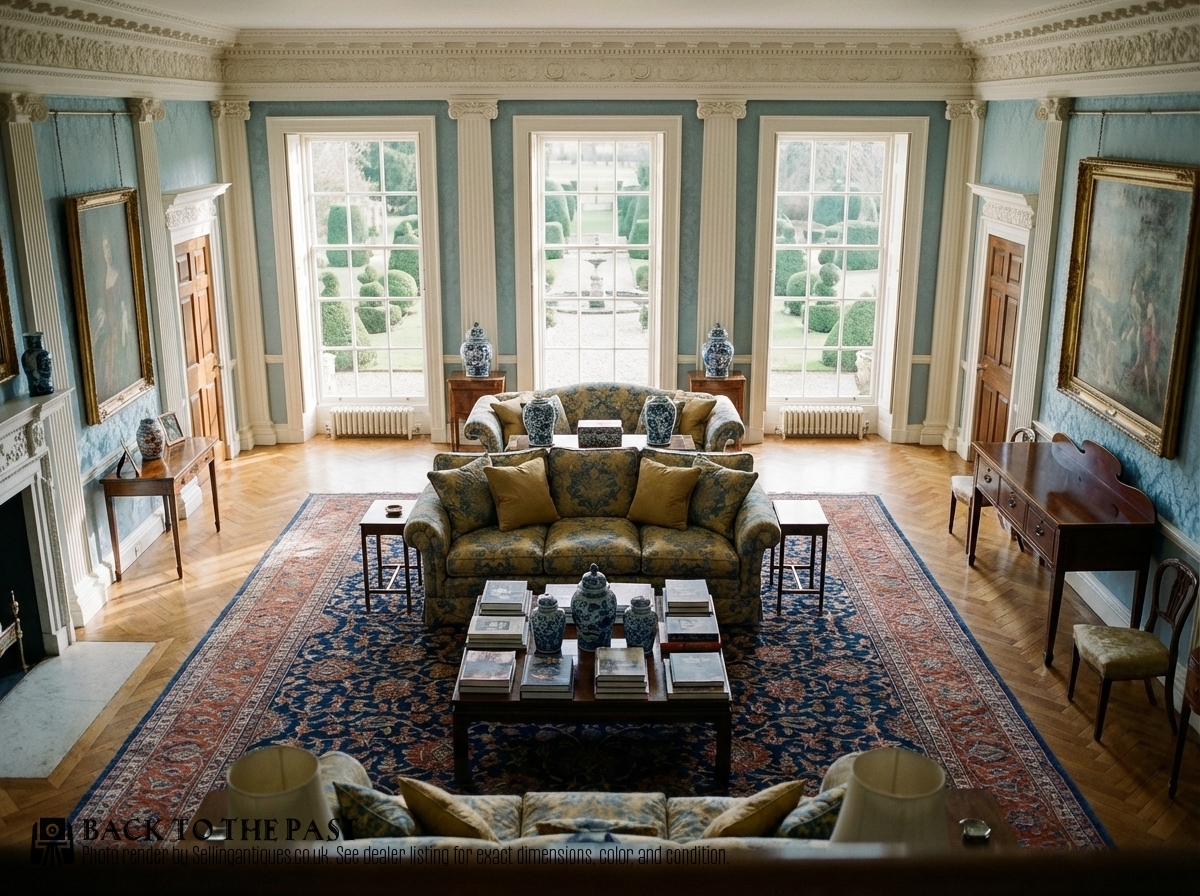
Mahogany Server with Drawers
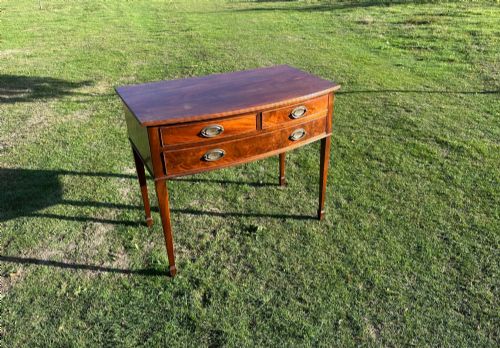
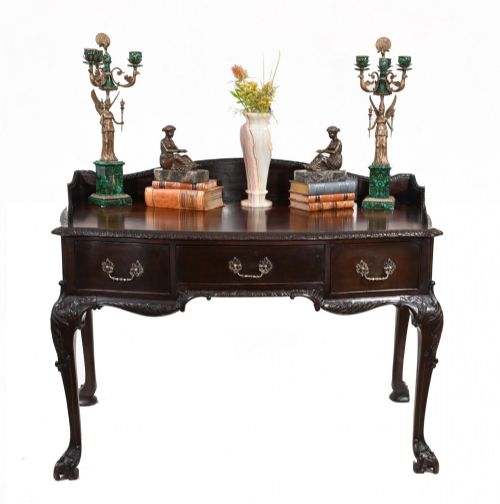
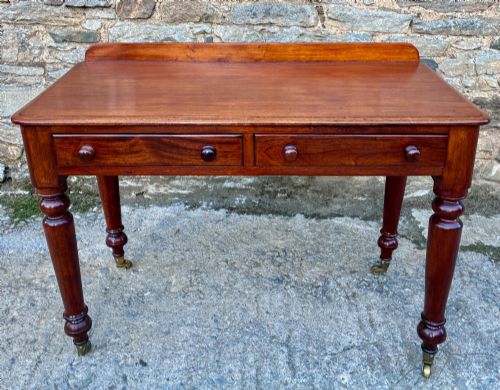
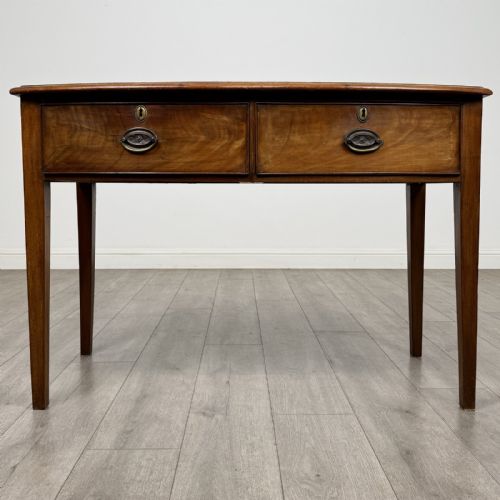
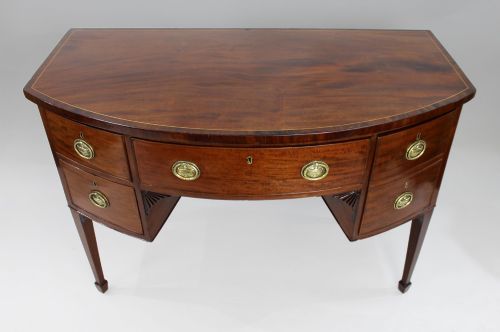
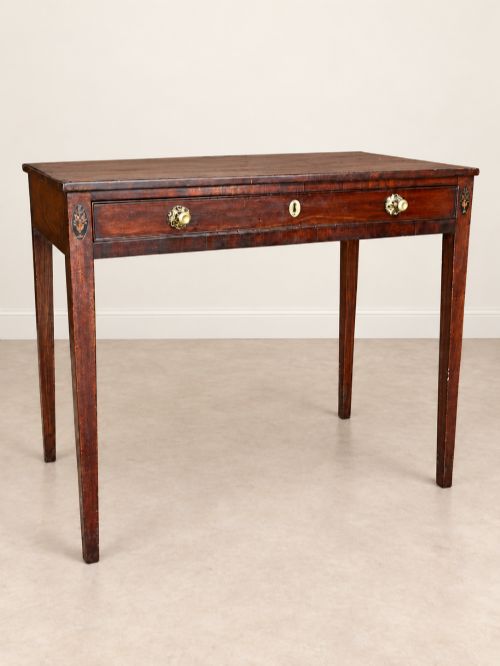
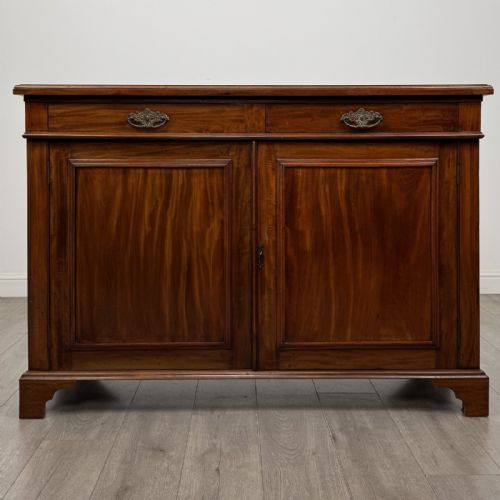
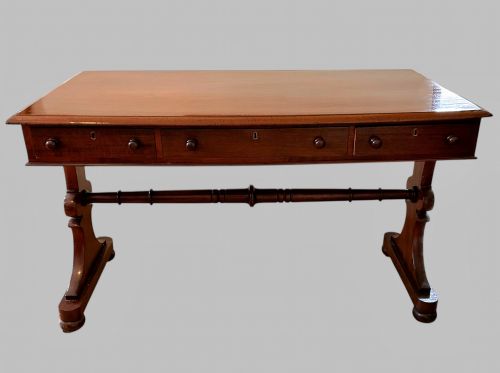
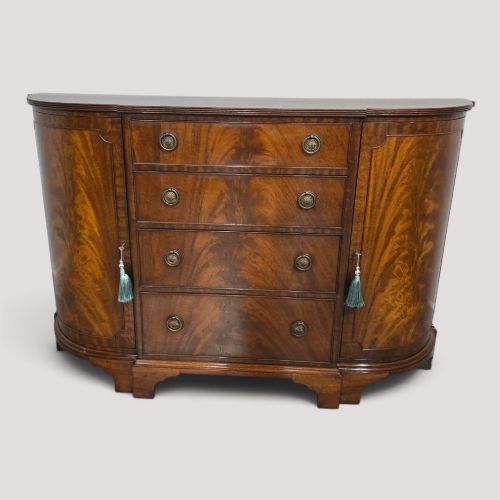
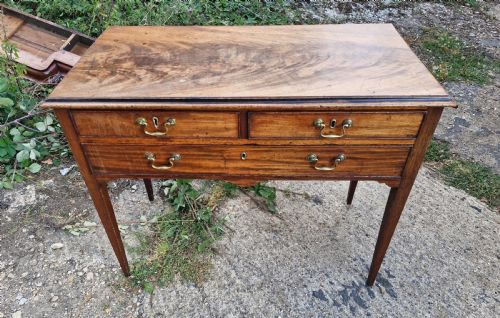
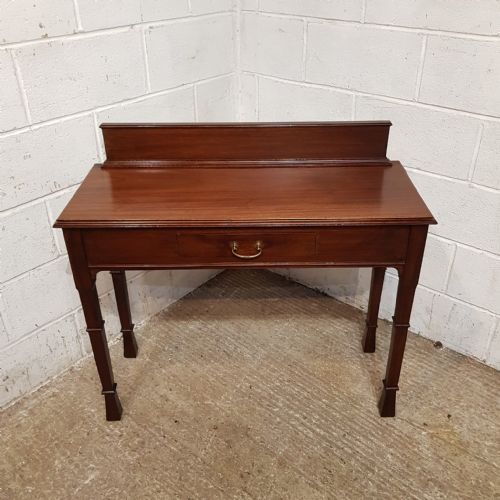
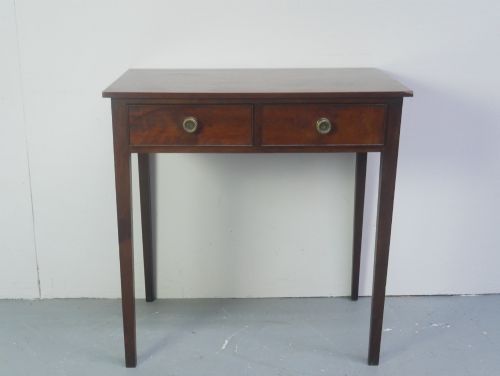
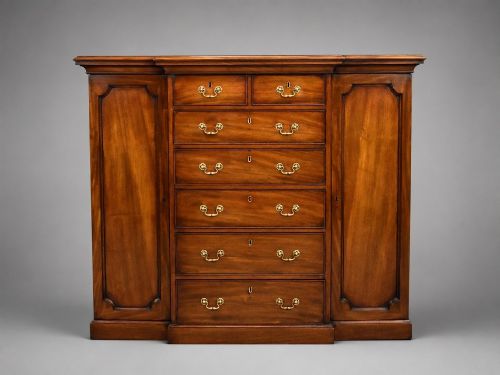
When you examine a mahogany server with drawers, you find a variety of forms including sideboards, serving tables, console tables, and library tables spanning the Georgian, Victorian, and Edwardian periods. These pieces range from compact two-drawer servers to large sideboard configurations designed for dining rooms and hallways.
The construction typically dates from around 1800 through to the early twentieth century, incorporating revival styles such as Sheraton and Chippendale alongside vernacular forms like Lancashire dresser bases. Most examples you encounter balance functional storage with formal aesthetic presence.
How they were made
Cabinet makers utilised solid mahogany and mahogany veneers applied over secondary timbers such as oak, building carcases designed to withstand heavy daily use. Drawer linings often employ secondary softwoods or oak with hand-cut dovetail joints securing the corners.
Surface decoration frequently involves contrasting timbers, utilising satinwood inlay, boxwood stringing, and rosewood cross-banding to create geometric or neoclassical motifs. Hardware consists primarily of cast brass handles and escutcheons fixed to the drawer fronts.
Mahogany Server with Drawers Retail Price Guide 2026
Typical asking prices for mahogany server with drawers among the pieces listed under this phrase on Sellingantiques today, from the lower quarter to the upper quarter. They describe what is for sale here now, not the wider market.
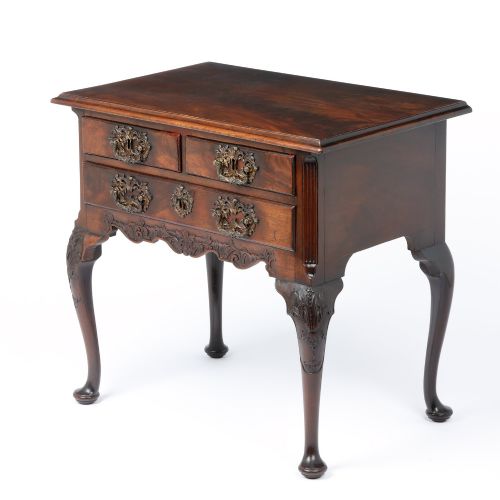
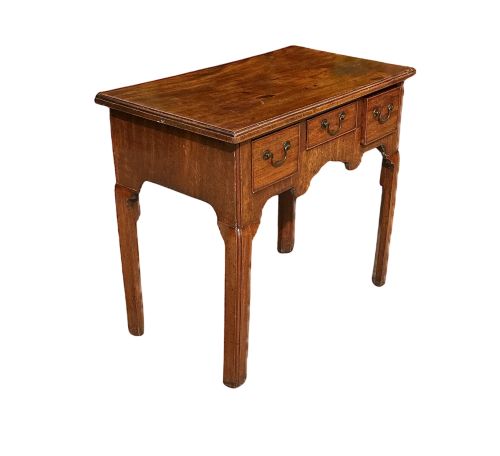
Gothic pierced brackets appear beneath one Georgian table, giving serious storage a sudden wink of medieval architecture.
What varies in quality
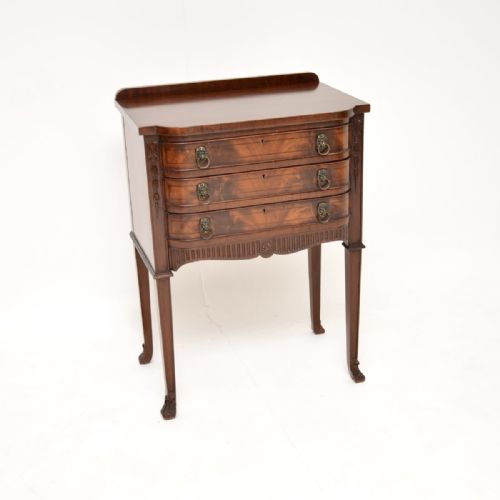
The grade of the timber and the precision of the cabinet work dictate the standing of each piece, distinguishing simple utility items from high-end drawing room furniture. Finely figured flame mahogany veneers and crisp hand-carved details elevate certain examples significantly above plain counterparts.
Structural refinement also separates the ranges, visible in the thickness of the timber, the subtlety of serpentine or bow fronts, and the integrity of internal drawer construction. Pieces exhibiting exhibition quality often display superior joinery, complex cross-banding, and integrated galleries.
Goodall of Manchester
The Mahogany Server with Drawers Glossary
- Cross-banding
- A border strip of veneer laid perpendicular to the grain of the main surface. This technique frames the top or drawer fronts of a serving table.
- Serpentine-fronted
- A piece of furniture featuring a gently undulating front line with a convex centre flanked by concave curves. This contour requires skilled woodworking.
- Dovetail joint
- An interlocking wood joint formed by interlocking wedge-shaped fingers. It provides strong tensile strength for drawer construction.
- Stringing
- A narrow inlay of contrasting wood used as a decorative line. It outlines panels and drawer edges on Sheraton revival pieces.
- Gallery
- A raised decorative border running along the edge of a tabletop. It prevents items from sliding off the surface.
Mahogany Server with Drawers: Frequently Asked Questions
What is a mahogany server with drawers used for?
These pieces functioned historically for serving food or storing dining room linens and silver. Today they serve equally well as hallway consoles or living room display surfaces.
Their fitted drawers provide practical enclosed storage for smaller household items while keeping the timber surface clear for lamps or decorative objects.
How do I identify a Georgian mahogany server?
Georgian pieces generally display restrained classical proportions, solid mahogany construction, and understated brass hardware. Look for hand-cut dovetails and structural joinery typical of the eighteenth and early nineteenth centuries.
Later revival pieces often incorporate lighter satinwood inlay and more decorative cross-banding characteristic of Edwardian interpretations.
Where should I place a console table in my home?
A console or serving table fits well in entryways, narrow hallways, or against dining room walls where floor space is limited. Their shallow depth allows them to sit comfortably without blocking walkways.
Ensure the height aligns with your wall art or mirrors to create a balanced arrangement in the room.
What is Sheraton revival style?
Sheraton revival furniture borrows design elements from the late eighteenth-century neoclassical work of Thomas Sheraton. These pieces typically feature delicate tapered legs and contrasting wood inlays.
In Edwardian interpretations, you often find lighter construction combined with mahogany veneers and geometric stringing.