




Sheraton Revival Serving Table
These sheraton revival serving table pieces offer classic elegance, bringing refined late nineteenth and early twentieth century proportion to modern dining spaces.
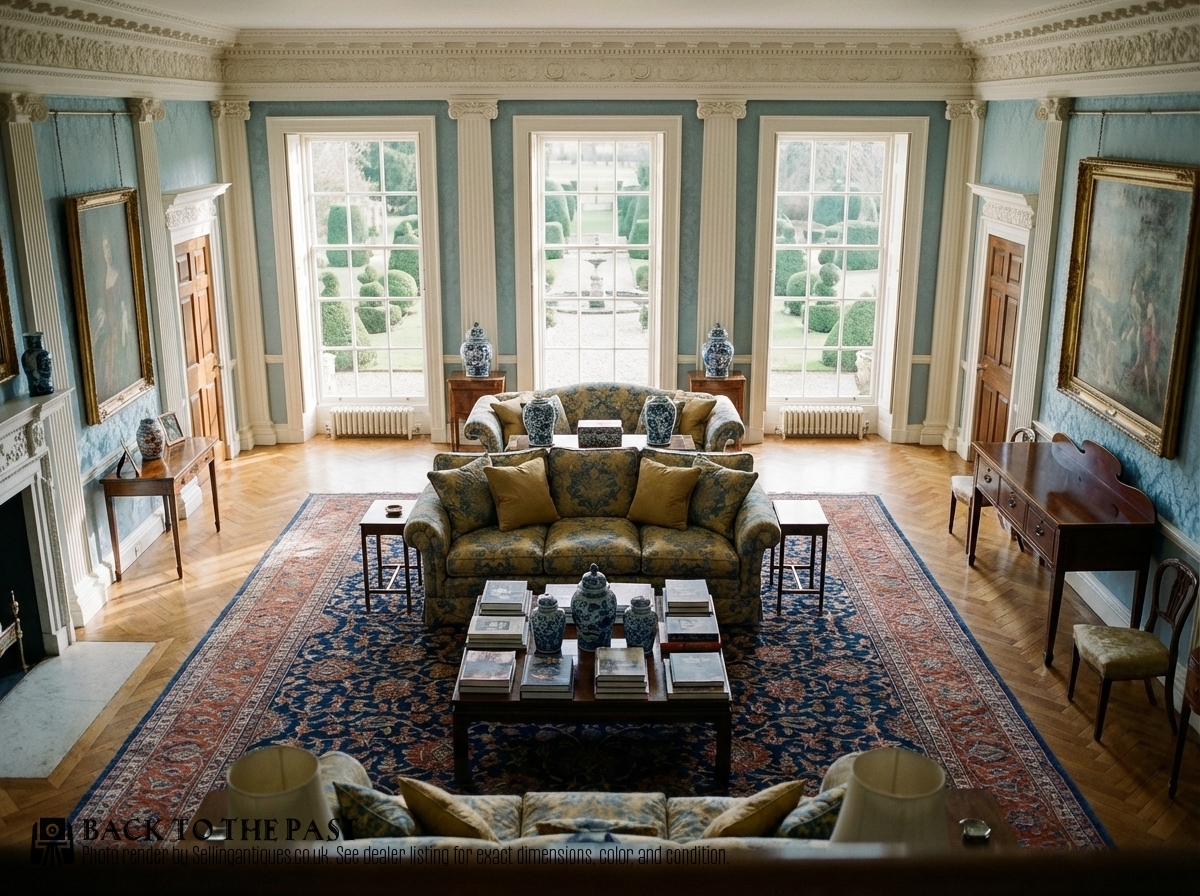
Sheraton Revival Serving Table
A sheraton revival serving table typically appears in Edwardian and late nineteenth century contexts, echoing the lighter forms of the eighteenth century. These pieces function as servers, sideboards, or console tables within dining rooms and hallways.
The most frequent form encountered on this page is the mahogany serving table, often detailed with satinwood and boxwood inlay. Servers and etageres also appear, presenting similar proportions and decorative vocabularies.
Originating predominantly from the Edwardian era and the late nineteenth century, these tables reflect a revival of interest in neoclassical design principles. Buyers seek them for their slender legs, inlaid details, and practical surface areas.
How they were made
Cabinetmakers constructed these tables using mahogany as the primary timber, frequently enhanced with mixed wood veneers and satinwood. Cross-banding and delicate stringing in boxwood define the surface decoration.
Makers employed wood inlay and marquetry techniques to ornament table tops and drawer fronts. Brass fittings, such as handles and castors, complete the construction of these refined serving tables.
Sheraton Revival Serving Table Retail Price Guide 2026
Typical asking prices for sheraton revival serving table among the pieces listed under this phrase on Sellingantiques today, from the lower quarter to the upper quarter. They describe what is for sale here now, not the wider market.
Listings feature mahogany, satinwood, and boxwood inlay across Edwardian sideboards and etageres.
What varies in quality
The refinement of the timber selection and the precision of the inlay separate standard examples from finer ones. Crisp boxwood stringing and well-matched satinwood veneers indicate higher workshop standards.
Proportion and structural grace dictate the standing of a piece within this style. Tables that retain balanced dimensions and subtle marquetry demonstrate superior cabinetmaking execution.
The Sheraton Revival Serving Table Glossary
- Sheraton Revival
- A design style from the late nineteenth and early Edwardian periods that reinterprets the neoclassical furniture of Thomas Sheraton. It relies on light proportions, straight tapered legs, and decorative veneer work.
- Satinwood
- A durable tropical timber with a lustrous, golden-yellow sheen used extensively for veneers and banding. Cabinetmakers prized it for creating high-contrast decorative panels.
- Etagere
- A set of open shelves or tiers used for displaying small objects or serving items. These pieces often feature slender uprights and multiple levels.
- Inlay
- A technique where pieces of contrasting timber, such as boxwood, are inserted into recessed cavities of the primary wood to form patterns. It defines the linear ornamentation on these tables.
Sheraton Revival Serving Table: Frequently Asked Questions
What is a sheraton revival serving table?
It is a late nineteenth or early twentieth century piece of furniture designed in the neoclassical taste of the Georgian period. These tables provide a surface for serving food or displaying items.
They typically feature mahogany construction, satinwood banding, and slender tapered legs characteristic of Edwardian revivalism.
How do I date these serving tables?
Dating relies on timber characteristics, construction methods, and stylistic cues from the Edwardian era or late nineteenth century. Archive records and listed pieces frequently point to the period between eighteen eighty and nineteen ten.
Examine the secondary timbers and the style of the inlay for clues regarding the exact manufacturing decade.
Where should I place a serving table?
These tables suit dining rooms, hallways, or living spaces where surface area and refined proportion matter. Their shallow depth allows them to sit comfortably against walls without dominating the room.
Pair them with complementary Edwardian furniture or use them as standalone console pieces.
How do I care for mahogany and satinwood?
Maintain these surfaces by dusting regularly with a soft, dry cloth and avoiding direct sunlight. Excessive heat and moisture can damage fragile veneers and polished finishes.
Apply high-quality beeswax occasionally to nourish the timber and preserve the natural lustre of the wood.