





Georgian Portrait Jewellery
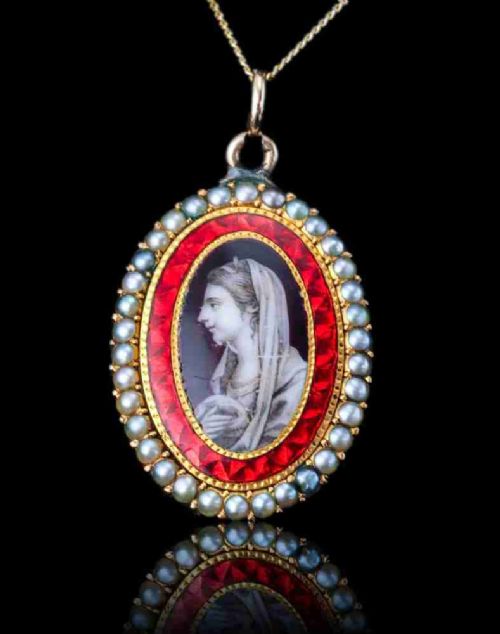
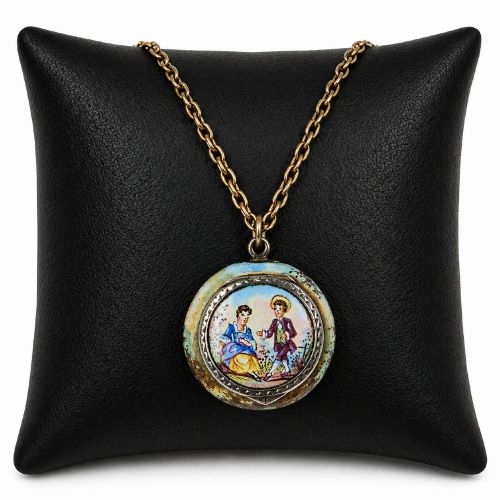
Georgian portrait jewellery carries hand-painted miniatures and silhouettes in gold settings, offering a tangible connection to faces from centuries past.
Georgian Portrait Jewellery
Georgian portrait jewellery encompasses rings, pendants, lockets, brooches, and fob seals that capture likenesses through miniature painting, enamel, and silhouette. These pieces were often commissioned as tokens of affection, remembrance, or status during the eighteenth and nineteenth centuries.
The most common examples on this page are rings and pendants housed in gold frames, featuring either detailed hand-painted watercolours or sharp black silhouette profiles. Buyers typically encounter works spanning the Georgian, Regency, and early Victorian eras, reflecting shifting aesthetics from neoclassical solemnity to sentimental romanticism.
Materials and Construction
Makers utilised gold, often in 9K, 14K, 18K, or pinchbeck, to house delicate painted elements behind protective glass or crystal rock. Frames frequently incorporated detailed metalwork, hair compartments on the reverse, or hardstone mounts.
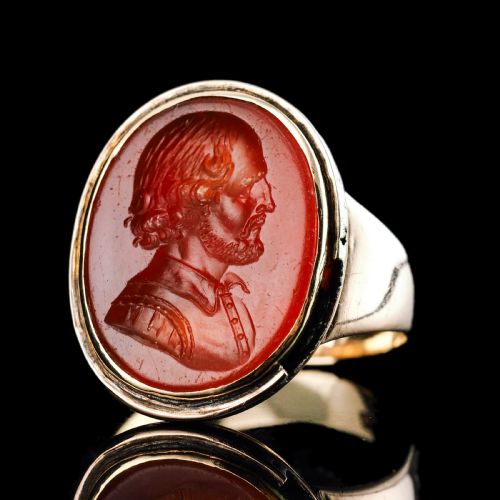
Miniatures were executed using watercolour, pigment, and enamel on ivory, card, or copper, while silhouettes were painted on glass or paper. Intaglio gems carved into carnelian, agate, and hardstone offered an alternative method of portraiture through relief carving.
Look closely for hidden hair compartments on the backs of frames, where owners once tucked discreet locks of a loved one's hair.
Factors That Determine Quality
The sophistication of the brushwork and the precision of the likeness dictate the artistic merit of a portrait miniature. Finer pieces demonstrate meticulous control over pigment and shading, capturing depth and expression within a remarkably small surface area.
The integrity of the mounting, the purity and weight of the gold frame, and the survival of the original glass or crystal faceplate significantly influence the desirability of each piece. Signed works by notable silhouettists or enamel painters elevate historical importance.
Henry Bone ARA·John Miers·Christian Friedrich Zincke
The Georgian Portrait Jewellery Glossary
- Verre Eglomise
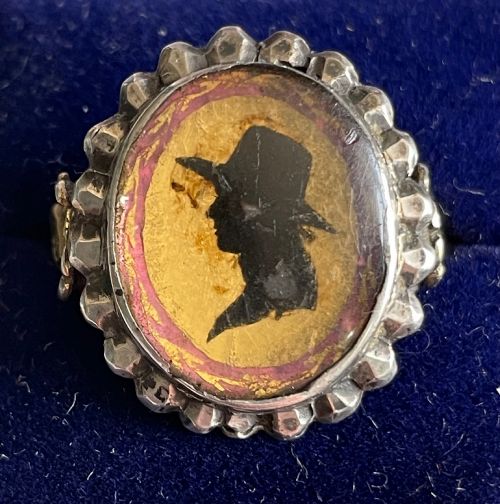
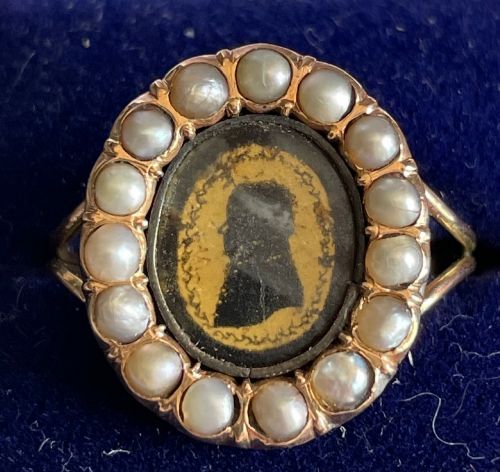
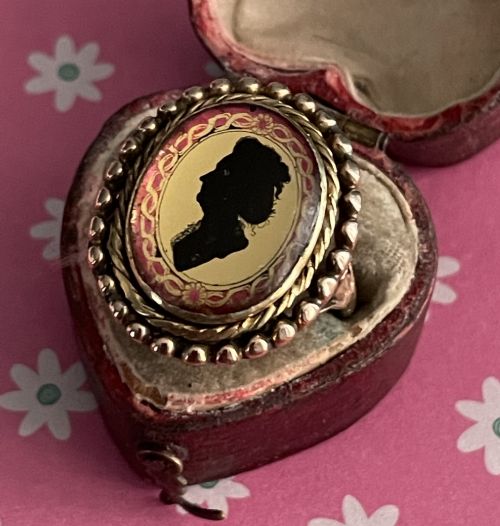
- A technique involving cold painting and gilding on the reverse of glass. It creates a striking mirrored silhouette effect often seen in Georgian pieces.
- Intaglio
- A gem or stone carved with a sunken design so that an impression can be made in relief. Classical profiles of gentlemen and deities were frequently rendered this way.
- Fob Seal
- A small personal stamp used for sealing documents with wax, often mounted with an intaglio stone or portrait. They were commonly worn suspended from a pocket watch chain.
- Pinchbeck
- An alloy of copper and zinc invented to imitate gold. It provides a warm, durable yellow lustre without the precious metal cost.
- Miniature
- A small-scale portrait painting executed with extreme precision. These were designed to be worn close to the body as personal keepsakes.
Georgian Portrait Jewellery: Frequently Asked Questions
How do I wear antique portrait jewellery safely?
Protect these pieces from harsh impacts, moisture, and chemical exposure by removing them before swimming, exercising, or applying cosmetics.
Store them individually in soft pouches away from direct sunlight to preserve the fragile pigments and gold settings.
Were these pieces worn as mourning jewellery?
Many portrait pieces served as sentimental love tokens or tokens of remembrance, though not all were strictly for mourning. Hair was frequently woven into compartments on the reverse to commemorate living loved ones as well as the deceased.
The inclusion of bright enamels and neoclassical motifs often points towards romantic affection rather than grief.
How can I tell a Georgian piece from a Victorian one?
Georgian pieces often feature closed-back gold settings, hand-cut stones, and distinct neoclassical artistic conventions. Victorian examples transitioned towards heavier castings and different clasp mechanisms.
Examining the construction of the frame and the costume details of the portrait helps narrow down the period.
What is a silhouette portrait?
A silhouette is a profile portrait filled in with a solid dark colour, typically black, against a lighter background. They gained immense popularity in the late eighteenth century as an accessible form of likeness.
Artists like John Miers specialised in painting these crisp profiles onto plaster, card, or glass.