




Gold Enamel Portrait Pendant
A gold enamel portrait pendant holds a painted face beneath glass, bringing centuries of personal history into a wearable jewel.
Gold Enamel Portrait Pendant
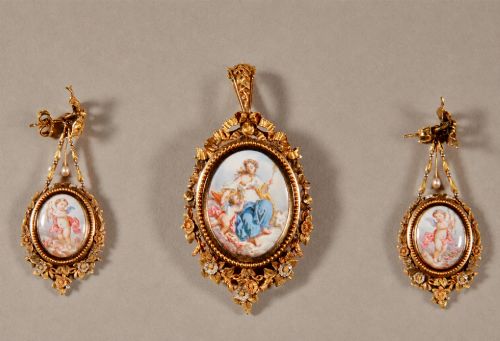
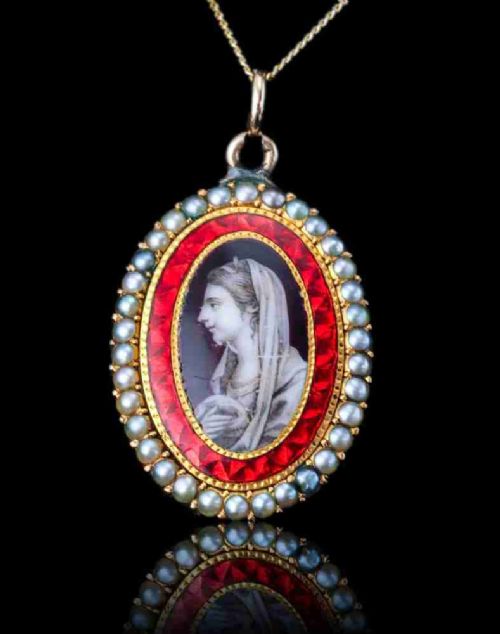
When you search for a gold enamel portrait pendant, you find miniature artworks framed in precious metal that combine portraiture with decorative enamel work. These pieces span from the eighteenth century through the Edwardian era, capturing likenesses of named gentlemen and anonymous sitters alike.
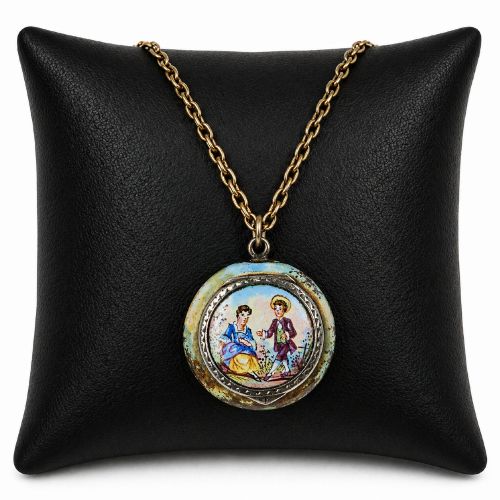
The versions you meet most frequently on this page belong to the Georgian and Victorian periods, often framed in gold or gilt metal with delicate pearl accents. They frequently double as lockets or brooches, designed to be worn close to the heart on a chain or pinned to clothing.
How they were made
Craftsmen shaped these pendants using gold, ranging from nine carat to twenty-two carat, alongside silver and copper for specific structural or backing elements. Enamel was applied to metal surfaces and fired at high temperatures to create durable, glossy coloured grounds or protective covers.
Portraits were meticulously hand-painted in miniature, sometimes using sepia tones or full colour, before being sealed beneath glass or crystal. Goldsmiths then added details such as split pearls and intricate bezels to complete the mount.
Gold Enamel Portrait Pendant Retail Price Guide 2026
Typical asking prices for gold enamel portrait pendant among the pieces listed under this phrase on Sellingantiques today, from the lower quarter to the upper quarter. They describe what is for sale here now, not the wider market.
Some portrait pendants double as secret lockets, originally designed to hide a discreet lock of a loved one's hair behind the painted face.
What varies in quality
The standard of a gold enamel portrait pendant rests primarily upon the skill of the miniature painter and the purity of the metal housing. Pieces by recorded artists demonstrate a finer rendering of facial expression and depth than anonymous workshop productions.
The intricacy of the surrounding work, such as precise granulation, well-matched pearls, and undamaged enamel, separates standard pieces from exceptional examples. The survival of the original backing and glass further elevates the integrity of the piece.
Christian Friedrich Zincke·Henry Bone ARA
The Gold Enamel Portrait Pendant Glossary
- Portrait Miniature
- A small, highly detailed painting on ivory, vellum, or copper that captures a person's likeness. These delicate works require a magnifying glass to appreciate the fine brushwork.
- Enamel
- A glassy substance fused to metal through high-temperature firing to provide durable colour and shine. It protects the metal underneath while adding decorative brilliance.
- Bezel
- A collar of metal that holds a portrait miniature or gemstone securely in place. The craftsmanship of the bezel indicates the overall quality of the mounting.
- Locket
- A small hinged case designed to hold a portrait, lock of hair, or miniature memento. Many portrait pendants double as lockets for dual functionality.
- Sepia
- A dark brown pigment derived from cuttlefish, widely used for monochromatic portrait miniatures in the Georgian period. It creates warm, subtle tones.
Gold Enamel Portrait Pendant: Frequently Asked Questions
What is a gold enamel portrait pendant?
A gold enamel portrait pendant is a piece of antique jewellery featuring a hand-painted miniature likeness set within a gold frame decorated with enamel work.
These items served as personal tokens, memorial pieces, or fashionable accessories across the eighteenth and nineteenth centuries.
How were portrait pendants worn?
Owners typically wore these pendants suspended from chains around the neck or attached to ribbons against the chest.
Many examples feature integrated loops or pin fittings, allowing them to function as both pendants and brooches.
How do I date a portrait pendant?
Dating relies on the style of the clothing and wig depicted in the portrait, alongside the construction techniques of the gold frame and enamel.
Georgian pieces often display sepia tones and simpler bezel designs, while Victorian and Edwardian examples incorporate pearls and higher carat gold mounts.
Are portrait miniatures always painted on copper?
While copper served as a common base for enamel miniatures, artists also painted on ivory, vellum, and card depending on the period and technique.
The backing material influences how light passes through the paint layers and affects the preservation of the artwork.