


Miniature Portrait Brooch
These miniature portrait brooches combine intimate painted likenesses with wearable jewellery from the Georgian, Victorian, Edwardian, and Art Deco periods.
Miniature Portrait Brooch
A miniature portrait brooch is a wearable piece of jewellery enclosing a small painted or enamelled likeness, typically depicting a specific person, child, or devotional subject. When you search for a miniature portrait brooch, you encounter pieces designed to be fastened to clothing, serving as personal tokens or keepsakes.
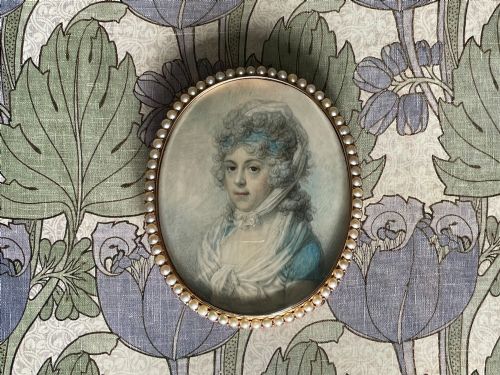
The selections available range from eighteenth-century works by named practitioners to Victorian mourning pieces and later twentieth-century silver and china designs. You meet pieces framed in gold, silver, gilt metal, and gold-toned metal, often enhanced by pearls.
Georgian neoclassical styles sit alongside Victorian examples and Edwardian enamel work. The forms vary from standard pin-back brooches to swivel mounts and stick pins.
How they were made
Mounts incorporate glass to protect the delicate painted surfaces, sometimes combined with pearls for decorative borders. Enamel techniques allowed for durable coloured imagery, as seen in Georgian and Edwardian examples.
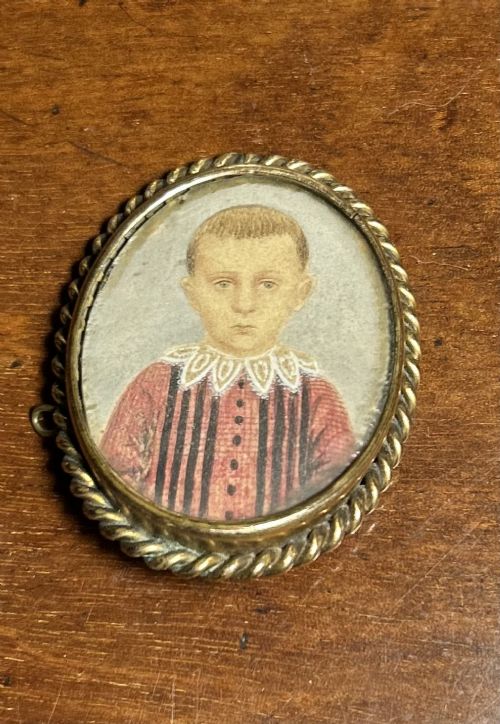
Young boys painted with oversized white collars gaze out from Victorian pins, wondering why adults made them sit still for so long.
What varies in quality
The refinement of the painted likeness determines the standing of a piece, distinguishing skilled hand-painted portraits from simpler decorative representations. The handling of expression, proportion, and detail in the miniature painting shows the competency of the practitioner.
The material of the mount contributes to the character of the object, with solid gold or silver settings offering greater durability and substance than gilt or gold-toned metal alternatives. The integration between the miniature painting and the brooch frame demonstrates the care taken during assembly.
Richard Cosway·Christian Friedrich Zincke·John Barry·John Miers
The Miniature Portrait Brooch Glossary
- Portrait miniature
- A small painting executed on a delicate scale, often capturing an individual likeness on paper, enamel, or china. These works require specialised skills due to their diminutive dimensions.
- Enamel
- A glassy substance fused to a metal surface through firing, providing a smooth and permanent ground for painted imagery. This technique protects the pigments from fading.
- Stick pin
- A long pin with a decorative head, worn upright in a lapel or cravat, functioning similarly to a brooch. Miniature portraits set as stick pins offer a subtle way to wear these painted pieces.
- Swivel brooch
- A mounting style that allows the central frame to rotate, sometimes revealing a secondary compartment on the reverse for hair work or a second miniature. This mechanical feature provides dual display options.
- Neoclassical
- A style drawing inspiration from classical antiquity, frequently appearing in Georgian jewellery through classical motifs and draped attire. It reflects an eighteenth-century enthusiasm for Greek and Roman aesthetics.
Miniature Portrait Brooch: Frequently Asked Questions
What is a miniature portrait brooch?
A miniature portrait brooch is a piece of jewellery that incorporates a small painted likeness, often watercolour on paper or enamel, set into a metal frame with a pin fastening.
These pieces functioned historically as personal tokens, love tokens, or memorials to keep the image of a relative or loved one close.
How do I wear a portrait brooch?
You can fasten a portrait brooch to the lapel of a jacket, the front of a dress, or the collar of a blouse using the integrated pin mechanism. Stick pin variants slide vertically into fabric or cravats.
Because these pieces contain delicate materials like glass, watercolour, and paper, wear them with care away from heavy impacts or moisture.
How do I date a miniature portrait brooch?
Dating relies on the style of the clothing and hair depicted in the portrait, alongside the construction methods of the metal mount and the framing materials. Georgian pieces often display neoclassical clothing and simpler gold or gilt settings.
Victorian examples frequently incorporate mourning elements or swivel mounts, while Edwardian and later twentieth-century pieces show shifts toward enamel work and silver or china combinations.
Were these brooches used for mourning?
Some portrait brooches served as mourning tokens, particularly during the Victorian period when commemorating deceased relatives became widespread. These examples sometimes feature swivel mounts or hair work compartments on the reverse.
Other pieces functioned as sentimental love tokens exchanged between living family members or romantic partners.