


Profile Portrait Ring
These profile portrait ring examples capture a miniature likeness in gold and hardstone, offering a wearable piece of history that collectors prize.
Profile Portrait Ring
A profile portrait ring is a finger ornament displaying a human silhouette or carved head in intaglio or cameo form. Buyers searching for a profile portrait ring encounter specimens chiefly from the Georgian, Victorian, and Edwardian eras, alongside pieces dated to the eighteenth and nineteenth centuries.
How they were made
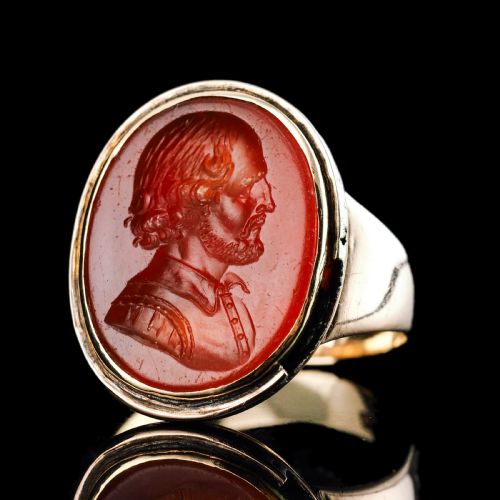
The makers utilised precious metals such as yellow gold, rose gold, and silver to set stones like carnelian, agate, and hardstone. These hardstones and minerals were hand-carved to produce intaglio designs sunken into the stone or cameo reliefs projecting outwards.
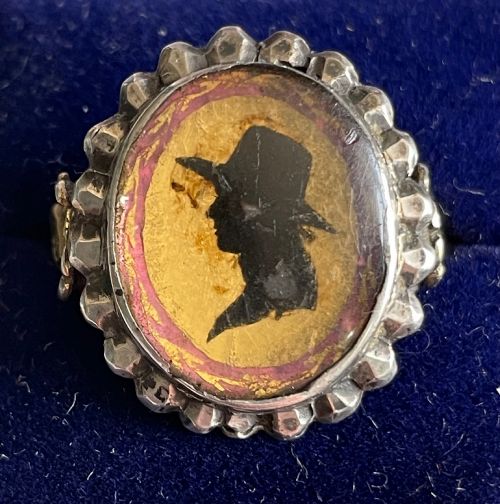
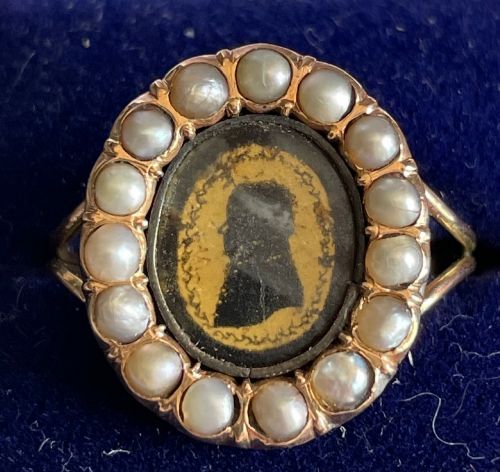
Other examples employ silhouette work on Continental pieces, capturing profile likenesses in monochrome detail. The mountings integrate the carved stones or silhouettes securely into durable ring bands suited to period wear.
The listings show materials spanning gold, silver, carnelian, agate, hardstone, glass, black opal, and coral across multiple centuries.
What varies in quality
Material selection also dictates standing, with heavier gold weights and well-matched stones such as black opal or high-grade carnelian marking out better workmanship.
The Profile Portrait Ring Glossary
- Intaglio
- A gemstone or hardstone carved with a design sunken beneath the surface so that it makes an impression when pressed into wax. This technique appears frequently on nineteenth-century gentleman and deity rings.
- Cameo
- A method of carving where the design is raised in relief against a contrasting background colour. Agate, carnelian, and coral are common mediums for this style.
- Hardstone
- A term for semi-precious stones used in jewellery carving, including agate and carnelian. These durable materials allowed artisans to achieve fine profile details.
- Silhouette
- A portrait rendered in a solid dark profile, typically black, against a light background. Continental examples of this work appear in Georgian jewellery.
- Classical Revival
- A stylistic movement drawing inspiration from the art and forms of ancient Greece and Rome. This aesthetic heavily influences the female portraits and mythological figures seen in these rings.
Profile Portrait Ring: Frequently Asked Questions
What periods do these rings come from?
The pieces span the eighteenth, nineteenth, and early twentieth centuries. This includes Georgian, Victorian, and Edwardian eras.
Specific dates within the listings stretch from the George III period through the 1830s up to nineteen hundred.
What materials were used for the portraits?
Carvers utilised hardstones including carnelian and agate, alongside coral and black opal. Some pieces also feature charcoal silhouette work.
The surrounding mounts are fashioned from yellow gold, rose gold, eighteen carat gold, nine carat gold, and silver.
How do I care for a antique ring?
Wear the jewellery with care, removing it during physical tasks to protect fragile hardstones, coral, and delicate gold settings. Store each piece separately in a lined box.
Clean the metal and stones gently using soft cloths without harsh chemical immersion.