


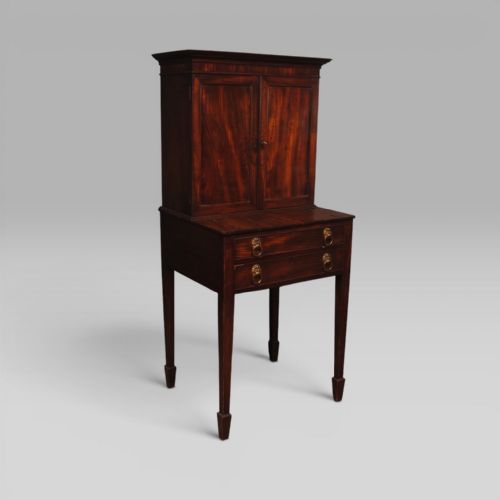


Georgian Period Writing Cabinet
A georgian period writing cabinet brings together fine cabinet-making and practical storage for papers, offering elegant design for daily study.
Georgian Period Writing Cabinet
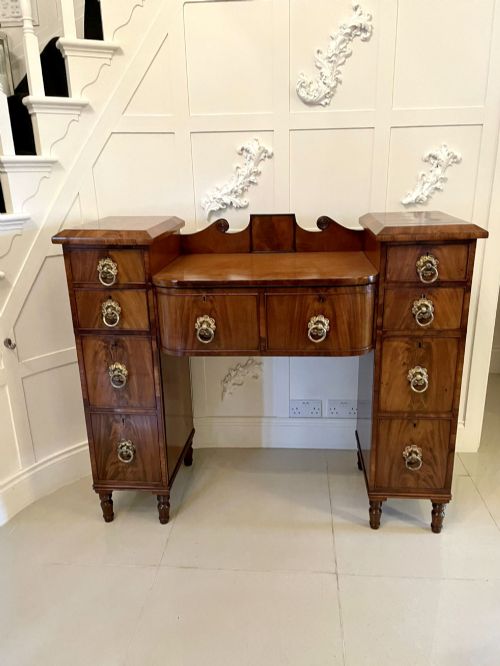
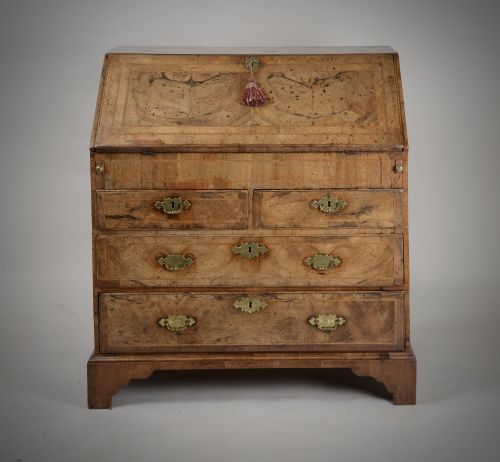
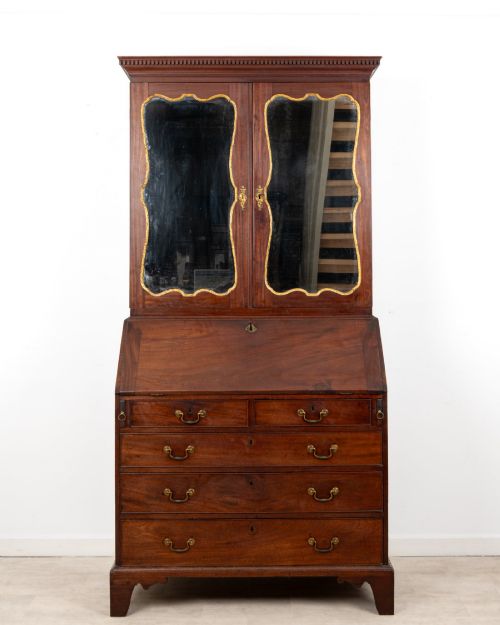
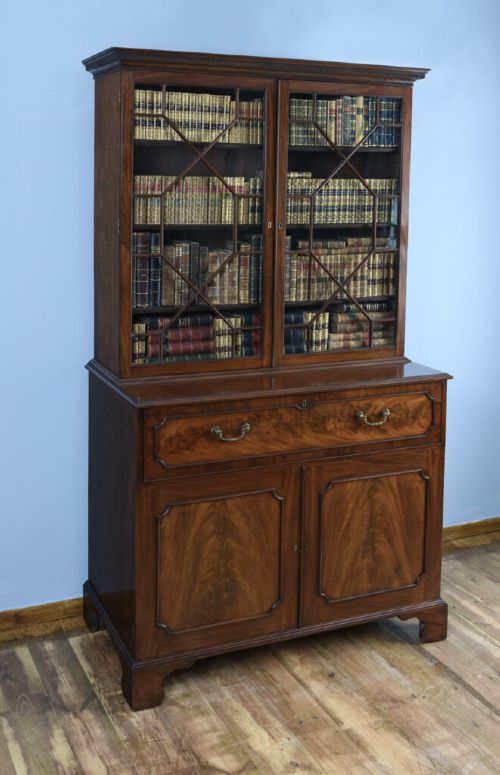
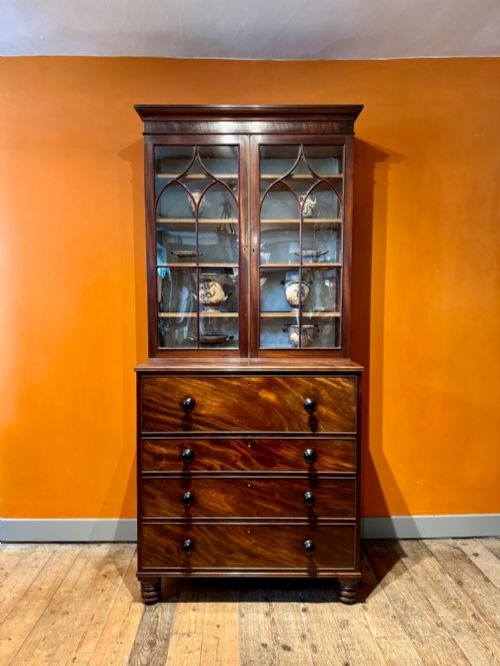
A georgian period writing cabinet encompasses forms such as bureau bookcases, secretaire bookcases, tallboys, desks, and smaller tables like bonheur du jours. These pieces date across the eighteenth and nineteenth centuries, spanning Queen Anne, George I, George II, George III, Chippendale, Sheraton, and Regency styles.
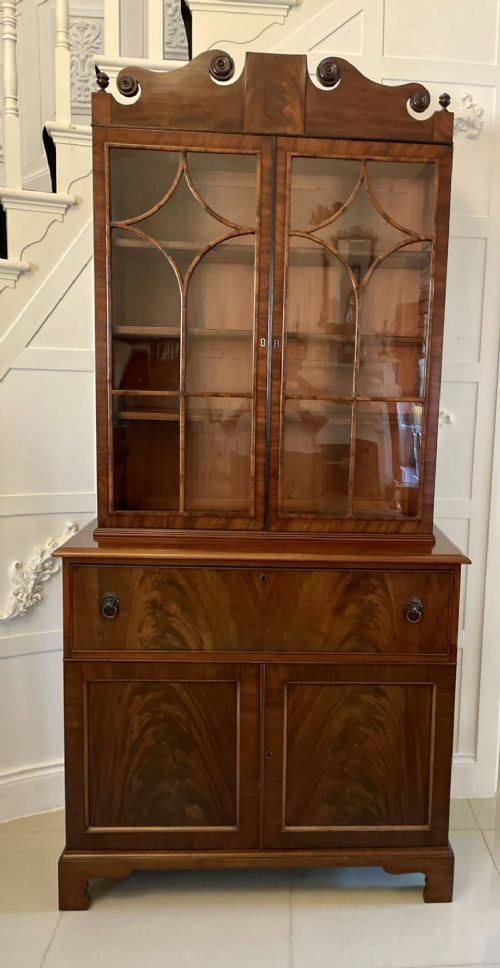
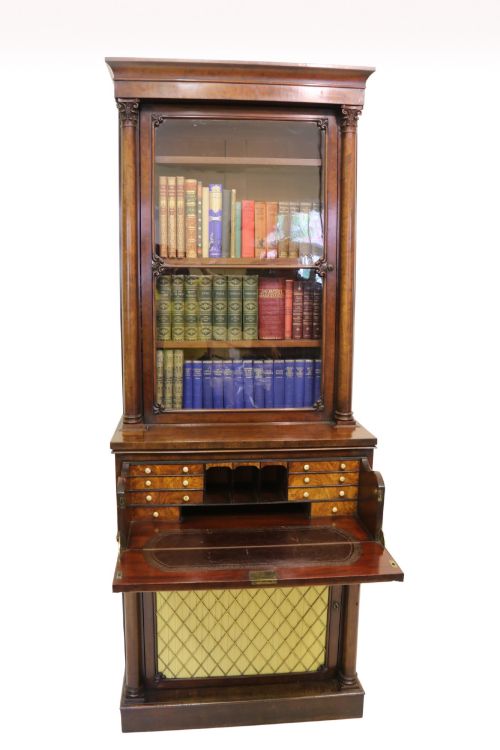
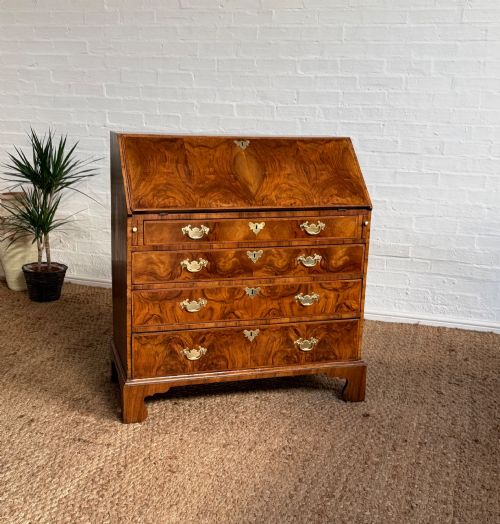
The version most commonly met on this page is the mahogany or walnut bureau bookcase and secretaire, combining a fitted writing drawer or drop-front desk with upper shelving behind glazed or panelled doors. Alongside these larger bookcases, smaller ladies' writing tables and cabinets appear frequently.
Origins trace directly to British workshops and periods of classical design, offering structural compartments for correspondence alongside display space. Buyers encounter timber surfaces ranging from figured mahogany and burr walnut to lighter satinwood and harewood.
How they were made
Cabinet-makers constructed these pieces primarily using solid and veneered timbers such as mahogany, walnut, oak, and satinwood, often accentuating grain patterns with figured cuts. Interiors frequently incorporate lesser timbers alongside fine primary woods for drawer linings and hidden compartments.
Brass hardware, including drop handles, escutcheons, and hinges, secures the structural elements, while glazed doors enclose upper bookcases. Leather writing surfaces, often coloured red, are inset into pull-out desks or fall-front writing drawers.
Joinery techniques involve precision dovetailing for drawers and framed construction for doors and carcass bodies. Decorative elements rely on cross-banding, inlay, and carved mouldings rather than applied cast ornaments.
Georgian Period Writing Cabinet Retail Price Guide 2026
Typical asking prices for georgian period writing cabinet among the pieces listed under this phrase on Sellingantiques today, from the lower quarter to the upper quarter. They describe what is for sale here now, not the wider market.
Many bureau interiors hide secret miniature drawers behind sliding pigeonhole partitions, designed for stashing private letters and coin.
What varies in quality
The refinement of timber selection dictates much of the visual standard, separating standard stock from pieces utilising highly figured burr walnut, fiddle back mahogany, or intricate satinwood inlay. The handling of grain continuity across drawer fronts reveals the cabinet-maker's skill.
Internal complexity and the architecture of the fitted writing section distinguish superior examples from simpler ones. Elaborate pigeonholes, hidden release drawers, and well-proportioned prospect doors indicate higher workshop capability.
Originality of surface finish and hardware preserves the historical integrity of the piece. Untouched patination and matching period brasses carry greater weight among collectors than replaced components.
Gillows of Lancaster·Giles Grendey·Thomas Hope
The Georgian Period Writing Cabinet Glossary
- Secretaire
- A piece of furniture containing a drawer or compartment that folds down to form a writing surface. It often conceals smaller drawers and pigeonholes inside.
- Bonheur du jour
- A light lady's writing desk featuring a small cabinet or set of shelves upon the upper surface. This French-influenced form gained popularity during the Sheraton and Regency periods.
- Bureau bookcase
- A combination of a sloping-front desk and an upper shelving unit enclosed by doors. These tall storage pieces formed central items in Georgian libraries and parlours.
- Cross-banding
- A decorative border technique where veneer strips are laid so the grain runs at right angles to the central panel. This frames drawer fronts and table tops on finer cabinet work.
- Harewood
- Sycamore wood that has been stained to a greyish-brown hue, often utilised in polite neoclassical marquetry and inlay work during the eighteenth century.
Georgian Period Writing Cabinet: Frequently Asked Questions
What is a secretaire bookcase?
A secretaire bookcase combines an upper shelving section for books with a lower chest containing a dedicated writing drawer. The front of this drawer pulls down to reveal a leather-lined writing surface and internal compartments.
Such dual-purpose furniture saved space in period homes while keeping correspondence secure behind lockable doors.
How do I tell George III from Regency style?
George III pieces often display classical mahogany proportions, subtle carving, and architectural cornices reflecting Palladian influence. Regency designs, emerging later, frequently incorporate bolder brass inlay, rosewood or figured mahogany, and inspiration drawn from ancient Roman and Greek forms.
Cabinet work from the earlier Georgian eras tends towards structured formality, whereas Regency items explore lighter, cleaner lines and occasional exotic veneers.
Where were these cabinets used?
These pieces served primarily in private libraries, withdrawing rooms, and parlours where gentlemen and ladies attended to daily correspondence. The upper glazed doors protected valuable volumes from dust and soot while displaying them to visitors.
In bedrooms or private dressing rooms, smaller variations like the bonheur du jour or ladies writing table offered a convenient station for letter-writing.
How should I care for antique walnut and mahogany?
Maintain a stable indoor environment away from direct heat sources and strong sunlight to prevent the timber veneers from drying or splitting. Dust regularly with a dry cloth and apply occasional traditional wax to nourish the antique finish.
Avoid liquid polishes containing silicone, which can penetrate porous historical finishes and damage the original patination.