



Double Dome Bureau
A double dome bureau offers magnificent arched cabinetry above a fitted writing slope, combining security for papers with grand architectural presence.
Double Dome Bureau
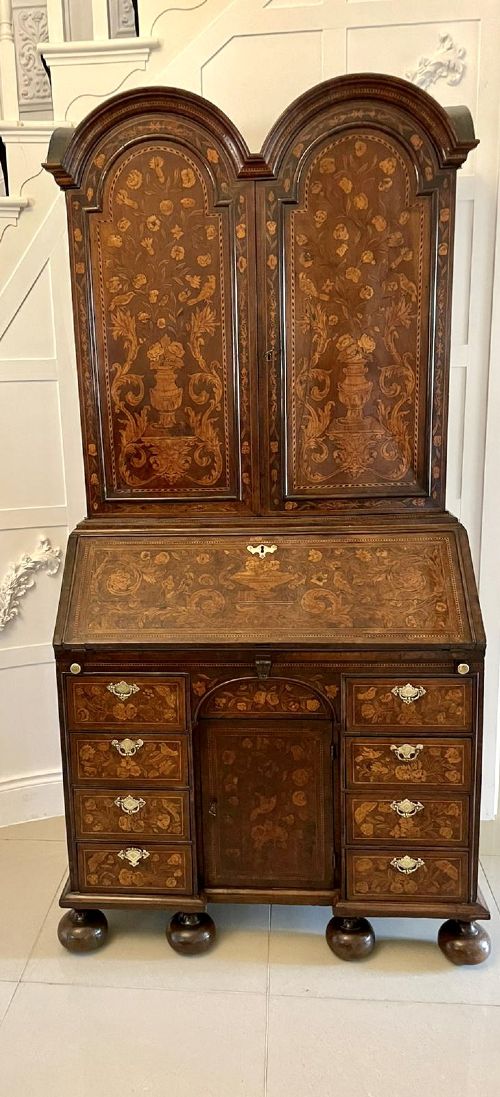
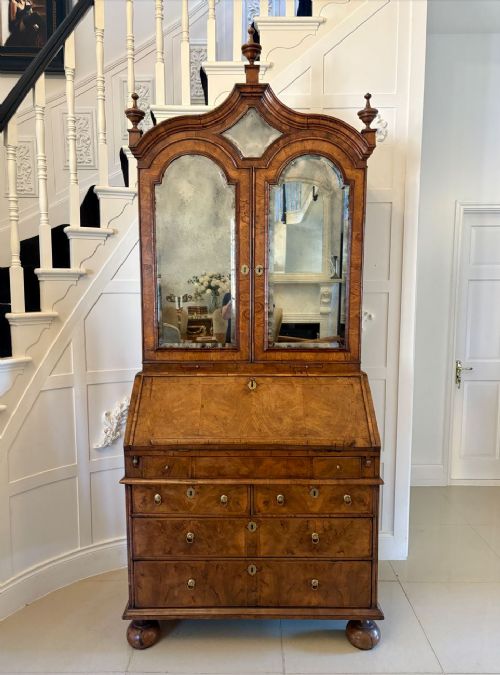
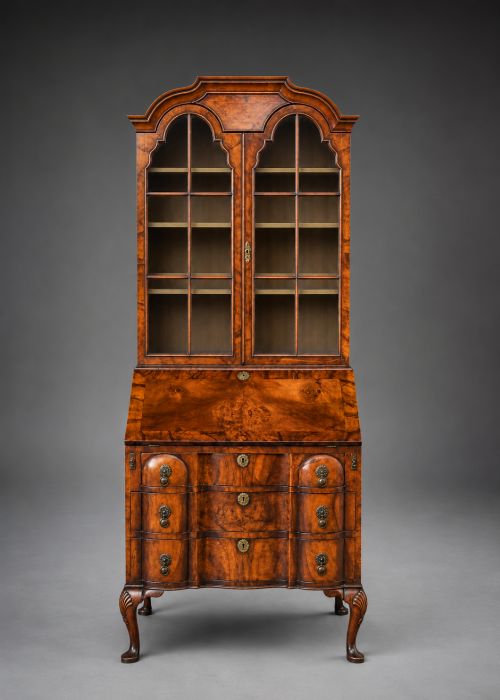
A double dome bureau takes the form of a tall cabinet with twin arched upper doors enclosing shelving, paired with a sloping fall-front desk below. These substantial pieces emerge primarily during the Georgian, Queen Anne, and William and Mary periods, constructed in English, Dutch, Italian, and German workshops.
The version most commonly met on this page is the walnut bureau bookcase or cabinet, often detailed with burr veneers and featherbanding. Examples range from early eighteenth-century originals to later Edwardian revivals and twentieth-century interpretations.
Materials and Techniques
Cabinetmakers construct these pieces using solid oak, fruitwood, and walnut frames, applied with highly figured burr walnut veneers to the exterior surfaces. Crossbanding and delicate featherbanding frame the drawer fronts and doors, while intricate wood and fruitwood marquetry decorates specialised continental examples.
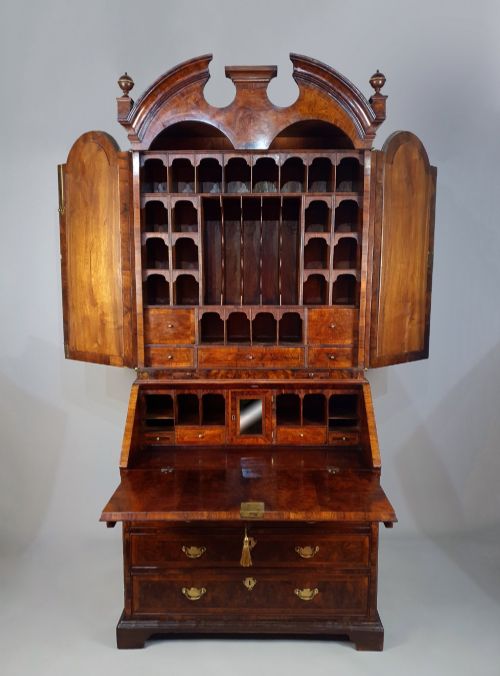
Mirrored or clear glass panels are fitted within the twin arched upper doors, backed by brass hardware including escutcheons and drop handles. Interior writing compartments integrate fitted pigeonholes, small drawers, and secret compartments behind the sloping fall-front.
Listings span the 17th, 18th, and 19th centuries, alongside Edwardian revivals, utilising walnut, burr walnut, oak, fruitwood marquetry, brass, and glass.
Judging Quality
The hierarchy of quality rests upon the selection and matching of the timber veneers, particularly the symmetry of burr walnut figures across the curved domes and fall-fronts. Superior execution shows in crisp featherbanding, fine marquetry detailing, and the retention of original brass drawer furniture.
Proportion and architectural harmony define the finest examples, where the curve of the double dome balances the mass of the lower bureau base. Original glass panes, well-figured secondary timbers, and untouched interior fittings elevate an example far above later revivals.
The Double Dome Bureau Glossary
- Double dome
- A top section featuring two parallel arched hoods. This architectural cresting defines the visual weight of the upper cabinet.
- Burr walnut
- Timber taken from walnut tree growths that produces swirling grain patterns. Cabinetmakers slice this wood into thin veneers for decorative surfaces.
- Featherbanding
- Narrow bands of veneer laid in a herringbone pattern to frame drawer edges. It requires precise cutting and fitting by the artisan.
- Marquetry
- Inlaid pieces of wood and fruitwood forming pictorial designs on furniture surfaces. Dutch and continental workshops frequently employ this technique.
- Fall-front
- A hinged writing flap that drops forward to create a sloping desk surface. It conceals internal drawers and pigeonholes when closed.
Double Dome Bureau: Frequently Asked Questions
What fits inside a double dome bureau?
The upper cabinet houses adjustable shelving behind glazed doors for displaying books or collections. The lower slope opens to reveal small drawers and pigeonholes designed for correspondence.
Larger lower drawers provide concealed storage for household papers and ledgers, keeping the writing surface clear.
How do I care for walnut veneer?
Walnut furniture requires placement away from direct sunlight and heat sources to prevent the burr veneers from drying and lifting. Maintaining stable indoor humidity protects both the timber and the underlying oak framework.
Applying a traditional beeswax polish occasionally maintains the lustre of the wood without building up heavy chemical residues.
How do I distinguish eighteenth-century pieces?
Examining the secondary timbers inside the drawers reveals native oaks or conifers typical of the period. Hand-cut dovetails and timber shrinkage patterns offer reliable indicators of age.
Earlier examples display distinct construction methods in the framing of the double domes compared to Edwardian or later revivals.
Where should I place a bureau bookcase?
These tall architectural pieces require a wall with sufficient height and depth to support their imposing proportions. Placing them in a study or drawing room allows the double dome cresting to draw the eye upward.
Adequate floor space ensures the fall-front can drop fully without obstructing room circulation.