
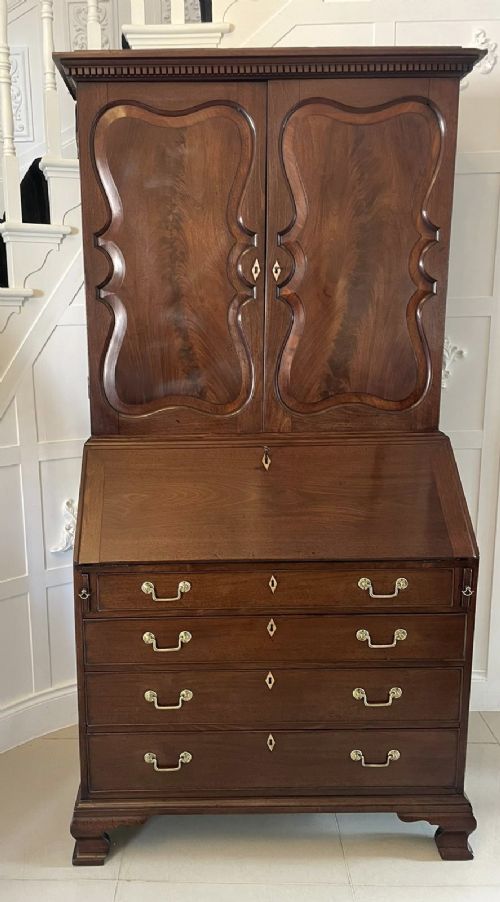
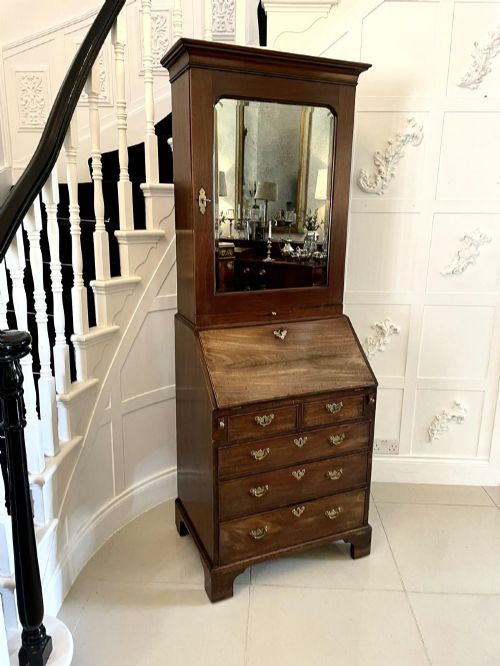
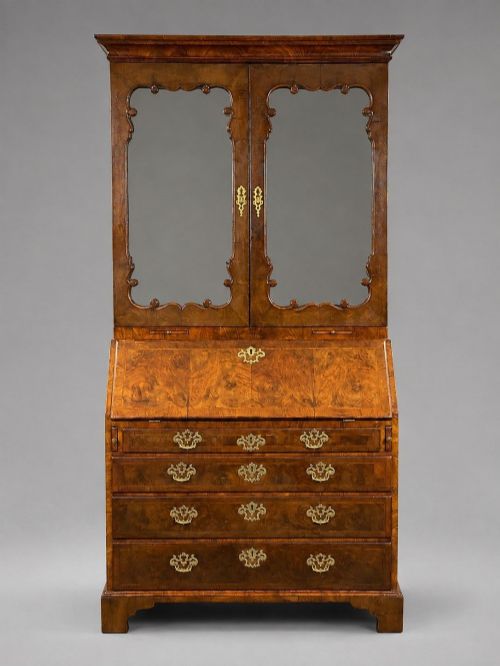


George II Bureau Bookcase
A george ii bureau bookcase combines a fitted writing slope and a glazed shelving cabinet into a substantial piece of 18th-century furniture.
George II Bureau Bookcase
A george ii bureau bookcase serves as a dual-purpose piece of furniture, uniting a lower writing desk with an upper cabinet designed for books and display. The form bridges the reigns of the mid-18th century and reflects the domestic requirements of the period.
The most common examples encountered on this page belong to the George II and Georgian periods, spanning the 18th century. These pieces combine fitted interior compartments with robust proportions suited to historical studies and libraries.
Constructed primarily during the 1700s and around 1750, these bureau bookcases display architectural upper sections, often featuring mirror glass or clear glass panels within the cabinet doors.
How they were made
Cabinetmakers constructed these pieces using dense hardwoods such as mahogany, walnut, burr walnut, red walnut, and oak. These timbers provided the structural strength required for large double-height furniture.
Decorative surfaces relied on figured veneers and carefully selected grain patterns, complemented by brass hardware for handles, escutcheons, and hinges. Glass panels and mirror glass were fitted into the upper cabinet doors to protect and display contents.
Joinery techniques united the heavy carcass of the lower bureau with the lighter superstructure of the bookcase, maintaining stability across both sections.
Listings feature oak, walnut, burr walnut, and mahogany alongside red walnut and mirror glass across 18th-century periods.
What varies in quality
The choice of timber underpins the visual impact of a george ii bureau bookcase, with figured mahogany and burr walnut commanding attention through intricate grain movement. Lesser examples utilise simpler domestic oaks or plain veneers.
The sophistication of the internal fittings, including secret compartments, pigeonholes, and small drawers within the bureau section, distinguishes the work of skilled cabinetmakers from standard production. Superior execution extends to the architectural mouldings of the upper bookcase.
Proportion and surface preservation determine the standing of individual pieces. Well-balanced dimensions and untouched patination on the timber elevate certain examples above others.
Gillows
The George II Bureau Bookcase Glossary
- Bureau bookcase
- A dual-purpose item consisting of a sloping writing desk compartment placed beneath a glazed shelving cabinet. This form became central to 18th-century library and parlour furnishings.
- Burr walnut
- A prized timber harvested from walnut tree growths, yielding intricate swirling patterns used for surface veneering. It appears frequently on high-status Georgian furniture.
- Figured mahogany
- Timber selected for natural optical effects, such as flame or feather patterns, within the grain. Cabinetmakers applied these veneers to primary display surfaces.
- Mirror glass
- Silvered glass panes set into upper cabinet doors to reflect light within rooms. Surviving early examples reflect historical manufacturing methods.
- Red walnut
- A distinct American or West Indian mahogany variant noted for its reddish hue. Makers utilised this dense material during the mid-18th century.
George II Bureau Bookcase: Frequently Asked Questions
How do I date a george ii bureau bookcase?
Dating relies on timber selection, structural joinery, and stylistic markers associated with the 18th century. Walnut predominates in the earlier part of the period, while mahogany gains prominence toward mid-century.
Hardware styles and the design of the interior pigeonholes and drawers also offer clues to the decade of manufacture.
Where were these pieces used in the home?
A george ii bureau bookcase functioned as a primary administrative and storage hub in the private studies, libraries, or withdrawing rooms of wealthy households. The upper cabinet held valuable volumes and papers behind locked doors.
Meanwhile, the fold-down writing slope provided a private surface for correspondence and household bookkeeping.
How do I care for walnut and mahogany?
Maintaining historical timber requires stable room humidity and protection from direct sunlight, which fades natural pigments. Gentle dusting with a dry cloth preserves the aged finish.
Avoid modern silicone polishes, relying instead on traditional wax formulations sparingly applied to nourish the wood grain.
What is the difference between walnut and mahogany pieces?
Walnut bureau bookcases typically date toward the earlier 18th century and often feature figured or burr veneers. Mahogany versions become more common around mid-century, offering a heavier and denser structural frame.
Both timbers were finished to highlight natural grain patterns, though their distinct colours define the visual character of each period.