



George II Mahogany Desk
When you look for a george ii mahogany desk, you enter a world of dense timbers and measured proportions crafted for mid-eighteenth-century writing rooms.
George II Mahogany Desk
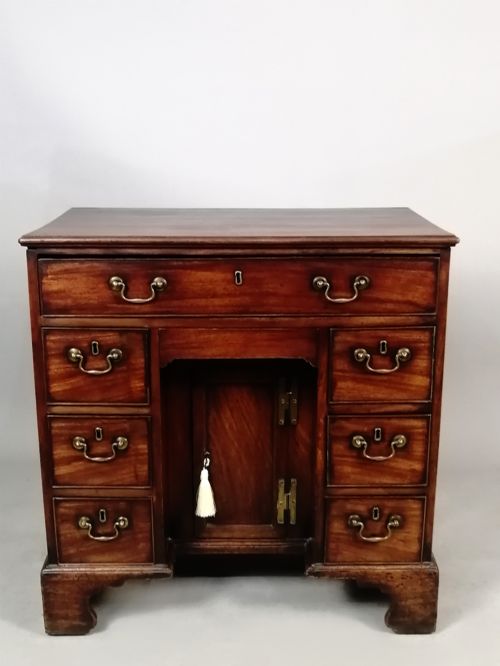
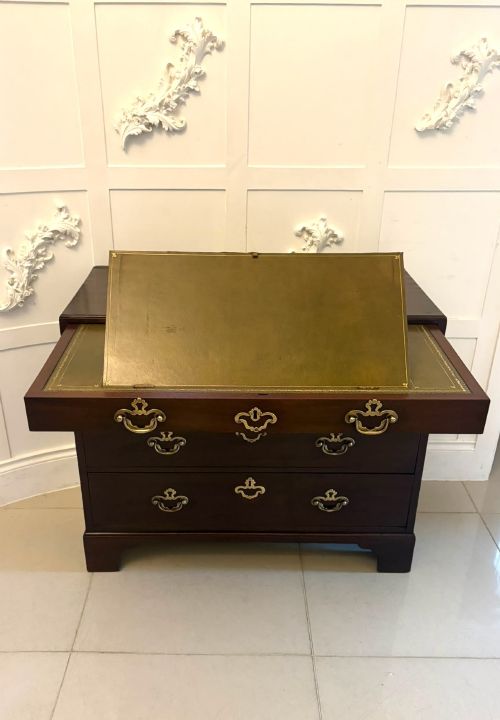
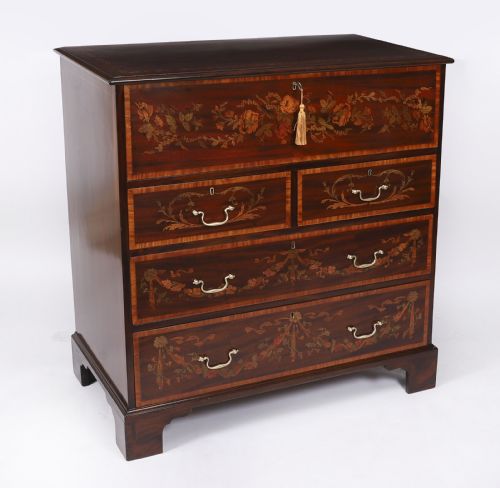
A george ii mahogany desk typically appears as a kneehole variation, a fitted bureau, or a compact writing table designed during the eighteenth century. These forms reflect the domestic habits of the period, providing concealed compartments and central drawers for ledgers and correspondence.
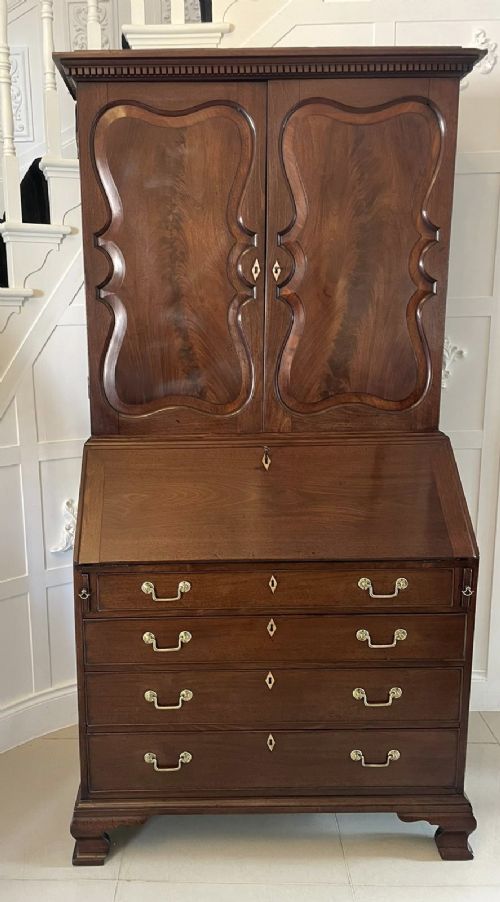
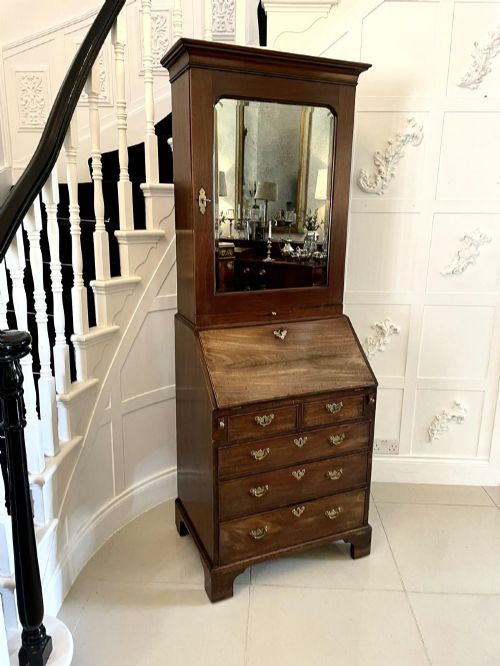
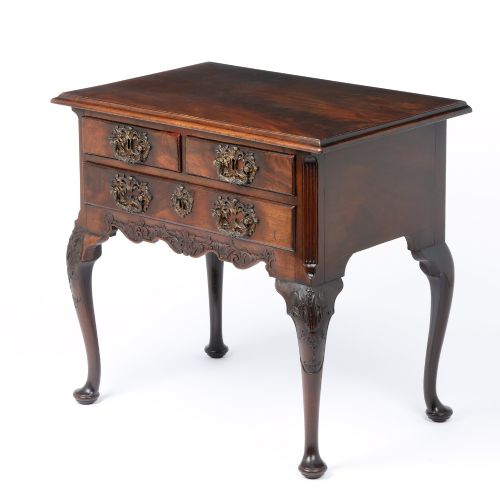
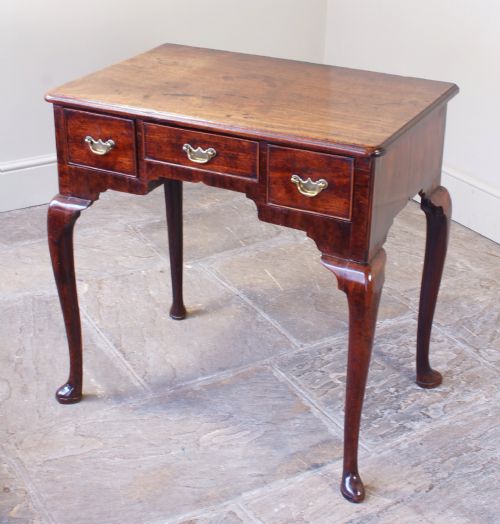
Beyond the standard kneehole format, listings include bureau bookcases and lowboys that share the structural discipline of the era. Makers of the time prioritised functional interiors behind disciplined architectural facades.
While many pieces originate from the eighteenth century, later revivals from the nineteenth and early twentieth centuries also appear. These later interpretations adopt the vocabulary of the mid-1700s with varying degrees of fidelity.
Materials and Construction
Mahogany serves as the primary timber, often selected for its figured grain and deep natural tone. Workshops frequently paired this dense wood with secondary timbers such as oak for drawer linings and internal divisions.
Hardware played an essential role in construction, utilising cast brass handles and key escutcheons secured with hand-cut screws. Joinery relied on precise dovetailing for drawers and mortise-and-tenon frames for structural stability.
Several kneeholes hide secret compartments behind dummy drawers, offering secret hiding spots for forgotten love letters.
Judging the Workmanship
The distinction between tiers rests upon the selection of timber and the crispness of carved details. Superior examples display uninterrupted figured grain across primary surfaces and finely executed mouldings rather than applied ornament.
Internal architecture reveals much about a piece's standing, with better desks offering intricate secret compartments and solid oak secondary framing. The retention of original brass hardware and untouched surface patination further elevate an example.
Mappin and Webb·Edwards and Roberts·Gillows of Lancaster
The George II Mahogany Desk Glossary
- Kneehole desk
- A compact writing table featuring a central recessed recess flanked by banks of small drawers. This form became popular during the early Georgian period for domestic studies.
- Bureau bookcase
- A tall case furniture piece combining a sloping writing flap above drawers with a glazed or panelled upper cabinet for books. The interior typically contains pigeonholes and small drawers.
- Lowboy
- A small side table with one or more rows of drawers, often used as a dressing table or a writing surface in smaller rooms. They frequently feature cabriole legs terminating in pad feet.
- Cuban mahogany
- A dense, heavy variety of timber prized for its rich colour and dark figuring during the eighteenth century. It resists warping and takes a fine polished finish.
- Crossbanding
- A decorative border technique where thin strips of veneer are laid perpendicular to the grain of the primary surface. This frames the top or drawer fronts with a contrasting border.
George II Mahogany Desk: Frequently Asked Questions
How do I identify a genuine period piece?
Examine the secondary timbers inside the drawer linings and the hand-cut dovetails joining the sides. Eighteenth-century construction methods leave distinct tool marks that differ markedly from later machine-made furniture.
Check for consistency in the timber ageing and the patination accumulated over centuries of use. Alterations or replaced elements often disrupt this visual continuity.
Were these desks used for writing or reading?
These forms served primarily for correspondence, household accounts, and the storage of important papers. The inclusion of fitted pigeonholes and secret drawers accommodated the paperwork of a Georgian household.
Some variations incorporated adjustable reading surfaces or pull-out slides to hold inkstands and writing materials while in use.
How should I care for the mahogany surface?
Maintain the finish by applying natural beeswax sparingly and buffing with a soft cloth to preserve the historic sheen. Avoid placing the timber in direct sunlight or near heat sources that might dry out the wood.
Keep humidity levels stable within the room to prevent the solid mahogany and applied veneers from splitting or lifting.
What is the difference between George II and later styles?
Mid-eighteenth-century pieces carry the heavier proportions and robust carved elements characteristic of the 1750s. Regional variations and specific turning details often point directly to this manufacturing era.
Revival pieces produced during the Victorian or Edwardian periods frequently utilise softer secondary woods and display more uniform mechanical tooling under close inspection.