



Double Domed Bookcase
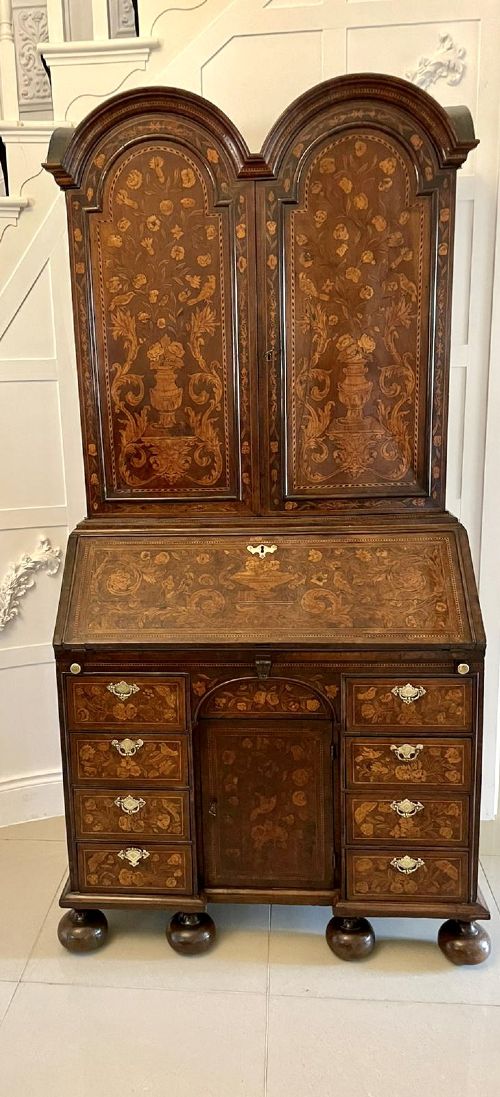
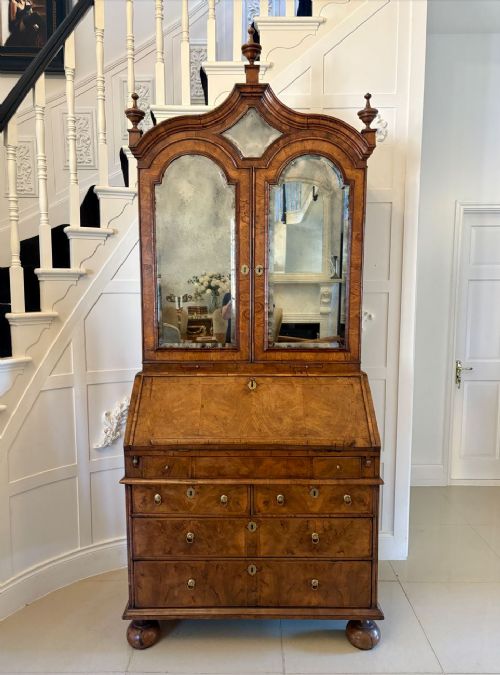
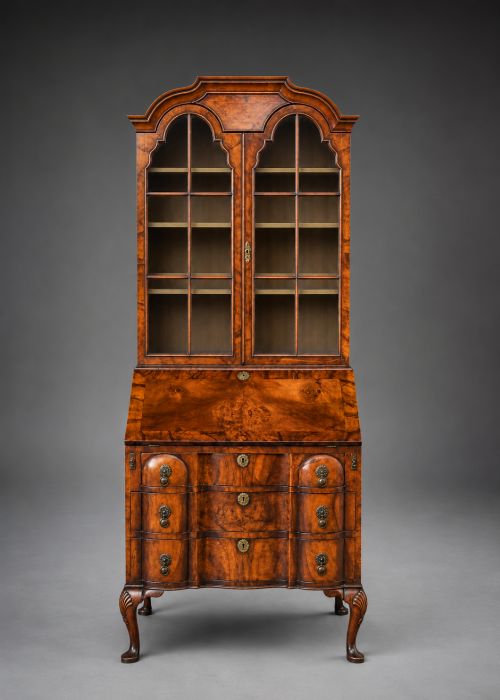
These double domed bookcase examples are grand architectural pieces designed to house a library while concealing a writing desk.
Double Domed Bookcase
A double domed bookcase presents a distinctive upper bonnet with two arched crestings above twin doors, housing shelves within its tall frame. When you search for a double domed bookcase, you encounter impressive cabinet furniture primarily built during the Georgian and Queen Anne periods, alongside later revivals.
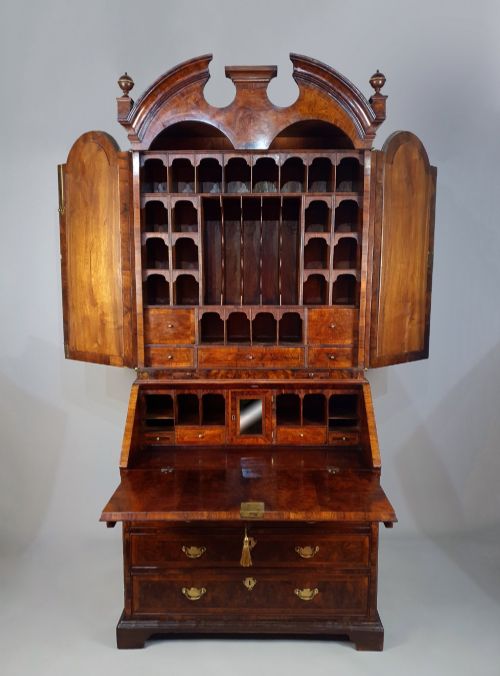
The format frequently combines a bureau desk base with fitted pigeonholes and drawers behind a sloping fall-front, though display cabinet variations also appear. Walnut and burr walnut dominate the selection, often enriched with marquetry or featherbanding across the surfaces.
Originating largely from English workshops of the early eighteenth century, these large case pieces also reflect continental influences including Dutch Baroque and Italian Rococo styles. Edwardian reproductions and twentieth-century interpretations join the historical inventory alongside period items.
Materials and construction
Cabinetmakers constructed these large structures using native timbers like oak and fruitwood as carcase foundations, applying choice veneers of walnut and burr walnut to the exterior faces. Brass hardware such as escutcheons and drop handles punctuate the drawer fronts and doors.
Marquetry inlay featuring intricate floral or geometric patterns decorates specialised examples, utilising contrasting woods embedded directly into the surfaces. Glass panes are fitted into the upper doors to protect the volumes stored within the shelves.
One past owner held a peerage title, proving that even eighteenth-century peers needed somewhere grand to keep their books.
Judging the standard of manufacture
The choice of veneer determines much of the visual impact, with highly figured burr walnut commanding greater appreciation than plainer straight-grained timber. Mastery in matching the grain patterns symmetrically across large expanses reveals the skill of the original workshop.
The architectural proportions of the double dome top and the finesse of any marquetry work distinguish superior examples from simpler iterations. Original brasses and well-executed interior compartments for letters and secret drawers elevate the standing of a piece.
The Double Domed Bookcase Glossary
- Bureau bookcase
- A cabinet combining a sloping writing flap enclosing a fitted interior with shelving above enclosed by doors. This dual-purpose form dominated high-status interiors during the early eighteenth century.
- Featherbanding
- A decorative banding made from thin veneered strips arranged in a herringbone or chevron pattern around drawer perimeters. It frames the burr walnut panels on finer case furniture.
- Marquetry
- The art of forming decorative patterns using fitted veneers of different woods, sometimes incorporating fruitwood or metal. It appears on baroque cabinetwork to create elaborate floral displays.
- Bureau cabinet
- An alternative term for a bureau bookcase, often denoting a tall storage unit with a desk section. These pieces served both display and writing functions in elite domestic spaces.
- Double dome
- An architectural pelmet or top section featuring two parallel curved arches. This sophisticated profile crowns the most desirable walnut libraries.
Double Domed Bookcase: Frequently Asked Questions
What is a double domed bookcase?
A double domed bookcase is a tall piece of furniture featuring a twin-arched upper section above shelving and a lower storage or desk base.
Most examples date from the early eighteenth century and incorporate walnut veneers designed to display valued book collections.
How were these bookcases used historically?
These cabinets served to store and protect valuable libraries while offering a private writing surface behind a fall-front desk flap.
The upper glazed doors kept dust away from precious volumes in formal reception rooms.
How do I date a walnut bookcase?
Dating relies on examining the construction methods, timber choice, and stylistic details such as the shape of the domes and feet.
Early eighteenth-century pieces display different interior configurations and carcass woods compared to Edwardian revivals.
Where should I place one at home?
Because of their considerable height and depth, these bookcases require a room with adequate wall space and high ceilings to balance their scale.
They function effectively in studies or libraries where their grand architectural presence can be appreciated.