


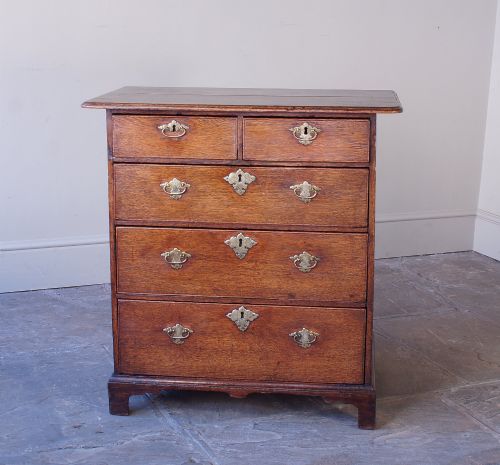
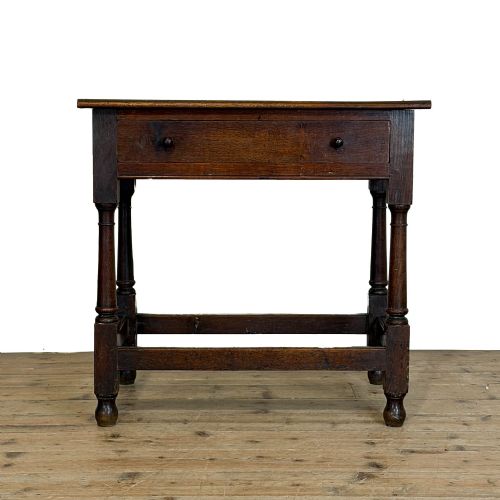
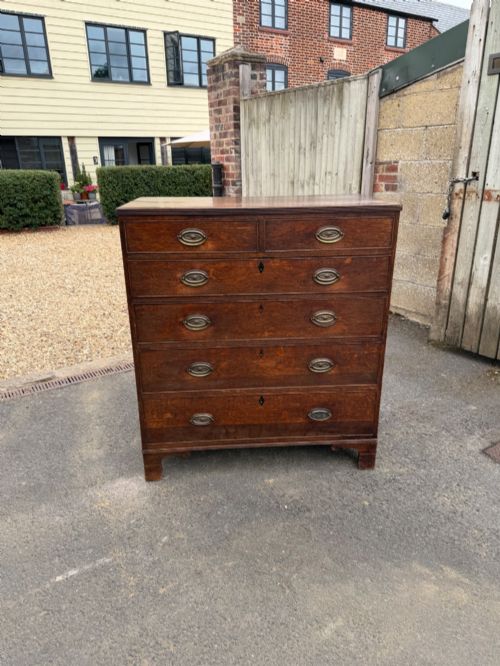
Georgian Period Oak Drawers
Georgian period oak drawers bring honest country construction and deep patination into a room, offering sturdy storage rooted in centuries of English craftsmanship.
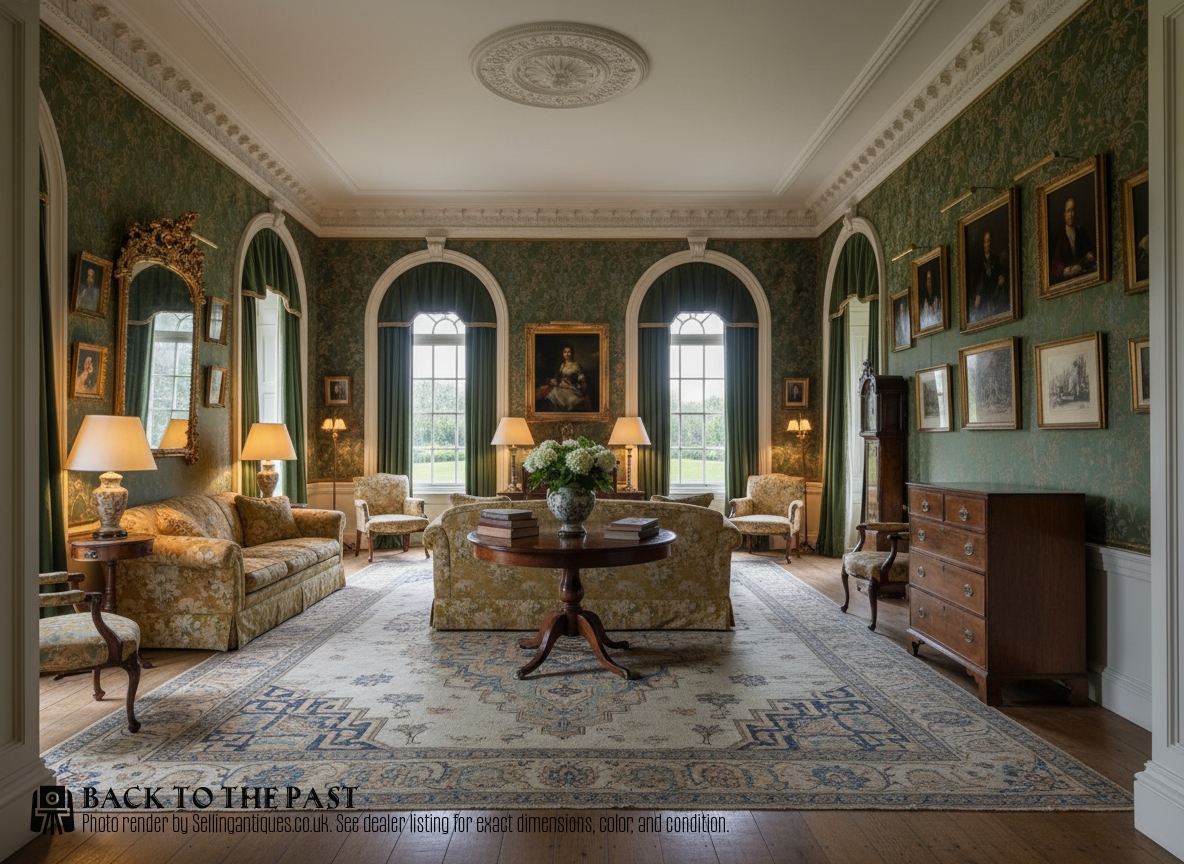
Georgian Period Oak Drawers
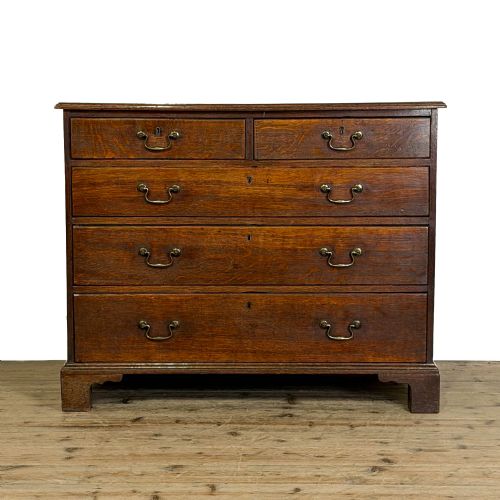
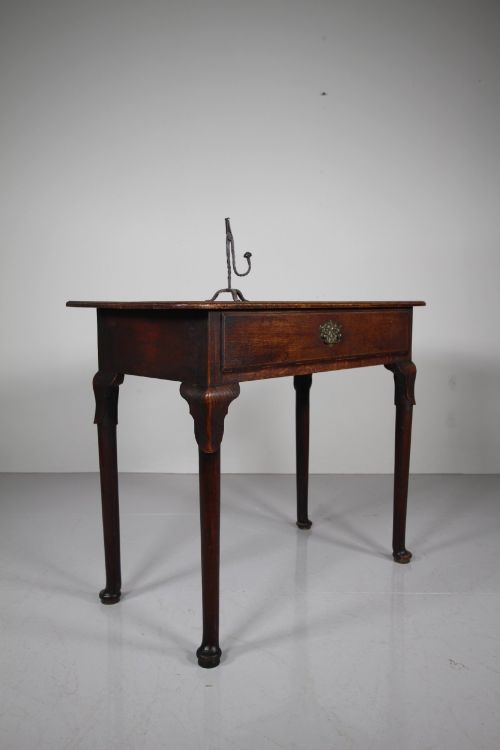
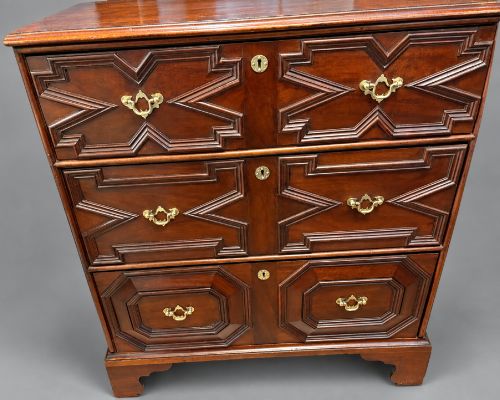
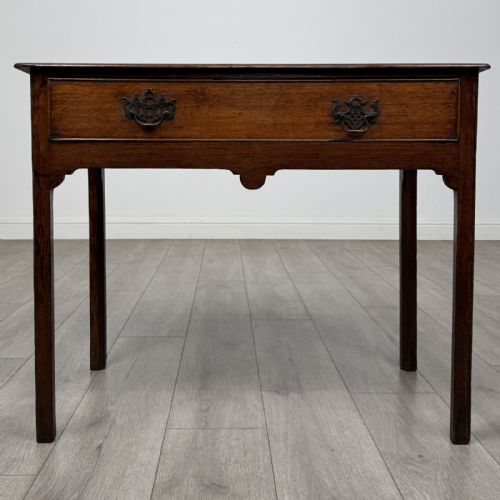
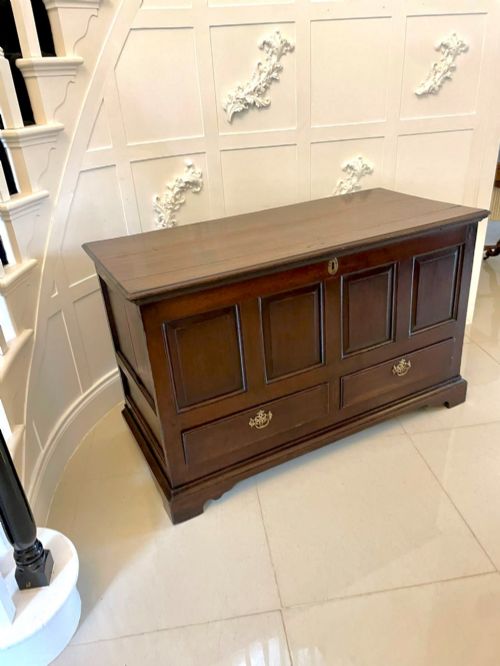
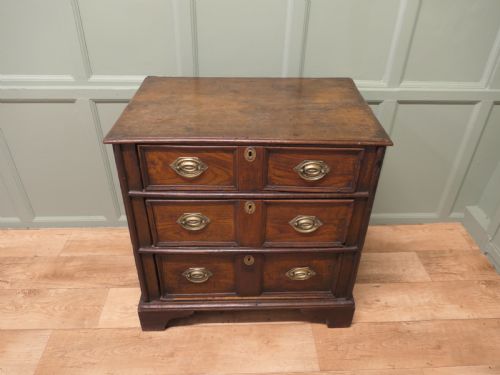
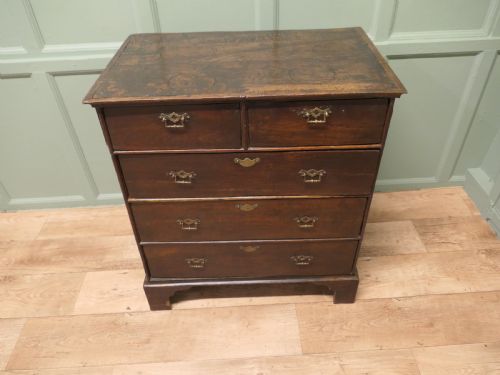
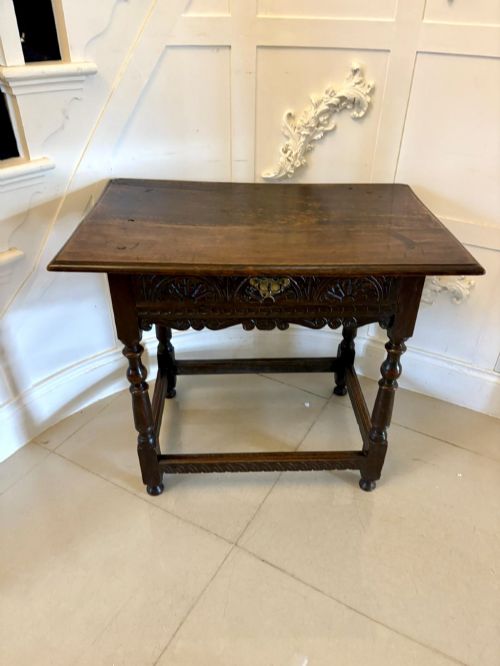
When you search for georgian period oak drawers, you are looking at substantial timber storage pieces spanning the seventeenth through the nineteenth centuries, with a heavy concentration in the eighteenth century. The most common forms on this page are standard chests of drawers, alongside lowboys, side tables, and dressers originating from English country houses and workshops.
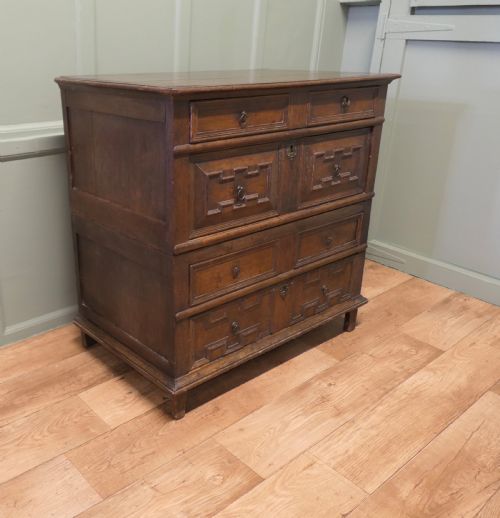
The aesthetic bridges several eras, encompassing William and Mary, Queen Anne, and George I styles through to George III and Victorian interpretations. Pieces range from simple panelled construction to geometric moulded drawer fronts and pieces raised on stands.
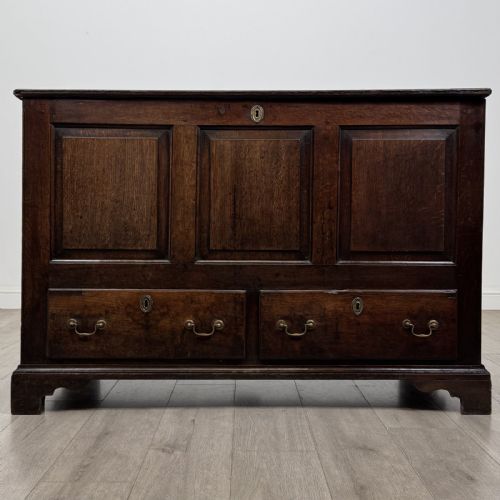
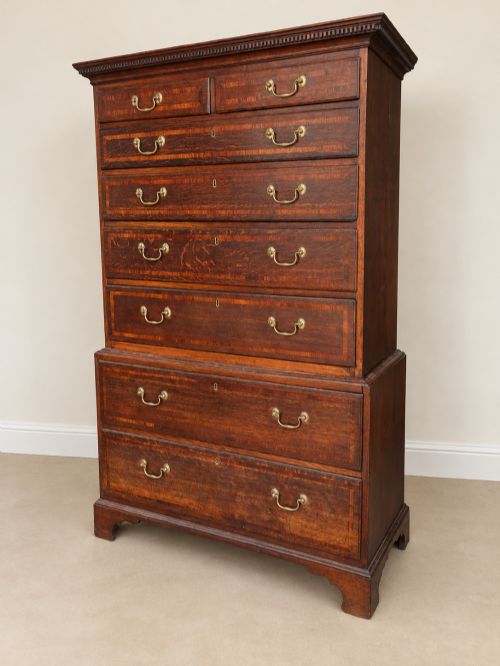
Beyond the standard chest, buyers encounter related storage forms such as mule chests, tallboys, and bachelor's chests. These variants introduce side cupboards, elevated stands, or fold-down writing surfaces while maintaining the primary oak vocabulary.
Materials and Technique
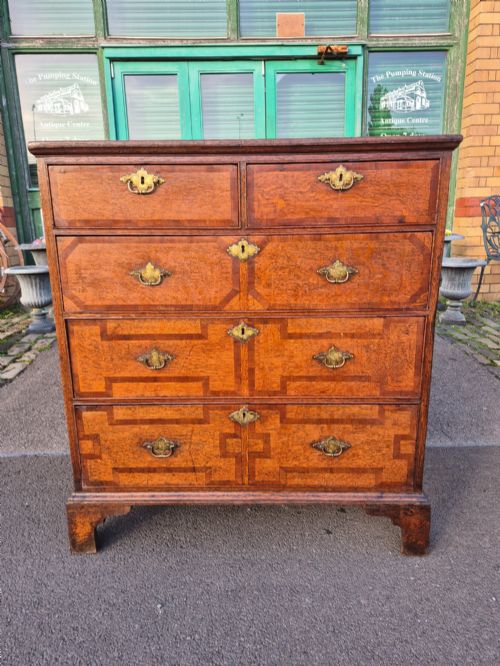
Cabinet makers relied primarily on solid oak for the primary carcases and drawer linings, often pairing it with secondary woods like elm, fruitwood, and walnut for contrast or structural stability. Cross-banding and wood inlay add decorative precision to otherwise robust surfaces.
Construction techniques involve hand-cut joinery, pegged framing, and panelled sides designed to accommodate the natural movement of solid timber over centuries. Drawer runners and internal divisions show the straightforward carpentry typical of English country workshops.
Hardware consists of brass drop handles, batwing plates, or oval pulls secured with original fixings where preserved, alongside bracket feet or simple plinth bases that support the heavy timber frames.
Georgian Period Oak Drawers Retail Price Guide 2026
Typical asking prices for georgian period oak drawers among the pieces listed under this phrase on Sellingantiques today, from the lower quarter to the upper quarter. They describe what is for sale here now, not the wider market.
One listed piece cleverly disguises itself as a bedside chest while functioning as an 18th-century close stool.
Assessing Quality
The distinction between ordinary and exceptional pieces rests in the integrity of the timber surfaces and the survival of original structural elements. Rich, untouched patination developed through centuries of use sets apart examples that retain their early finish from those stripped or heavily restored.
Proportion and decorative restraint dictate the standing of a piece within its type. Crisp geometric mouldings, well-executed panel work, and balanced drawer arrangements reflect the skill of the original workshop more than surface ornamentation alone.
The Georgian Period Oak Drawers Glossary
- Lowboy
- A small oak or fruitwood table with one or more rows of drawers, commonly used as a dressing table or side table in the eighteenth century.
- Chest on Stand
- A tall upper section of drawers resting upon a separate, usually leggy lower frame, offering elevated storage with a lighter visual footprint.
- Mule Chest
- A storage chest featuring one or more functional drawers built into the base beneath the main lift-lid compartment.
- Cross-Banding
- A decorative technique where thin strips of veneer are laid around the borders of a drawer front so the grain runs perpendicular to the surrounding wood.
- Bracket Foot
- A small, simple foot shaped like a bracket, supporting the corners of a chest of drawers or cabinet.
- Court Cupboard
- An enclosed wooden sideboard or cupboard featuring recessed upper tiers, typical of earlier seventeenth and eighteenth century English interiors.
Georgian Period Oak Drawers: Frequently Asked Questions
How do I spot a marriage in these pieces?
A marriage occurs when two different periods or sections are joined together to form a single item, such as an upper chest placed on a later base. Inspect the timber grain, colour, and fixing points where the components meet to ensure they belong to the same era.
Differences in wear patterns, oak species, and nail types usually reveal whether the parts started life together in the workshop.
Are oak drawers suitable for modern bedrooms?
Solid oak furniture brings immense durability and practical storage capacity to contemporary homes, fitting comfortably into both traditional and minimalist interiors. The deep patination and neutral tones of antique timber allow these pieces to anchor a room without overwhelming it.
Ensure you measure the depth and height carefully, as older chests often feature smaller proportions or different clearances than modern factory-made furniture.
What maintenance do old oak surfaces need?
These timber surfaces require very little intervention beyond occasional dusting with a dry cloth and the sparing application of traditional beeswax to nourish the wood. Avoid placing them near direct heat sources or in fluctuating humidity to prevent the solid oak panels from splitting.
Letting the timber breathe preserves the natural polish and depth built up over hundreds of years of daily use.
How can I tell a provincial piece from a London one?
Country or provincial pieces often display heavier oak construction, simpler bracket feet, and secondary woods like fruitwood or elm dictated by local timber supplies. London makers typically had access to finer walnut veneers, more complex mouldings, and specialised hardware.
Regional variations show up in the choice of lining boards and the specific methods used to cut dovetails within the drawers.