
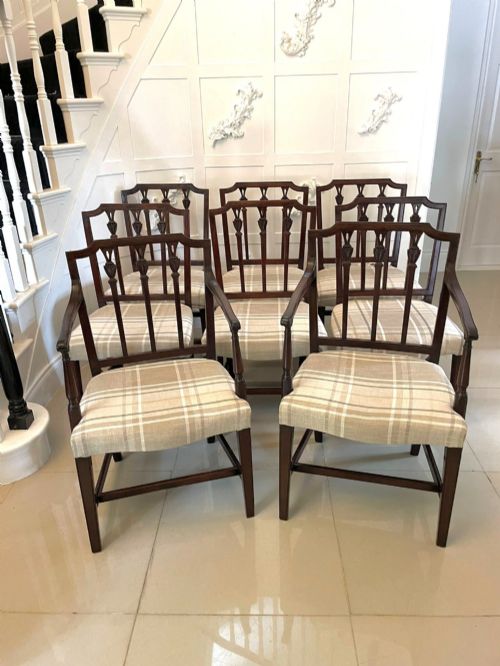
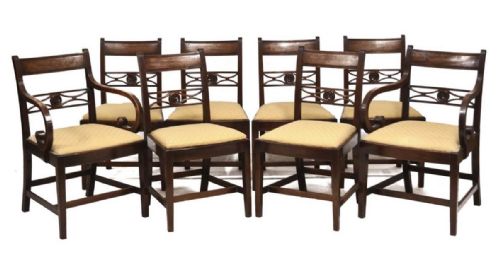
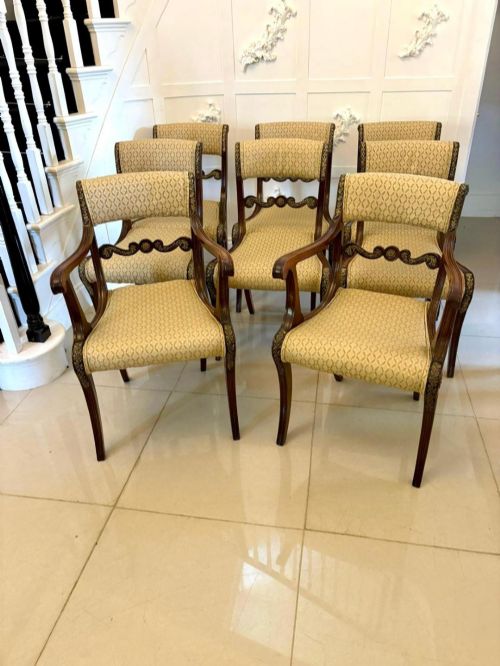
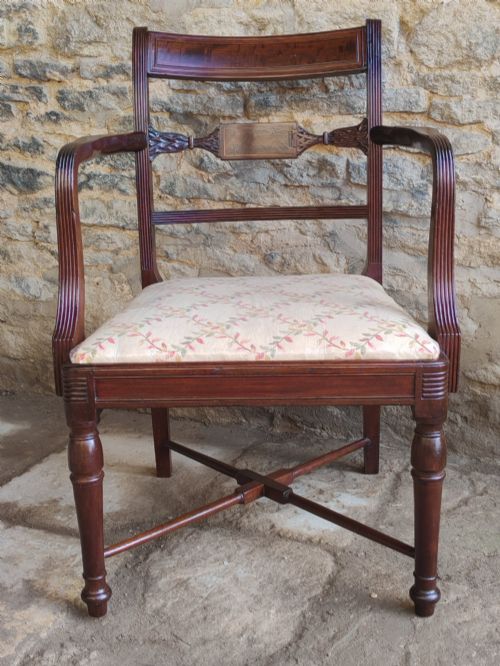
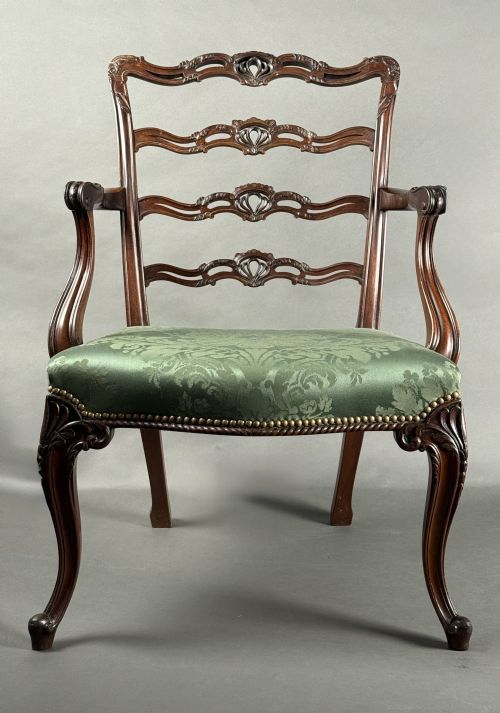
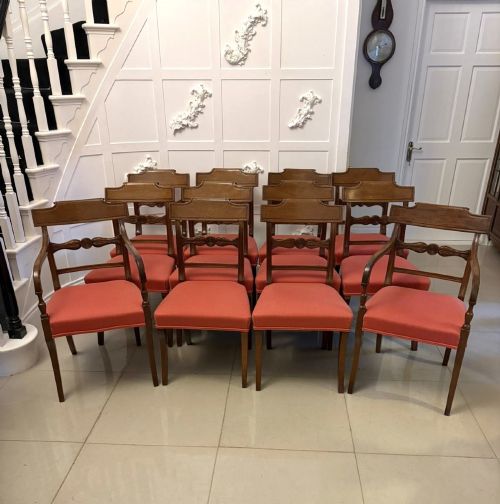
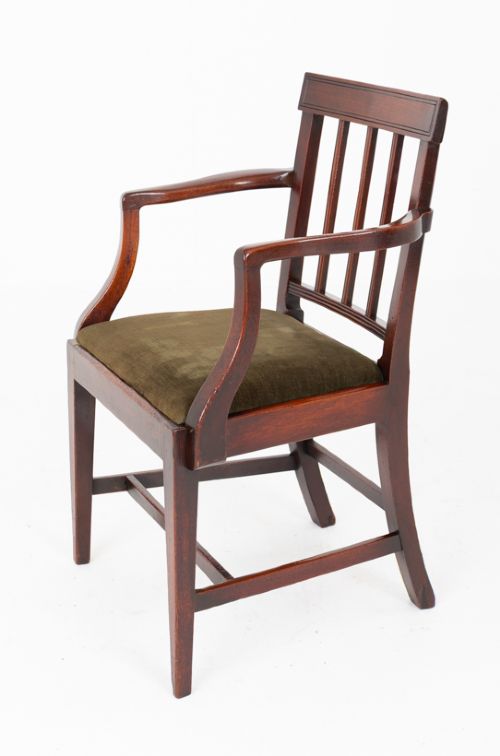
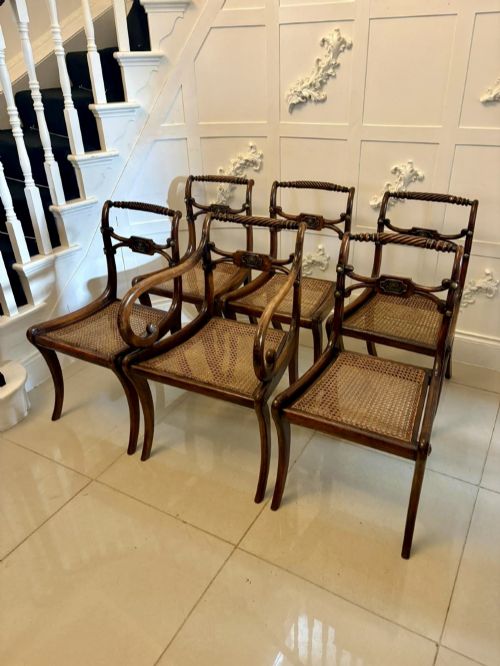
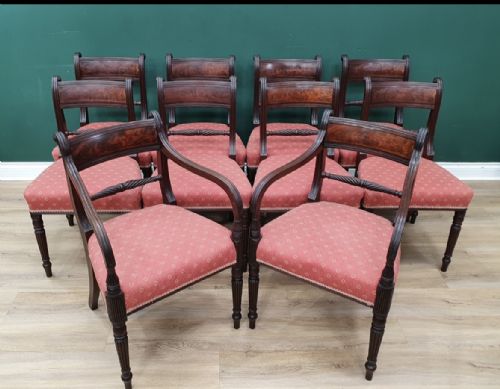
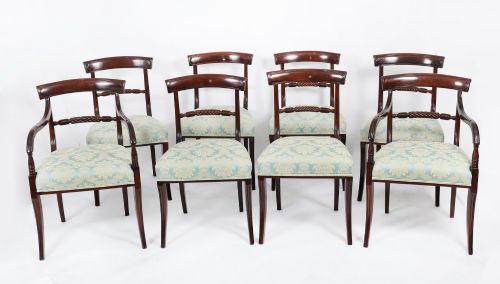
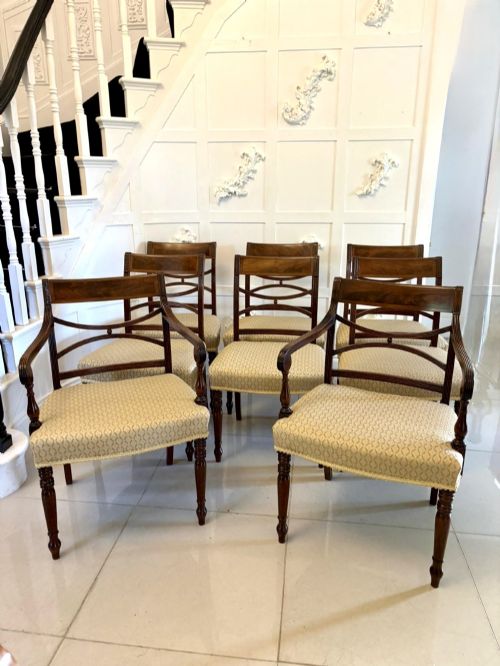
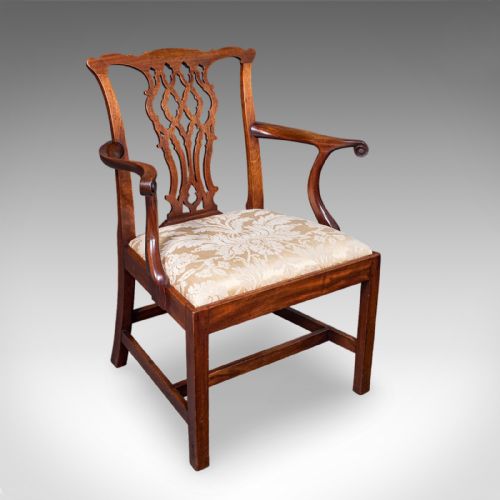
Georgian Period Carver Chair
A georgian period carver chair brings architectural grace and generous proportions to the dining table.
How they were made
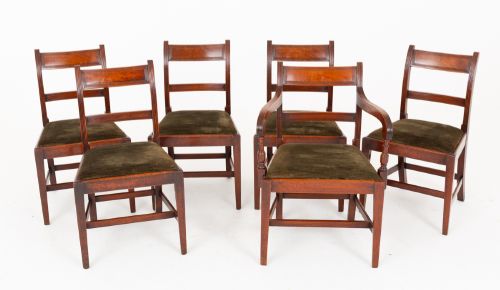
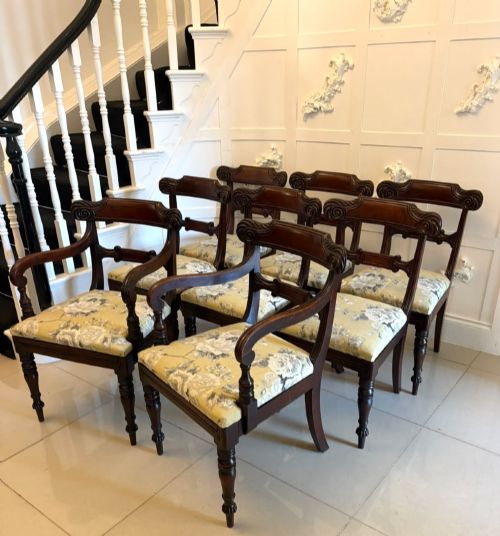
Cabinetmakers constructed these frames primarily from dense mahogany, employing mortise and tenon joints to ensure rigidity under daily use. Secondary timbers provided internal support, whilst turned or tapered legs offered a stable foundation. Carved details were executed directly into the solid wood rather than applied as separate ornamentation.
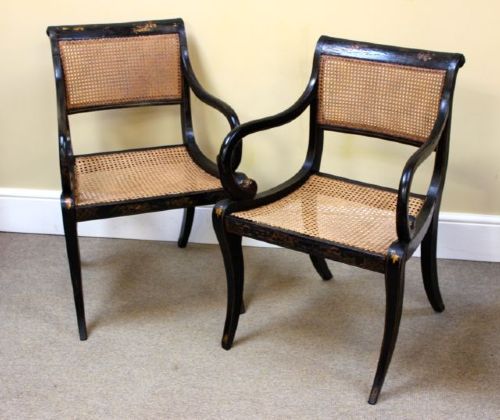
Upholstered variants relied on webbing and horsehair stuffing held beneath textiles, velvet, or leather, secured with brass tacks. Caned versions integrated woven plant fibres into pierced wooden frames, providing a lighter seat structure. Painted finishes occasionally supplemented natural wood grains, utilising pigments on beech or pine carcases.
What varies in quality
The distinction between ordinary and superior examples lies in the crispness of the carving and the selection of timber. Dense, well-figured mahogany with deep, manual chisel work separates bespoke workshop output from later revival pieces. Proportions and the integration of the arm supports into the upright stiles dictate the structural harmony of the piece.
Original surface patination and minimal timber replacement preserve the historical integrity of an armchair. Chairs retaining their original upholstery substructure or untampered joinery command greater regard among collectors than those subject to heavy structural intervention.
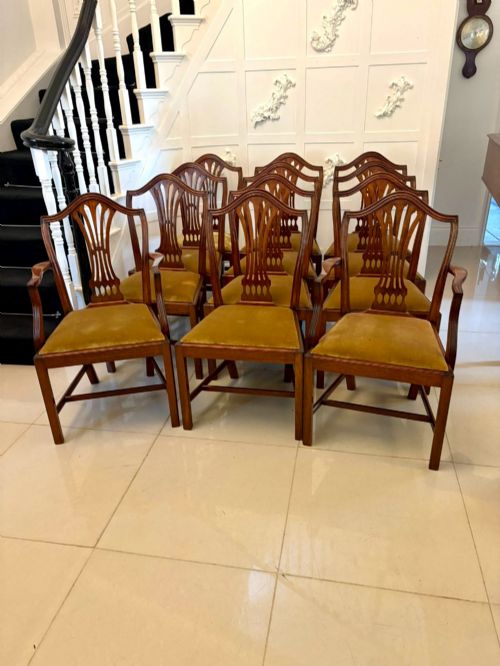
Listings for a georgian period carver chair span eighteenth-century origins through to twentieth-century Hepplewhite revival pieces.
The Georgian Period Carver Chair Glossary
- Carver chair
- An armchair designed to sit at the head of a dining table, featuring elevated arms to accommodate formal dress. These seating pieces match or complement the surrounding single chairs in a dining set.
- Shield back
- A chair back shaped in the outline of a heraldic shield, popularized during the late eighteenth century. This design often incorporates pierced splats decorated with carved drapery or feathers.
- Chippendale
- A style of furniture rooted in the designs published by Thomas Chippendale during the eighteenth century. Pieces in this manner frequently display intricate fretwork and cabriole legs.
- Hepplewhite
- A neoclassical style associated with cabinetmaker George Hepplewhite, characterised by elegance and lighter proportions. Shield-back and heart-back chair designs are typical of this aesthetic.
- Cane
- Woven material made from rattan or split reeds, used to form light, resilient seat panels. Caned panels allowed airflow and added textural contrast to wooden chair frames.
Georgian Period Carver Chair: Frequently Asked Questions
How do I date a georgian carver?
Dating relies on examining the timber species, joinery methods, and stylistic vocabulary evident in the back splat and legs. Eighteenth-century examples generally exhibit hand-cut joints and dense, heavy mahogany.
Later Victorian interpretations or twentieth-century revivals often display machine-tooled elements or timber characteristics inconsistent with the eighteenth century. Comparing the carving depth and structural wear helps clarify the period of manufacture.
Can I use these chairs daily?
These antique armchairs were built for daily domestic dining and remain structurally robust enough for contemporary use. Ensuring the joints remain tight is essential before placing an antique chair into regular service.
Professional conservation or minor tightening of the underframe preserves stability. Protective measures on upholstery and careful placement away from direct heat sources protect the historic wood and fabric.
What wood was used?
Mahogany is the predominant timber found across these listings, valued for its stability, deep colour, and suitability for carving. Walnut appears in earlier pieces, whilst fruitwood and elm occur in regional or country variants.
Secondary woods like beech or pine occasionally appear in concealed structural components or painted frames. Timber selection directly reflects the workshop origin and the prevailing fashion of the manufacturing era.