




Elm Open Armchair
An elm open armchair offers rugged vernacular character, bringing tactile warmth and honest country craftsmanship into any room.
Elm Open Armchair
An elm open armchair combines robust native timber with straightforward seating forms across various regional traditions. Buyers searching for an elm open armchair encounter domestic country seating from British workshops alongside notable international examples.
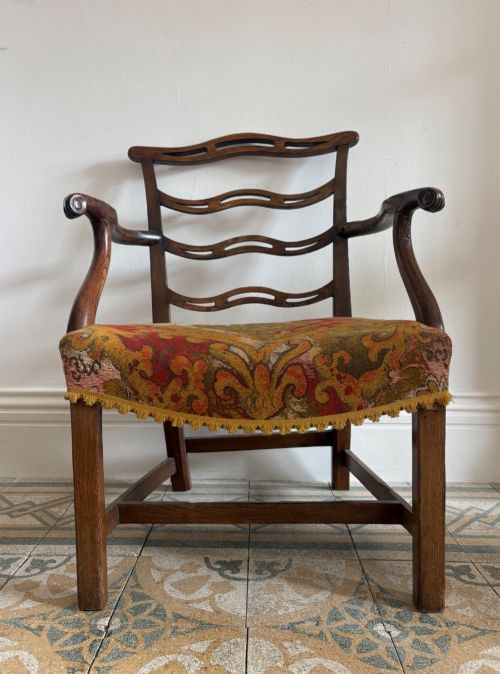
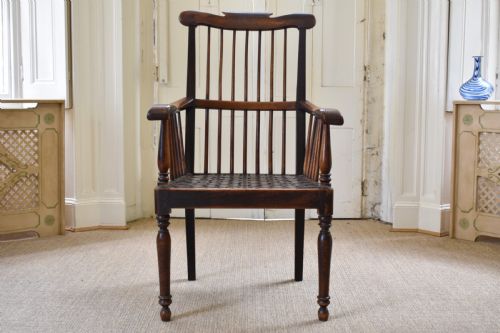
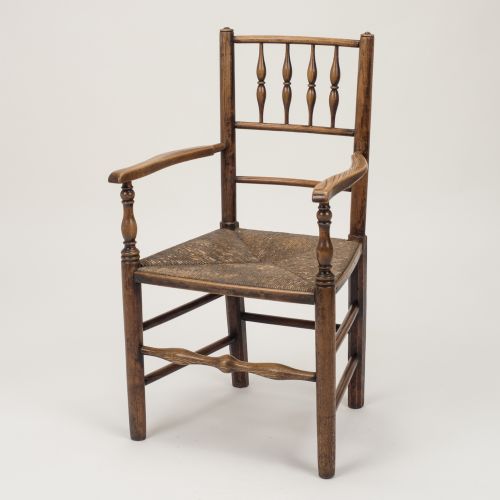
The selection ranges from Georgian country ladderbacks and spindle backs to Windsor kitchen chairs and nineteenth-century vernacular seating. Makers frequently combined elm with ash, oak, birch, or laburnum to provide structural strength where needed.
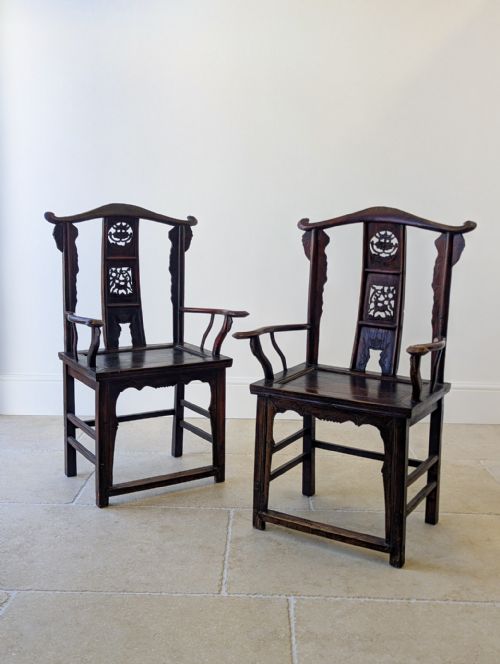
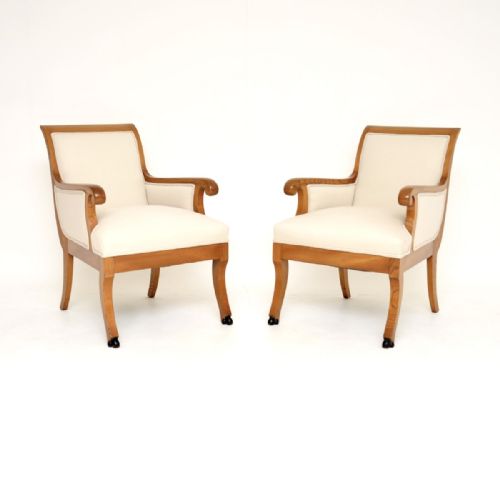
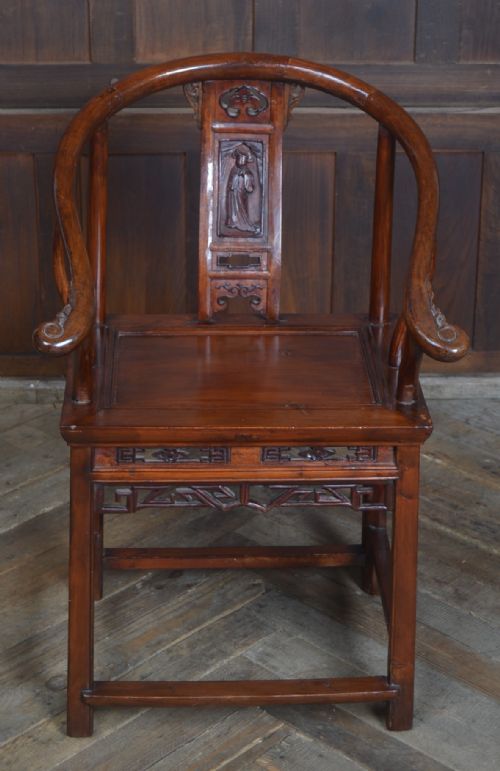
International pieces also appear within this category, including Qing Dynasty yoke-back chairs, lacquered Chinese seating, and Swedish neoclassical designs. English country interpretations dominate the available selection, reflecting domestic rural traditions.
Materials and construction methods
Makers utilised solid elm for its distinct grain pattern and tough, resilient qualities, often pairing it with ash or birch for turned spindles and structural supports. Rush seating, fabric upholstery, and tapestry inserts provided comfort within these open armchair frames.
Regional workshops relied on traditional joinery techniques, combining pegged mortise and tenon joints with steam-bent elements to shape arms and crest rails. Lacquered finishes appear on certain imported Asian examples, contrasting with the waxed or polished surfaces of British country pieces.
Listings feature periods spanning from the early eighteenth century through to the early twentieth century, alongside regional styles including Swedish Neoclassical and Chinese Export.
Evaluating quality and execution
Quality rests upon the integrity of the timber selection and the retention of original structural components over centuries of domestic use. Pieces displaying balanced proportions and well-turned spindles demonstrate superior execution by the maker.
The survival of early surface patination and original rush or timber seats distinguishes finer examples from heavily restored or later altered items.
The Elm Open Armchair Glossary
- Ladderback
- A chair back featuring horizontal slats between the upright posts. This traditional form was widely produced by rural English makers during the eighteenth and nineteenth centuries.
- Windsor
- A chair constructed with a solid wooden seat into which the legs and back spindles are directly inserted. Regional variations include stick-back and wheel-back configurations.
- Rush seat
- A seating surface woven from dried marsh grasses. This traditional technique provides a durable and flexible base for country armchairs.
- Yoke-back
- A distinctive chair design featuring a curved top rail resembling an ox yoke. This form is characteristic of classical Chinese furniture traditions.
- Spindle back
- A chair back constructed with numerous thin, turned wooden rods. These vertical elements distribute weight evenly and provide light structural support.
Elm Open Armchair: Frequently Asked Questions
Where were these chairs made?
The evidence shows production originating from British country workshops as well as overseas traditions including Qing Dynasty China and Sweden.
Domestic examples reflect regional vernacular styles, while imported pieces demonstrate distinct aesthetic approaches to solid timber seating.
How do I care for elm furniture?
Solid timber requires stable indoor humidity levels and protection from direct heat sources to prevent wood movement. Regular dusting and occasional application of appropriate wax maintain the surface condition.
Avoid harsh chemical cleaners that can strip the historic patination accumulated over the centuries.
Are these chairs comfortable for daily use?
Open armchairs provide sturdy seating supported by wooden armrests and supportive ladder or spindle backs. Many examples feature woven rush pads or upholstered fabric inserts for added comfort.
Their ergonomic design varies depending on whether the piece originated in a British country kitchen or an imperial Chinese workshop.
How can I tell the period?
Dating relies on construction methods, timber choice, and stylistic markers associated with Georgian, Victorian, or Qing Dynasty eras. Tool marks and joinery details offer clues regarding the age of the piece.
Comparative examples help establish whether a chair dates to the eighteenth, nineteenth, or early twentieth century.