



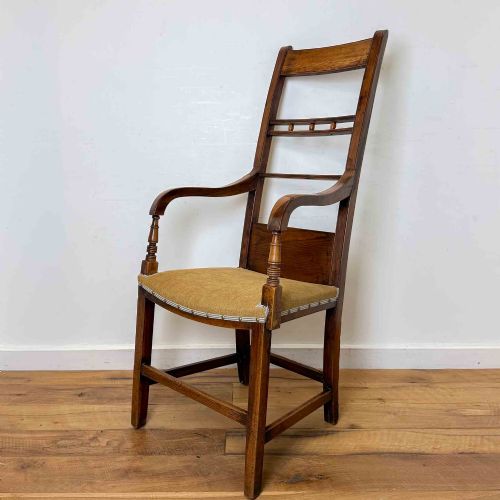
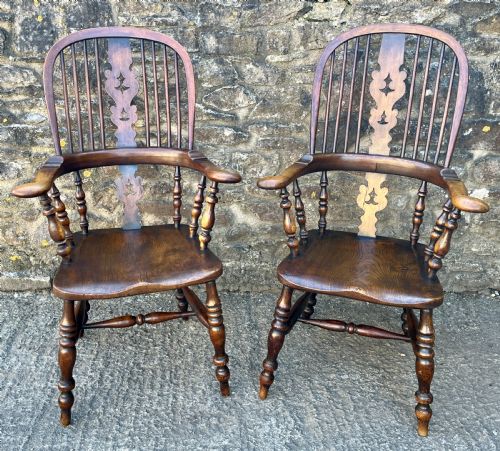


Georgian Elm Elbow Chair
A georgian elm elbow chair is a sturdy country seat built for daily use, combining local woods and practical design to anchor a traditional interior.
Georgian Elm Elbow Chair
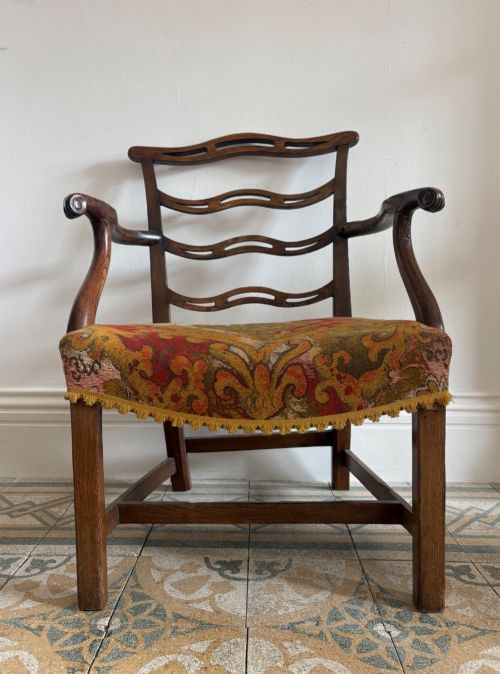
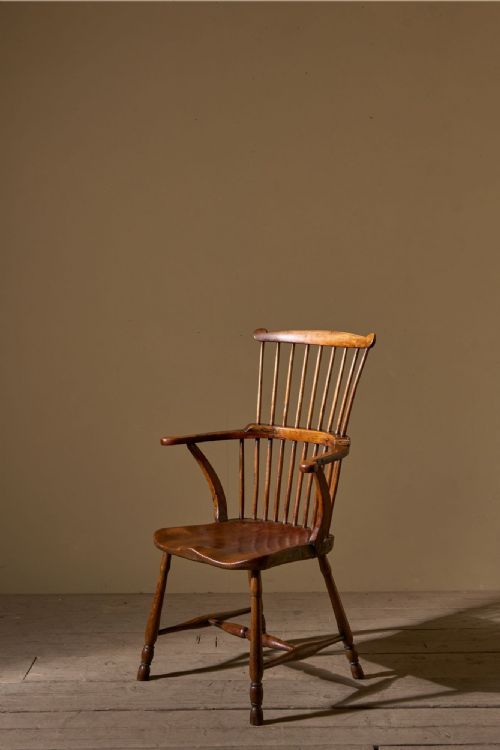
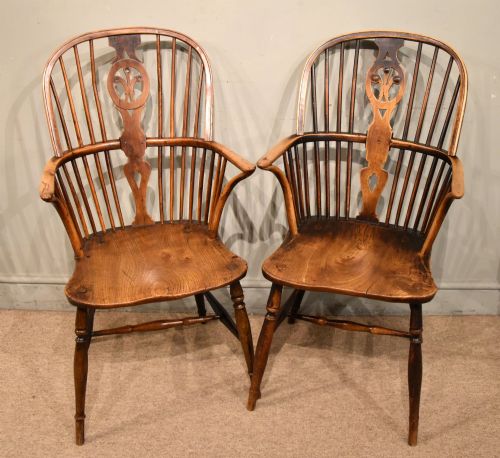
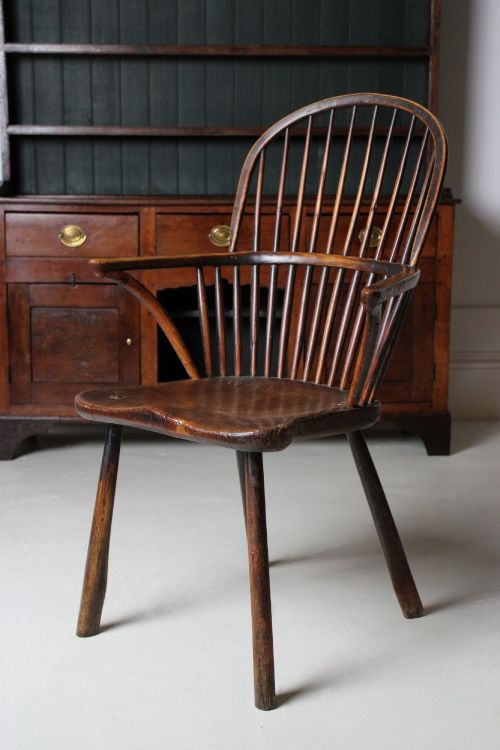
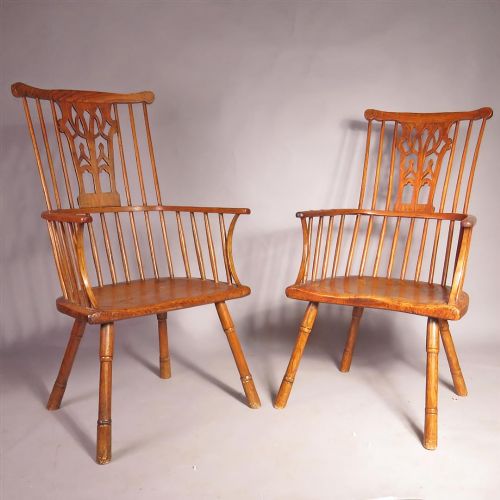
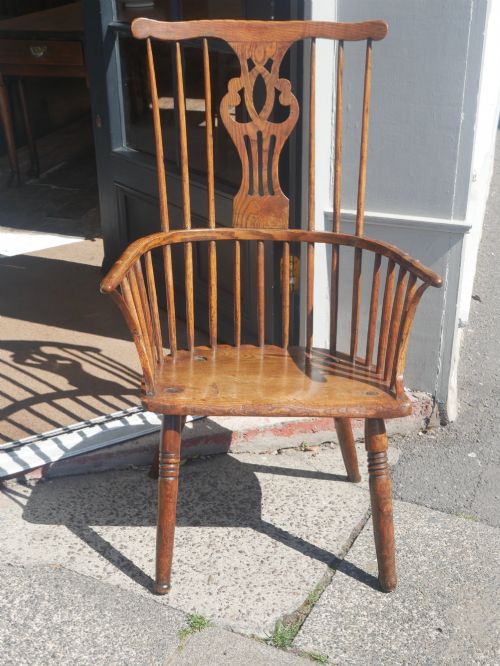
The versions most commonly met on this page are Windsor armchairs and country carvers featuring carved wooden seats paired with ash, yew, or fruitwood spindles. They range from low backs to high comb backs and stick backs designed for comfort around the farmhouse hearth.
How they were made
Makers utilised elm for the thick, dished solid seats because its interlocking grain resisted splitting when bodgers bored holes for legs and spindles. Ash and yew provided strong, flexible material for the steam-bent bows, arms, and backsticks.
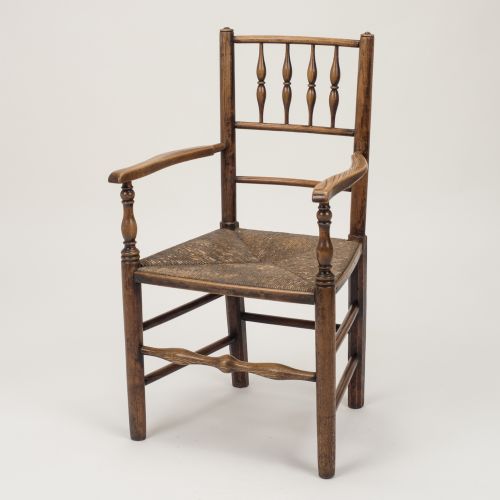
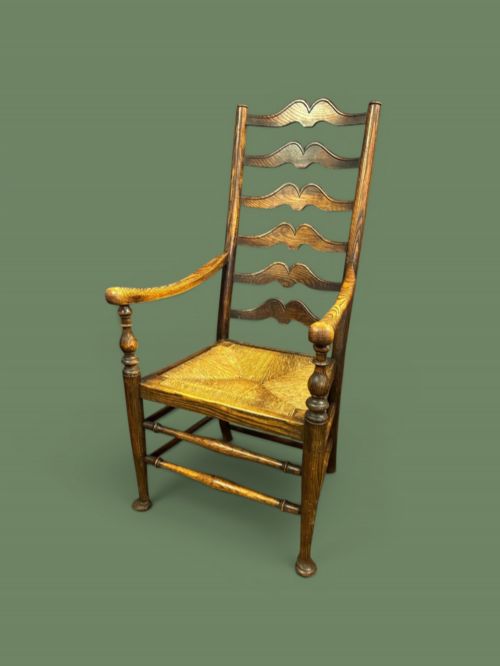
Construction relied on traditional green woodworking techniques, joining turned legs and undercarriages directly into the underside of the massive seat slab. Rush seating also appeared on ladderbacks alongside solid timber panels.
Several examples include child-sized Windsor armchairs, proving that miniature country seating was built for the smallest household members.
What varies in quality
The distinction between ordinary and exceptional examples rests on the grace of the turning, the presence of figured timber in the seat, and the comfort of the back bow. Better chairs display balanced proportions in the arm terminals and subtle shaping in the comb.
Original surface patination and minimal replacement of structural components distinguish superior pieces from those with excessive repairs or stripped timber.
The Georgian Elm Elbow Chair Glossary
- Windsor chair
- A wooden chair constructed with a thick solid timber seat into which the legs and back spindles are separately inserted. This form dominates vernacular country seating.
- Comb back
- A Windsor chair variation where the central vertical spindles rise to pierce a horizontal top rail, resembling the teeth of a comb. This style offers pronounced back support.
- Carver chair
- A term used for an armchair, typically matching a set of simpler dining chairs. These sturdy elbow chairs often stood at the head of a table.
- Dished seat
- A wooden chair seat hollowed out into a shallow concave depression for comfort. Craftsmen carved this shape using adzes and scorps.
- Vernacular
- Objects built by local tradesmen using regional materials and traditional methods without formal architectural patterns. These pieces serve practical domestic functions.
Georgian Elm Elbow Chair: Frequently Asked Questions
What is a georgian elm elbow chair?
A georgian elm elbow chair is a traditional wooden armchair featuring a solid elm seat and turned spindles, originating from the eighteenth and early nineteenth centuries.
These pieces were constructed in English workshops and rural districts to serve practical seating needs in farmhouses and country houses.
How were these chairs used originally?
These elbow chairs served as sturdy seating around farmhouse tables, desks, and hearths where durability mattered most.
The wide arms and supportive backs provided comfort for daily tasks and relaxation in domestic spaces.
How do I live with one today?
An antique elm armchair integrates easily into modern interiors as a desk chair, a hallway seat, or an accent piece in a living room.
Keeping the wood conditioned and avoiding direct heat sources protects the timber and preserves the natural surface patination.
How do I tell periods apart?
Identifying periods involves examining the style of the splats, the profile of the arm bows, and the turning style of the legs.
Earlier eighteenth-century examples often display simpler comb backs or Chippendale-influenced open arms, while nineteenth-century versions introduce wider saddle seats and varied spindle arrangements.