
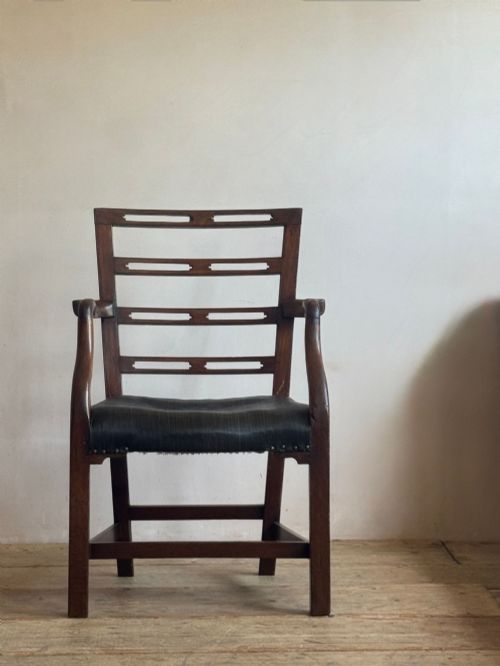


Country Chippendale Armchair
These country chippendale armchair examples offer robust regional timberwork and classic pierced splats for any traditional interior.
Country Chippendale Armchair
A country chippendale armchair unites urban eighteenth-century cabinet-making patterns with provincial furniture traditions. You will encounter forms spanning the Georgian era and the nineteenth century, built by regional makers who adapted fashionable London designs.
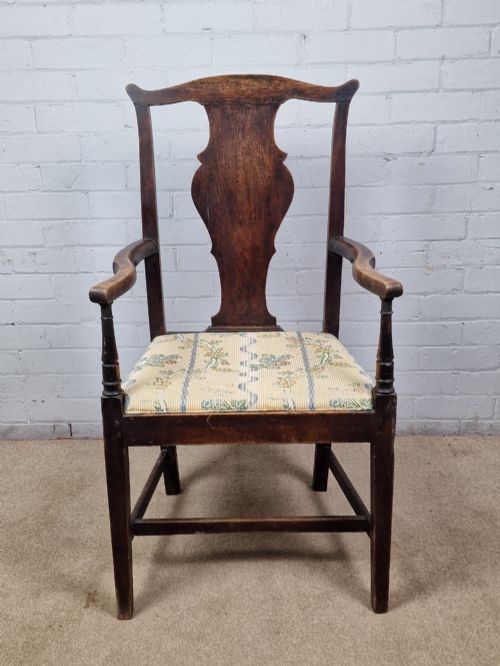
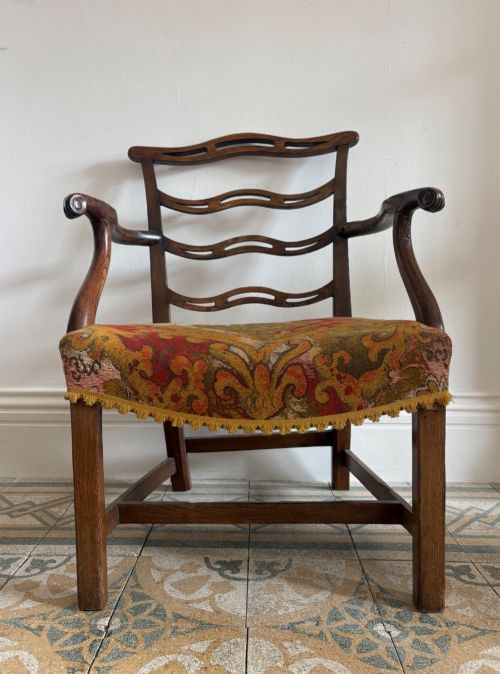
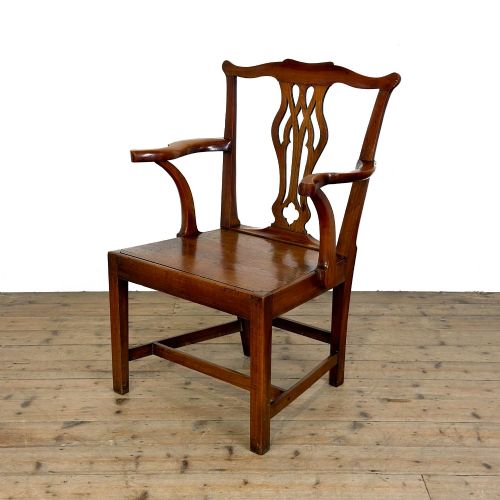
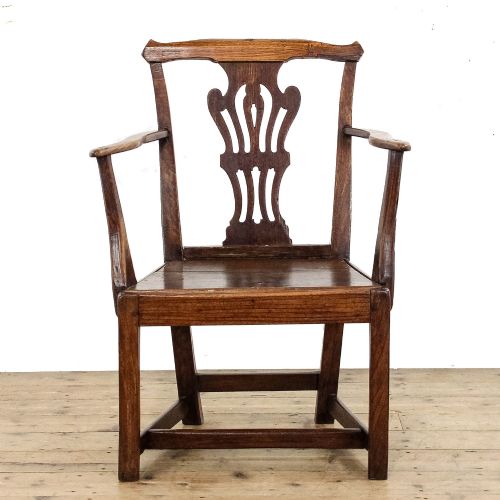
The most common examples on this page are constructed from native timbers like elm, oak, and fruitwood rather than imported mahogany. These provincial pieces frequently feature ladderback splats, open arms, and drop-in seats covered in fabric or tapestry.
Materials and construction
Makers utilised solid regional hardwoods, pairing elm and fruitwood frames with sturdy oak underframes. Timbers were often worked by hand using traditional joinery methods suited to domestic daily use.
Seating areas relied on drop-in frames upholstered in durable textiles, tapestry fabric, or leather. Brass elements occasionally appeared in structural reinforcement or decorative detailing.
Several armchairs arrive with tapestry seats ready to absorb your cat's immediate territorial approval.
Evaluating quality and proportion
Quality rests upon the crispness of the carved splat and the integrity of the timber framing. Superior pieces display thoughtful proportions and careful shaping of the arm supports and legs.
Provincial interpretation alters the character significantly, ranging from simple vernacular execution to refined regional cabinet-work. Wear and patination reflect decades of domestic service rather than structural compromise.
Wheelers of Arncroach
The Country Chippendale Armchair Glossary
- Carver chair
- A term used for an armchair, typically matching a set of smaller dining chairs. These sturdy seats stood at the head of the dining table.
- Ladderback
- A chair back featuring multiple horizontal wooden slats running between the uprights. This regional design remained popular across country workshops for generations.
- Splatt
- The central vertical piece of wood in a chair back, often shaped and pierced in the Chippendale manner. Provincial makers simplified these patterns to suit local tastes.
- Fruitwood
- A generic term for timber sourced from fruit-bearing trees such as pear or apple. Cabinet-makers valued it for its dense grain and warm tone.
Country Chippendale Armchair: Frequently Asked Questions
What is a country chippendale armchair?
A country chippendale armchair is a provincial seat combining urban eighteenth-century carved back designs with regional cabinet-making materials. These chairs reflect local interpretations of fashionable London styles.
They utilise native timbers like elm and fruitwood rather than mahogany, offering a sturdier, vernacular approach to domestic seating.
How do I date an antique armchair?
Dating relies on examining timber species, construction joinery, and the stylistic evolution of the back splat and legs. Georgian pieces display specific hand-worked tool marks and traditional pegged joints.
Later nineteenth-century interpretations often exhibit subtle variations in proportion and machine assistance in secondary framing components.
Where were these armchairs used?
These armchairs served primarily as substantial seating in domestic dining rooms, parlours, or libraries. Their robust construction suited daily use in country houses and farmhouses.
Carver chairs often stood at table heads, while upholstered variations functioned as fireside or desk seating.
How do I care for antique timber?
Maintenance requires keeping wooden frames away from direct heat sources and sudden humidity changes to prevent timber splitting. Regular gentle dusting preserves the natural wax patination.
Avoid harsh chemical cleaning products that strip the historic finish from elm, oak, or fruitwood surfaces.