




Georgian Fruitwood Armchair
A georgian fruitwood armchair is a substantial country seat bringing warmth and rich grain to any room.
Georgian Fruitwood Armchair
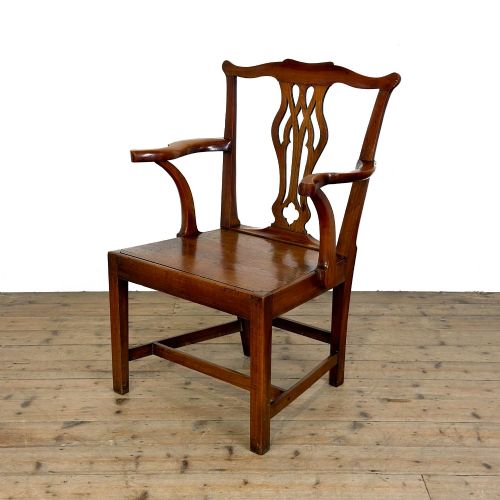
When you search for a georgian fruitwood armchair, you encounter seating shaped by regional English cabinet makers during the eighteenth and nineteenth centuries. These chairs encompass Windsor designs, ladder backs, corner chairs and Chippendale style armchairs fashioned for domestic comfort.
The pieces appearing here range across the Georgian, Regency and nineteenth century periods. Most examples hail from English regional country workshops, featuring sturdy timbers such as elm, ash and yew alongside primary fruitwood construction.
You will find varied regional forms including Thames Valley stick backs, Mendlesham chairs, and comb back primitive armchairs. Rush seats and fabric upholstery appear across these country and farmhouse seating variants.
How they were made
Cabinet makers and bodgers utilised native woods like fruitwood, elm, oak, beech and yew for these armchairs. Turning, spindle work and steam bending shaped the stick backs and comb backs.
Joinery combined pegged frames with solid plank seats and woven rush bases. Regional craftspeople employed local hardwoods to build robust country carvers designed for daily use.
A lobster pot comb back provides a delightfully marine moniker for a thoroughly terrestrial country seat.
What varies in quality
Quality rests in the harmony of mixed timbers and the crispness of turned spindles. Better examples display balanced proportions, retaining original surface patination across the fruitwood and elm components.
Design sophistication separates standard farmhouse seating from refined regional pieces. Strong architectural lines in comb backs or well-executed Chippendale style carving elevate a chair's character.
The Georgian Fruitwood Armchair Glossary
- Fruitwood
- Dense timber derived from fruit-bearing trees such as cherry or pear, prized for its warm tone and smooth grain. It develops a deep patination over centuries of handling.
- Windsor chair
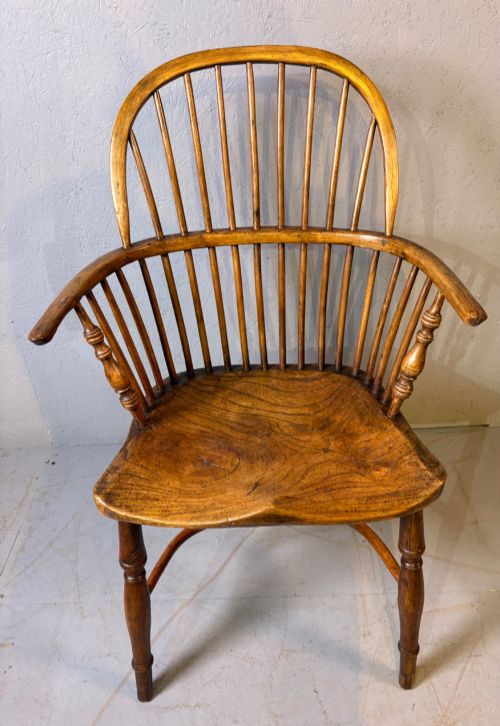
- A wooden chair featuring a solid carved seat into which the legs and back spindles are directly fitted. Stick backs and comb backs are common regional variations.
- Spindle back
- A chair back constructed from a series of turned vertical wooden rods. This lighter construction method requires precise carpentry to maintain structural rigidity.
- Rush seat
- A seating surface woven from dried marsh rushes tightly wound over a frame. It provides a resilient and traditional platform found on many country chairs.
- Corner chair
- A square-seat chair set diagonally with one leg at the front and a sweeping curved back rail supported by turned columns. These pieces fit neatly into room angles.
Georgian Fruitwood Armchair: Frequently Asked Questions
How do I care for fruitwood?
Fruitwood requires minimal intervention beyond dusting with a soft dry cloth. Avoid placing antique chairs near direct heat sources or strong sunlight to prevent timber splitting.
Applying a gentle wax polish occasionally helps preserve the natural sheen. Let the surface breathe and maintain stable room humidity.
Where were Mendlesham chairs made?
Mendlesham chairs originated in the Suffolk village of Mendlesham during the eighteenth and nineteenth centuries. Local cabinet makers produced these distinctive armchairs using native fruitwood and elm.
They are recognised by their refined craftsmanship and often incorporate pierced splats. These pieces represent a high point in English regional chair making.
What defines a Thames Valley Windsor?
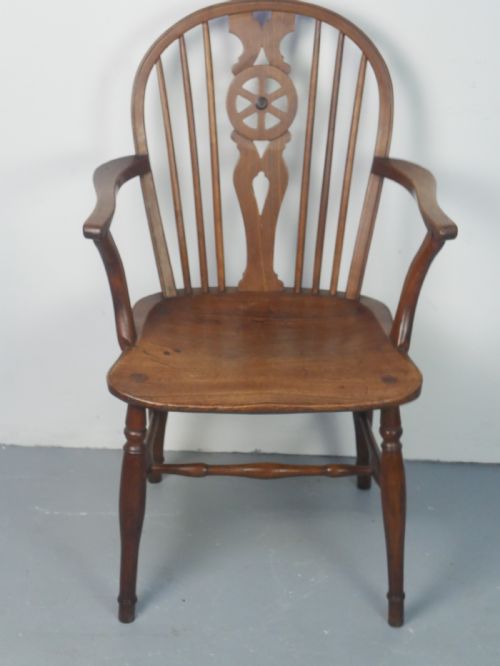
Thames Valley Windsor chairs are distinguished by elegant wheel or pierced splats set centrally within the stick back. Makers utilised yew, elm and fruitwood to build these balanced seating forms.
Regional workshops along the river valley developed specific turning patterns for the legs and stretchers. These details set them apart from northern or West Country variants.