
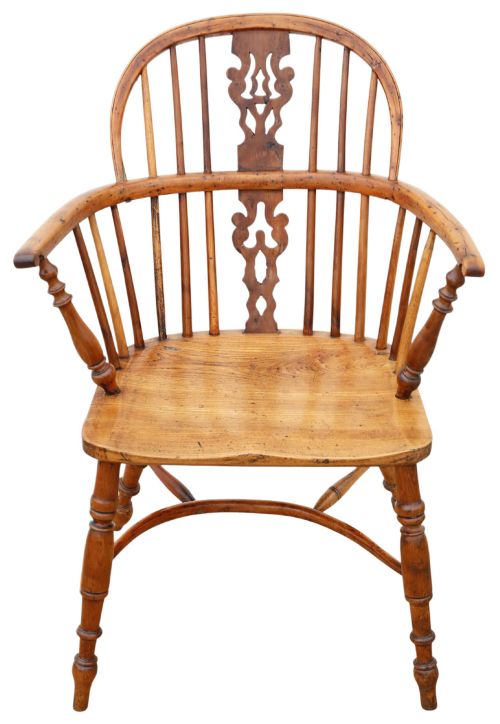
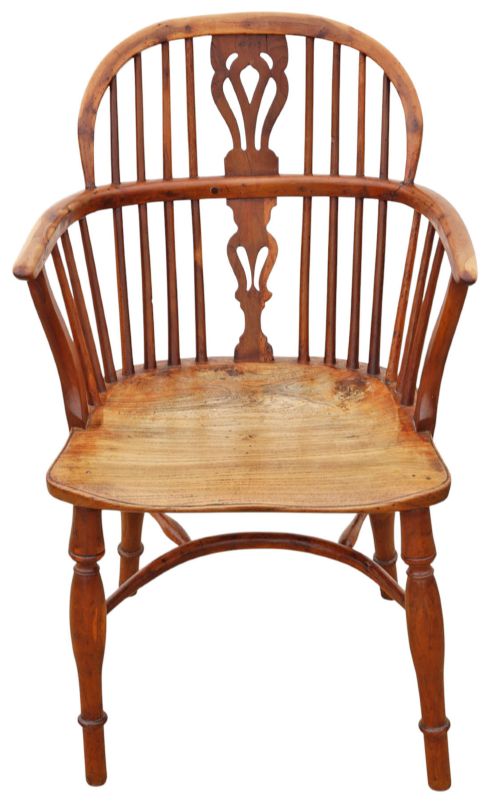

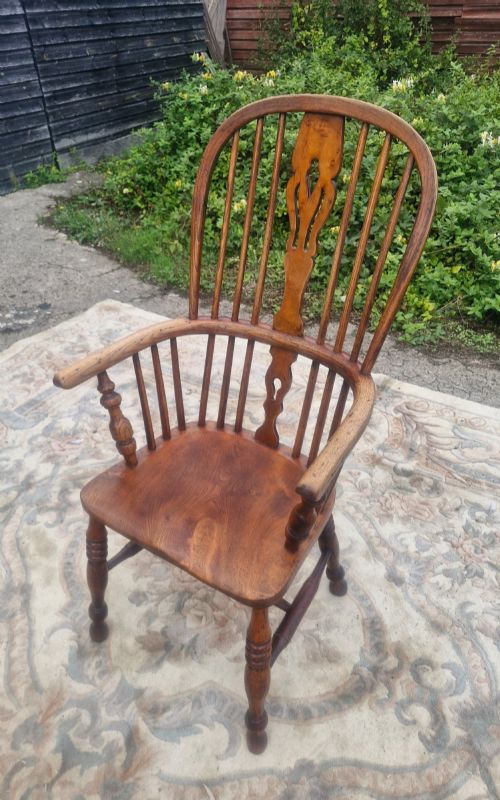


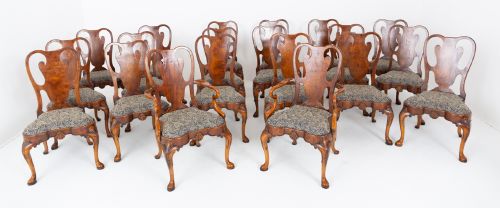
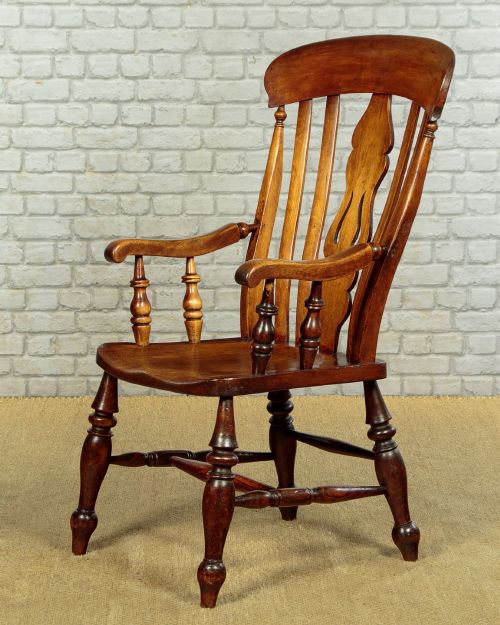
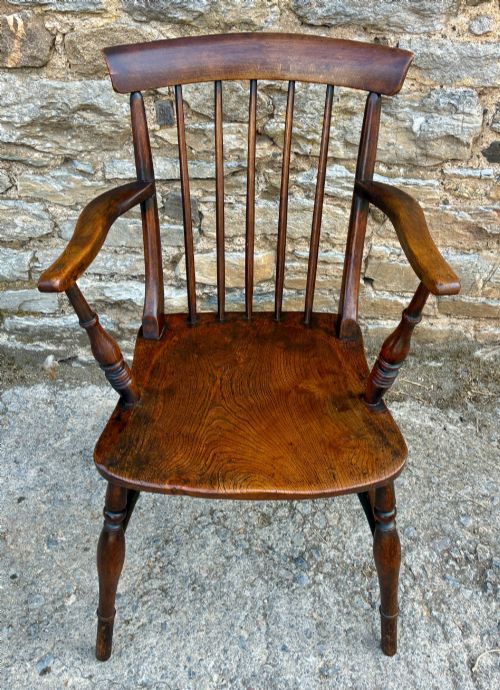
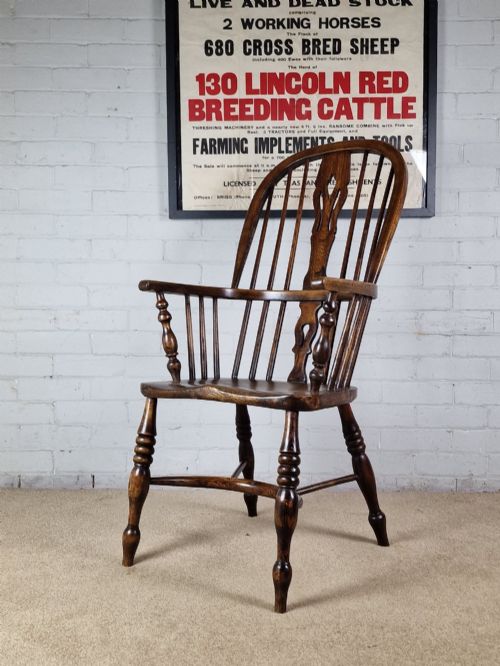
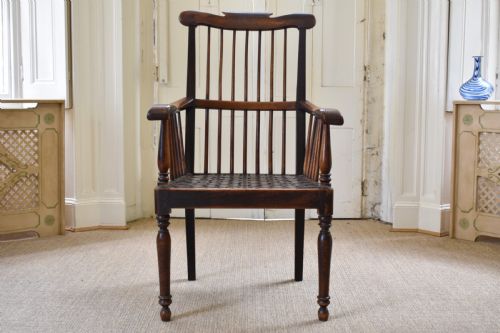
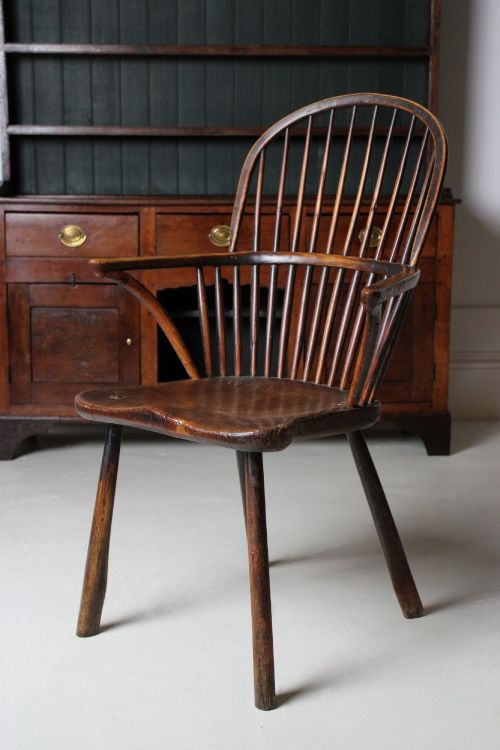
Brown Elm Carver Chair
A brown elm carver chair brings sturdy vernacular character to a room, offering the robust comfort of traditional English seating.
Brown Elm Carver Chair
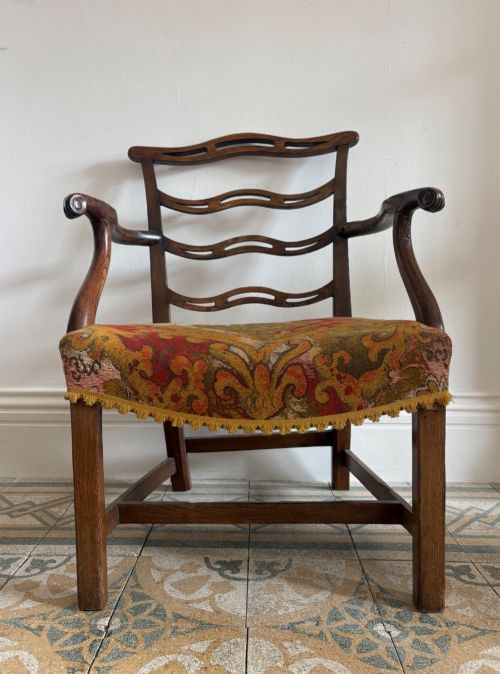
When searching for a brown elm carver chair, you encounter sturdy timber armchairs shaped by generations of regional English joinery. These seating pieces span the eighteenth, nineteenth, and early twentieth centuries, drawing on Georgian, Victorian, and Edwardian periods.
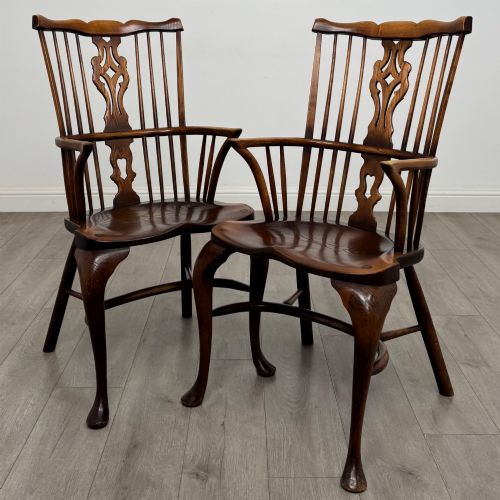
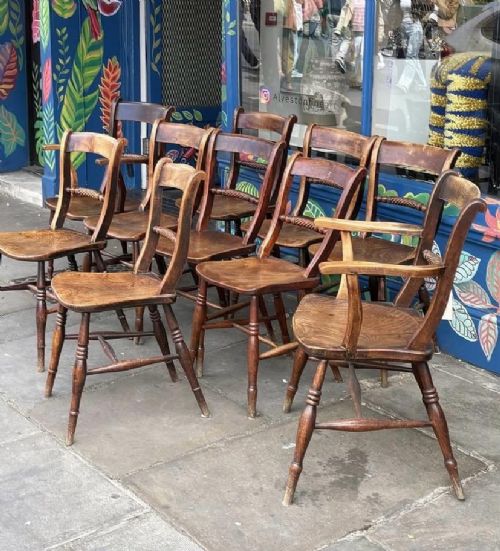
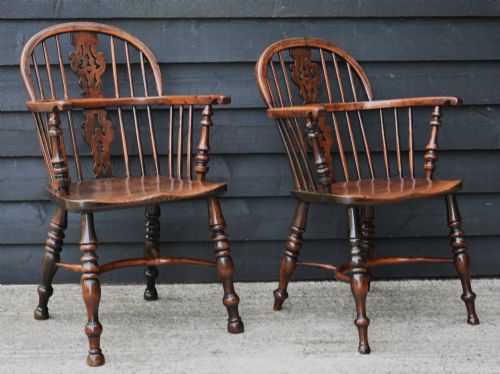
The most common examples on this page are Windsor armchairs and country farmhouse carvers featuring solid timber seats and stick or spindle backs. They emerge from English vernacular traditions, appearing singly or in matched pairs and larger dining sets.
How they were made
Maker-craftsmen built these chairs by combining native timbers, pairing durable brown elm seats with ash, beech, yew, fruitwood, or oak for the spindles, legs, and bentwood bows. Elm provided a tough, interlocking grain for the saddle-shaped seat that resisted splitting under heavy use.
Turned components and steam-bent wooden parts formed the structural framework, secured by wedge joints and traditional stretchers such as the crinoline stretcher. Some examples incorporate woven rush seating inserted directly into the wooden frame.
Some nineteenth century country carvers bear the distinct chop marks of an adze beneath the elm seat, left by the maker shaping the wood by eye.
What varies in quality
Quality in these vernacular chairs rests upon the selection of timber and the harmony of the timber's grain and colour across the piece. Superior examples display deep, rich patination on the elm seat alongside well-proportioned spindles and cleanly turned undercarriages.
The integrity of the construction and the retention of original surface finishes dictate the standing of a chair. Pieces that maintain their structural rigidity without excessive replacement parts or inappropriate modern adhesives represent the upper tier of the range.
The Brown Elm Carver Chair Glossary
- Carver chair
- An armchair designed to sit at the head of a dining table or serve as a fireside seat. These pieces feature integrated armrests attached to the main frame.
- Windsor chair
- A wooden chair built with a heavy solid timber seat into which the legs and back spindles are wedged directly. The design often incorporates a bentwood bow or a high spindle back.
- Vernacular
- Objects created by local craftsmen following regional traditions rather than strict academic design patterns. These pieces prioritise functional utility and local material availability.
- Crinoline stretcher
- A curved under-stretcher linking the legs of a Windsor chair in a continuous loop. This architectural element provides lateral stability to the chair frame.
- Rush seat
- A seating surface woven from dried marsh rushes or sedges. This technique creates a textured, supportive platform supported by the wooden seat rails.
Brown Elm Carver Chair: Frequently Asked Questions
What is a brown elm carver chair?
A brown elm carver chair is a traditional wooden armchair featuring a solid elm seat and integrated armrests. These pieces belong to English vernacular and country furniture traditions spanning several centuries.
Craftsmen built them for domestic use in farmhouses, kitchens, and parlours, combining elm with timbers like ash, beech, and yew.
How do I identify the period of an elm armchair?
Dating relies on observing construction methods, turning styles, and wood patination. Georgian examples often display refined cabriole legs or comb backs, while Victorian pieces tend to feature sturdy stick backs or balloon shaped turnings.
Examining the wear patterns on the elm seat and the tools marks underneath helps determine the age of the woodwork.
Are these chairs suitable for daily dining use?
These armchairs function well in daily settings because makers engineered them for practical domestic service. Their solid elm seats and braced undercarriages handle regular sitting.
Placing them at the ends of a dining table or using them as desk and fireside chairs integrates them into modern living spaces.
Why is elm used for the seat?
Elm possesses an irregular, interlocking grain structure that prevents it from splitting easily when nailed or drilled. This quality made it the preferred timber for thick saddle seats.
Makers exploited this durability so the seat could withstand the stress of legs and spindles driven directly into the wood.