




Traditional Country Ladderback Armchair
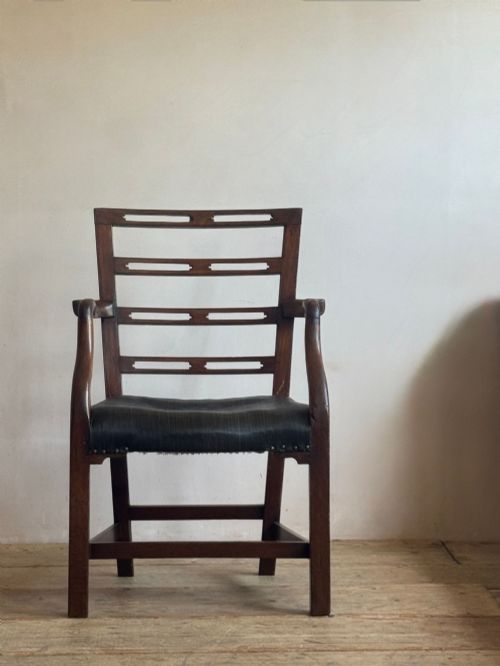
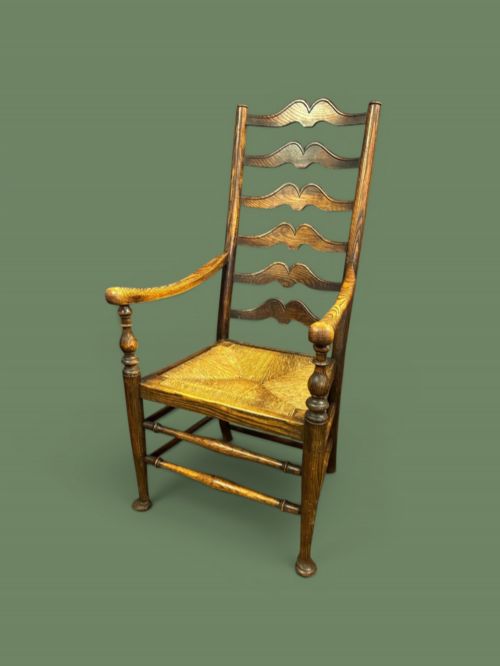
These traditional country ladderback armchairs bring centuries of vernacular woodwork into domestic spaces through honest construction and rush or fabric seating.
Traditional Country Ladderback Armchair
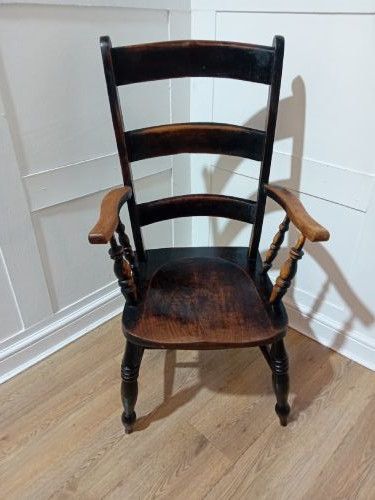
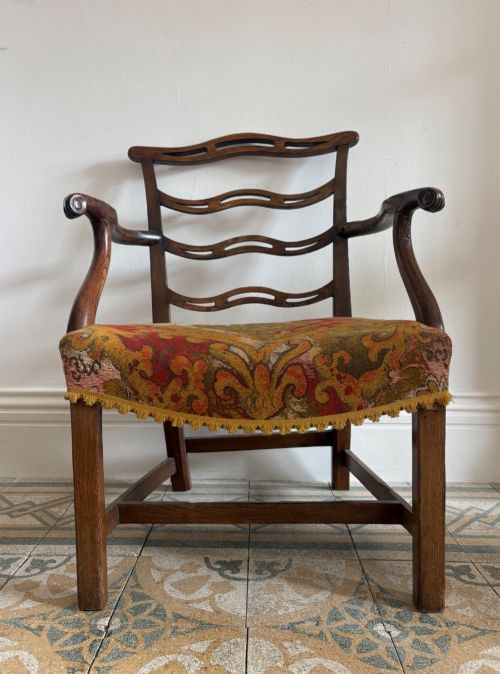
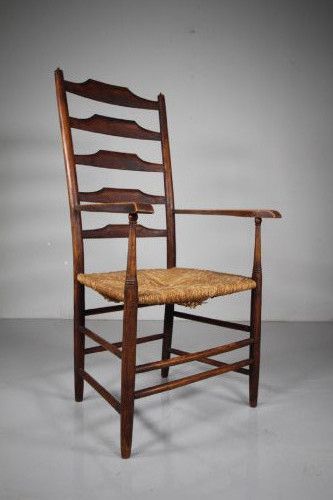
A traditional country ladderback armchair is defined by horizontal rails set between upright rear posts, creating a supportive backrest derived from vernacular furniture traditions. These chairs emerge across the eighteenth, nineteenth and early twentieth centuries, spanning Georgian, Victorian, Edwardian and Arts and Crafts eras.
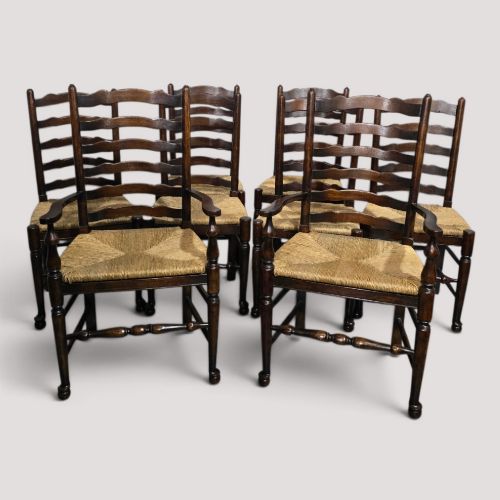
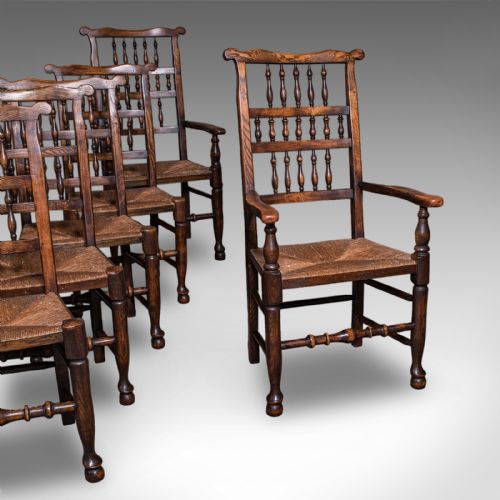
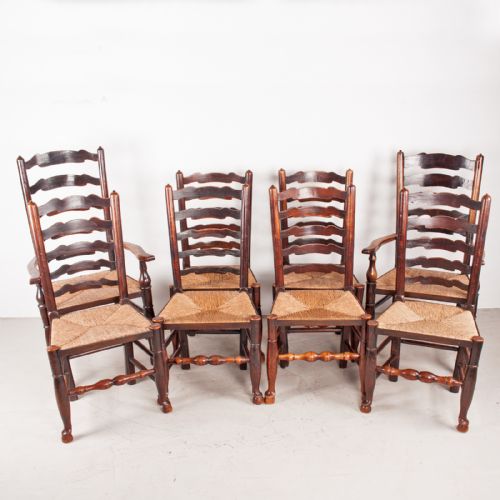
The regional iterations visible here range from Cheshire and Lancashire forms to Thames Valley and Sussex designs. Armchairs appear alongside companion sets of dining chairs, carvers, rocking chairs and children's high chairs.
Makers utilised local timbers to build robust seating for farmhouse kitchens and country houses alike, resulting in sturdy open-arm proportions that prioritise daily utility.
Craft and preservation
Quality rests upon the integrity of the frame construction and the tightness of the original rush or fabric weaving. Better examples retain their matching timber components without excessive replacement parts or compromised joints.
The subtlety of the ladder rail profile and the patination accumulated on the exposed wood distinguish exceptional regional pieces from simpler utility seating.
The listings on this site combine ash, elm, oak and beech with woven rush and fabric seating across multiple centuries.
Philip Clissett·Liberty & Co
The Traditional Country Ladderback Armchair Glossary
- Ladderback
- A chair back constructed with multiple horizontal wooden slats or rails between the upright posts. This traditional format provides comfortable support while remaining straightforward to assemble.
- Rush seat
- A seating surface woven from dried marsh grass twisted into cords. This traditional technique creates a flexible, durable pad across the chair frame.
- Carver
- An armchair designed with armrests, historically placed at the head of a dining table or used as a standalone fireside seat. These pieces match larger sets of side chairs.
- Vernacular furniture
- Practical domestic objects made by regional craftspeople using local materials and traditional methods without grand architectural pretension. These pieces reflect specific geographic styles.
Traditional Country Ladderback Armchair: Frequently Asked Questions
How do I date a ladderback chair?
Dating relies upon examining the timber species, turning styles on the posts, and construction methods like pegging. Regional vernacular pieces often retain subtle tool marks and structural traits characteristic of their period.
Later Victorian and Edwardian examples show machine assistance in turning, whereas eighteenth and early nineteenth-century pieces display greater individual variation from hand-tooling.
Are rush seats durable?
Traditional rush seating withstands daily domestic use remarkably well when kept away from excessive dampness. The twisted marsh grass forms a dense, resilient web that supports weight comfortably over decades.
Should the weave eventually slacken or fray, traditional craftspeople can re-rush the frame to restore its original function.
What is a carver chair?
A carver is an armchair version of a dining chair, historically positioned at the head of the table for the head of the household. These chairs feature open arms built to accommodate wider clothing.
In many listings, carvers appear alongside matching side chairs to complete dining sets.
How do I care for antique timber?
Maintaining antique ash, elm, oak and beech requires simple dusting with a dry cloth and occasional application of traditional beeswax. Avoid placing wooden furniture near direct heat sources or in damp environments to prevent timber movement.
Preserving the original surface finish maintains the historic character accumulated over generations of use.