

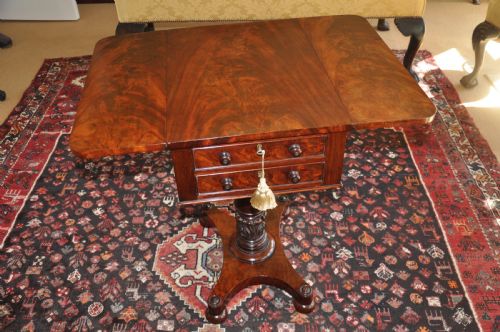


Georgian Pedestal Drop Leaf
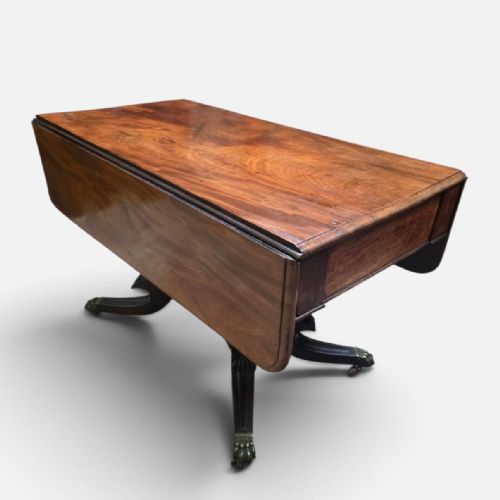
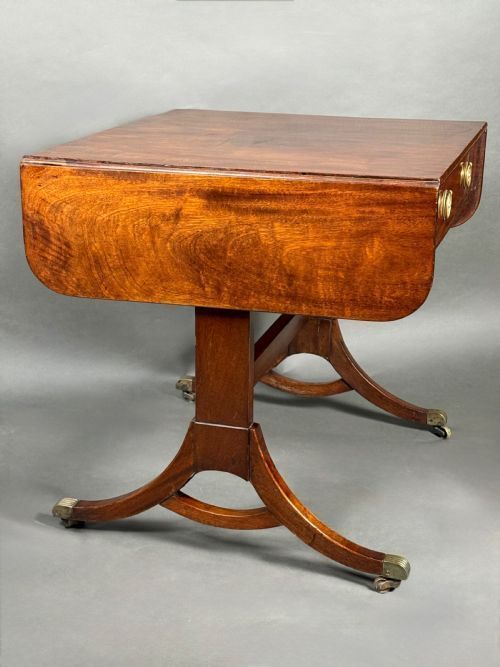
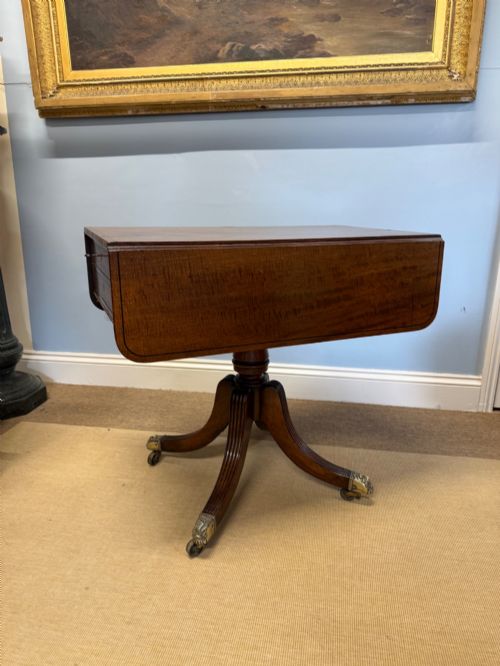
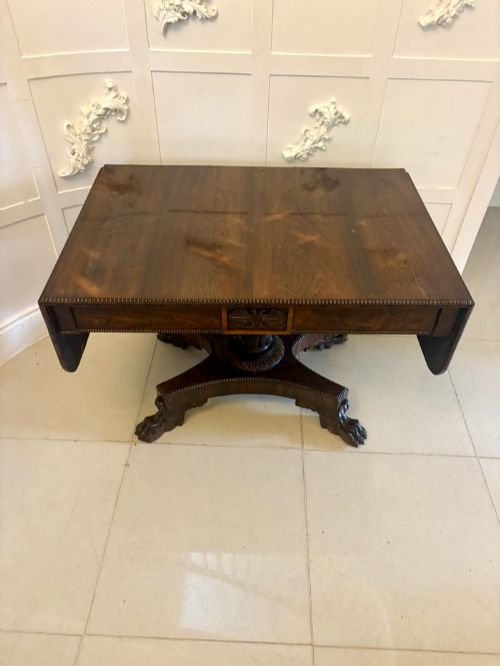
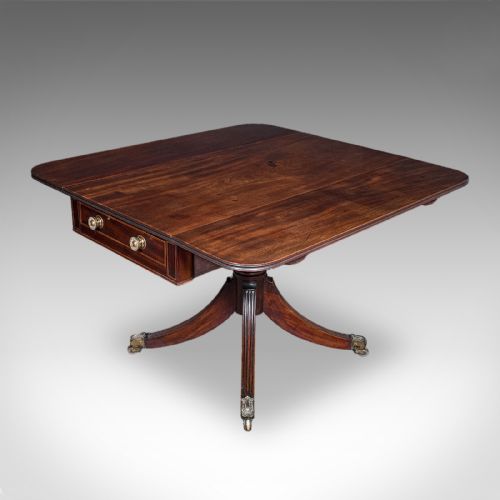
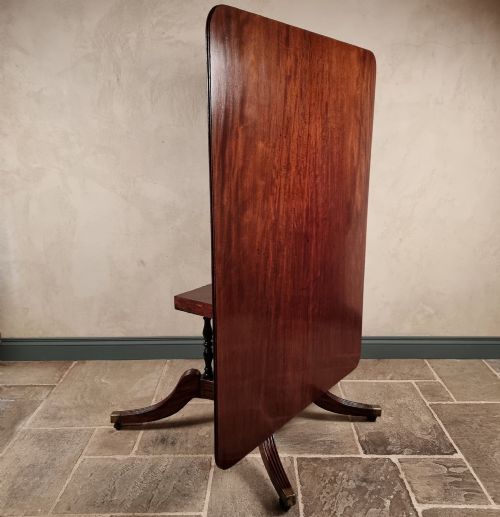
Georgian pedestal drop leaf tables combine timber figure with a central column, offering versatility in dining rooms and parlours.
Georgian Pedestal Drop Leaf
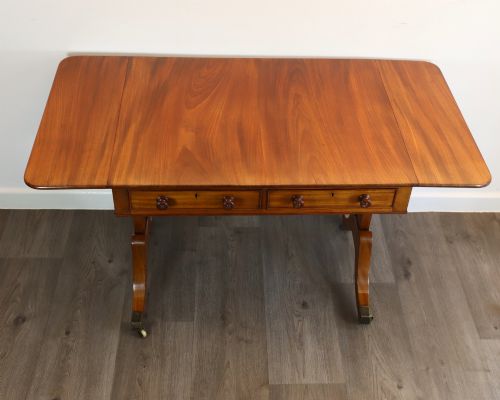
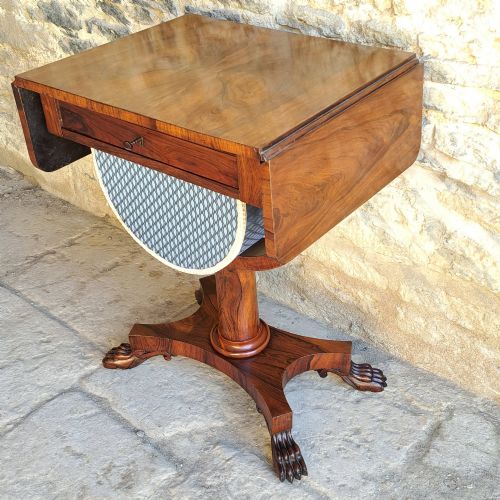
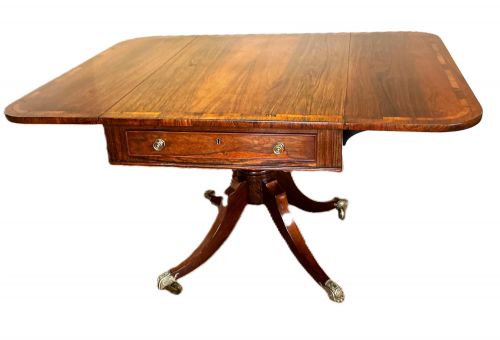
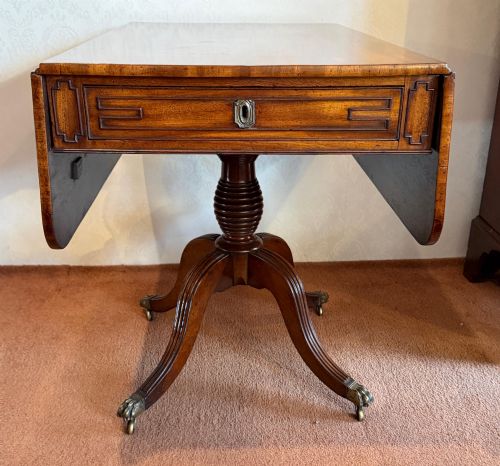
When you search for georgian pedestal drop leaf, you encounter tables designed with hinged flaps supported by single or dual pedestals. The forms range from sofa tables and pembroke tables to larger dining tables originating across the Georgian, Regency, and Victorian eras.
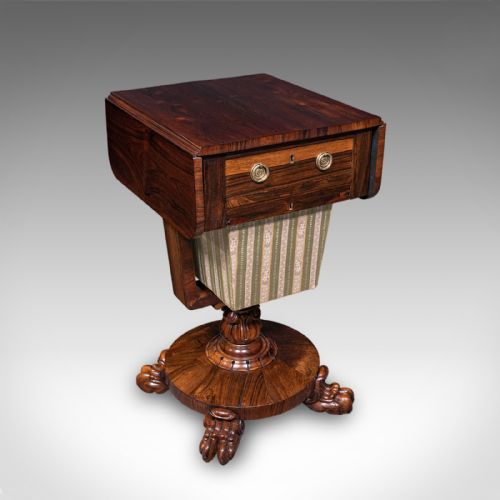
Sofa tables and pembroke tables dominate the selections, alongside sewing tables, work tables, and occasional tables. These pieces serve multiple functions in a room, often featuring drop leaves that expand the surface area when needed.
Materials span mahogany, flame mahogany, rosewood, and figured elm, occasionally enhanced with satinwood or ebony stringing and brass inlays. Pieces emerge from the eighteenth and nineteenth centuries, carrying styles from George III and William IV periods.
How they were made
Cabinet makers utilised dense native and imported timbers, selecting mahogany, rosewood, and Cuban mahogany for their durability and rich grain patterns. Flame mahogany and figured elm provide striking visual depth on table tops.
Inlays of satinwood and ebony create fine contrasting borders, while brass components add structural detail and decorative accents to pedestals and feet. Drop leaf mechanisms rely on sturdy wooden brackets or hinged flaps operating smoothly from the central column.
Table forms span pembroke tables, sofa tables, dining tables, and sewing tables with drop leaves.
What varies in quality
The selection of timber grain sets apart superior examples, particularly where symmetrical flame mahogany or figured rosewood figures across the drop leaves. Greater refinement appears in crisp ebony and satinwood stringing rather than plain borders.
Construction robustness defines the upper tier, seen in stable pedestal bases and well-fitted hinge mechanisms that support the drop flaps securely. Balance and proportion between the central column and the extended leaves determine the visual success of each piece.
The Georgian Pedestal Drop Leaf Glossary
- Drop leaf
- A table design featuring hinged flaps that fold down to save space or lift up to extend the surface area.
- Pedestal
- A single central column supporting the table top, often rising from a platform base with spreading legs.
- Pembroke table
- A small rectangular table with two hinged drop leaves, typically fitted with one or more drawers.
- Sofa table
- A long, narrow table traditionally placed in front of a sofa, equipped with drop leaves at either end.
- Stringing
- A narrow inlay of contrasting wood used to outline panels and borders on furniture surfaces.
Georgian Pedestal Drop Leaf: Frequently Asked Questions
What is a pedestal drop leaf table?
A pedestal drop leaf table is a piece of furniture supported by a central column instead of four corner legs, featuring hinged flaps that fold down.
These tables adapt easily to smaller spaces by dropping the leaves when extra room is needed.
How were pembroke tables used?
Pembroke tables served as versatile occasional tables for writing, breakfasting, or needlework in eighteenth and nineteenth century parlours.
Their drop leaves allowed them to sit compactly against a wall until pulled out for daily tasks.
What is a sofa table?
A sofa table is a low, elongated table designed to stand immediately behind a sofa or in the centre of a room.
Drop leaves on the ends provide additional surface space for lamps, books, or writing materials.
How do I identify a Georgian table?
Georgian tables display characteristic woodwork from the reigns of the Georges, typically utilising solid mahogany, Cuban mahogany, or fine veneers.
Construction methods reflect hand-cut joinery and traditional finishing techniques developed during the eighteenth and early nineteenth centuries.