






Georgian Pedestal Chest Desk
A georgian pedestal chest desk brings enduring architectural balance and compact writing utility to a study.
Georgian Pedestal Chest Desk
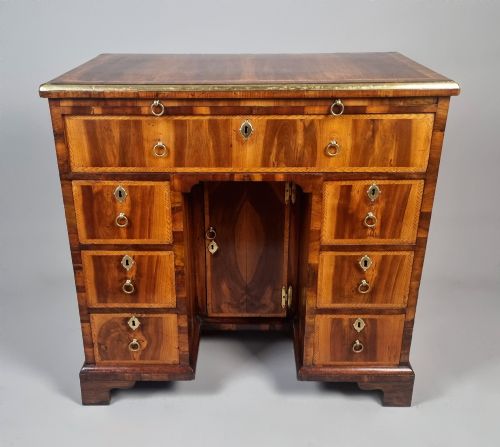
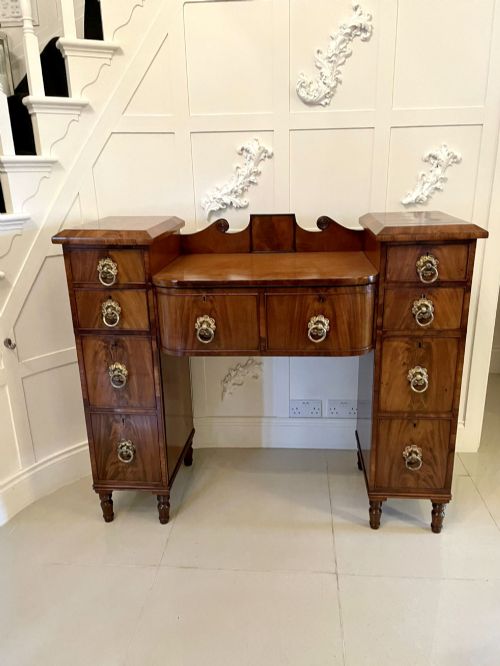
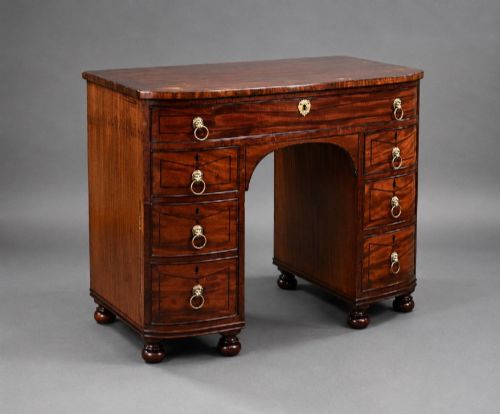
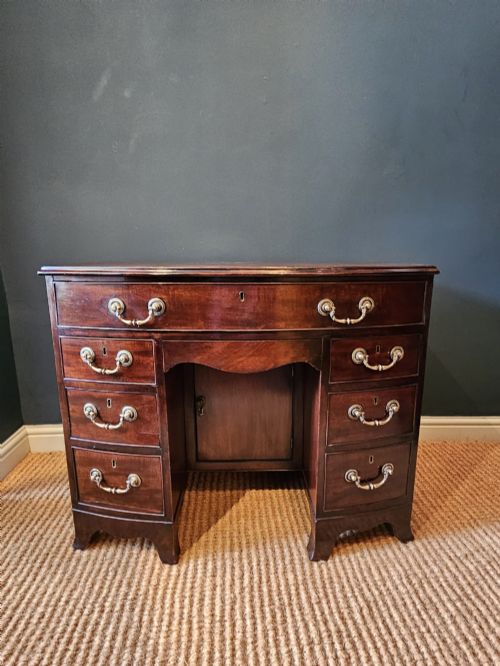
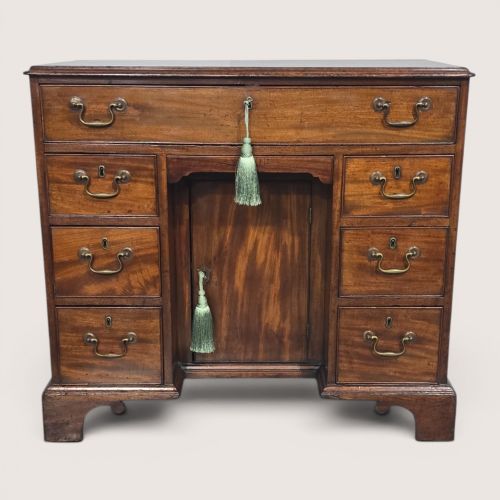
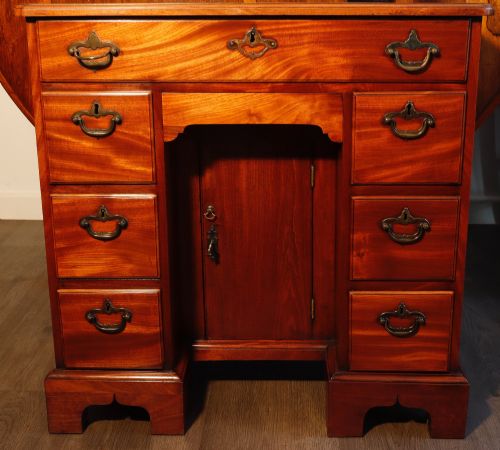
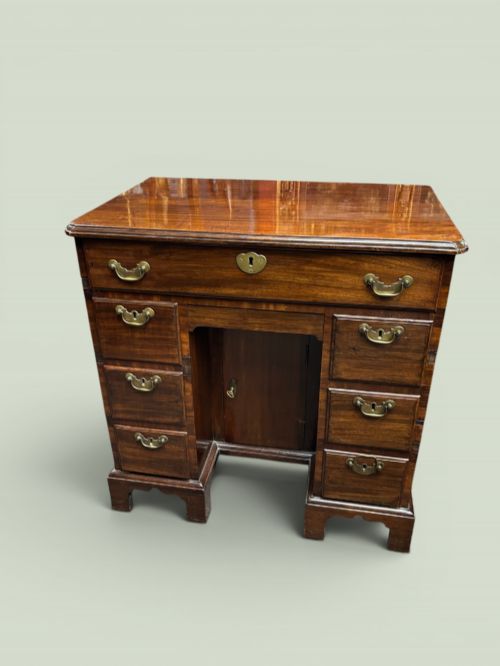
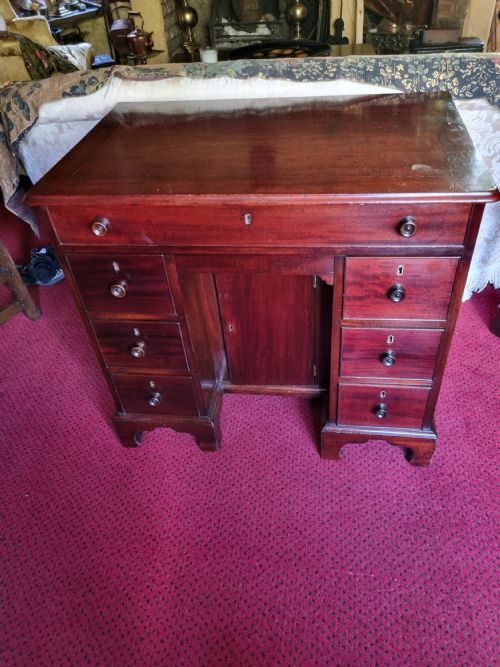
A georgian pedestal chest desk combines a central kneehole recess flanked by banks of small drawers, serving as both a writing surface and a dressing table.
The pieces on this page span the 18th century and the Regency and Victorian periods, reflecting diverse regional interpretations of the classic pedestal form.
Makers utilised compact proportions to fit writing and storage into modest domestic spaces without sacrificing formal presence.
Timber Selection and Construction
Cabinetmakers constructed these desks primarily in mahogany, walnut, and yew wood, frequently selecting figured Cuban mahogany for primary surfaces.
Drawer fronts and top panels often display fine featherbanding and inlay, paired with cast brass handles and escutcheons.
Secondary timbers such as oak provide sturdy interior framing for the small drawer compartments.
Georgian Pedestal Chest Desk Retail Price Guide 2026
Typical asking prices for georgian pedestal chest desk among the pieces listed under this phrase on Sellingantiques today, from the lower quarter to the upper quarter. They describe what is for sale here now, not the wider market.
Listings feature oak, walnut, and mahogany timbers across pieces dated from the 18th century through the Victorian era.
Distinctions in Execution
Quality rests in the selection of timber figure, where richly grained walnut or figured mahogany elevates the visual depth of the piece.
The refinement of internal pigeonholes, secret compartments, and sliding writing shelves demonstrates the original maker's ambition.
The crispness of mouldings, dovetail joinery, and the integrity of the original brass hardware separate utilitarian examples from finer commissions.
Grendy
The Georgian Pedestal Chest Desk Glossary
- Kneehole desk
- A small writing table with pedestals of drawers on either side of a central recess. This configuration often doubles as a dressing chest.
- Featherbanding
- A decorative inlay technique using veneer strips arranged in a herringbone pattern around the perimeter of a drawer or top. It frames the timber grain.
- Cuban mahogany
- A dense, heavy timber prized for its deep colour and dark figuring. Cabinetmakers favoured it for high-status 18th-century case furniture.
- Serpentine
- A curved outline featuring a convex centre flanked by concave wings. It adds rhythmic movement to the front of a chest desk.
Georgian Pedestal Chest Desk: Frequently Asked Questions
What is a kneehole desk?
A kneehole desk is a compact writing table featuring a central recess for the legs, flanked by two vertical stacks of small drawers. They originated to provide private writing and storage space in domestic interiors.
Over the centuries, cabinetmakers adapted the form for dressing purposes, adding internal compartments and sliding shelves to hold personal items.
How do I care for mahogany?
Keep wooden furniture away from direct sunlight and heat sources to prevent the timber from drying out and the finish from fading. Regular dusting with a soft, dry cloth preserves the polished surface.
Apply traditional wax sparingly when the wood appears dry, buffing gently to maintain the natural lustre of the grain.
How do I distinguish walnut from mahogany?
Walnut displays a warmer brown tone with complex, swirling grain patterns and occasional dark growth rings. It was particularly popular during the earlier 18th century.
Mahogany tends to have a reddish-brown hue with straighter, tighter grain structures that take a high, reflective polish.
Where were these desks placed?
These pieces fit comfortably into studies, libraries, or bedrooms where floor space was at a premium. Their finished backs sometimes allowed them to stand away from the wall.
They served individuals who needed a dedicated surface for correspondence and household accounts without the bulk of a full-sized bureau bookcase.