
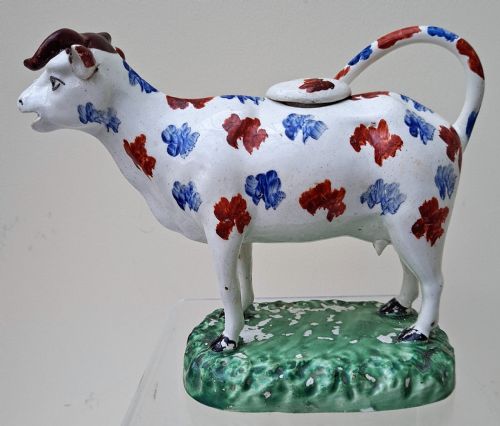


Georgian Pearlware Jug
A georgian pearlware jug brings earthenware table pottery into your home through moulded forms, transfer decoration, and lustre finishes.
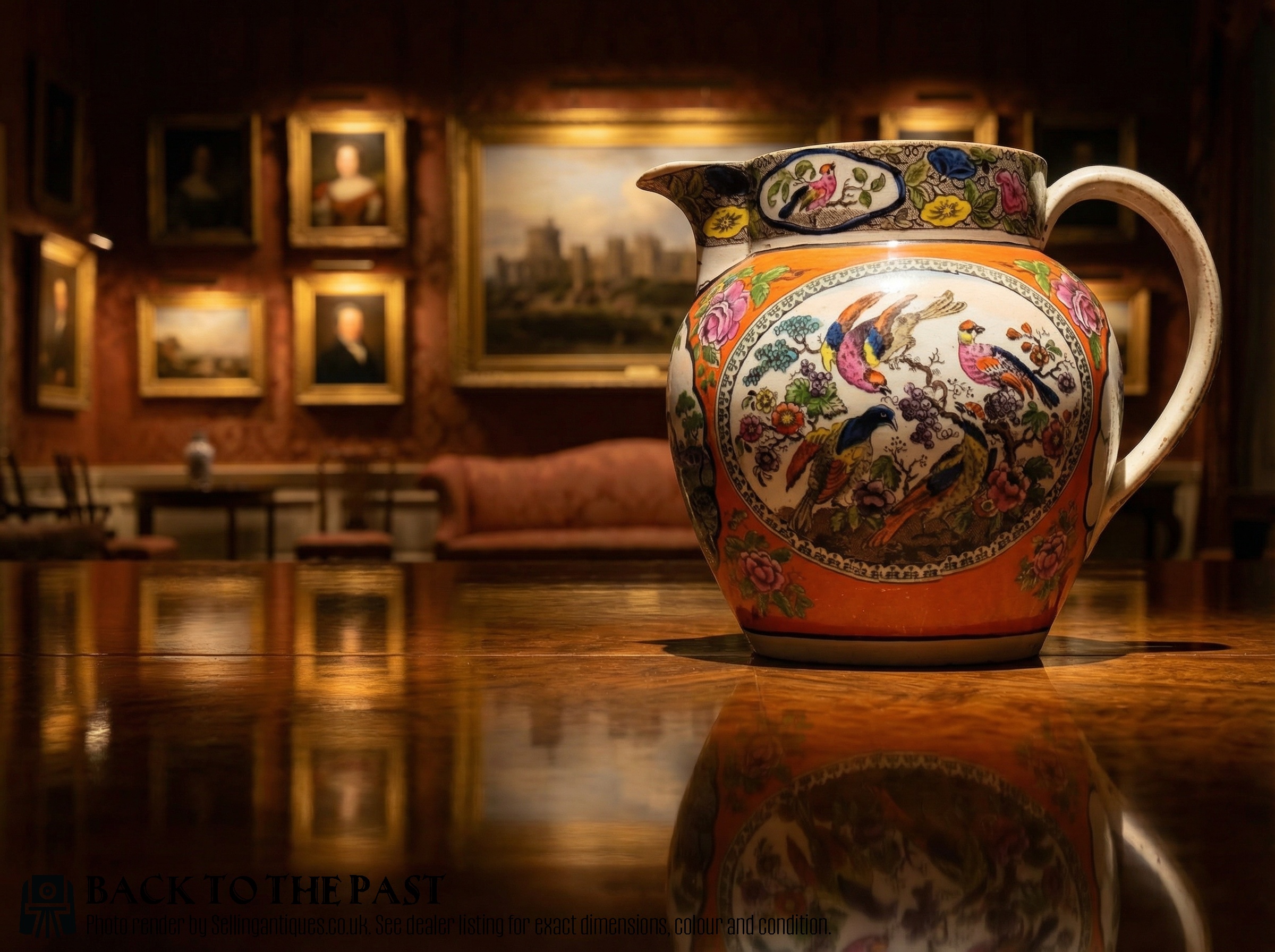
Georgian Pearlware Jug
A georgian pearlware jug is a ceramic vessel produced during the 18th century, 19th century, and Regency periods. The selection includes utility pitchers, creamers, Toby jugs, character jugs, and cow creamers from Welsh, Staffordshire, Sunderland, and Yorkshire potteries.
The most common formats on this page are Sunderland lustre jugs featuring poetic panels, Staffordshire creamers with cabbage leaf moulding, and figurative cow creamers. These pieces function as decorative tablewares or display items with distinct regional traits.
How They Were Made
Potters shaped these vessels from earthenware and pearlware ceramic, often employing cabbage leaf moulding or flat base constructions for figurative forms. Makers applied glaze to the ceramic body to achieve the characteristic pale blue-grey tint associated with pearlware.
Decoration relied on purple transfer decoration and metallic lustre glaze, alongside enamelled and poetic panels. Sunderland and Staffordshire kilns utilised these lustrous and printed finishes to ornament the pottery.
Several cows retain their milkmaids perched permanently on flat bases, pouring tea without spilling a drop.
What Varies in Quality
Quality rests upon the clarity of the moulded detail, such as the sharpness of cabbage leaf reliefs or the definition on character jugs and cow creamers. Finer examples maintain crisp surface modelling rather than softened contours from worn moulds.
The precision of the transfer decoration and the application of metallic lustre glazes dictate visual appeal. Hand-painted enamel details and well-aligned poetic panels separate standard utilitarian jugs from superior display pieces.
The Georgian Pearlware Jug Glossary
- Pearlware
- A refined earthenware developed in the pottery industry, featuring a glaze with a subtle bluish tint that pooled in crevices. This material succeeded salt-glazed stoneware and creamware.
- Lustre Glaze
- A metallic film applied to ceramics to create an iridescent sheen. Sunderland pieces frequently utilised this technique for decorative bands and panels.
- Transfer Printing
- A method of applying pre-printed designs to ceramic surfaces using engraved copper plates and tissue paper. This technique allowed for consistent figurative and textual decoration.
- Cow Creamer
- A hollow ceramic vessel in the shape of a cow, designed to pour milk or cream from its mouth. These pieces often include a milkmaid figure or flat base.
- Toby Jug
- A pottery jug modelled as a stout, jovial person seated with a mug of beer and a pipe. These character vessels date prominently to the Georgian era.
Georgian Pearlware Jug: Frequently Asked Questions
What is a pearlware jug?
A pearlware jug is a ceramic pitcher created during the Georgian period using a refined earthenware body covered in a pale, bluish-tinted glaze. Potters utilised these vessels for serving liquids or as decorative display items.
These pieces encompass utilitarian jugs alongside figurative forms like Toby jugs and cow creamers. Sunderland and Staffordshire regions produced many of the notable examples found today.
How do I date a georgian jug?
Dating relies on stylistic clues, moulding techniques, and decorative methods recorded in the piece. Characteristics such as cabbage leaf moulding or specific transfer print subjects point toward particular decades within the 18th and 19th centuries.
Pottery marks, regional traits from Welsh or Yorkshire kilns, and glaze compositions also help narrow the production window. Comparing the form against documented examples provides a clearer timeline.
Where were these jugs made?
Production centred primarily in English pottery districts, most notably Staffordshire, Sunderland, and Yorkshire. Regional workshops also operated in Wales, producing distinct earthenware forms.
Each pottery centre developed specific specialisms, from Sunderland lustre jugs with poetic panels to Staffordshire figurative creamers and character jugs.
How should I display a pearlware jug?
Display these jugs on stable, flat surfaces away from direct sunlight and heavy foot traffic. Earthenware and pearlware benefit from secure placement on shelves or within cabinets where their glazes and transfer prints remain visible.
Keep the environment stable in temperature and humidity to protect the ceramic body and metallic lustre glazes. Dust the pieces gently with a soft, dry cloth.