
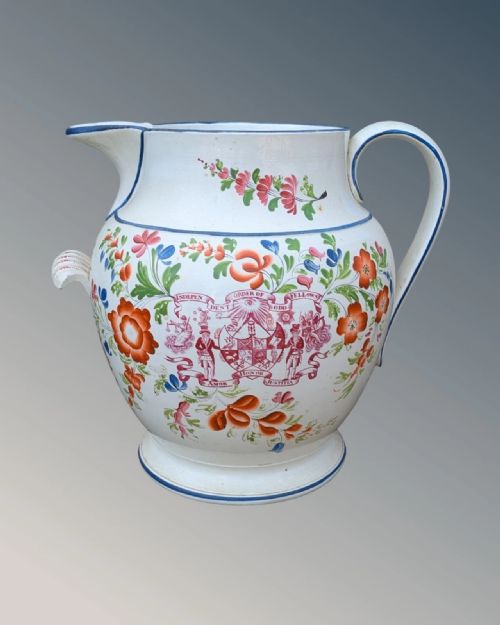


Georgian Earthenware Water Pitcher
These georgian earthenware water pitcher examples combine robust utility with striking transfer-printed and moulded decoration, offering a tangible link to domestic life.
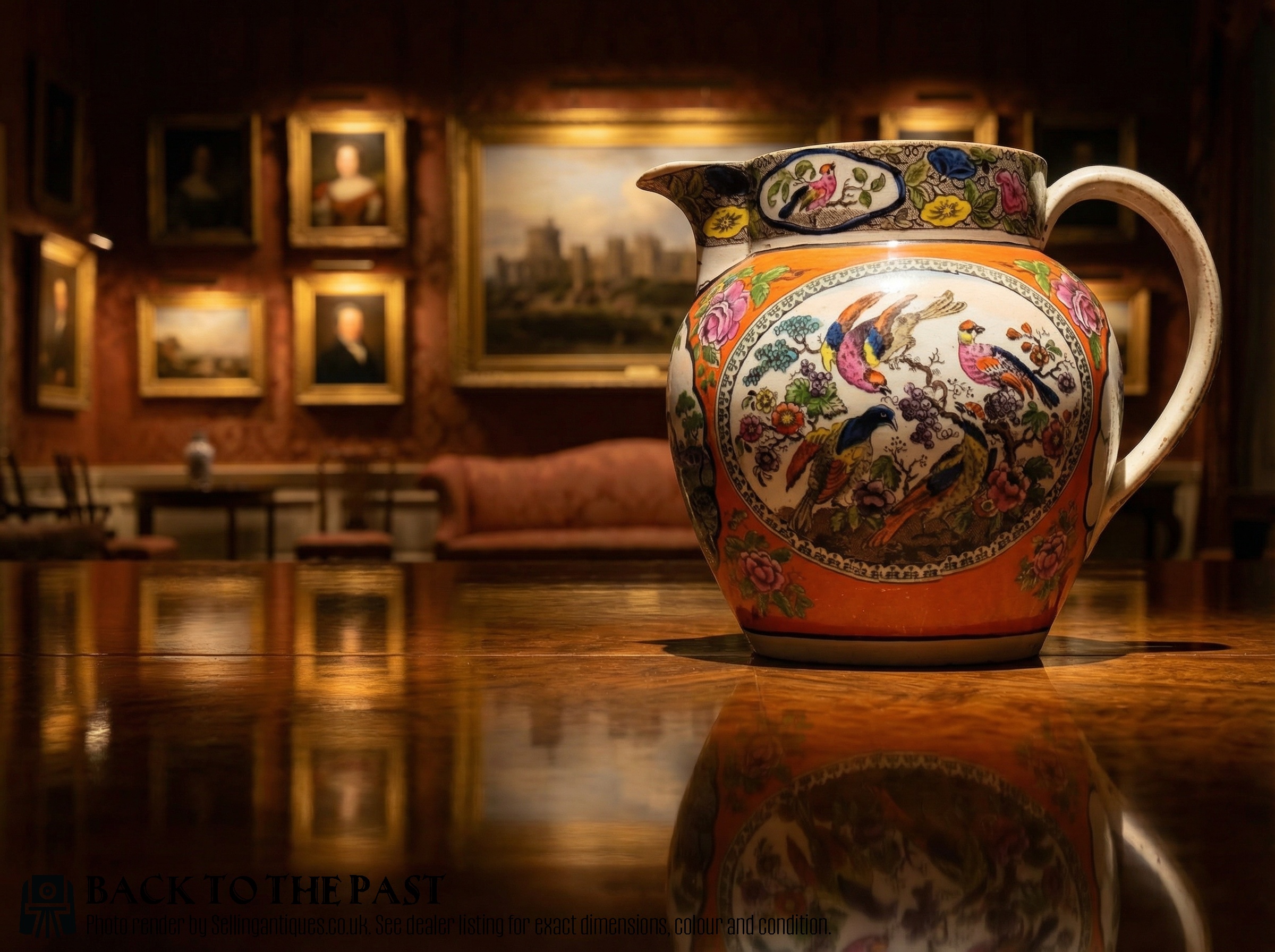
Georgian Earthenware Water Pitcher
A georgian earthenware water pitcher is a robust ceramic vessel designed for holding and pouring water in domestic settings. These pieces primarily encompass jugs and pitchers created during the Georgian and Regency periods, stretching into the nineteenth century.
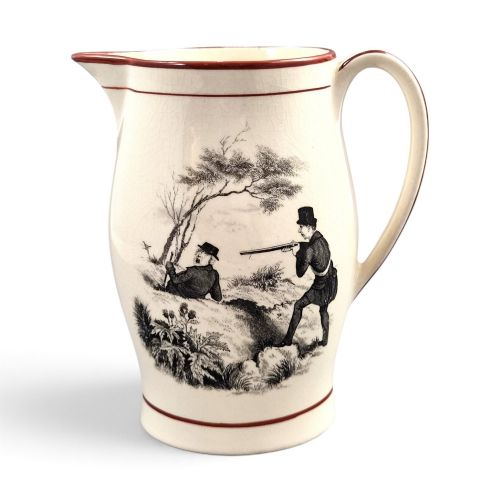
Buyers will most frequently encounter creamware and pearlware varieties, often decorated with transfer-printed scenes, magenta details, or pink lustre. Forms range from large one-gallon vessels to footbath jugs and smaller Dutch jugs.
The origins span English potteries, with Staffordshire works particularly well represented among the surviving examples. These objects bridge the gap between everyday kitchen utility and decorative table display.
How they were made
Makers utilised earthenware bodies such as creamware and pearlware, shaping them through throwing or moulding techniques like cabbage leaf moulding. These bodies were then finished with a smooth glaze to seal the porous ceramic substrate.
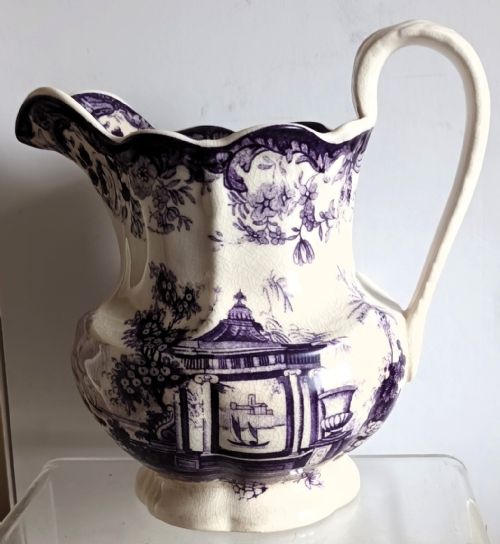
Decoration relied heavily on transfer-printing in blue, magenta, or various enamels to apply intricate topographical, historical, or pictorial scenes. Some vessels also received hand-painted touches or pink lustre highlights to enhance the visual appeal before final firing.
Oddfellows society members clearly enjoyed a hearty drink, judging by the surviving oversized ceremonial creamware jugs.
What varies in quality
Quality in a georgian earthenware water pitcher rests on the crispness of the moulded relief work and the registration of the transfer-print. Finer examples show sharp detailing in patterns such as the Bethesda design or transfer-printed architectural scenes without blurring.
The refinement of the earthenware body and the evenness of the glaze application also distinguish superior vessels from heavier, coarser utility ware. Better execution in the enamelling and the application of pink lustre separates standard kitchen items from exhibition-quality display pieces.
The Georgian Earthenware Water Pitcher Glossary
- Creamware
- A refined earthenware with a pale yellowish-cream glaze, developed in Staffordshire during the eighteenth century. It became widely popular for domestic tableware due to its smooth surface and light weight.
- Pearlware
- An improved earthenware body featuring a bluish-tinted glaze that pooled slightly blue in crevices, designed to mimic Chinese porcelain. It superseded creamware around the turn of the nineteenth century.
- Transfer-printing
- A decoration technique where a design is engraved on a copper plate, inked, transferred to tissue paper, and then rubbed onto the ceramic surface before firing. This allowed for intricate, repeatable multi-coloured or monochromatic scenes.
- Pink lustre
- A metallic glaze containing gold that fires to a pink, iridescent sheen. It was frequently applied as bands or decorative highlights on nineteenth-century jugs.
- Mazarine
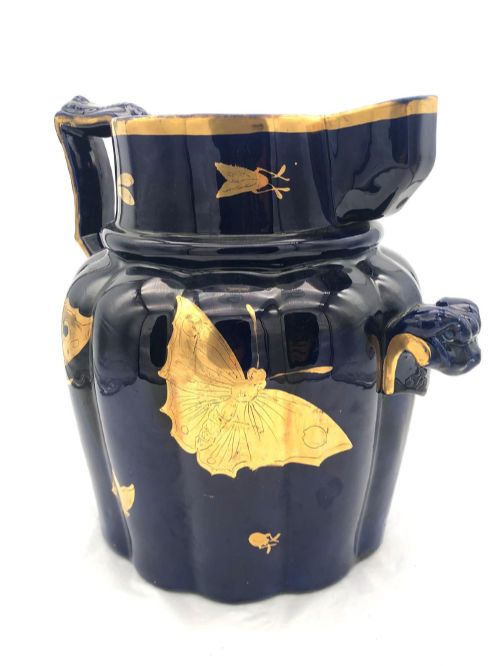
- A deep, rich blue colour often associated with specialised footbath jugs and large serving vessels. The term describes both the hue and the specific vessel type designed for washing.
Georgian Earthenware Water Pitcher: Frequently Asked Questions
What were these pitchers used for?
These pitchers served practical functions in the home, primarily for carrying and pouring water for washing or table service. Larger versions, such as the one-gallon vessels, held substantial quantities for communal household use.
Over time, many of these utilitarian objects transitioned into decorative display pieces as domestic interiors evolved and industrial methods changed table settings.
How do I identify a Georgian piece?
Identification relies on examining the characteristics of the ceramic body, glaze type, and decorative motifs. Creamware and pearlware bodies, combined with hand-applied transfer-printing or early moulded reliefs, point directly to this era.
Form and stylistic cues, such as Regency shapes or specific historical subjects like the Boston State House, help narrow the production window.
Are these pitchers waterproof?
Most of these vessels were glazed to hold liquids effectively for daily domestic tasks. The interior glaze seals the porous earthenware body against moisture absorption.
However, due to age and hairline fractures, contemporary owners often choose to display them dry rather than subject them to regular daily use with liquids.
What is Gaudy Welsh ware?
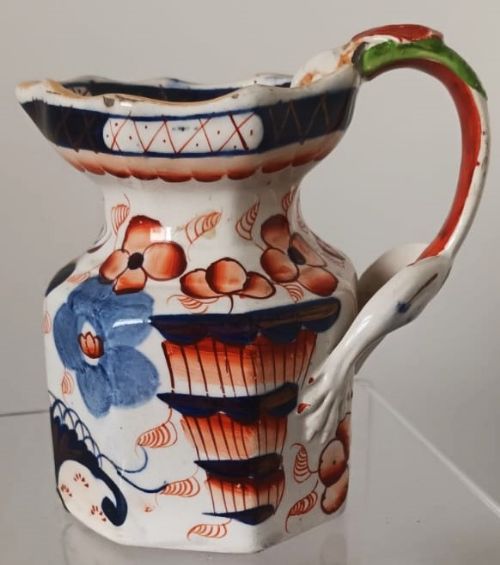
Gaudy Welsh refers to a colourful style of earthenware featuring vibrant cobalt blue, copper lustre, and iron red enamels, often painted over transfer-printed outlines. It was produced extensively in the nineteenth century for popular markets.
Patterns like the Bethesda design show the bold, naive aesthetic that distinguishes this ware from more refined contemporary porcelain.