
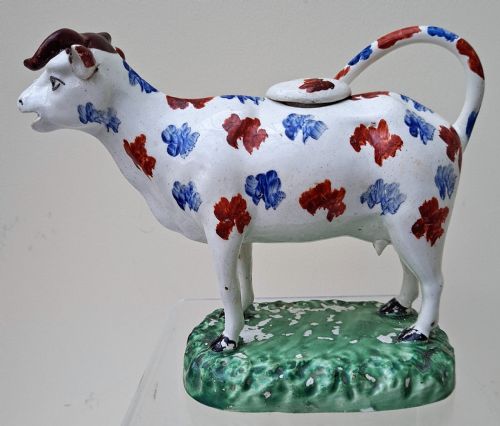


Pearlware Ceramic Pitcher
These pearlware ceramic pitcher selections bring home functional Georgian folk art, offering distinctive lustre and transfer-printed character.
Pearlware Ceramic Pitcher
A pearlware ceramic pitcher represents a specific development in British pottery from the Georgian and Regency periods. Collectors searching this phrase encounter utilitarian vessels shaped as jugs, creamers, and character jugs.
The pieces on this page span the late eighteenth and early nineteenth centuries, originating from Staffordshire, Yorkshire, and Wales. Common forms include Sunderland lustre jugs with poetic panels, cow creamers, and Toby jugs.
Moulded earthenware items like cabbage leaf jugs sit alongside figures such as the bull baiting jug. These examples reflect the lively domestic output of English and Welsh potteries from those eras.
How they were made
Potters shaped these vessels using earthenware bodies finished with a characteristic pearlware glaze that gave a faint bluish tint. Artisans applied relief moulding, such as cabbage leaf patterns, while the clay remained soft.
Decoration relied on purple transfer printing and metallic lustre glazes applied across the surface before firing. Workshops also employed hand-painted details on figures and poetic panels to complete each piece.
Cow creamers come complete with a tiny milkmaid standing by the beast, ready to pour cream from the animal's mouth.
What varies in quality
Quality rests in the crispness of the moulded relief and the control shown in the transfer-printed decoration. Early examples exhibit sharp details in the shaping of figures and leaves.
The application of metallic lustre glazes and painted panels distinguishes standard production from finer output. Richness of colour and precision in the glazing elevate certain jugs above simpler domestic items.
The Pearlware Ceramic Pitcher Glossary
- Pearlware
- A refined earthenware developed in the late eighteenth century with a glaze containing a small amount of cobalt. This oxide addition created a subtle blueish pooling effect in recesses.
- Lustre glaze
- A metallic finish applied to ceramics to produce a reflective sheen. Copper and other metals created the distinctive metallic surface seen on Sunderland pieces.
- Transfer printing
- A decoration technique using an engraved copper plate to transfer designs onto paper and then onto the ceramic body. This method allowed for complex pictorial and poetic panels.
- Cow creamer
- A hollow ceramic vessel modelled as a cow, used for serving cream from the animal's mouth. These domestic pieces often include a milkmaid figure on a flat base.
- Toby jug
- A pottery jug shaped as a stout, jovial figure typically holding a mug and a pipe. These character jugs date to the Georgian period and display bright underglaze or enamel painting.
Pearlware Ceramic Pitcher: Frequently Asked Questions
How are pearlware jugs dated?
Dating relies on stylistic markers, glaze characteristics, and the specific method of decoration. Pieces from the late eighteenth century show different moulding traits compared to those from the eighteen-twenties.
Comparison with documented examples helps narrow the production window. Transfer-printed panels and lustre finishes provide further chronological clues.
What is a Sunderland lustre jug?
Sunderland lustre jugs feature distinctive metallic pink or purple glazes often combined with transfer-printed verses and depictions of bridges or ships. They were produced in the Northeast of England during the early nineteenth century.
These vessels served as commemorative items or gifts for sailors and travellers. Their poetic panels capture popular sentiments of the Georgian era.
How were cow creamers used?
Cow creamers functioned as tabletop cream jugs during tea service. Milk was poured through a lid on the animal's back and dispensed via the mouth.
Many examples include a removable lid and a milkmaid standing beside the beast. They combined practical utility with whimsical animal modelling.
Where were these pitchers made?
Production centred in major English pottery districts, particularly Staffordshire and Yorkshire, alongside Welsh potteries. Regional workshops developed distinct specialities in figures and lustre work.
Local clay sources and traditional moulding techniques influenced the character of pieces from each region. Staffordshire hubs drove much of the commercial output.