



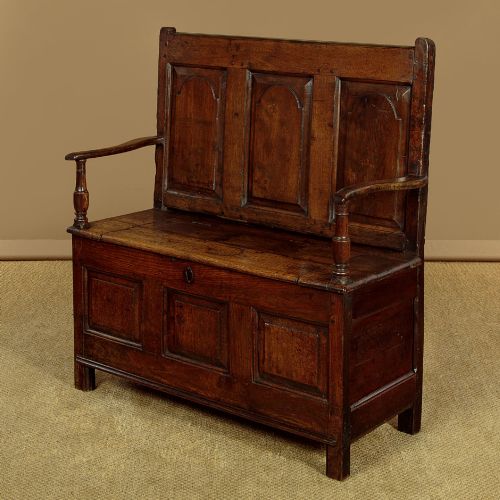

Georgian Panelled Settle
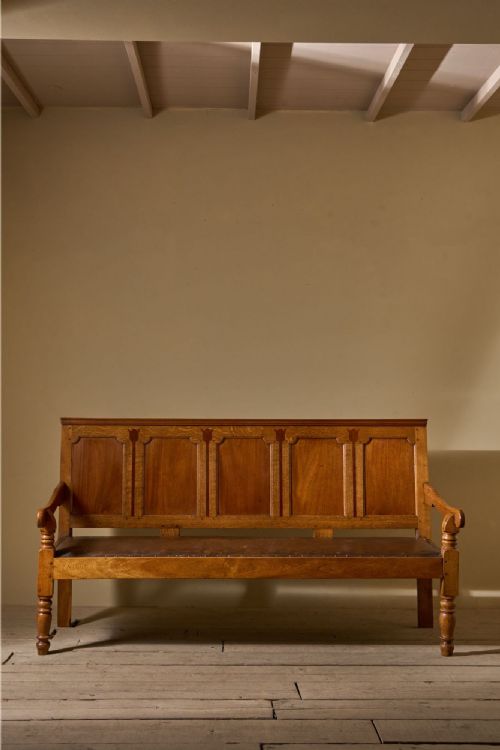
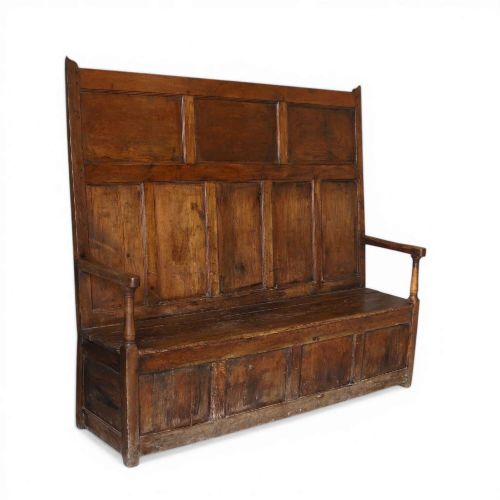
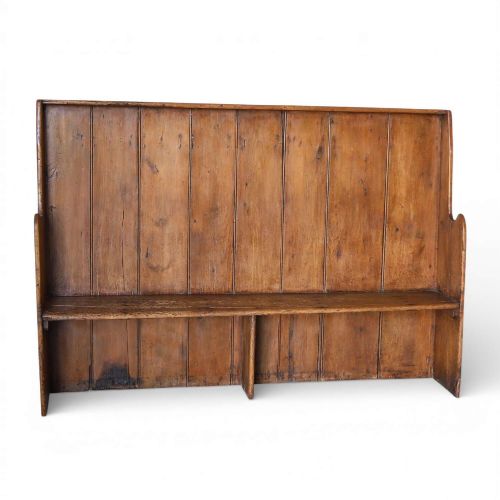
A georgian panelled settle offers high timber backs to block draughts in cold halls, combining seating with built-in storage.
Georgian Panelled Settle
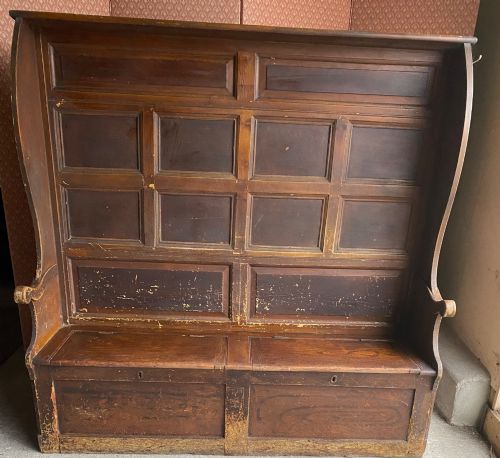
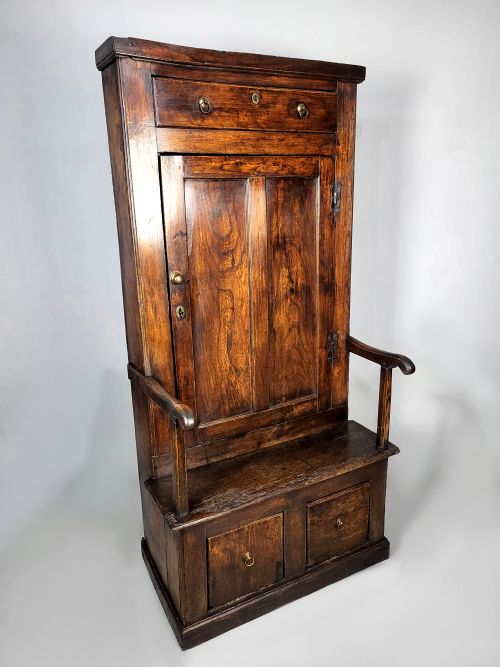
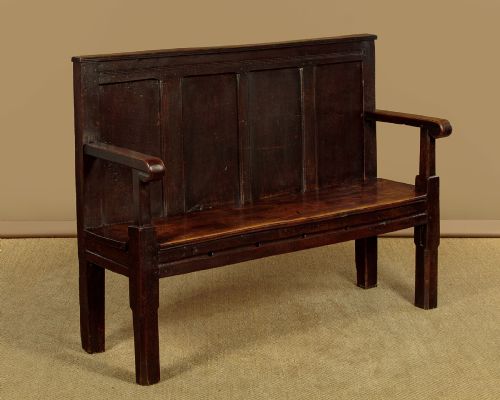
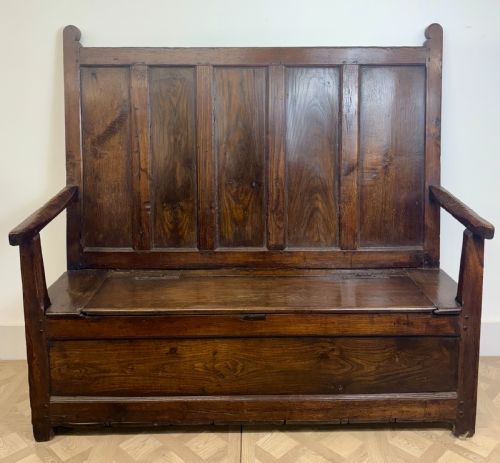
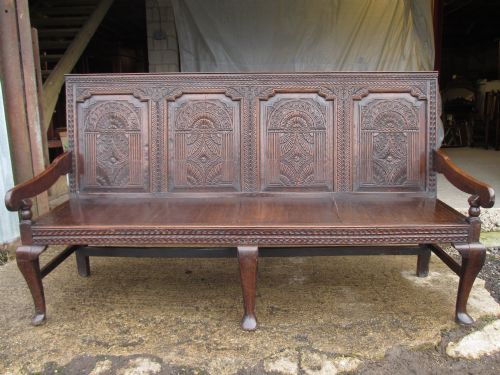
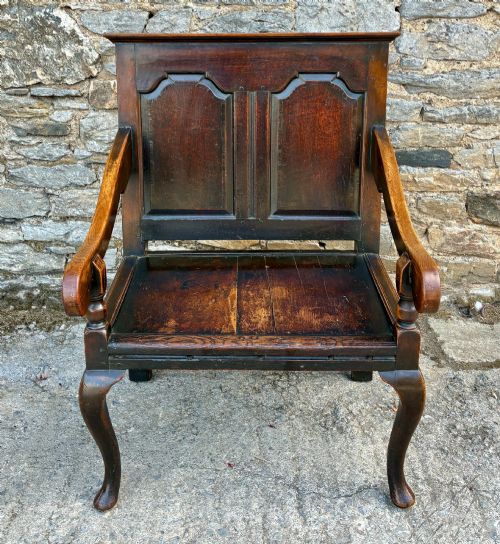
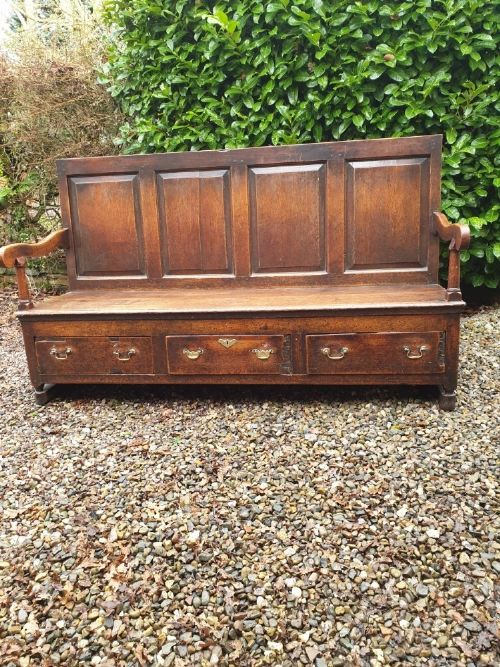
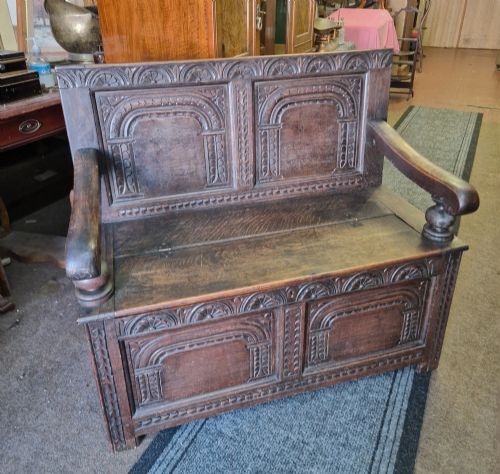
A georgian panelled settle is a high-backed wooden bench built to shield occupants from draughts in domestic halls and provincial taverns. The examples found here span the eighteenth and nineteenth centuries, taking the form of straight-backed benches, box seats with lift lids, and wingback barrel designs.
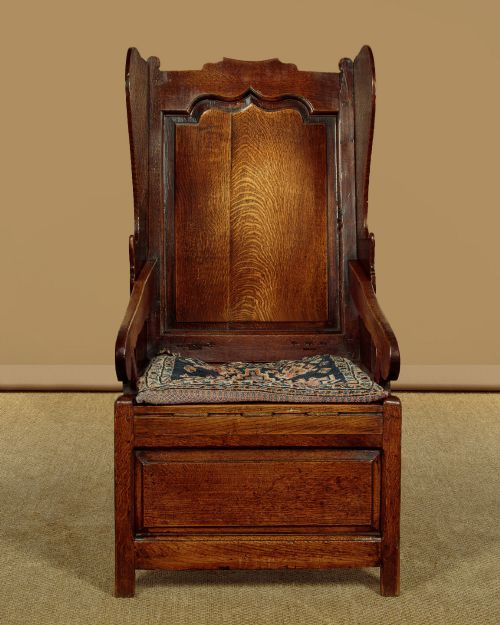
Makers working in regions like Wales and the West Country utilised local hardwoods and softwoods to construct these seats. Alongside standard benches, variations include bacon settles fitted with high timber racks and lambing chairs featuring hooded wings.
How They Were Made
Joiners built these frames primarily using solid oak, complemented by elm, ash, and pine panels held together with pegged joints. Surfaces often display carved details, crossbanding, or remnants of early paint and natural patination accumulated over centuries.
The backs utilise framed panels designed to combat timber shrinkage, while box settles incorporate lidded compartments beneath the seat boards for storage.
Georgian Panelled Settle Retail Price Guide 2026
Typical asking prices for georgian panelled settle among the pieces listed under this phrase on Sellingantiques today, from the lower quarter to the upper quarter. They describe what is for sale here now, not the wider market.
Listings feature oak, pine, elm, and ash timbers, with several examples retaining original painted finishes.
What Varies in Quality
The standard of a settle rests on the integrity of its timber and the depth of its original surface patination. Pieces retaining their early painted finishes or untouched pegged construction stand apart from those altered by extensive timber replacement.
Proportion and scale dictate the visual weight of the piece, with smaller box forms and concave barrel variants showing greater ambition in vernacular design than straightforward utilitarian benches.
The Georgian Panelled Settle Glossary
- Box settle
- A bench featuring an enclosed compartment beneath the seat, accessed via a lift-up lid. This storage space allowed households to keep blankets or dry goods close to the hearth.
- Bacon settle
- A specialised tall settle fitted with internal rails or slatted upper backs designed for curing meat. These fixtures hang salt pork or bacon safely away from pests in country kitchens.
- Lambing chair
- A hooded or wingbacked single seat traditionally placed near the fire during winter lambing season. The high enclosed sides trap warmth and block cold air.
- Peg joint
- A traditional woodworking connection where wooden dowels secure mortise and tenon joints without metal nails. This method accommodates natural wood movement over time.
- Crossbanding
- A decorative border technique where thin strips of veneer are laid across the grain of the primary wood. It frames drawer fronts or panel edges on refined provincial pieces.
- Patina
- The surface sheen and colour developed by timber through decades of handling, polishing, and exposure to light. It signals age and consistent use.
Georgian Panelled Settle: Frequently Asked Questions
What is a settle used for?
These seats provided practical communal seating in draughty farmhouse halls and public taverns before central heating existed. Their high wooden backs blocked cold air currents while the base offered secure storage.
In daily domestic life, families gathered around the hearth on these benches for evening meals and tasks. Some specialised variants doubled as drying racks for farm produce or textiles.
How do I tell an 18th century settle apart?
Early pieces rely heavily on pegged frame construction, solid oak planks, and hand-cut panel mouldings rather than modern fixings. Their surfaces typically display deep patination or traces of historic paint rather than factory finishes.
Proportions tend to be heavier and more vernacular, reflecting the regional traditions of Welsh and English country joiners. Tool marks left by adzes and hand saws remain visible on the underside and interior boards.
Where should I place a settle at home?
Settles work effectively in entrance halls, mudrooms, or large dining spaces where their tall backs anchor the room. Placing one against a blank wall allows the timber panels to serve as a primary visual feature.
Because they were originally designed to block draughts, they fit naturally near doorways or as room dividers in open-plan layouts. The internal box storage accommodates bulky items like throws or cushions out of sight.
Are painted finishes original on these benches?
Many provincial pine and oak benches retain early or original painted surfaces applied decades after their initial manufacture. These finishes often present as worn layers of muted colour that highlight the underlying wood grain.
Distinguishing between early tavern paint and later decoration requires examining the wear patterns around the arms and seat edges. Genuine historic paint shows natural thinning and integration into the timber pores.