


Georgian Panelled Chest
A georgian panelled chest provides robust domestic storage through centuries of craftsmanship, offering authentic period character that grounds any room.

Georgian Panelled Chest
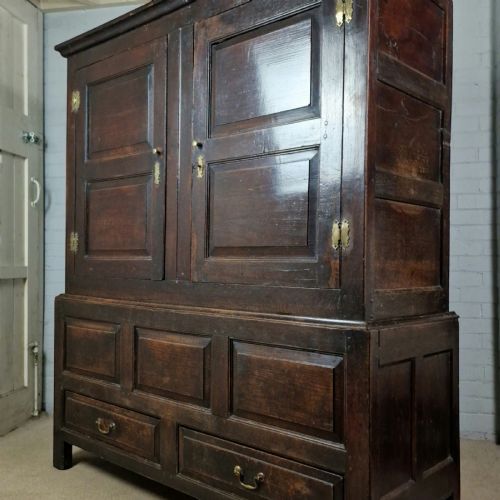
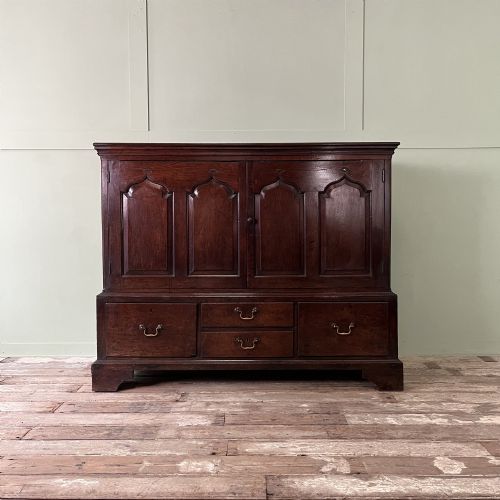
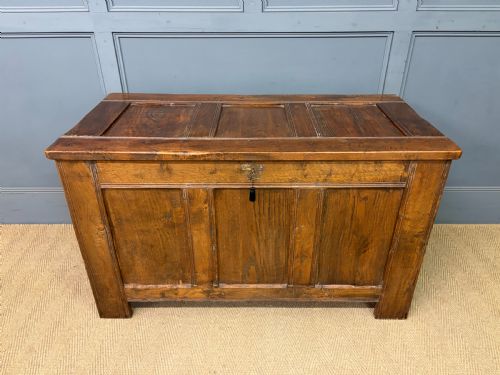
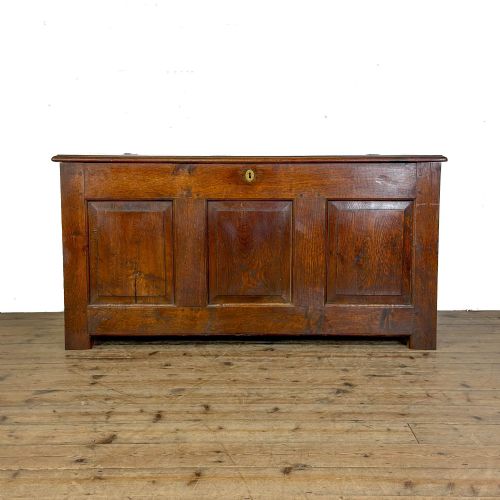
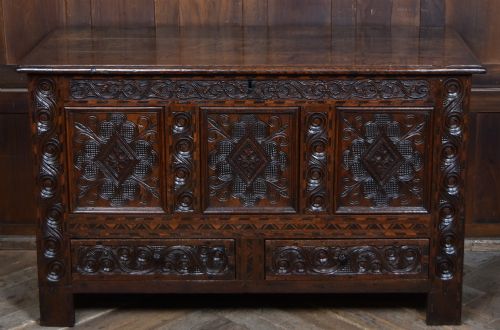
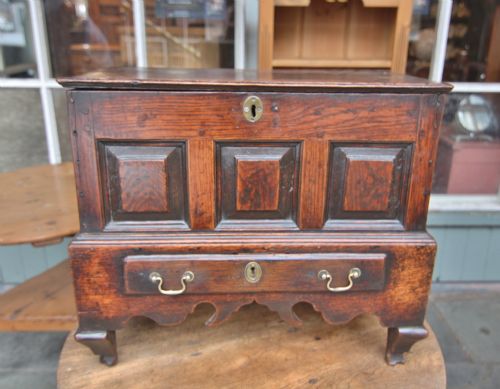
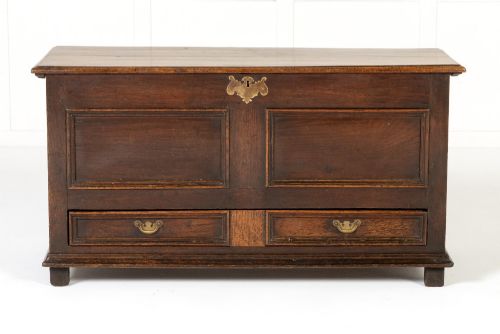
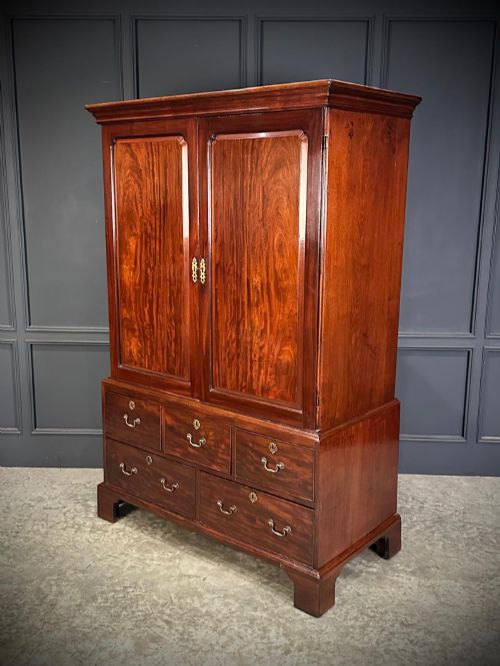
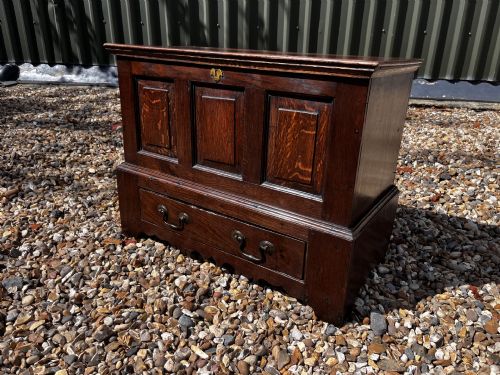
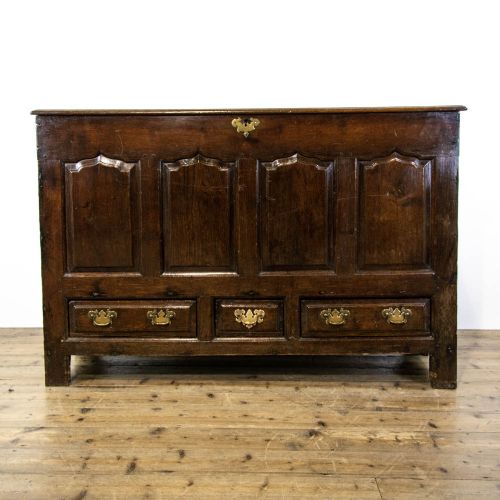
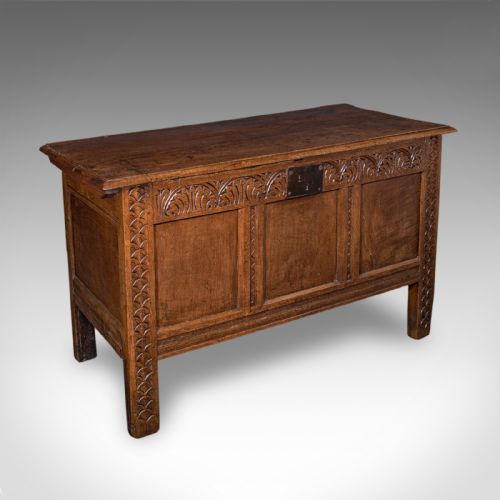
When searching for a georgian panelled chest, buyers encounter a robust variety of utilitarian storage furniture created to hold household textiles, garments, and valuables. The most common forms met on this page include joined oak coffers, mule chests fitted with lower drawers, and blanket boxes originating from English and Welsh country workshops.
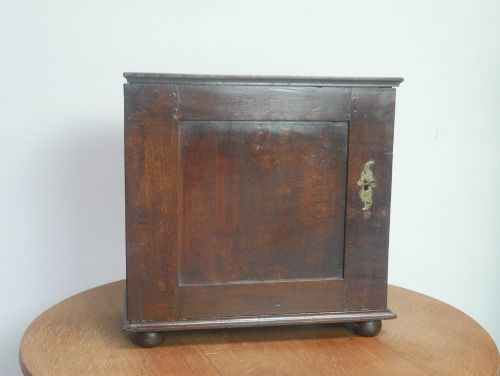
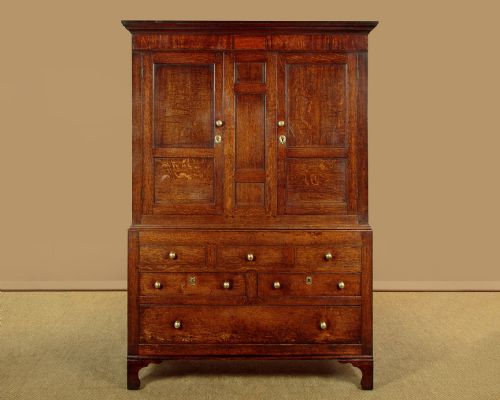
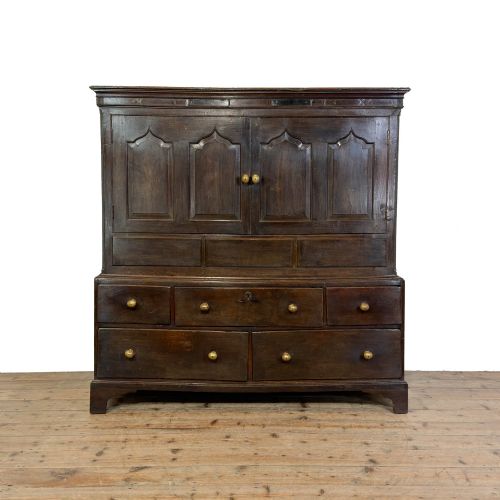
These pieces span the seventeenth, eighteenth, and nineteenth centuries, reflecting domestic needs of the period through straightforward construction and durable timber. Alongside traditional blanket chests, related forms such as linen presses, spice cupboards, and tallboys appear in regional woods like oak, mahogany, and walnut.
How they were made
Makers relied primarily on solid oak, mahogany, and walnut, often utilising frame and panel construction to accommodate seasonal timber movement. Secondary elements incorporated brass hinges, iron hardware, and occasionally decorative wood inlay or burr elm panels to add contrast.
Joinery techniques involved pegged mortise and tenon joints for structural rigidity, while drawer linings and backing boards utilised secondary softwoods like pine. Surfaces were hand-planed and finished to highlight the natural grain without heavy modern varnishes.
Some mule chests hid small internal lockable till compartments designed specifically to keep personal tavern money away from curious household staff.
What varies in quality
The division between standard utilitarian pieces and the top of the range rests on timber selection, surface patination, and the complexity of the joinery. Exceptional examples display deeply figured grain, such as burr elm panels or rich mahogany crossbanding, alongside crisp hand-carved detailing.
Proportion and structural integrity also dictate distinction, where well-balanced panels and untouched original brassware elevate a piece far above heavily restored or altered equivalents.
The Georgian Panelled Chest Glossary
- Mule chest
- A storage chest featuring one or more drawers built into the base beneath the main compartment. This form bridges the gap between a traditional blanket box and a chest of drawers.
- Panelled
- A method of construction where a frame holds a thinner central board floating within grooves. This technique prevents the wood from splitting as it expands and contracts.
- Crossbanding
- A decorative border technique where thin strips of veneer are laid across the grain of the primary wood. It frames drawer fronts or top surfaces on finer furniture.
- Livery cupboard
- A ventilated storage piece historically used for food or household provisions. They frequently feature turned spindles or pierced panels to allow air circulation.
Georgian Panelled Chest: Frequently Asked Questions
What is a mule chest?
A mule chest combines a traditional lift-lid storage box with one or more drawers fitted into the base. This hybrid form gained popularity as households required easier access to stored garments without disturbing items piled on top.
Makers often constructed these pieces in regional workshops using local timbers like oak and pine. The lower drawers made daily retrieval of linens far more practical than reaching deep into a top-opening coffer.
How were these chests used historically?
These pieces served as the primary storage units for household blankets, precious textiles, and personal valuables before built-in wardrobes became common. Their heavy construction also allowed them to double as impromptu seating or window benches in domestic settings.
In many homes, a coffer formed part of a marriage dowry, holding linens and garments accumulated for a new household. Their sturdy lids protected contents from dust, pests, and damp conditions.
How do you date an oak coffer?
Dating relies on examining the construction methods, tool marks, and hardware integrated into the piece. Hand-riven timbers, pegged joints, and simple stile-and-rail framing typically point to earlier eighteenth or seventeenth-century origins.
Secondary woods, nail types, and the evolution of panel mouldings provide further clues. As styles shifted toward the nineteenth century, cabinetmakers introduced finer veneers and more refined decorative carving.
Where were regional styles made?
Many distinct regional variations originated in rural areas such as Wales and Lancashire, where local joiners utilised accessible timbers like native oak. Welsh pieces often display characteristic proportions and traditional carving specific to local workshops.
English country pieces similarly reflect the materials available to provincial cabinetmakers rather than metropolitan fashions. These regional vernacular items carry unique quirks that reveal their geographic origins.