



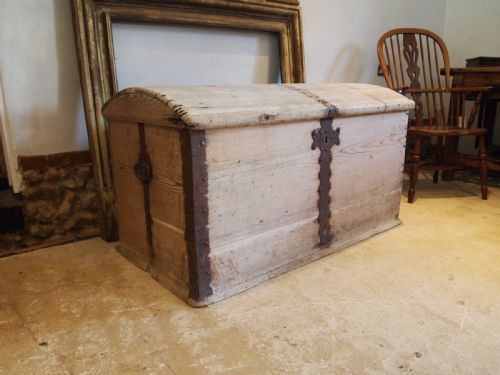


18th Century Pine Coffer
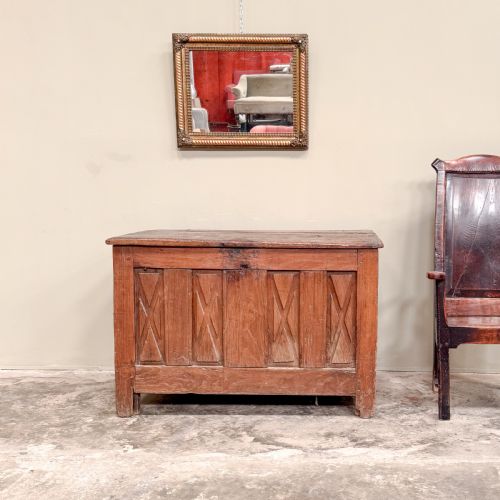
An 18th century pine coffer is a sturdy utilitarian chest built for holding household goods, offering honest craft and generous storage.

18th Century Pine Coffer
An 18th century pine coffer provides deep domestic storage through simple box construction or panelled joins, frequently featuring internal till compartments for smaller valuables. These chests serve as practical furniture with sturdy lids, functioning equally well as blanket stores or occasional tables within domestic spaces.
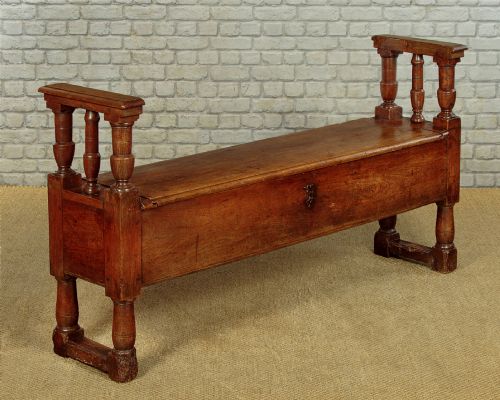
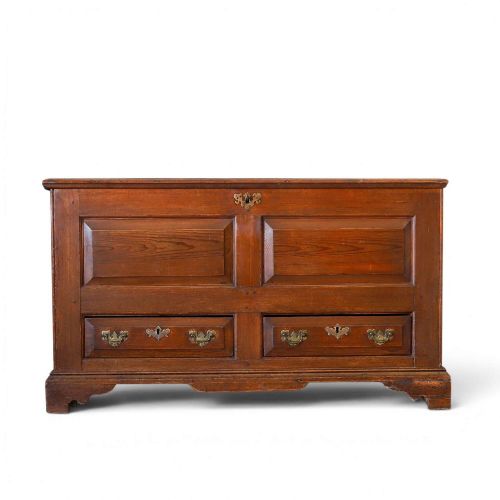
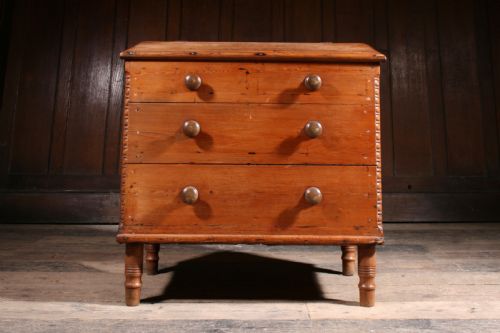
The pieces on this page span Georgian English examples alongside Scandinavian, French provincial, and Welsh regional forms. Surviving variations include plain waxed surfaces, examples with lower drawers, and pieces decorated with original paint, folk art, or labyrinth motifs.
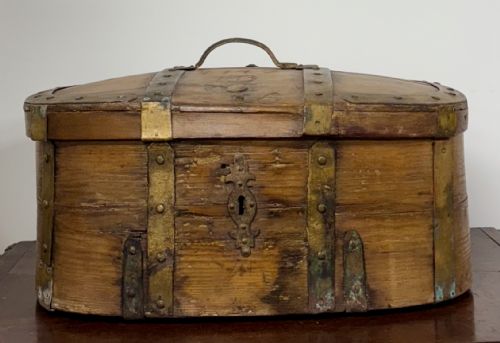
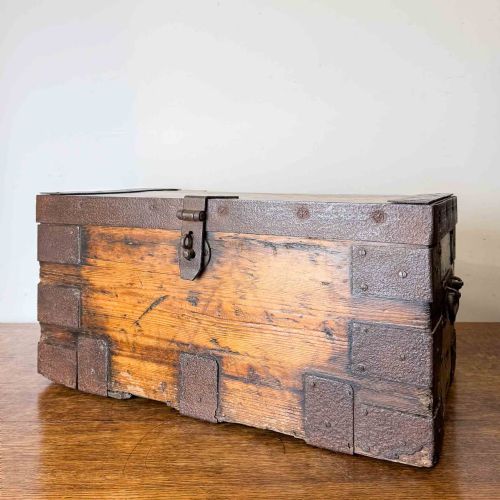
Mule chests with lower drawers and marriage boxes appear alongside six-plank constructions and iron-bound strongboxes. Elm and oak sometimes appear alongside primary pine timbers, while wrought iron and brass provide hinges, lock plates, and carrying handles.
How they were made
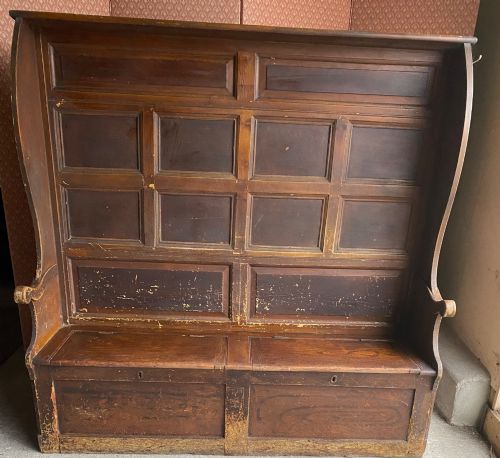
Makers constructed these chests primarily from softwood pine, sometimes incorporating elm or oak for added strength in structural members or boards. Joinery methods include simple six-plank board assembly secured with dovetails or pegged tenons, as well as framed and panelled construction.
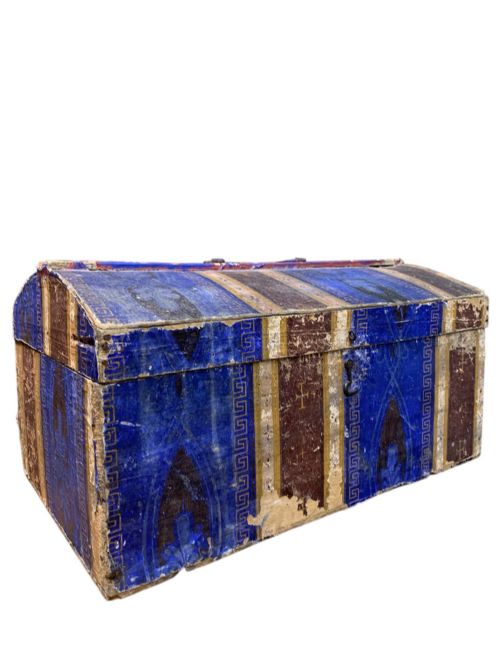
Ironmongery plays a key role in construction, with hand-forged wrought iron straps, butterfly hinges, and metal binding reinforcing corners and lids. Surface treatments range from clear wax finishes to historic layers of blue, dark, or polychrome folk art paint.
18th Century Pine Coffer Retail Price Guide 2026
Typical asking prices for 18th century pine coffer among the pieces listed under this phrase on Sellingantiques today, from the lower quarter to the upper quarter. They describe what is for sale here now, not the wider market.
One mid-18th century Swedish chest arrives decorated with a labyrinth, designed to puzzle anyone attempting to sneak a peek at the contents.
What varies in quality
Quality rests upon the integrity of the original construction, the thickness of the pine boards, and the survival of early or original surfaces. Pieces retaining their original wrought iron hardware, untouched paintwork, or integrated lower drawers stand higher in character.
Proportion and regional detail distinguish standard utilitarian boxes from sophisticated provincial statements, such as Swedish baroque motifs or complex panelled fronts. Alterations to feet, hinges, or lids affect the structural continuity of surviving examples.
The 18th Century Pine Coffer Glossary
- Coffer
- A large wooden chest traditionally used for storing valuables, linens, or documents. These heavy boxes typically feature hinged lids and robust side handles.
- Mule chest
- A storage chest fitted with one or more drawers beneath the main internal compartment. This form bridges the traditional coffer and the chest of drawers.
- Six-plank
- A simple box construction method utilising six individual boards joined directly at the edges. This technique represents an early and direct form of chest making.
- Till
- A small internal compartment built into the upper corner of a chest for holding coins, keys, or small personal items. It lifts out or remains fixed to the interior wall.
- Folk art
- Decorative painting or ornamentation applied by regional artisans rather than academic workshops. Examples include geometric labyrinth designs and traditional marriage box motifs.
18th Century Pine Coffer: Frequently Asked Questions
What were 18th century pine coffers used for?
These chests served primarily for storing household textiles, blankets, clothing, and dry foodstuffs in domestic settings.
Their robust construction also allowed them to function as seating benches or tables when space required multiple uses.
How do I care for a waxed pine coffer?
Maintain the wood by applying a natural beeswax polish sparingly and buffing with a soft brush to preserve the surface sheen.
Keep the chest away from direct heat sources and dramatic humidity shifts to prevent timber movement and cracking.
How can I tell a regional style apart?
Scandinavian and Welsh pieces often display distinct paint decorations, ironwork patterns, or panel layouts unique to their local traditions.
English Georgian examples tend to favour cleaner architectural lines, waxed pine surfaces, or functional lower drawer configurations.
Are painted pine coffers authentic?
Many Scandinavian and English pieces retain historic original paint finishes applied for decoration or protection during the period.
Close inspection of pigment wear, underlying timber oxidation, and crackle patterns helps differentiate historic paint layers from later decoration.