


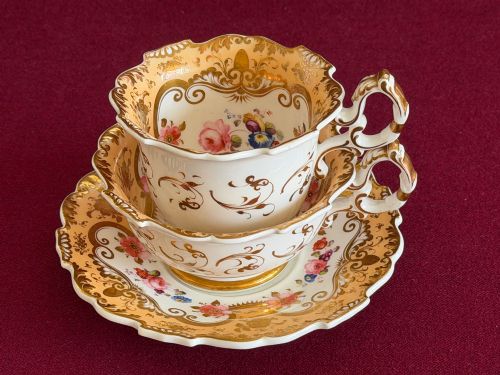
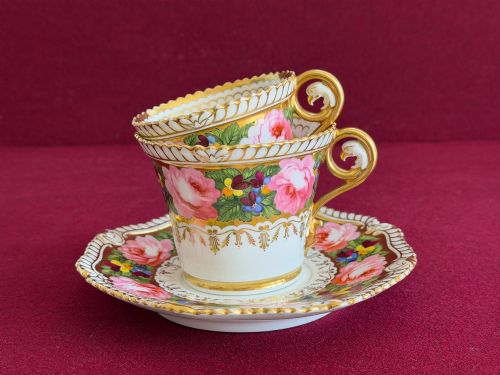
Georgian Painted Porcelain
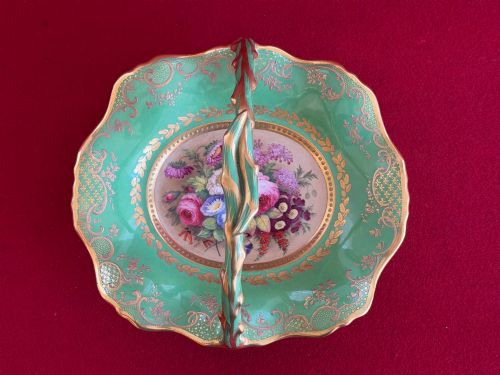
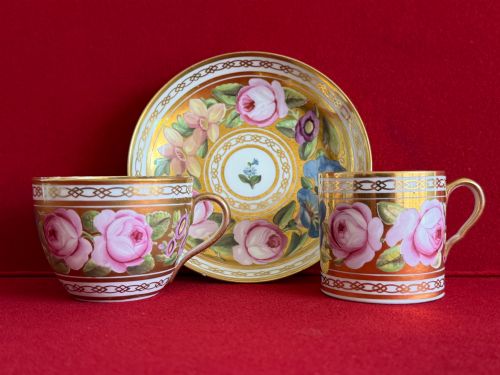
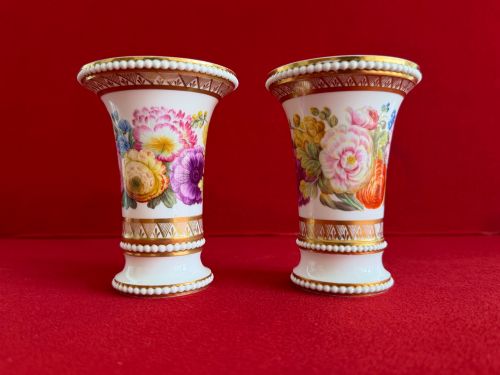
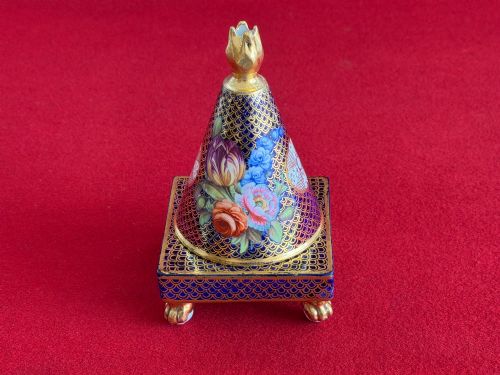
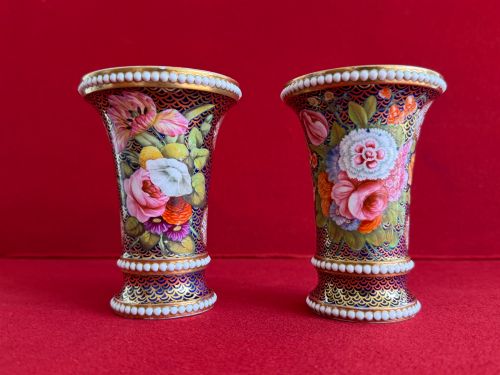
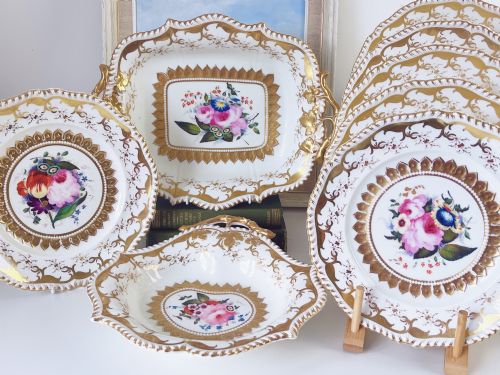
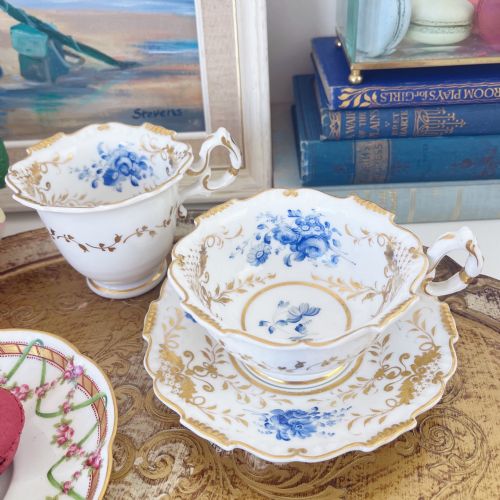
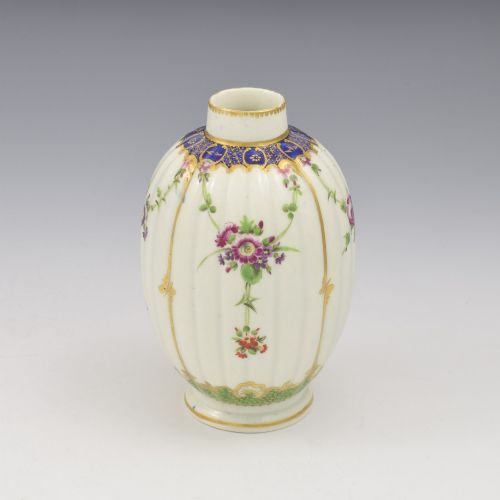
Georgian painted porcelain brings hand-decorated teacups, vases and cabinet pieces from eighteenth and nineteenth-century kilns into modern rooms.
Georgian Painted Porcelain
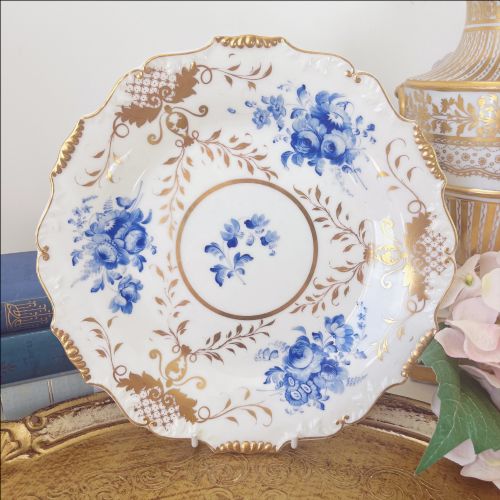
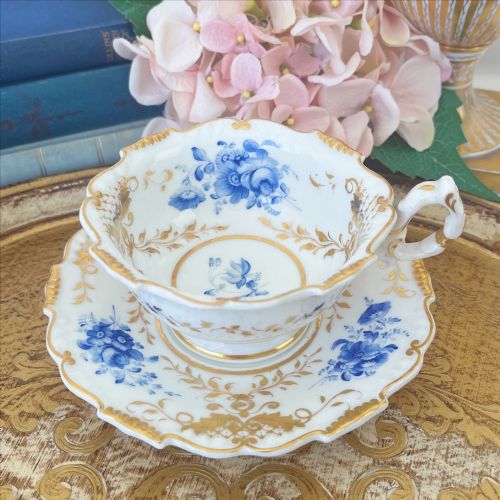
Most pieces you meet on this page hail from famous factories like Worcester, Derby, and Coalport, spanning the mid-eighteenth century through to the early decades of the nineteenth century. These items were made for display in cabinets or for pouring tea in wealthy drawing rooms, capturing the refined domestic tastes of the period.
How they were made
Potters used soft-paste porcelain, bone china, and enamel, shaping the body either by throwing on a wheel or pressing into moulds such as fluted balusters and lobed bowls. Artisans then applied hand-painted polychrome pigments directly onto the glazed surface before a final kiln firing.
Makers often integrated gold leaf and gilding to accent handles, rims, and panels, elevating the visual weight of tea trios, vases, and dessert dishes.
What varies in quality
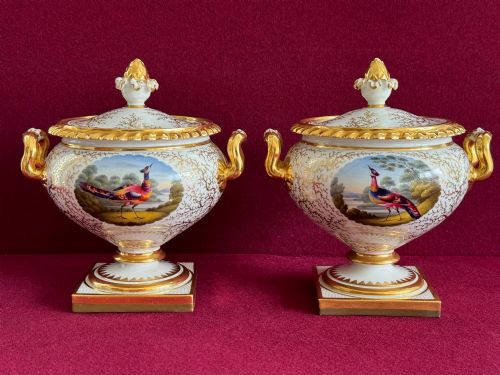
Quality rests primarily on the skill of the painter and the crispness of the porcelain moulding. Pieces featuring finely detailed botanical studies, hand-painted birds, or named decorator attribution sit comfortably above standard factory output.
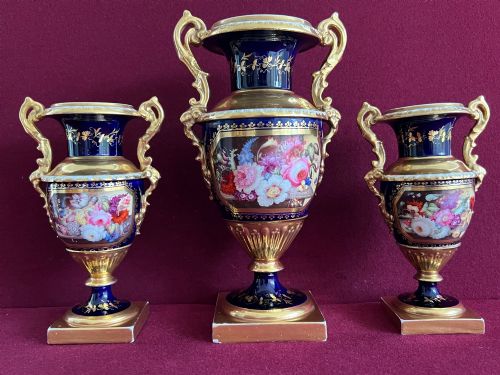
The precision of the gilding and the preservation of the enamel colours over centuries also dictate the desirability of a piece, alongside the rarity of specific factory shapes like pedestal vases or ice pails.
Grainger Lee And Co·Flight Barr And Barr·H And R Daniel·George Robertson·Richard Chaffers·Bow Porcelain·Chelsea·Newhall·Coalport·W(***)·Ridgway·Swansea·Chamberlains Worcester·Moses Webster·Spode·Hicks And Meigh·Minton
The Georgian Painted Porcelain Glossary
- Soft-paste porcelain
- An artificial ceramic body composed of white clay and glass frit, fired at lower temperatures than hard-paste porcelain. This material creates a warm, creamy translucent glaze characteristic of early English factories.
- Bone china
- A practical ceramic paste containing animal bone ash, invented to increase strength and whiteness. It became the dominant body for nineteenth-century teacups and cabinet plates.
- Polychrome
- Decoration employing multiple distinct colours applied by hand. It frequently describes floral sprays, birds, or figurative scenes painted over the glaze.
- Gilding
- The application of metallic gold leaf or gold paint to ceramic surfaces. It highlights rims, handles, and panel borders on Regency and Georgian tea wares.
- Trio
- A matched set comprising a teacup, a coffee cup, and a saucers. These groupings were standard for formal hospitality in the early nineteenth century.
- Cabinet piece
- An ornamental item made strictly for display in a glass-fronted cabinet rather than everyday dining or tea service.
Georgian Painted Porcelain: Frequently Asked Questions
Can I still use these antique teacups for tea?
While these fragile pieces were originally created for drinking tea, modern collectors generally preserve them as display objects. Using them risks damaging delicate nineteenth-century enamels and historical soft-paste bodies.
Hand-washing is occasionally attempted by cautious owners, but thermal shock and the abrasive nature of modern dish soaps can harm the original hand-painted pigments.
How do I distinguish Dr Wall Worcester from later periods?
Dr Wall period pieces, produced during the eighteenth century, typically display softer paste bodies and distinctive underglaze blue crescent or square marks. The painting styles lean heavily toward Asiatic botanical motifs and early European floral sprays.
Later nineteenth-century iterations from the same location adopted bone china and featured more opulent gilding alongside handwritten pattern numbers.
How should I display porcelain cabinet plates safely?
Cabinet plates and decorative dishes require sturdy wall hangers with rubber-coated prongs or dedicated plate stands designed for antique porcelain. Ensure the display location stays away from direct sunlight to prevent the hand-painted enamels from fading.
Stable shelving away from high-traffic household areas protects these fragile items from accidental knocks.