


Antique Landscape Painted Bowl
An antique landscape painted bowl brings pastoral views and distant horizons indoors on porcelain, earthenware and canvas.
Antique Landscape Painted Bowl
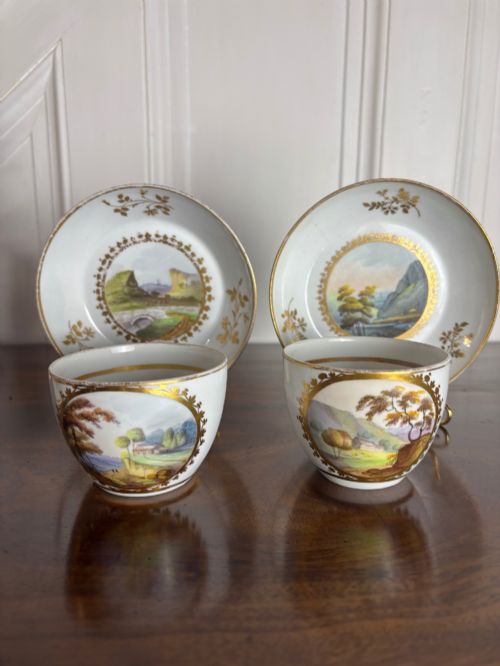
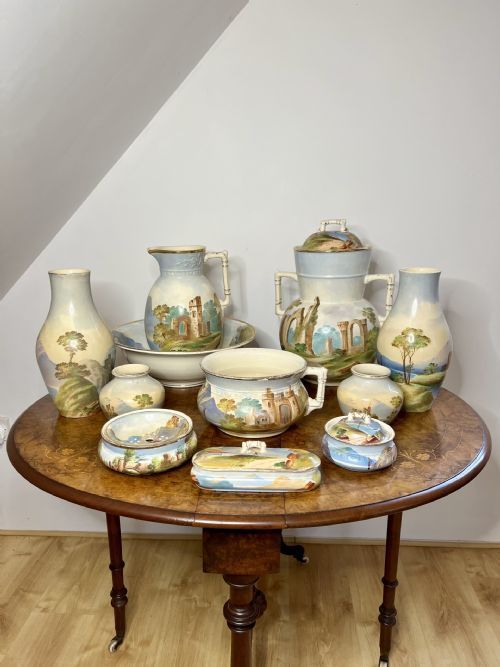
When you search for an antique landscape painted bowl, you encounter vessels decorated with scenic views, ranging from late Georgian Derby cabinet pieces to Rockingham porcelain baskets. These items merge functional ceramic forms with detailed pastoral or coastal vistas rendered by hand.
The pieces appearing on this page span the eighteenth and nineteenth centuries, taking shape across various styles like Georgian, Victorian, and Rococo Revival. Alongside ceramic bowls, the selection includes related decorative objects and framed landscape watercolours that capture similar topographical subjects.
Materials and construction methods
Potters and painters utilised porcelain, bone china, and earthenware as the foundational canvas for these scenic depictions. Cobalt underglaze, enamel pigments, and gold leaf additions bring depth and fine detail to the painted horizons and foliage.
Makers applied intricate hand-painted views directly onto the glazed ceramic surfaces before secondary firing processes set the pigments. Gilt highlights and flower encrustations frequently frame the central landscapes to enhance the visual presentation.
Listings feature porcelain, earthenware, and bone china decorated with enamel and gold leaf across the Georgian and Victorian periods.
Assessing visual and material standards
Quality rests in the precision of the brushwork and the topographical clarity of the painted landscape itself. Finer examples display meticulous attention to architectural or natural details within the scene rather than generic background washes.
The purity of the porcelain body and the crisp application of enamel and gold leaf separate standard domestic wares from exceptional cabinet pieces. Preservation of the painted surface without excessive rubbing indicates careful handling across generations.
Minton·Rockingham·Derby·Mason·Richard Ginori
The Antique Landscape Painted Bowl Glossary
- Cabinet bowl
- A decorative vessel intended primarily for display rather than domestic service. These pieces frequently feature intricate hand-painted scenes and gilt highlights.
- Enamel
- Opaque glass-like pigments fused to the ceramic surface during firing. This technique allows for vibrant coloration in detailed landscape vignettes.
- Gilt
- A thin layer of gold applied to ceramic rims and handles. It provides a reflective border that frames the central painted decoration.
- Cobalt underglaze
- A blue metallic oxide pigment applied to pottery before the final glaze and firing. This method ensures the pigment remains permanent and protected beneath the glassy surface.
- Bone china
- A type of porcelain incorporating animal bone ash. It results in a strong, translucent body favoured for fine decorative vessels.
Antique Landscape Painted Bowl: Frequently Asked Questions
How were landscape painted bowls used?
These pieces served both decorative and functional roles in historic households. Cabinet bowls were displayed prominently on furniture to showcase wealth and taste.
Other vessels held dessert courses, creams, or sugar on formal dining tables. Over time, many transitioned entirely into display items as ceramic styles evolved.
How do I date an antique bowl?
Dating relies on examining the ceramic body, glaze characteristics, and any factory marks on the base. Stylistic clues such as floral encrustations or specific border patterns also point to distinct periods like the Georgian or Victorian eras.
Comparing the painting style to documented works by period artists or potteries helps narrow the decade of manufacture.
Are landscape scenes hand painted?
Most antique decorative bowls feature hand-painted vignettes executed by skilled ceramic artists. Painters often rendered specific local landmarks, country estates, or imaginary pastoral scenes directly onto the fired glaze.
Close inspection reveals individual brushstrokes and minor variations between pieces that distinguish hand-painted work from later transfer printing.
How do I care for antique porcelain?
Display these items away from direct sunlight to prevent fading in the enamel pigments and gold leaf. Dust them gently with a soft, dry cloth rather than using liquid cleaners.
Avoid placing them in areas subject to sudden temperature fluctuations to protect the historical ceramic body and glaze from stress.