




Georgian Painted Console Table
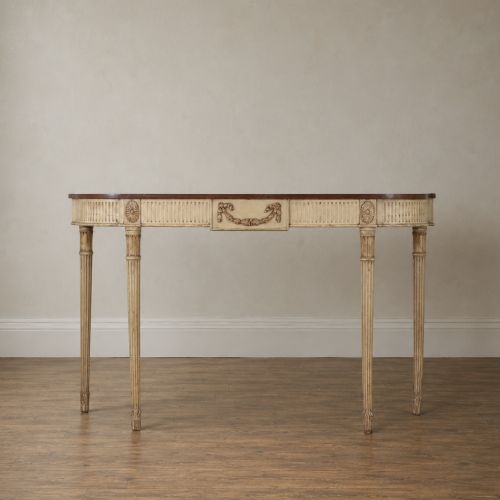
A georgian painted console table brings architectural grace and colour into a room, offering a surface that sits flat against the wall.
Georgian Painted Console Table
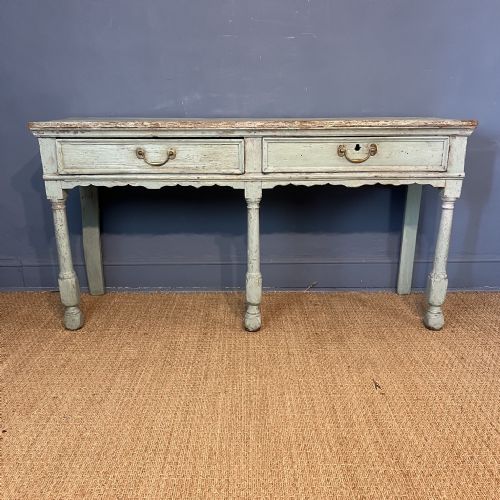
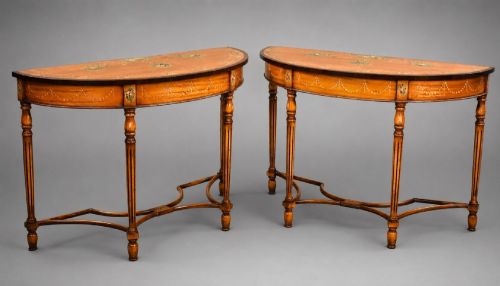
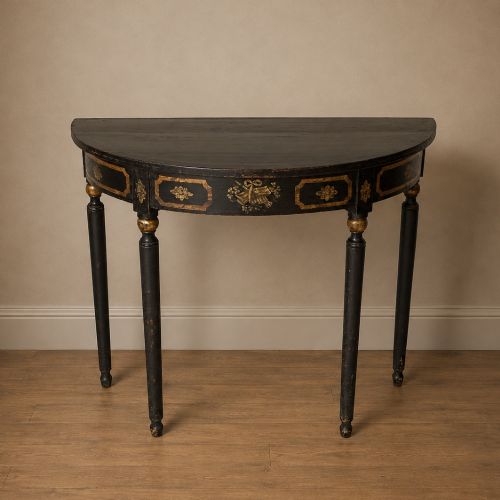
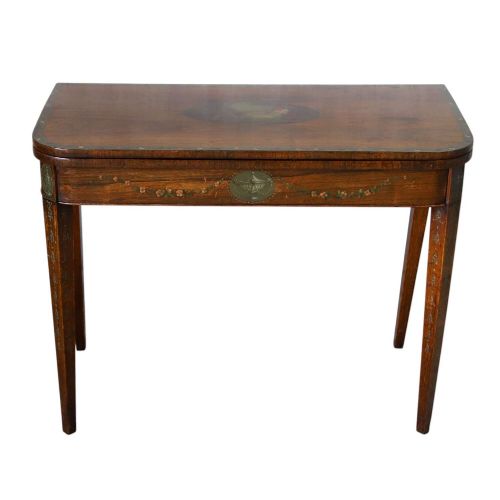
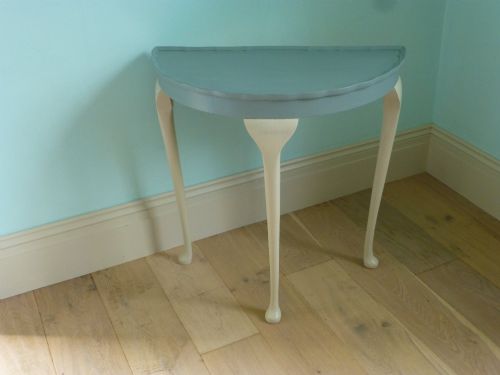
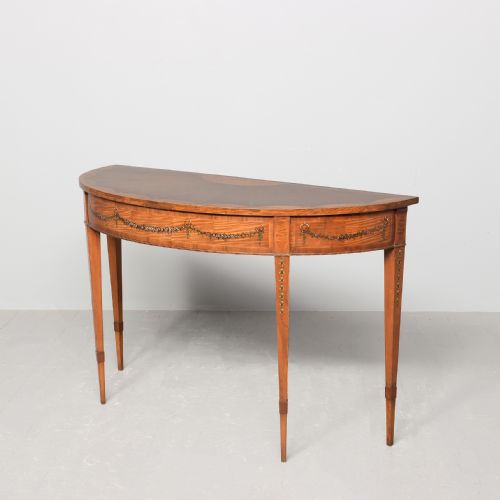
A georgian painted console table appears most frequently in demi-lune or half-round forms, designed to fit snugly against a hallway or drawing room wall. These pieces carry surface decoration ranging from simple pigments on pine to elaborate motifs on satinwood.
The selection includes items spanning the eighteenth and nineteenth centuries, alongside later revival pieces produced around nineteen-twenty. Makers built these tables for display, supporting urns, lamps or decorative objects rather than heavy domestic labour.
Origins stretch across English country houses and continental workshops, incorporating forms like serving tables and pier tables alongside standard console designs. Pine, oak and satinwood form the core structural timbers beneath layers of historical and later paint.
How they were made
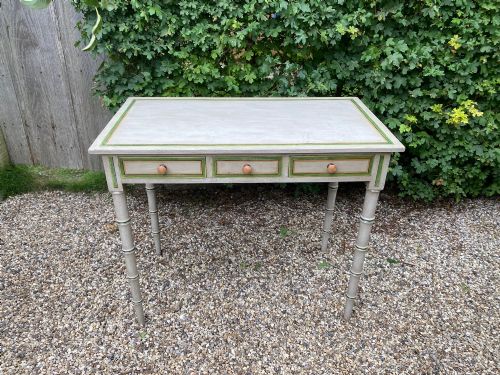
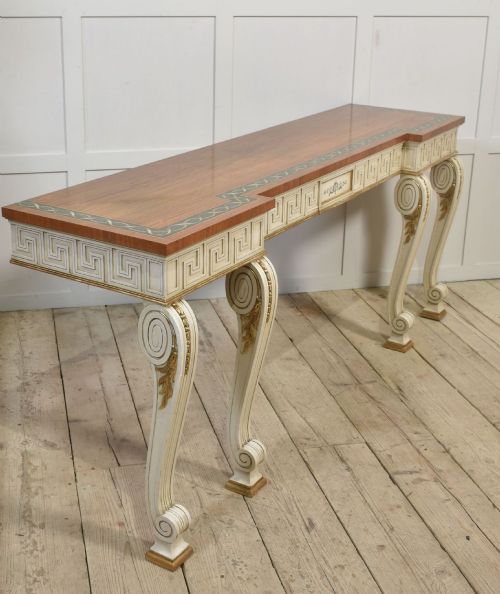
Carpenters constructed the carcases using native timbers such as pine, oak and mahogany, shaped into semicircular or rectangular formats with mortise and tenon joints. Turned or tapered legs provide support, sometimes enhanced with faux bamboo turning or parcel gilt accents.
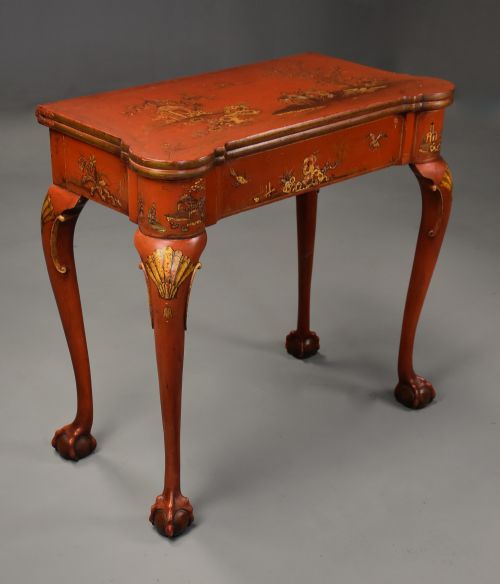
Painters applied coats of pigment directly to the timber, occasionally incorporating hand-painted geometric borders, floral scenes or faux marble finishes. Gilding and lacquer work appear on specific items, sealing the wooden substrate beneath decorative layers.
Listings span periods from the seventeenth century through to nineteen-twenty, incorporating pine, satinwood, oak and gold leaf.
What varies in quality
The sophistication of the painted surface dictates much of the distinction between pieces, moving from simple country house coats to refined neoclassical and Chinoiserie decoration. Original pigment layers hold greater archaeological interest, though skilled later decoration executed in period style remains common.
Timber selection and structural joinery also define the standard, with fine satinwood and dense mahogany demanding higher cabinet-making skills than utilitarian pine. The crispness of carved details, inlay work and the integrity of marble tops further separate standard examples from finer works.
The Georgian Painted Console Table Glossary
- Demi-lune
- A half-moon shape used for console tables designed to stand flat against a wall. This format became popular during the eighteenth century for maximising floor space in smaller reception rooms.
- Pier table
- A decorative table built to sit against the wall between two windows, often placed beneath a mirror. These pieces frequently feature elaborate painted and gilded ornamentation.
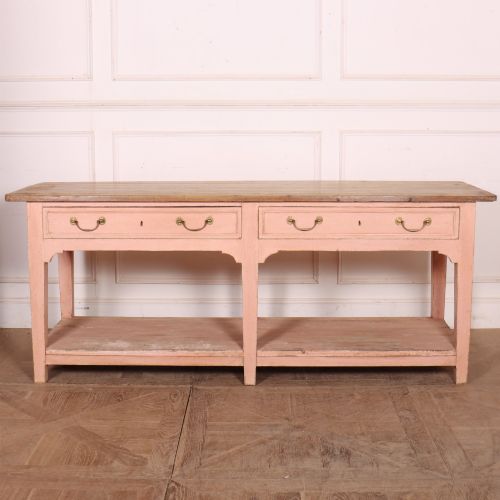
- Potboard dresser base
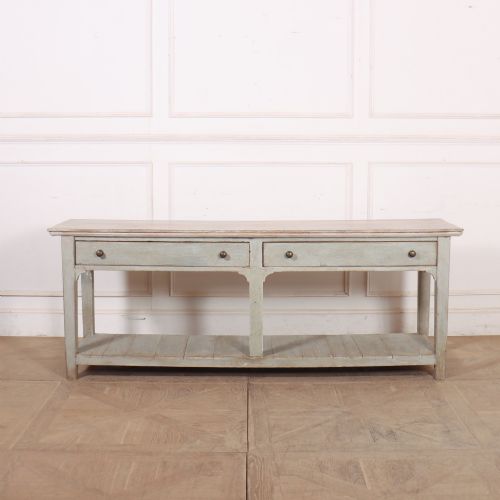
- A heavy base unit featuring an open lower shelf for storing crockery. Though distinct from standard console tables, these rustic forms appear frequently alongside them in country house interiors.
- Satinwood
- A lustrous yellow timber imported from tropical regions, prized by cabinet-makers for fine furniture. It provides a smooth golden ground for delicate painted decoration.
- Parcel gilt
- The practice of applying thin gold leaf to specific raised portions of a carved or painted surface. This technique highlights architectural details and mouldings.
Georgian Painted Console Table: Frequently Asked Questions
Where should I place a console table?
These tables find a natural home in hallways, entrance passages or behind sofas where floor depth is restricted. Their shallow profile allows them to anchor a mirror or painting without blocking walkways.
In reception rooms, they provide a display surface for lighting, porcelain or decorative objects while adding architectural character to plain walls.
Are painted finishes original?
Many surviving examples feature decorative paint applied during later periods rather than the original eighteenth-century scheme. This practice of later painting reflects changing interior tastes across the nineteenth and twentieth centuries.
Both original pigment and later decorative painting hold historical value, provided the surface has settled naturally over decades of use.
How do I care for antique painted wood?
Protect painted surfaces from direct sunlight and sharp changes in temperature to prevent the timber beneath from warping or the paint from cracking. Dust gently with a dry, soft cloth rather than using liquid polishes.
Avoid placing damp items directly onto antique painted tops to prevent water rings and pigment lifting from the wood.
What is the difference between a console and a serving table?
Console tables are generally lighter decorative pieces designed to stand against a wall, frequently supported by brackets or two front legs. Serving tables tend to be larger, sturdier forms originally intended for dining rooms.
Over time, the terms have often overlapped, particularly when larger side tables feature decorative painted finishes suited to reception spaces.